 Vinay Karanam
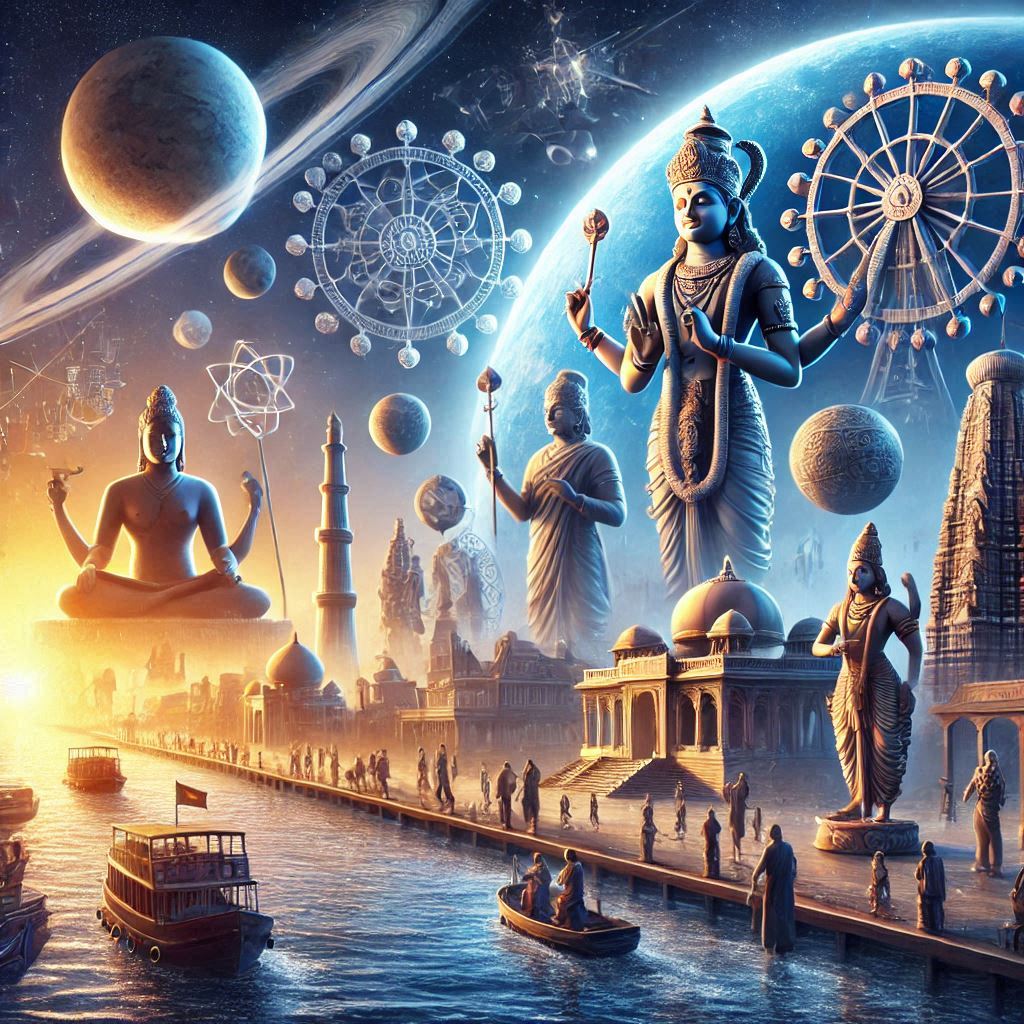
 Bharat’s contributions to the fields of science and mathematics are monumental, forming the cornerstone of many modern disciplines. The knowledge systems developed by ancient Bharatiya scholars not only addressed practical problems but also delved into philosophical and cosmic inquiries, showcasing a seamless blend of science and spirituality.
In this eighth article of the “Bharat Is Not for Beginners” series, we explore the brilliance of Bharat’s scientific and mathematical heritage, from ancient innovations to their lasting global impact.
Mathematics: The Language of the Universe
Unveiling Deeper Connections: Vedic Mathematics and Beyond
Astronomy: Mapping the Cosmos
Ancient Bharatiya astronomers were pioneers in understanding celestial movements, emphasizing observation and computation.
Vedanga Jyotisha
The earliest references to astronomy come from the Vedas, where Vedanga Jyotisha outlined the study of planetary positions to aid rituals and agriculture.
Aryabhata’s Astronomical Insights
Aryabhata proposed a heliocentric model where the Earth rotates on its axis. He accurately calculated the duration of a day and the orbits of celestial bodies, debunking prevailing myths of his time.
Varahamihira and the Panchanga
Varahamihira’s Brihat Samhita detailed meteorology, planetary conjunctions, and eclipses. His contributions influenced the Panchanga (Hindu almanac), used to this day for festivals and agricultural planning.
Medicine: The Wisdom of Ayurveda
Ayurveda, Bharat’s ancient medical system, is a comprehensive science of health and well-being that predates many modern medical practices.
- Charaka Samhita: Attributed to Charaka, this text outlines internal medicine, emphasizing prevention through diet, exercise, and lifestyle.
- Sushruta Samhita: Sushruta, the “Father of Surgery,” detailed surgical procedures, including cataract surgery and plastic surgery, showcasing advanced medical knowledge.
Ayurveda’s holistic approach to health—balancing the mind, body, and spirit—continues to inspire modern wellness practices.
Engineering and Architecture: A Testament to Ingenuity
Bharat’s engineering marvels are evident in its grand temples, water management systems, and urban planning.
Stepwells and Irrigation
- Stepwells: Structures like Rani ki Vav in Gujarat demonstrate advanced hydraulic engineering.
- Canals and Reservoirs: Ancient irrigation systems ensured efficient water management, sustaining agrarian communities.
Temple Construction
Temple architecture like the Brihadeeswarar Temple and the Kailasa Temple at Ellora showcases precision engineering and astronomical alignment.
Metallurgy: Mastery Over Materials
Bharat excelled in metallurgy, producing innovations that baffled the world for centuries.
- Iron Pillar of Delhi: This 1,600-year-old pillar resists corrosion, a testament to advanced metallurgical techniques.
- Wootz Steel: Bharat’s high-quality steel, renowned for its durability, was exported globally and admired by ancient civilizations.
Philosophy and Logic: Laying the Foundation for Scientific Thought
Bharatiya philosophy nurtured a culture of inquiry and rational thought. Schools like Nyaya and Vaisheshika emphasized logic, reasoning, and the scientific method.
- Kanada and Atomic Theory: Kanada’s Vaisheshika Sutras proposed an atomic theory, suggesting that all matter is composed of indivisible particles (paramanu).
- Sankhya Philosophy: This school explored the principles of evolution and the interplay of matter and consciousness.
Influence on the World
Bharat’s scientific and mathematical knowledge spread far and wide through trade routes, scholars, and texts.
- Arab Scholars: Translations of Bharatiya works into Arabic, such as Al-Khwarizmi’s adaptation of Aryabhata’s works, introduced Bharat’s concepts to Europe.
- European Renaissance: The infusion of Bharatiya knowledge via Arab intermediaries catalyzed advancements in Europe, shaping the scientific revolution.
The Legacy of Bharat’s Knowledge Systems
Bharat’s contributions are not relics of the past but living traditions that continue to inspire. From zero in mathematics to Ayurveda in wellness, Bharat’s ancient wisdom offers solutions for modern challenges, blending tradition with innovation.
In our next article, we delve into Bharat’s enduring languages and literature, exploring the power of words to shape culture, preserve history, and inspire change. Stay with us on this incredible journey through the wonders of Bharat.