

 Dorothy Brown
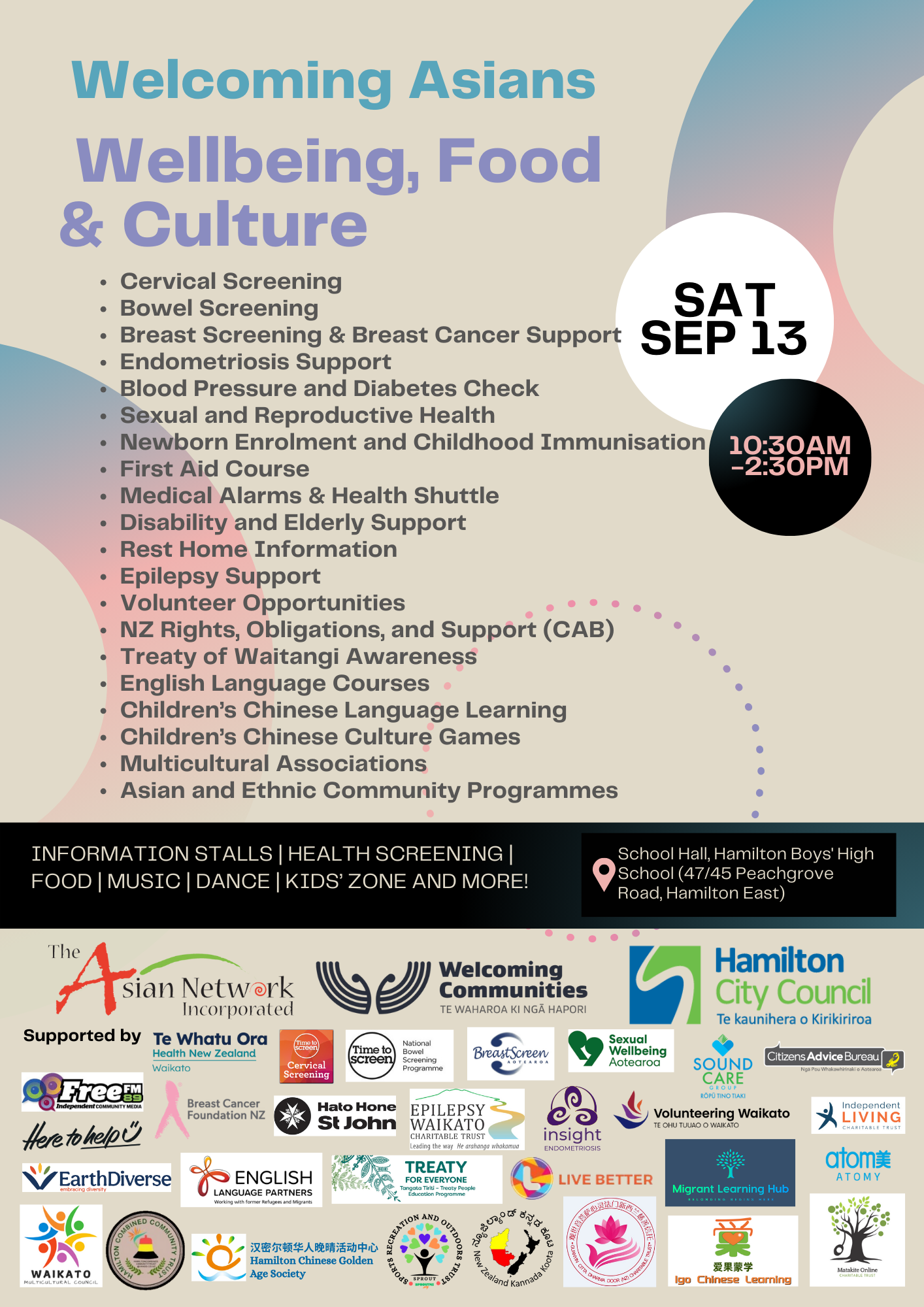
 Hamilton is set to host an event that embodies the spirit of multicultural harmony and proactive community support: the “Welcoming Asians: Wellbeing, Food & Culture” showcase. Scheduled for Saturday, September 13, at Hamilton Boys’ High School (47/45 Peachgrove Road, Hamilton East), the initiative brings together Asian and ethnic communities for a day dedicated to health, culture, and social empowerment. Running from 10:30 am to 2:30 pm, the programme delivers a rich mix of health screenings, information stalls, food, music, dance, and activities for children. This article explores the event’s comprehensive offerings, the collaborative spirit driving its organisation, and its significance for Hamilton’s vibrant Asian community.
Hamilton has long stood as a beacon of New Zealand’s multicultural society, with Asian communities representing one of the city’s most dynamic and rapidly growing populations. The “Welcoming Asians: Wellbeing, Food & Culture” event seeks to build bridges between cultures, foster awareness of essential health resources, and nurture a sense of belonging among newcomers and long-time residents alike. Hosted with input from a broad array of health providers, cultural organisations, and local authorities, the event stands as a testament to collaborative community spirit and the value of diversity within Waikato.
Community Health: The Foundation
The backbone of the event is its robust offering of health-related services. Attendees can take advantage of an array of free screenings and consultations, aimed at lowering barriers to healthcare and promoting preventative wellbeing. Key services include:
- Cervical Screening: Early detection is vital for women’s health, and accessible screening opportunities remove obstacles for culturally diverse populations. Professional practitioners offer safe, confidential consultations and can guide participants to ongoing support networks.
- Bowel Screening: Raising awareness about bowel health is imperative for older adults and those at risk. By providing information and screening, the event encourages proactive attitudes toward this often-overlooked aspect of health.
- Breast Screening & Breast Cancer Support: Promoting breast health among women is an area where cultural sensitivity is essential. On-site experts are equipped with multilingual resources and understanding of the specific challenges faced by Asian women.
- Endometriosis Support: Endometriosis remains underdiagnosed and misunderstood in many communities. Information and support are available for those seeking guidance, with access to networks and self-management strategies.
- Blood Pressure and Diabetes Checks: Chronic diseases like hypertension and diabetes disproportionately affect many ethnic populations. Offering on-the-spot checks, informed advice, and pathways to further medical support, the event aims to reduce long-term complications through early intervention.
The holistic approach extends to Sexual and Reproductive Health services, supporting informed decision-making and combating stigma. Medical Alarms and Health Shuttle services inform older adults of practical solutions for emergencies, while Disability and Elderly Support teams deliver guidance on navigating care systems and entitlements.
Enabling Families: Childhood Immunisation and Support
Childhood health emerges as a prominent theme. Among the services available is Newborn Enrolment and Childhood Immunisation – crucial for public health and especially for migrant parents who may be unfamiliar with local schedules and systems. Health professionals are present to answer questions, provide resources in multiple languages, and help parents ensure their children receive the protections essential for starting school.
First Aid Courses are an educational highlight, empowering individuals and families to respond confidently to common emergencies. This initiative is especially valuable for communities facing language or cultural barriers to mainstream health education.
Elderly and Disability Support
Hamilton’s Asian community includes a diverse spectrum of ages, and dedicated stalls address the unique needs of the elderly and disabled. Information about Rest Homes, disability entitlements, and elder support organisations is readily available. Staff and volunteers are trained in cultural competence, able to bridge communication gaps and help families make informed choices about care and lifestyle.
Community Empowerment: Volunteering, Rights, and Education
A key tenet of the event is fostering empowerment through knowledge-sharing. Visitors will find resources on:
- NZ Rights, Obligations, and Support: Citizens Advice Bureau and associated services educate attendees about legal rights, obligations under New Zealand law, and available support structures.
- Treaty of Waitangi Awareness: This seminal document underpins New Zealand’s bicultural foundation, and its relevance to newcomers is immense. Workshops and displays help demystify its history and modern implications, promoting respectful integration into Aotearoa’s social fabric.
- Volunteer Opportunities: Community groups rely on passionate individuals for success. Information booths match volunteers with organisations seeking help, fostering meaningful social contribution while providing pathways to employment and social connection.
Language and Cultural Learning
Language development and cultural education are among the cornerstones of successful integration. English Language Courses tailored for migrants offer practical advice on improving workplace and everyday communication skills. For Hamilton’s many families, Children’s Chinese Language Learning and Culture Games deliver fun, interactive sessions that nurture heritage pride while building bridges with the wider community.
These programmes are supported by multicultural associations, including Chinese community groups, Indian cultural organisations, and pan-Asian networks. Their aim is to cultivate an environment where all children feel included, empowered, and proud of their roots.
Music, Food, and Dance: Celebrating Diversity
No community gathering is complete without food and performance, and this event promises a sensory feast. Authentic Asian cuisine stalls offer flavours from across the continent, including Chinese, Indian, Korean, and Southeast Asian delicacies. For many, sharing food is both a cultural practice and a pathway to deeper understanding among neighbours.
Performances include traditional music and dance, presented by local artists, cultural groups, and schoolchildren. These showcase the vibrancy of Auckland’s multicultural scene and foster appreciation among attendees from all backgrounds. Workshops and kids’ zones ensure younger participants remain engaged, further weaving a tapestry of togetherness.
Kids’ Zone and Family-Friendly Fun
Special attention is paid to making the event accessible and enjoyable for families. The Kids’ Zone packs a range of creative activities designed to spark curiosity and learning, from crafts to games inspired by Asian traditions. Safe, supervised play spaces allow parents to engage with adult stalls and attend workshops while children make new friends and explore their heritage.
Organisers and Partners: Collaborative Impact
The success of Hamilton’s “Welcoming Asians: Wellbeing, Food & Culture” event is underpinned by the shared vision of its organisers and partners. The Asian Network Incorporated, Welcoming Communities, Hamilton City Council, Te Whatu Ora, and a host of NGO and volunteer groups provide resources, expertise, and manpower. Breast Cancer Foundation NZ, EarthDiverse, St John, and Epilepsy Waikato all contribute essential health advice, while Citizens Advice Bureau and Treaty of Waitangi consultants handle legal and cultural education.
These collaborations highlight the power of partnership–government agencies, health professionals, multicultural authorities, and ethnic community groups working together to deliver holistic support.
Supporting Social Inclusion
Social isolation is a frequent challenge for migrants and ethnic minorities. Events like this one form a vital lifeline, offering information not just about health, but about rights, entitlements, and ways to break into mainstream social circles. Multicultural Associations and Ethnic Community Programmes that exhibit at the event are keen to onboard newcomers, expand networks, and empower members with knowledge.
By providing direct access to resources and friendly faces, these events remove the barriers that can impede successful settlement and long-term wellbeing. They foster a sense of community ownership, allowing new arrivals to contribute, learn, and flourish in their adopted home.
Raising Awareness: Beyond Health Screens
While health screening forms the locus of the event, equally important is raising awareness of chronic conditions and preventative care. Cultural barriers and stigma often keep members of ethnic communities from seeking timely help. Here, outreach and information in native languages, together with face-to-face contact with sympathetic professionals, help to dismantle these hurdles.
Local health providers are committed to follow-up, ensuring that attendees leave not just with leaflets, but with clear pathways to ongoing care. The integration of medical alarms, diabetic support, and end-of-life care make the event relevant to all life stages.
Connecting Cultures: The Role of Education
Education bridges generations and cultures, empowering families with the skills vital for survival and social success in New Zealand. English courses target not only fluency but cultural confidence, addressing workplace integration and citizenship. Child-focused language programmes ensure heritage is celebrated rather than shed, connecting future generations to ancestral roots.
Cultural learning is delivered through games, dance, music, and conversation, affirming the value of diversity at every level.
Volunteering and Social Participation
Breaking into volunteer networks can be daunting for newcomers. At this event, a spectrum of options is presented: from health outreach projects to language tutoring and festival support. Involvement in community organisations builds friendship networks, career skills, and a sense of identity.
For those keen to contribute, direct introductions to existing teams demystify the process of participation.
Navigating Systems: Legal Rights and Obligations
Understanding rights and obligations in New Zealand law is critical for all immigrants. Citizens Advice Bureau and legal professionals offer advice on:
- Residency and citizenship pathways
- Employment rights
- Housing and rental standards
- Schooling requirements and education entitlements
- Consumer protection and dispute processes
Workshops answer questions in a safe, friendly setting, ensuring participants leave with increased confidence about their place in Aotearoa’s society.
Treaty of Waitangi: Building Bicultural Understanding
The Treaty of Waitangi stands as New Zealand’s founding document. Its significance for both Māori and newcomers cannot be overstated. Dedicated workshops and stalls offer translations, history overviews, and insights into the Treaty’s present-day meaning.
New arrivals learn how biculturalism shapes policy and community relations, and are encouraged to participate as respectful members of the wider national family.
The Role of Multicultural Associations
Multicultural Associations present at the event are instrumental in supporting ongoing integration. These groups provide social outings, festivals, language classes, and advocacy services year-round. They create safe spaces for conversation, celebration, and collective action.
Ethnic-specific groups cater to Chinese, Indian, Korean, Filipino, and wider pan-Asian networks, forming cultural lifelines for recent migrants and long-term residents alike.
The Importance of Early Childhood Programmes
Special attention is given to children at all stages of development. Newborn Enrolment booths assist parents in registering toddlers for immunisations, education, and wellbeing checks. Early learning programmes nurture language proficiency and cognitive skills.
Family support is available for issues like bullying, cultural isolation, and identity formation, delivered with sensitivity to backgrounds and beliefs.
Food: A Bridge to Inclusion
Food stalls are more than a source of nourishment; they are a vehicle for community-building. Sharing food fosters dialogue, interest in other cultures, and forms the basis for cross-cultural friendships.
Cooks and vendors not only sell popular dishes, but demonstrate preparation, ingredients, and the stories behind traditional cuisine.
Creative Expression: Music and Dance
Live performances are woven throughout the timetable, showcasing the artistic riches of Asian cultures. Traditional dance and music provide both entertainment and education, highlighting the beauty of diversity.
Workshops invite attendees to learn movement and song, breaking down barriers of age and background.
Adult Learning: Courses and Connections
For many migrants, adult learning is a gateway to opportunity, confidence, and civic participation. English language courses, driving lessons, tech workshops, and employment guidance are available at the event, linking visitors to ongoing community classes around Hamilton.
Seniors and Elderly: Respect and Resources
Ageing populations require tailored support. Ethnic-specific information for seniors covers healthcare, entitlements, language services, and social inclusion efforts. Staff ensure respectful engagement, and family members are encouraged to join seminars about supporting elderly relatives.
Rest Home services and Independent Living advocates are available for in-depth consultation, linking seniors to appropriate providers.
Epilepsy, Endometriosis, and Chronic Disease Management
For conditions that are less visible but deeply impactful, the event provides professional advice and ongoing support contacts. Epilepsy support teams and endometriosis advocates break down myths, foster understanding, and provide personal stories to destigmatise these illnesses.
Disease management is framed through empowerment–cultural sensitivity and evidence-based resources ensure members of all ethnic backgrounds access the help they need.
Disability Support and Inclusive Access
The event prioritises inclusive access, with stalls dedicated to the needs of disabled attendees. Information about mobility aids, legal entitlements, educational resources, and community champions aims to ensure disabled members are not left behind.
Active transport services, health shuttles, and medical alarm demonstrations in the venue further promote safe and independent living.
Pathways for Migrants: Integration and Belonging
The overarching goal of the “Welcoming Asians: Wellbeing, Food & Culture” event is fostering lasting integration. Presenting health screens, cultural festivities, language courses, and legal education in a single welcoming environment speaks volumes about Hamilton’s commitment to its Asian population.
Migrants and ethnic minorities are empowered to join mainstream life, confident in their contributions and supported by knowledgeable advocates.
Summary
The “Welcoming Asians: Wellbeing, Food & Culture” event at Hamilton Boys’ High School promises a day of meaningful engagement, practical support, and joyful celebration. Its well-rounded slate of health services, information stalls, cultural workshops, and family fun positions it as a landmark for community empowerment.
Hamilton’s leadership in migrant support and multicultural inclusion serves as an example for all of New Zealand. The event is more than a day out–it is a platform for shared growth, understanding, and the creation of futures together in Aotearoa.