



 Dorothy Brown
 Opinion
Published by Zealandia News
Dr Madan Mohan Sethi’s recent piece on India’s infrastructure boom and the opportunities it creates for New Zealand firms deserves more than a passing nod. It is, in many ways, a quiet but confident invitation — one that both nations would do well to accept with open arms. Having followed the trajectory of the India-New Zealand relationship over recent years, and having watched the tangible, on-the-ground transformation in how the Consulate General of India (CGI) in Auckland now serves the Indian diaspora, I believe the moment has come to widen the lens. Infrastructure is the visible skeleton of this partnership, but the deeper story is about values, character and shared purpose — what one might call, in the Indian civilisational sense, Dharma — meeting New Zealand’s hard-earned reputation for quality of life, environmental stewardship and institutional trust.
Few civilisations have shaped the world through infrastructure, philosophy and sustainable living as profoundly as India and New Zealand. Today, as India — or Bharat, as it is described in its constitutional soul — undertakes one of the largest infrastructure programmes in human history, and as New Zealand continues to exemplify quality of life, environmental stewardship and quiet innovation, an extraordinary opportunity has opened up between two nations that, on the surface, could not look more different, yet at their core share a great deal.
The question facing both countries is no longer whether they can work together. It is how boldly they choose to do so.
Infrastructure: where scale meets precision
India’s infrastructure transformation is nothing short of breathtaking. From the rock-cut Kailasa Temple at Ellora to the Sun Temple at Konark and the Taj Mahal, India’s history reflects a tradition of world-class construction and engineering excellence stretching back millennia. Today, that legacy is being reimagined on an unprecedented scale. Driven by rapid urbanisation, industrialisation and the vision of Viksit Bharat (Developed India) 2047, India is building metro systems, ports, airports, industrial corridors, smart cities and digital infrastructure at a pace few nations have ever attempted.
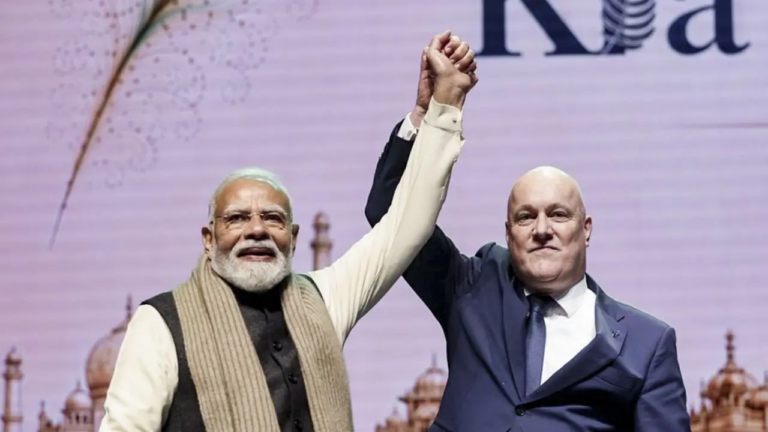
Prime Minister Narendra Modi has personally invited New Zealand investors and businesses to partner with India in infrastructure development, civil aviation, logistics, clean energy, urban mobility, water management, waste management and the digital economy. This is not a courtesy gesture. It is a genuine recognition that New Zealand firms bring globally respected capabilities in transport infrastructure, civil engineering, project delivery, environmental consulting and resilient infrastructure design — precisely the disciplines a fast-growing India needs as it builds for the next century rather than merely the next decade.
Leading New Zealand organisations such as Fletcher Building, Downer, HEB Construction, Fulton Hogan, Beca and WSP have developed capabilities that complement India’s manufacturing scale and infrastructure ambitions almost perfectly. The synergy is difficult to overstate: India’s scale and manufacturing strength combined with New Zealand’s precision engineering and sustainability expertise can deliver infrastructure that is not only vast, but exemplary in quality and durability.
Agriculture: feeding the world together
The partnership extends well beyond concrete and steel. Agriculture — the lifeblood of both economies — presents one of the most exciting frontiers of collaboration. India and New Zealand have signed an Agricultural Productivity Arrangement under which both countries will cooperate closely on agritech.
New Zealand is an agritech powerhouse, having developed advanced technologies across the full range of agricultural activity, from pasture management to genetics. Ten representatives from India’s agribusiness sector recently visited New Zealand’s Fieldays event and came away impressed by New Zealand’s expertise in animal husbandry, precision farming, quality transparency, post-harvest management, climate-resilient agriculture and cold-chain logistics.
As Swapnil Jadhav, founder of Map My Crop, put it: “The recent signing of the New Zealand-India FTA has enabled us to collaborate with New Zealand agri-tech and take their best practices to the world.” In Nagaland, India’s first Centre of Excellence for kiwifruit cultivation is being established in partnership with New Zealand — a small but symbolically rich project, given how central the kiwifruit is to New Zealand’s own agricultural identity. These are not isolated pilot schemes. They are the building blocks of a genuine global food value chain, one capable of feeding a hungry world while lifting farm incomes and improving sustainability on both sides of the Tasman-to-Indian-Ocean corridor.
Environment and climate: a shared, almost sacred, duty
It is here that the convergence of Bharat’s Dharma — the eternal principle of righteous living in harmony with nature — and New Zealand’s deep respect for the natural world becomes most visible. Prime Minister Modi has highlighted the shared cultural values between India and New Zealand’s Māori community, noting that respect for nature and community can help create a new model for inclusive and sustainable global trade. There is something quietly profound in that observation: two very different indigenous and civilisational traditions arriving, independently, at the same conviction that humanity is a custodian of nature, not its owner.
India and New Zealand have agreed to deepen cooperation through the International Solar Alliance and the Coalition for Disaster Resilient Infrastructure. Both countries are exploring joint work on climate-resilient crops, livestock and dairy genomics, soil microbiome research, alternative proteins, nutraceuticals and carbon capture technologies. Green hydrogen, electric mobility, ocean-based energy and geothermal research all feature on the agenda, drawing on New Zealand’s decades of geothermal expertise and India’s rapidly scaling renewables sector, which already ranks among the largest installed solar capacities in the world.
In a particularly striking example of scientific cooperation, India’s National Centre for Polar and Ocean Research has signed a five-year memorandum of understanding with the University of Canterbury to strengthen cooperation in Antarctic and polar research. When two nations that revere nature choose to collaborate on protecting the planet’s most fragile ecosystems, the rest of the world takes notice — and, one hopes, takes inspiration.
Digital payments and financial inclusion
India’s digital revolution offers a further compelling dimension to this partnership. The Unified Payments Interface (UPI) is now operational across eleven countries, including France, Singapore, the UAE, Greece and Mauritius. In July 2026 alone, UPI recorded more than 2,360 crore transactions. This is not simply a payment rail — it is a model of financial inclusion that has changed the economic lives of hundreds of millions of people who, a decade ago, had never held a bank card.
New Zealand, with its sophisticated financial services sector and its own appetite for fintech innovation, is well placed to partner with India in expanding digital payment infrastructure, fintech solutions and cross-border remittance systems — an area of direct relevance to the many New Zealanders sending money to family in India, and vice versa. The India-New Zealand Free Trade Agreement, signed in April 2026, provides 100 percent duty-free access for 8,284 Indian export items to New Zealand, spanning pharmaceuticals, engineering goods and agricultural products, with the digital economy explicitly named as a priority sector for future cooperation.
Cybersecurity: protecting the digital future
As our economies grow more digitally intertwined, cybersecurity becomes a critical pillar of cooperation rather than an afterthought. India and New Zealand have reaffirmed their shared resolve to deepen cooperation in combating terrorism, strengthening cybersecurity and addressing emerging security challenges together.
The two countries have established an India-New Zealand Cyber Dialogue and agreed to align on shared cybersecurity priorities, alongside an operational Joint Working Group on Counter-Terrorism. As cyber threats grow more sophisticated and more transnational in nature, this cooperation becomes not merely desirable but essential. India’s fast-expanding cybersecurity capabilities, paired with New Zealand’s robust regulatory frameworks and its close ties within trusted international intelligence networks, can together model a genuinely secure approach to digital cooperation.
Quantum computing and emerging technologies
India is positioning itself firmly at the frontier of quantum computing. The National Quantum Mission, backed by a budget of $730 million, aims to achieve its core milestones by 2030-31. India’s first quantum computing testbeds — known as Quantum Reference Facilities — have been inaugurated in Amaravati, where IBM is commissioning one of India’s first physical quantum computers, targeted for full operational commissioning by September 2026. Tech Mahindra and I-HUB QTF are partnering to advance indigenous trapped-ion quantum computing capabilities, a field still in its infancy globally.
New Zealand’s strengths in research, applied innovation and high-value manufacturing can meaningfully complement India’s ambitious quantum agenda, whether through joint academic research, talent exchange, or collaboration on quantum-safe cryptography — an area of growing relevance to both nations’ cybersecurity postures. This is not a distant, speculative frontier. It is the next great technological race, and both countries have a genuine role to play in it.
Space: reaching for the stars together
The space sector offers another genuinely inspiring example of what this partnership can achieve. Prime Minister Modi has hailed the growing collaboration in space between India and New Zealand, noting that New Zealand’s technology contributed to the success of the Chandrayaan mission. “When India’s Chandrayaan landed on the Moon, all of New Zealand rejoiced,” Modi said — a small but telling remark about how closely the two nations’ scientific communities and publics already feel connected.
New Zealand’s space sector, anchored by launch capabilities that have made the country a genuine player in the small-satellite economy, has collaborated with India on several occasions already. Space technology has now been formally identified as a priority area for deeper future collaboration, from satellite manufacturing to launch services and earth observation data-sharing — with obvious dividends for agriculture, disaster management and climate monitoring in both countries.
Education and skills: building human capital
Education remains a central pillar of the India-New Zealand relationship, and rightly so — no partnership of this ambition can be sustained by government agreements alone; it needs people who understand each other. Four agreements have recently been signed between New Zealand and Indian educational institutions to promote student mobility, joint research and industry-linked learning. For the first time with any country, New Zealand has created a dedicated pathway for student mobility and Post Study Work Visas specifically with India.
Prime Minister Modi has invited New Zealand universities to establish campuses in India, a transformative step that would create opportunities for thousands of students while deepening the institutional, research and cultural ties that underpin any enduring relationship between nations.
Investment and trade: a $20 billion commitment
The numbers behind this partnership tell a compelling story. The India-New Zealand Free Trade Agreement eliminates duty on 100 percent of Indian exports and includes a USD 20 billion investment commitment, with New Zealand pledging to facilitate up to that amount in investment into India over the next 15 years. Both countries have set a target to double bilateral trade to NZD 7 billion (roughly Rs 35,000 crore) by 2030.
Bilateral merchandise trade increased by 49 percent in the 2024-25 financial year, reaching USD 1.3 billion, and the FTA itself is expected to enter into force by the end of 2026. This is not incremental progress measured in single-digit percentages. It is genuinely exponential growth, and it is only getting started.
Tourism and people-to-people ties
The human dimension of this relationship is equally vibrant, and arguably the most heartening part of the whole story. Indian tourists spent a record USD 229 million in New Zealand in the year ended March 2026, with Indian arrivals reaching 125 percent of 2019 levels — a striking recovery given how hard global tourism was hit in the intervening years. Around 81,000 Indian visitors travelled to New Zealand in 2024-25 alone.
More than 300,000 persons of Indian origin and NRIs now call New Zealand home, making up close to 5 percent of the population. This diaspora is not incidental to the relationship — it is one of its most valuable assets, acting as a living cultural and economic bridge that supports stronger bilateral ties and sustained demand for Indian goods, services and, increasingly, ideas.
The Consulate General of India in Auckland: a catalyst for change
None of the momentum described above would translate into real outcomes without effective facilitation on the ground, and it would be an omission not to acknowledge the very real, visible improvement in how the Consulate General of India in Auckland now serves the community. Since it began functioning in September 2024, the Consulate has brought about a genuine and welcome change in service delivery for the Indian diaspora in New Zealand.
From passport issuance and police clearance certificates to visa services and OCI card processing, the Consulate has streamlined essential consular services considerably, reducing the friction and long waits that once frustrated so many families. But its role extends well beyond paperwork. The Consulate actively facilitates trade and investment engagement, encourages educational and cultural exchange, and provides the kind of steady community connection that turns a diaspora into a genuine bridge between nations rather than a distant population simply being administered from afar.
Through business delegations, investment facilitation, B2B meetings, market intelligence and business visa assistance, the Consulate is doing the unglamorous but essential work of turning commercial interest into tangible outcomes. Its sponsorship of the Herald’s Infrastructure report is one small but telling example of that commitment to building bridges rather than merely maintaining a diplomatic presence.
Bharat’s Dharma and New Zealand’s quality of life: a shared future
At its deepest level, this partnership is about something more profound than trade statistics or investment commitments, welcome as those figures are. It is about the convergence of two worldviews that, while expressed very differently, share fundamental values.
Bharat’s Dharma — the eternal principle of righteousness, duty and harmony — teaches that prosperity must be pursued in alignment with moral and ecological principles, not at their expense. New Zealand’s own deep commitment to quality of life, environmental stewardship, social equity and quiet innovation reflects a strikingly similar ethos, even if the language used to describe it is entirely different. When India’s scale, manufacturing capability and investment momentum combine with New Zealand’s expertise in sustainable engineering, innovation and high-quality solutions, both nations gain the opportunity to build not only roads, ports and cities, but a modern economic partnership founded on shared growth, resilience and long-term prosperity.
Prime Minister Modi has emphasised that India and New Zealand are bound by shared democratic values, respect for the rule of law, diversity and a common commitment to sustainable development, describing the India-New Zealand Free Trade Agreement as a “landmark” initiative that will add real depth and dynamism to bilateral economic ties. The India-New Zealand Strategic Partnership Roadmap to 2030 now provides a clear framework to guide joint action over the coming four years, with defence and security cooperation, maritime security, counter-terrorism and cybersecurity all featuring prominently alongside the economic agenda.
Leading the world by example
The world is watching, whether or not it fully realises it yet. In an era of geopolitical uncertainty, economic fragmentation and mounting environmental strain, the India-New Zealand partnership offers a genuinely different model — one built on shared values, mutual respect and a serious commitment to sustainable, inclusive growth rather than growth extracted at any cost.
This is not merely a bilateral relationship measured in trade volumes and investment flows. It is a statement about what becomes possible when two nations — one rooted in ancient civilisational wisdom, the other shaped by hard-won modern pragmatism and innovation — choose to work together in good faith. It is a demonstration that economic growth and environmental stewardship can coexist, that technological advancement and social equity can progress hand in hand, and that national interest and global responsibility need not be at odds.
The opportunities before both countries are vast, spanning infrastructure, agriculture, climate action, digital finance, cybersecurity, quantum technology, space, education and tourism. The moment to act on them is now, while the political will, the investment appetite and the people-to-people goodwill are all aligned. And the partnership between Bharat’s Dharma and New Zealand’s quality of life is, I believe, genuinely poised to lead the world by example.
Dr Madan Mohan Sethi is India’s Consul-General based in Auckland.
The writer offers this as a personal opinion piece for Zealandia News, in response to and expansion upon Dr Madan Mohan Sethi’s “India infrastructure boom creates opportunities for New Zealand firms,” published in the NZ Herald.This opinion piece is published by Zealandia News.
The article can be read here: https://www.nzherald.co.nz/business/business-reports/infrastructure-report/india-infrastructure-boom-creates-opportunities-for-new-zealand-firms-madan-mohan-sethi/ZHRNUEKSBJANDOVOWUMBS2XQMY/