
 Lara Zijl
 The Significance of Raksha Bandhan: History, Community, and the 2026 HOTA Celebration in New Zealand
Raksha Bandhan, a festival that transcends simple ritualistic practice to embody the profound values of protection, duty, and universal brotherhood, holds a unique place in the Hindu calendar. Known colloquially as Rakhi, this ancient celebration has evolved from its origins in the Indian subcontinent to become a global symbol of social cohesion. In Aotearoa New Zealand, the festival has taken on an additional layer of significance, serving as a vital touchstone for the diaspora to maintain their cultural identity while fostering inclusive community bonds.
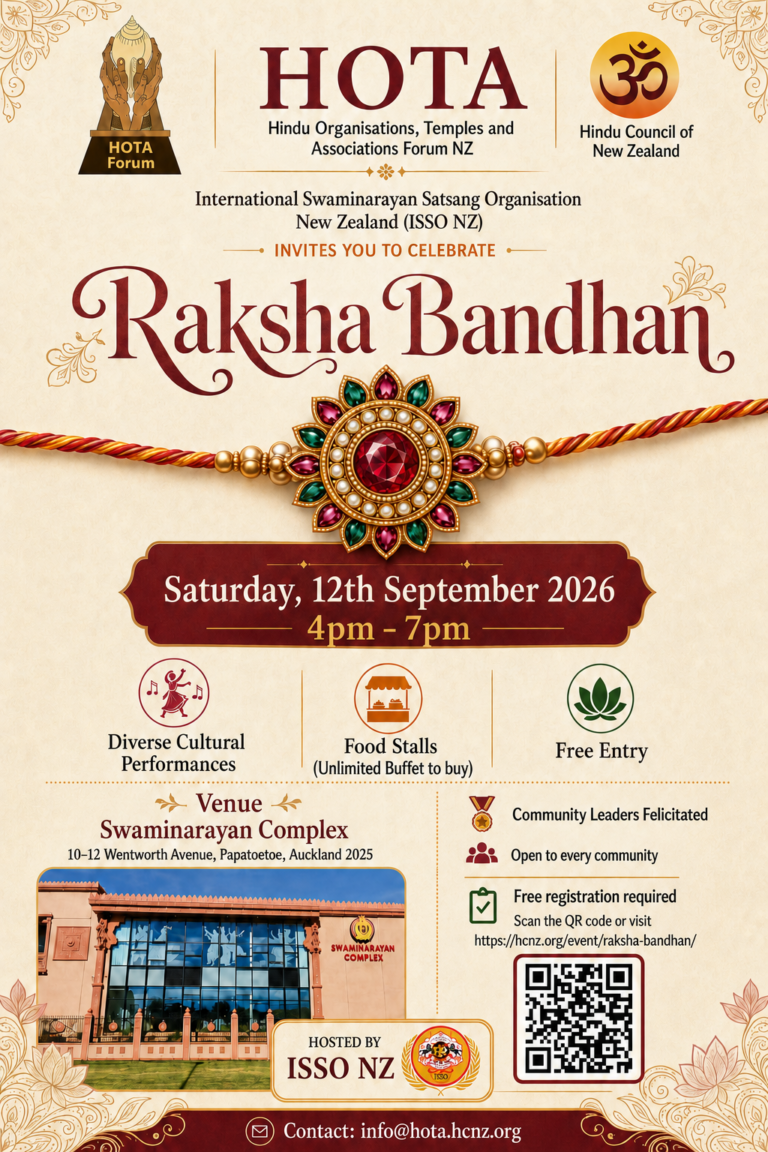
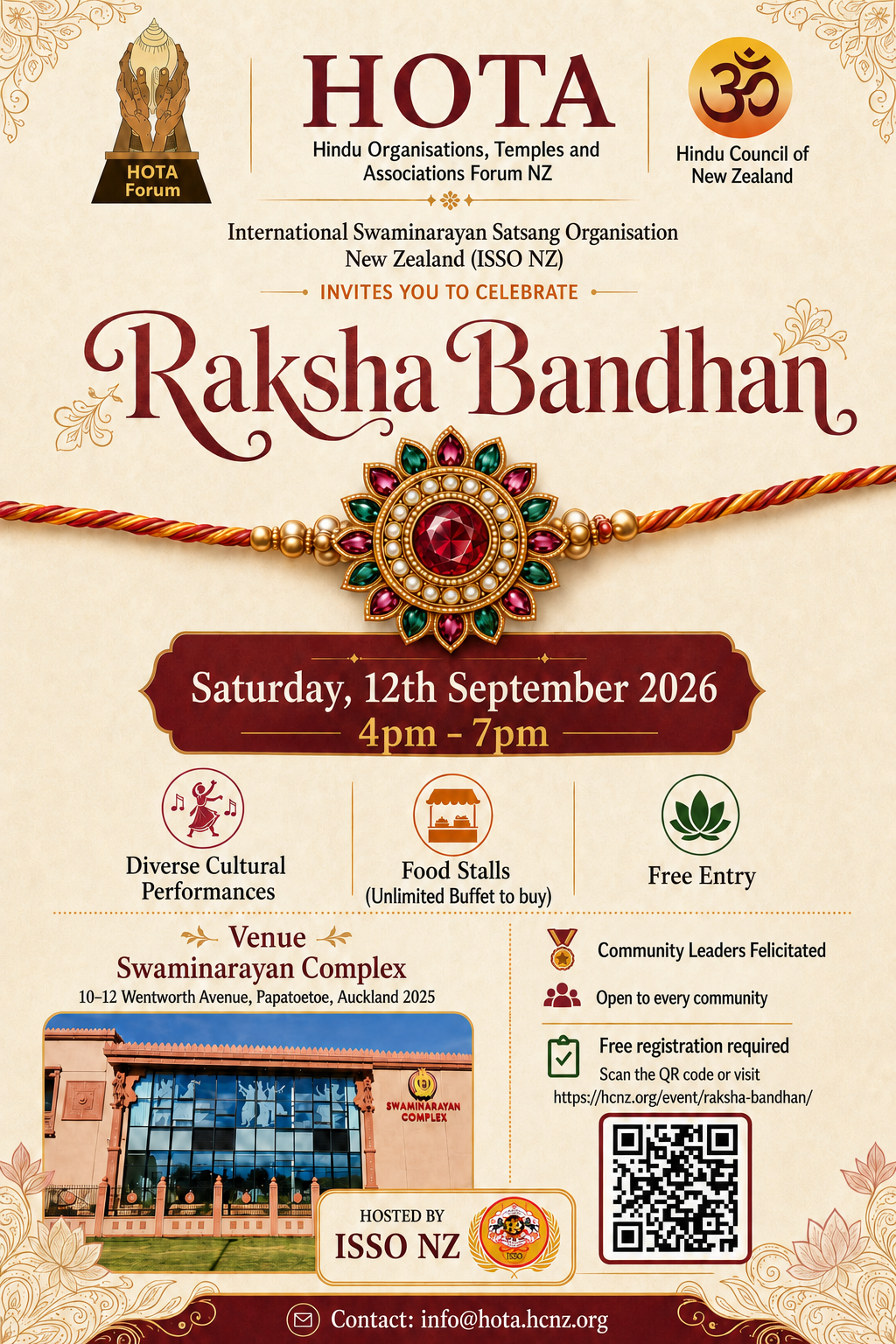
As the Hindu community in New Zealand continues to grow and contribute to the nation's multicultural fabric, the collective efforts of various organisations have moved beyond individual family celebrations toward large-scale community events. Central to this evolution is the role of the Hindu Organisations, Temples and Associations (HOTA), an umbrella body that facilitates collaboration across diverse groups. Looking forward to 2026, a landmark celebration is being meticulously planned for 12 September at the Swaminarayan Complex in Auckland, promising to be one of the most significant cultural gatherings in the region's history.
The Ancient Origins and Mythological Foundations
The history of Raksha Bandhan is deeply intertwined with the Vedic period and the rich tapestry of Puranic literature. The term "Raksha Bandhan" literally translates to "the bond of protection." Historically, the ritual involved the tying of a sacred thread (Rakhi) by a sister on her brother's wrist, symbolising her love and prayers for his well-being, while the brother pledged to protect her from all evils. However, the spiritual and historical scope of this practice is much broader than the sibling bond.
Scriptural References: The Bhavishya Purana
One of the earliest references to the Rakhi ritual is found in the Bhavishya Purana. According to this text, during a fierce battle between the Devas (gods) and Asuras (demons), King Indra was struggling to secure victory. On the advice of the spiritual preceptor Brihaspati, Indra’s wife, Sachi, tied a sacred thread empowered by mantras around Indra’s wrist on the full moon day of the Shravana month. This protective thread ensured Indra's victory, establishing the precedent that the Rakhi is a "Raksha" or shield against adversity, not limited solely to the brother-sister dynamic.
"The Rakhi is a symbol of the inherent divinity within each person and the ethical responsibility we carry toward one another. It is a reminder that in a civilised society, the strong must protect the vulnerable, and the community must stand united against discord."
The Narrative of Draupadi and Krishna
Perhaps the most poignant story associated with the festival is that of Draupadi and Lord Krishna from the Mahabharata. When Krishna injured his finger while beheading the tyrant Shishupala, Draupadi immediately tore a strip from her silk sari and tied it around his bleeding finger to staunch the flow. Touched by her selfless act, Krishna promised to protect her in her time of need—a promise he famously fulfilled during the "Vastraharan" in the royal court of Hastinapur. This narrative underscores the idea that the bond of Rakhi is based on merit and affection rather than just biological ties.
Historical accounts also highlight the political use of the Rakhi. For instance, Rani Karnavati of Chittor sent a Rakhi to the Mughal Emperor Humayun, seeking his help against an invasion. Despite their different faiths and the prevailing political tensions, the Emperor respected the gesture and set out to protect the Queen, illustrating the festival's power to bridge social and religious divides.
Symbolic Meaning and Spiritual Significance
In the modern era, Raksha Bandhan is viewed through the lens of Vasudhaiva Kutumbakam—the world is one family. While the ceremony remains a deeply personal family affair, its philosophical underpinnings advocate for a sense of duty toward all members of society. The thread itself is a physical representation of an intangible moral contract.
- Removal of Fear: The act of tying the thread is believed to provide psychological and spiritual strength to the recipient, fostering a sense of security.
- Ethical Responsibility: It reinforces the duty of the protector to uphold the dignity and rights of others, promoting a culture of respect.
- Spiritual Connection: The ritual often begins with prayers, reminding participants of the divine presence that oversees all human interactions.
- Renewal of Vows: Like many Hindu festivals, it serves as an annual opportunity to reset relationships and forgive past grievances.
The Hindu Diaspora and Cultural Preservation in New Zealand
The migration of the Hindu community to New Zealand has brought with it a wealth of cultural traditions that have enriched the local social landscape. For many families, celebrating Raksha Bandhan in Aotearoa is a vital way to ensure that younger generations, born and raised in New Zealand, remain connected to their heritage. In a secular, multicultural environment, these festivals provide a sense of identity and belonging.
Community centres and local temples across Auckland, Wellington, Christchurch, and Hamilton have become hubs for these celebrations. These venues allow the community to gather, share traditional vegetarian cuisine, and engage in the ritual tying of Rakhis. Furthermore, the festival has become an avenue for "public diplomacy," where Hindu New Zealanders invite their neighbours of different backgrounds to participate, explaining the significance of the "bond of protection" and fostering mutual understanding.
The Role of Hindu Organisations, Temples and Associations (HOTA)
As the community grew, the need for a coordinated approach to major festivals became apparent. This led to the formation and strengthening of HOTA (Hindu Organisations, Temples and Associations). HOTA operates as a collaborative platform, bringing together over 50 different Hindu groups, ranging from regional linguistic associations to large-scale temple trusts.
The primary objective of HOTA is to pool resources and expertise to host events that are too large for any single organisation to manage. By working under a unified banner, HOTA ensures that the Hindu voice is represented accurately to government bodies and the wider public. Their involvement in Raksha Bandhan celebrations has transformed the festival from a series of fragmented events into a cohesive, national-scale observance that highlights the unity within diversity of the Hindu faith.
- Coordination of major festivals like Diwali and Raksha Bandhan.
- Providing a platform for community service and youth leadership.
- Facilitating dialogue between the Hindu community and local councils.
- Standardising cultural education and resource sharing.
Upcoming Celebration: Raksha Bandhan at the Swaminarayan Complex 2026
A significant milestone in the journey of the New Zealand Hindu community will be the grand celebration of Raksha Bandhan scheduled for 12 September 2026. This event, organised by HOTA, is set to take place at the prestigious Swaminarayan Complex in Auckland. This venue is renowned for its architectural beauty and its capacity to host thousands of devotees, making it the ideal location for such a momentous occasion.
A Vision for Unity and Solidarity
The 2026 celebration is being designed as a comprehensive showcase of Hindu culture. Planning is already underway to ensure that the event includes participants from all sectors of society. The programme is expected to feature a formal ceremony where Rakhis are tied not only among family members but also presented to community leaders, emergency service workers, and representatives of the New Zealand Defence Force, symbolising the community's gratitude for their protection.
The Swaminarayan Complex will provide a backdrop of spiritual serenity, with the day's proceedings including traditional music (Bhajans), classical Indian dance performances, and educational displays detailing the history of the festival. For the HOTA organisers, the 2026 event is about more than just ritual; it is a statement of the community's maturity and its commitment to the collective well-being of New Zealand.
Participating in the 2026 Raksha Bandhan Festivities
The upcoming event on 12 September 2026 is an open invitation to all New Zealanders. Whether you are a member of the Hindu faith or someone interested in experiencing the vibrancy of Indian traditions, the Swaminarayan Complex will offer a welcoming environment for all. It serves as a reminder that the values of Raksha Bandhan—protection, respect, and duty—are universal and essential for the flourishing of a harmonious society.
Save the Date: 12 September 2026
Join the HOTA community at the Swaminarayan Complex, Auckland, for a landmark celebration of Raksha Bandhan. Experience the depth of Hindu heritage and the spirit of universal brotherhood in the heart of New Zealand.
Conclusion
Raksha Bandhan continues to be a beacon of positive social values. From its ancient Puranic roots to the modern-day gatherings in Auckland, the festival reminds us of the power of a simple thread to bind a community together. Through the dedicated efforts of HOTA and the participation of the wider public, the 2026 celebration at the Swaminarayan Complex will undoubtedly be a testament to the enduring relevance of these ancient traditions in a modern world. As we look toward the future, the spirit of Rakhi encourages us to build a society where everyone feels protected, valued, and connected.