
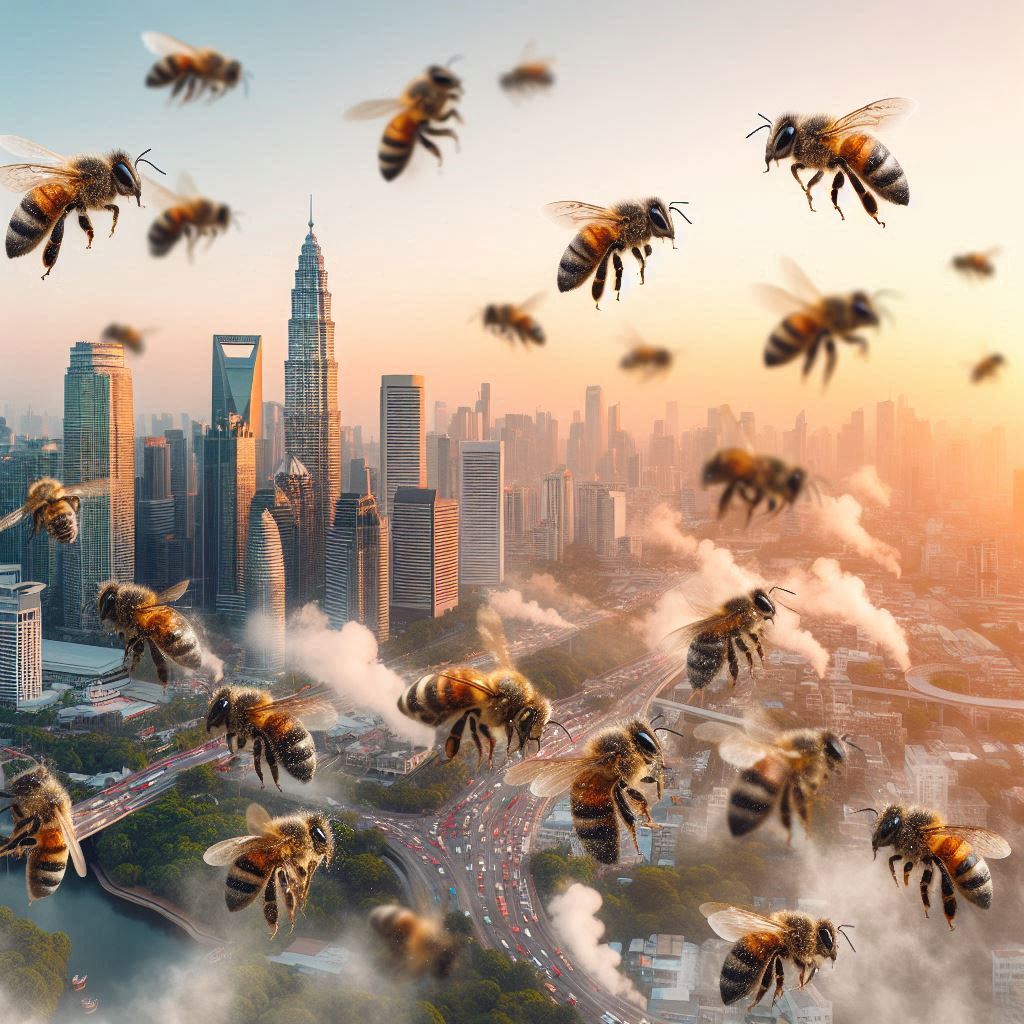
A new study, published in Environmental Pollution, reveals that air pollution, specifically ozone, disrupts bee communication by degrading floral scents, making it difficult for bees to locate flowers and hindering pollination.
Ozone’s Impact on Floral Scents
The research, conducted by scientists from the UK Centre for Ecology & Hydrology (UKCEH) and several universities, found that ozone significantly alters the size, shape, and scent of floral odor plumes. This alteration reduces honeybees’ ability to recognize these scents by up to 90% from just a few meters away.
Consequences for Pollination and Food Security
This disruption to bee communication has significant implications for pollination and food security. Pollinating insects rely on floral scents to locate flowers, navigate, and learn to associate specific scents with nectar rewards. Ozone’s impact on these scents makes it harder for bees to find flowers, potentially leading to decreased pollination rates and reduced crop yields.
Ozone’s Formation and Impact on Plant Growth
Ground-level ozone forms when nitrogen oxide emissions from vehicles and industrial processes react with volatile organic compounds from vegetation in the presence of sunlight. Previous research has already established that ozone damages plant growth, negatively impacting food production.
The Importance of Pollination
Pollination is a vital ecosystem service, essential for the production of food, textiles, biofuels, and medicines. Approximately 75% of food crops and nearly 90% of wild flowering plants rely on animal pollination, primarily by insects. Understanding and addressing factors that affect pollination is crucial for maintaining these vital services.
Key Takeaways:
- Ozone degrades floral scents, making it difficult for bees to locate flowers.
- This disruption to bee communication could negatively impact pollination rates and crop yields.
- Air pollution, including ozone, poses a significant threat to food security and biodiversity.
his research underscores the importance of addressing air pollution to protect pollinators and ensure the continued health of our ecosystems. Reducing emissions from vehicles and industrial processes is crucial for safeguarding pollination and maintaining the vital services that pollinators provide.