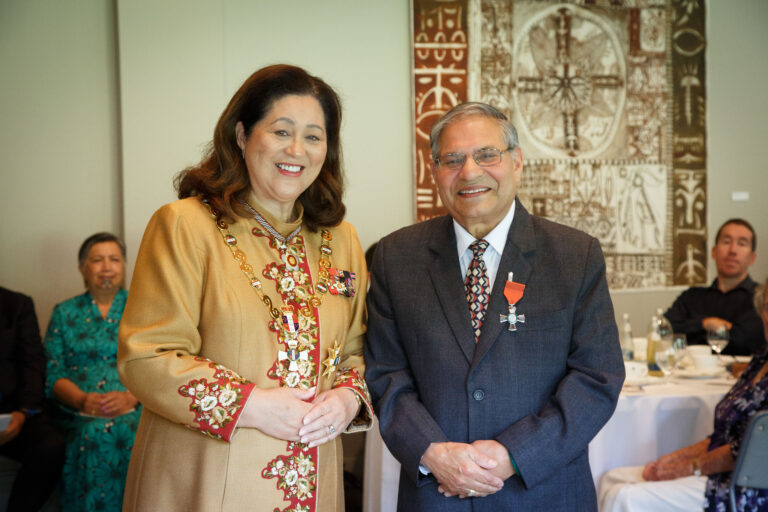
 Vinay Karanam
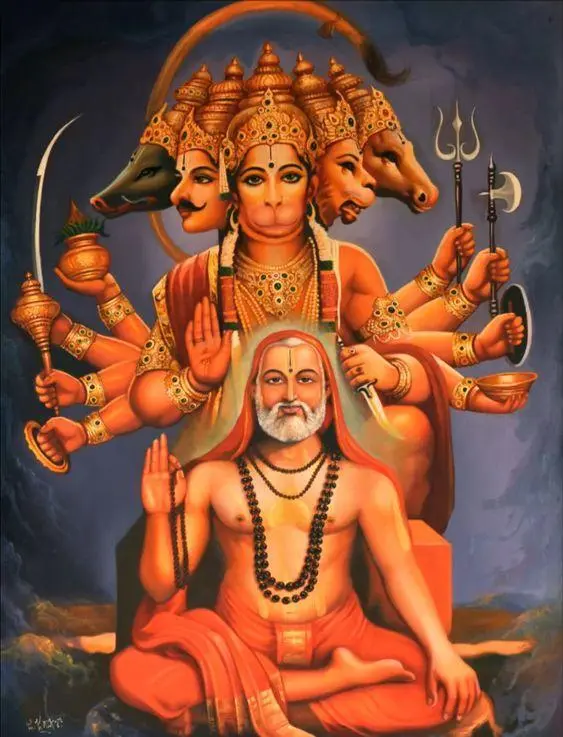
 Rayara Vardhanti, the sacred commemoration of Sri Raghavendra Swamy’s birth (Rayaru), will be celebrated on March 6, 2025, marking the Shukla Paksha Saptami of Phalguna Masa per the lunar calendar revered in Karnataka, Telangana, and Andhra Pradesh. This occasion unites devotees globally to honor a saint of the Madhva Sampradaya, renowned for his embodiment of Hari Sarvottama (Vishnu’s supremacy) and Vayu Jeevottama (Vayu’s primacy among jivas). Rayaru, enshrined in his Brindavana at Mantralaya, is a living presence, guiding souls toward moksha. This article explores the history of Rayara Vardhanti, short stories of his divine grace, his worldwide following, and the cosmological narrative within Madhva tradition—where Mukhya Prana (Vayu, the Life God) manifests through Hanuman, Bhima, Madhvacharya, and Rayaru as Prahlada’s avatar—intertwined with the Chintya-Achintya Bheda philosophy and its resonance with the quantum realm.
The History of Rayara Vardhanti
Sri Raghavendra Swamy, born Venkatanatha in 1595 (or 1598 per some accounts) in Bhuvanagiri, Tamil Nadu, hailed from a pious Gautama-gotra Brahmin lineage. A prodigy in Vedas, Nyaya, and music, he studied under Sri Sudhindra Tirtha, a luminary of the Madhva lineage tracing back to Sri Madhvacharya, the propounder of Tatvavada (Dvaita philosophy). After marrying Saraswati and fathering a son, in 1624, he took sannyasa as Sri Raghavendra Tirtha, ascending as the pontiff of the Kumbakonam Matha.
Rayaru’s life was a testament to Hari Bhakti. He traveled South India, expounding Tatvavada, authoring works like Parimala (a commentary on Nyaya Sudha), and defeating Advaita scholars in debates. In 1671, he entered his Brindavana at Mantralaya, Andhra Pradesh, vowing to remain in Nirvikalpa Samadhi for 700 years to uplift devotees. Rayara Vardhanti, celebrating his birth, evolved into a major festival under successors like Sri Vadeendra Tirtha, who glorified him in Guru Guna Stavana. Historical accounts from Vijayanagara chroniclers and Madhva hagiographies note his sanctity, earning him reverence as Jagadguru.
In 2025, Vardhanti aligns with the 32nd Sri Raghavendra Saptaaha Mahotsava (February 28 to March 6) in Kushtagi, Karnataka, featuring rituals like Maha Abhisheka, Vishnu Sahasranama Parayana, and discourses by luminaries like Sri Palimaru Swamiji. The Srivari Vastram from Tirupati will adorn his Brindavana, symbolizing his unity with Hari.
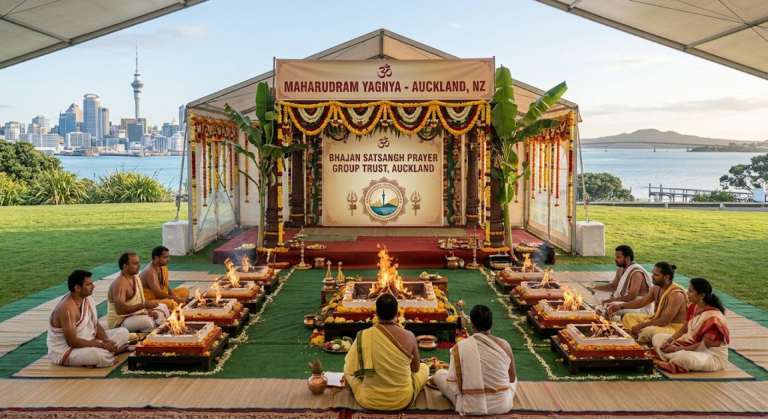
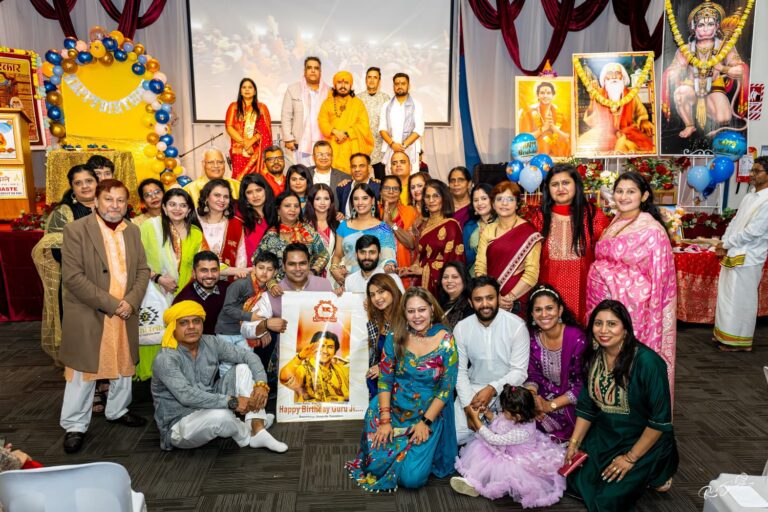
In Auckland, the Indian community gathers every year in reverent celebration for a special Rayaru Vardhanti pooja—a beloved tradition now marking 25 glorious years of devotion and unity. This annual event has grown into a cornerstone of cultural and spiritual enrichment, preserving the legacy of Sri Raghavendra Swamy and spreading his blessings across the city’s diverse devotees.
Held on the auspicious occasion of Rayara Vardhanti, the celebration resonates with the life and teachings of Sri Raghavendra Swamy, whose Brindavana at Mantralaya continues to be a beacon of faith. Auckland’s event follows the same spirit, with elaborate rituals like Tulasi Archana, the recitation of Sri Raghavendra Stotra, and Mangalarati, creating an atmosphere charged with spiritual vibrancy and divine grace. Families and individuals from across the Auckland region unite to honor Rayaru, seeking his guidance and blessings for their lives.
This cherished gathering doesn’t just celebrate the saint but also fosters a sense of community and shared values. Over the past 25 years, it has become a time of joyful reconnection, where generations of devotees come together, introducing children and youth to the essence of Rayaru’s teachings and the Madhva Sampradaya. Spiritual discourses, melodious bhajans, and communal offerings enhance the event, making it a blend of devotion and cultural richness.
The organizing committee invites anyone eager to join this celebration of faith and tradition to be part of the event. Whether you’re a long-time devotee or curious to learn more about the life and legacy of Sri Raghavendra Swamy, this pooja offers a profound experience of devotion and spiritual community.
For more details, or to confirm your participation, you’re encouraged to reach out directly to the author at admin@nzb.news or via WhatsApp at 0223966989. Don’t miss this annual opportunity to immerse yourself in the boundless grace of Sri Raghavendra Swamy and become part of a tradition that continues to light the hearts of Auckland’s devotees.

Short Stories of Rayaru’s Divine Grace
Rayaru’s miracles (Karuna Kshetra) reflect his boundless compassion, rooted in Vayu Jeevottama. Here are five tales from Madhva tradition:
- The Nawab’s Challenge
In Adoni, a Nawab tested Rayaru’s divinity, demanding he revive a lifeless buffalo. Chanting Hari Nama, Rayaru sprinkled Teertha from his kamandalu. The buffalo rose, affirming Hari Sarvottama. The Nawab, awestruck, offered villages and a white parasol, echoing honors bestowed on Sri Vyasa Tirtha by earlier rulers. - The Brahmin’s Salvation
A poor Brahmin, drowning in debt, sought Rayaru’s aid. Handing him Mrithike (sacred soil) from Mantralaya, Rayaru instructed him to present it to the creditor. The soil transformed into gold precisely matching the debt, showcasing Rayaru’s Sankalpa Shakti and the potency of Brindavana Mrithike. - Appanacharya’s Stotra
As Rayaru entered his Brindavana in 1671, his disciple Appanacharya composed the Sri Raghavendra Stotra. Pausing in sorrow mid-verse, he heard Rayaru’s voice from within complete it: “Sakshi Hayasyotra Hi” (Lord Hayagriva bears witness). This stotra, recited daily, invokes Rayaru’s Aparoksha Jnana. - The Hanuman Murti Miracle
At Hattibelagall, Rayaru consecrated a Hanuman idol during Chaturmasa Vrata. Later, devotees observed images of Rayaru, Sri Jayatirtha (Teekacharya), and Lakshmi Narasimha emerge on it. When a saint merged into the idol, it was declared Rayaru’s eternal presence, linking him to Mukhya Prana. - Venkanna’s Healing
Venkanna, a deformed boy in Bichale, served Rayaru devotedly. Arranging his marriage to Radhamma, Rayaru blessed him with Mrithike. Venkanna’s deformities vanished instantly, a testament to Rayaru’s Dayalu Guna and Prahlada Bhakti.
These Charitre tales, preserved in Raghavendra Vijaya and oral tradition, affirm Rayaru’s role as Kamadhenu and Kalpavriksha for devotees.
Followers Across the World
Rayaru’s grace transcends boundaries, uniting Hari Bhaktas globally. The Sri Raghavendra Swamy Matha at Mantralaya, where lakhs converge for Vardhanti and Aradhana (Brindavana entry), is the spiritual nucleus. In India, mathas proliferate—Bangalore hosts over a dozen, while Chennai, Mumbai, Pune, and Hyderabad boast vibrant communities. Smaller centers, like the underground matha in Bijapur or the 1681-established matha in Budhikote, Karnataka, reflect his pervasive influence. Rituals include Tulasi Archane, Santarpana, and Stotra Pathana.
Internationally, the Madhva diaspora carries Rayaru’s legacy. In the United States, mathas in Cary (North Carolina), San Jose (California), and Chicago (Illinois) host Vardhanti with Pravachana and Bhakti Sangeeta. London’s Madhva Sangha in the UK, Sydney and Melbourne in Australia, and centers in Singapore, Malaysia, and the UAE recite Hari Vayu Stuti and Raghavendra Ashtaka. Online platforms, like srsmatha.org, offer e-sevas and live streams, ensuring Rayaru’s Anugraha reaches all.
This global devotion stems from Rayaru’s Sankalpa—accessible through Mrithike, Stotra, and faith in Hari Sarvottama. In 2025, social media will amplify Vardhanti, linking Mantralaya to devotees worldwide.
Cosmology: Mukhya Prana’s Lineage and the Quantum Realm
In Madhva Tatvavada, Mukhya Prana—Vayu, the Life God—holds a exalted position as Jeevottama, second only to Hari. This cosmology traces his avatars: Hanuman, Bhima, Madhvacharya, and Rayaru as Prahlada’s reincarnation, culminating in Hanuman’s future as Brahma. The Chintya-Achintya Bheda philosophy, central to Madhva thought, parallels quantum mechanics’ mysteries.
Hanuman: Mukhya Prana’s First Avatar
Hanuman, the superhero of the Ramayana, is Mukhya Prana’s initial manifestation. Born to Anjana with blessings from Rudra and Vayu, his feats—leaping to Lanka, retrieving Sanjeevani, and serving Rama—embody Hari Bhakti and Vayu Shakti. Madhvacharya’s Mahabharata Tatparya Nirnaya exalts him as a Chiranjivi, destined for cosmic roles.
Bhima: The Second Avatar
In the Mahabharata, Bhima, son of Kunti and Vayu, is Mukhya Prana’s second avatar. His might—wielding a gada, vanquishing Kichaka, and uprooting forests—mirrors Hanuman’s valor. As a Hari Dasa, Bhima upholds Tatvavada’s emphasis on strength in devotion.
Madhvacharya: The Third Avatar
Sri Madhvacharya (1238–1317), the founder of Dvaita, is revered as Mukhya Prana’s third avatar. Born in Pajaka, Karnataka, he established Hari Sarvottama, Vayu Jeevottama, authoring Sarva Shastrartha Sangraha and defeating rival philosophies. His Anu Bhashya and Vishnu Tattva Vinirnaya cement his legacy as Jagadguru, guiding jivas toward Hari.
Rayaru: Prahlada’s Avatar
Rayaru is celebrated as Prahlada’s reincarnation, not a direct avatar of Vayu but imbued with Mukhya Prana’s essence. As Prahlada, he exemplified Narayana Bhakti against Hiranyakashipu; as Rayaru, he extends this grace in Kali Yuga. His past includes Vyasa Tirtha, who spread Tatvavada and installed 732 Hanuman murtis. Rayaru’s Parimala and Brindavana presence reflect Aparoksha Jnana.
Cosmological Succession
Madhva lore posits Rayaru as a successor to Hanuman’s legacy in spirit—where Hanuman served Rama physically, Rayaru aids devotees spiritually, fulfilling Prahlada’s vow of Hari Seva. Hanuman, a Chiranjivi, is prophesied in Bhavishya Purana to become the next Brahma in a future Manvantara, crafting creation with his Jnana and Shakti. This cycle mirrors Mukhya Prana’s eternal service to Hari.
Chintya-Achintya Bheda and the Quantum Realm
Madhvacharya’s Chintya-Achintya Bheda (thinkable-unthinkable difference) asserts that Hari’s attributes and the jiva-world distinction are real (Bheda), yet His infinite nature is beyond full comprehension (Achintya). This resonates with quantum mechanics: particles exist in superposition (thinkable possibilities), collapsing upon observation (unthinkable certainty), as in Schrödinger’s wavefunction
ψ. Quantum entanglement, proven by Bell’s Theorem, reflects Hari’s all-pervading Sarvottamatva, linking entities beyond space—like Mukhya Prana’s cosmic breath.
The quantum vacuum’s fluctuations align with Hari Karya—creation from apparent nothingness, sustained by Vayu. String theory’s vibrations echo the Nada of Mukhya Prana’s lineage, while the holographic principle mirrors Bheda within Hari’s unity. Rayaru, as Prahlada’s avatar, bridges this Chintya-Achintya divide, guiding jivas to perceive Hari’s truth.
Rayara Vardhanti 2025: A Cosmic Celebration
On March 6, 2025, Mantralaya will host Maha Mangalarati, Veda Pathana, and Mrithike Vitarana, reflecting Rayaru’s Prahlada Bhava. The Kushtagi Saptaaha will explore Tatva Manjari and Hari Vayu Stuti, linking him to Mukhya Prana’s lineage. Globally, devotees will offer Deeparadhana, chanting “Poojyaya Raghavendraya Satya Dharma Rataya Cha,” uniting in Hari Smarane. In Auckland, a special Rayaru Vardhanti pooja is organised every year for the past 25 years, as a tradition. If you are keen to participate in the event please contact the author admin@nzb.news or WhatsApp 0223966989 for more details.
This Vardhanti celebrates Rayaru’s role in Tatvavada’s cosmic narrative—Prahlada’s grace flowing through him, preparing Hanuman’s ascent as Brahma. It’s a testament to Vayu Jeevottama, harmonizing Chintya devotion with Achintya mystery.
The Eternal Grace
Rayara Vardhanti 2025 weaves history, Karuna Kshetra, and cosmology into a vibrant tapestry. From Venkatanatha’s birth to his global Bhakta Mandali, Rayaru embodies Prahlada’s Hari Bhakti, succeeding Hanuman and Madhvacharya in Mukhya Prana’s lineage. Through Chintya-Achintya Bheda, his legacy parallels quantum truths, illuminating Hari’s Sarvottamatva. As devotees bow to his Brindavana, they join a cosmic Sankalpa—from Mantralaya to eternity.