 Seraphina Hughes
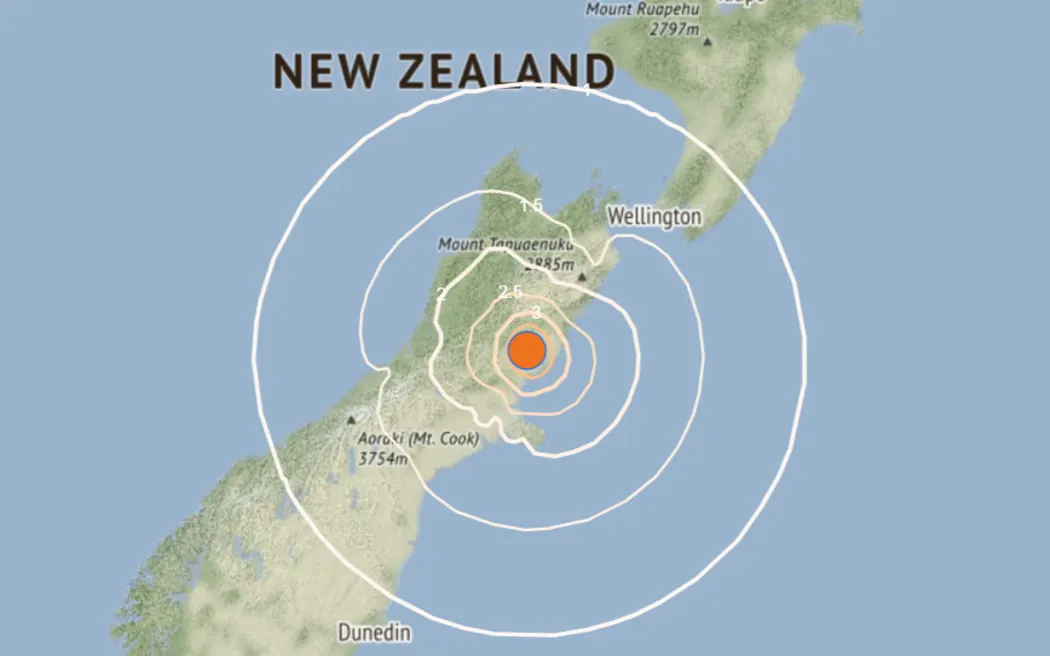
 CULVERDEN – A magnitude 5.1 earthquake jolted North Canterbury awake this morning, striking at 6:45 AM NZDT and sending tremors across the South Island from Christchurch to Greymouth. Centred 35 km west of Culverden at a shallow 5 km depth, the quake—logged as “light” by GeoNet—rattled windows, rocked cars, and sparked over 2,421 felt reports by midday. For NZ Bharat readers, it’s a seismic reminder of Aotearoa’s restless geology, blending cutting-edge quake tech with a history that echoes India’s own tectonic tales.
The Shake: Data and Details
GeoNet pinned the epicentre in the rugged hills west of Culverden, a rural hub 90 km north of Christchurch. At 5 km deep—shallow by global standards—it unleashed a peak ground acceleration (PGA) of 0.15g near the fault, per preliminary GeoNet data, strong enough to sway light objects but shy of structural damage thresholds (0.3g+). By 4:00 PM NZDT, 2,421 Kiwis had logged it—1,800 as “light,” 500 as “moderate,” and 50 as “strong”—stretching from Hanmer Springs to the West Coast. No injuries or major damage surfaced, though RNZ at 6:56 AM NZDT reported “rattling windows” in Christchurch and “cars shaking” on commutes.
A 4.7-magnitude aftershock followed at 7:49 AM, 10 km from Haast at 6 km depth, per GeoNet—unrelated but a stark double-tap for the South Island. Posts on social media captured the vibe: users in Okuku called it a “fright,” while a Christchurch commuter thought “someone was rocking my car.” Tech-wise, GeoNet’s Quake Search tool and seismic sensors—over 200 nationwide—tracked it live, a feat of NZ’s $50 million hazard network (GNS Science 2023).
Science Behind the Jolt
Why the shake? North Canterbury straddles the Alpine Fault’s eastern fringe, where the Pacific and Australian plates grind at 37 mm yearly (GNS Science). The quake likely ripped a minor fault off the Hope or Waiau systems—shallow thrusts typical here, says Dr. John Ristau of GNS Science, per NZ Herald at 8:00 AM NZDT. At 5 km, energy hit fast—liquefaction risk loomed on Canterbury’s alluvial plains, but dry soils dodged the bullet, unlike 2010’s muddy chaos.
Magnitude 5.1 sits mid-tier—NZ logs 150-200 quakes yearly above magnitude 4 (GeoNet 2024), but shallow ones amplify felt impact. Compare India’s 5.1 in Assam, June 2024—similar depth, similar “light” shakes (IMD). Tech like accelerometers and GPS stations, honed since the 2010 Darfield quake (7.1, $40 billion damage), gave instant depth and epicentre fixes, a leap from the 1901 Cheviot 6.9’s guesswork (Te Ara).
Historical Echoes
North Canterbury’s no stranger to tremors. The 2010 Canterbury sequence—7.1 Darfield, 6.3 Christchurch (185 dead)—rocked the region, costing $40 billion and rewriting building codes (Wikipedia). The 1888 Amuri quake (7.0) levelled Cheviot, while 1929’s 7.1 Buller quake shook Culverden’s fringes (NZ History). Today’s 5.1 pales beside them—GeoNet’s 2023 tally hit 14,000 quakes, 5.1 topping February’s 4.4 near Kaikoura—but shallow jolts keep nerves raw. For Bharat readers, it’s akin to the Himalayas’ restless faults—NZ’s Ring of Fire meets India’s plate squeeze.
Updates: March 6 Fallout
By 4:15 PM NZDT, calm prevails. GeoNet’s quake page (updated 3:00 PM) flags no aftershocks above 3.0—a quiet tail to a loud start. NZ Herald at 8:00 AM cited locals’ “bit of a jolt” tales, with Civil Defence on standby but unneeded. RNZ’s 6:56 AM report noted a West Coast 4.7 link was “coincidental”—separate faults, separate stories. Social media buzzed—“early wake-up call” in Rangiora, “felt it in Chch”—mirroring 1news.co.nz’s 7:46 AM tally of felt reports. No tie to Tauranga’s $5M playground row (NZB News today), but it’s another load on ratepayers’ minds.
Why It Matters
For NZ’s $20 billion export economy (Stats NZ 2024), quakes test resilience—$1.8 billion in India trade (Stats NZ) needs stable ground. For Bharat, it’s a shared seismic lens—India’s 62 visa-free spots (NZB News) lag NZ’s 190, but both nations brace for nature’s whims. Tech’s the hero: GeoNet’s real-time alerts, honed since 2010, mirror India’s IMD upgrades post-2004 tsunami. A 5.1’s small fry, but it’s a ping—NZ’s 2050 carbon-neutral goal leans on steady infrastructure, not shaky faultlines.
Excerpt
“A 5.1 dawn shaker rattled North Canterbury—shallow, sharp, and tracked by NZ’s quake-tech net. History’s scars linger, but today’s calm holds. For NZ Bharat, it’s geology’s pulse—felt from Culverden to Christchurch, a reminder of restless earth.”