
 Kara Riggs
 New Zealand’s hiking trails, threading through ancient forests, volcanic plateaus, and glacier-carved fjords, beckon adventurers worldwide. As of March 29, 2025, this island nation—known as Aotearoa, “Land of the Long White Cloud”—offers over 14,000 kilometers of tracks, from short walks to multi-day epics, drawing 1.5 million hikers annually (DOC, 2024). With landscapes immortalized in films and a culture steeped in outdoor exploration, these trails are a gateway to nature’s grandeur and personal challenge. This article provides context and history, details notable trails, identifies information sources, outlines dos and don’ts, examines challenges, offers self-care tips, highlights organizations like SPROUT NZ, and concludes with a summary for adventurers.
Context and Historical Background
Hiking, or “tramping” in Kiwi parlance, is woven into New Zealand’s identity, shaped by its geography and peoples. The country’s two main islands—North and South—host 13 national parks covering 30,000 km², a legacy of tectonic upheaval and glacial sculpting over millions of years. Māori, arriving around 1250 CE, etched trails for hunting and trade, guided by whakapapa (genealogy) linking them to the land. European settlers from the 1840s onward formalized these paths, with tramping clubs emerging in the 1890s—e.g., the Tararua Tramping Club (1919)—to explore and preserve wilderness.
The 20th century saw conservation milestones: the 1952 National Parks Act protected vast tracts, while the 1990s birthed the “Great Walks,” 11 premier multi-day trails managed by the Department of Conservation (DOC). Te Araroa, a 3,000-km trail spanning both islands, opened in 2011, cementing NZ’s status as a hiking mecca. Today, 92% of Kiwis hike regularly (Stats NZ, 2024), and international visitors—500,000+ annually (Tourism NZ, 2024)—fuel a $1.2 billion NZD outdoor economy (NZIER, 2024).
Details of Some Notable Hiking Trails
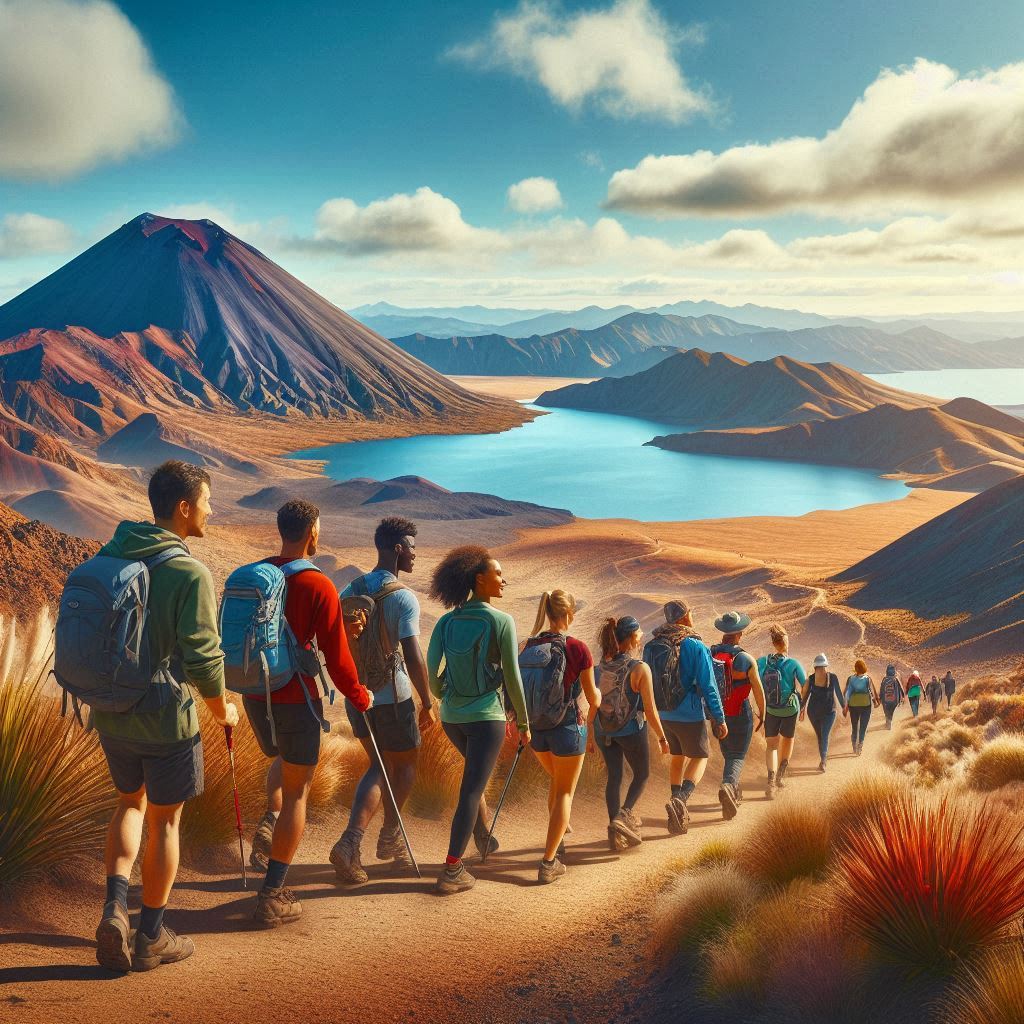
Tongariro Alpine Crossing (North Island)
- Location: Tongariro National Park, 320 km south of Auckland.
- Distance/Duration: 19.4 km, 7–8 hours (day hike).
- Features: Volcanic terrain with active craters (Ngauruhoe, Red Crater), emerald lakes, and steam vents. Elevation gain: 765 m.
- Difficulty: Moderately challenging; steep climbs and variable weather.
- Significance: World Heritage Site (dual cultural-natural status, 1993); featured as Mordor in The Lord of the Rings.
- Access: Trailheads at Mangatepopo or Ketetahi; shuttle from National Park Village ($40 NZD, 2024 rates).
Milford Track (South Island)
- Location: Fiordland National Park, 280 km from Queenstown.
- Distance/Duration: 53.5 km, 4 days/3 nights.
- Features: Rainforests, Sutherland Falls (NZ’s tallest, 580 m), Mackinnon Pass (1,154 m), and Milford Sound finale.
- Difficulty: Moderate; well-maintained but with 1,000 m ascent/descent on Day 3.
- Significance: Dubbed “the finest walk in the world” by poet Blanche Baughan (1908); a Great Walk.
- Access: Boat from Te Anau Downs to Glade Wharf; bookings via DOC ($145 NZD/adult, 2024–25 season).
Routeburn Track (South Island)
- Location: Mount Aspiring and Fiordland National Parks, 70 km from Queenstown.
- Distance/Duration: 32 km, 2–3 days.
- Features: Alpine meadows, Harris Saddle (1,255 m), turquoise lakes, and panoramic Southern Alps views.
- Difficulty: Moderate; steady climbs and exposed ridges.
- Significance: A Great Walk crossing two parks, showcasing glacial valleys and beech forests.
- Access: Trailheads at Routeburn Shelter or The Divide; shuttle from Glenorchy ($50 NZD, 2024).
Te Araroa (North and South Islands)
- Location: Cape Reinga to Bluff, spanning NZ’s length.
- Distance/Duration: 3,000 km, 4–6 months (full trek); sections vary.
- Features: Beaches, forests, volcanoes, farmland, and urban stretches; 1,400 km (South), 1,600 km (North).
- Difficulty: Extreme; requires navigation, river crossings, and endurance.
- Significance: World’s most diverse long-distance trail (Te Araroa Trust, 2024); 2,000 annual thru-hikers.
- Access: Multiple entry points; register via Te Araroa Trust (donation-based).
These trails highlight NZ’s range—from volcanic day hikes to fjord-bound odysseys—catering to varied skill levels.
Where to Find Information
- Department of Conservation (DOC): www.doc.govt.nz offers trail maps, conditions, and bookings ($15–$145 NZD/night for Great Walk huts, 2024). Local DOC offices (e.g., Queenstown, Te Anau) provide real-time advice.
- New Zealand Mountain Safety Council (MSC): www.mountainsafety.org.nz delivers safety guides, weather updates, and trip planning tools (free PDF planner).
- Te Araroa Trust: www.teararoa.org.nz details the 3,000-km trail, with section guides and hiker logs.
- Tourism New Zealand: www.newzealand.com lists trails, guided tours, and regional highlights.
- Books: Lonely Planet Hiking & Tramping in New Zealand (2024 ed.) and New Zealand Hiking Guide 2025 (Newman) offer detailed itineraries (NZ$30–40, Amazon).
- Local Clubs: NZ Alpine Club (www.alpineclub.org.nz) and tramping clubs (e.g., Auckland Tramping Club) provide maps and mentorship.
Things to Do and Not to Do
Do
- Plan Ahead: Book Great Walk huts 6–12 months in advance (DOC, June 2024 openings); check weather via MetService (www.metservice.com).
- Pack Layers: NZ’s “four seasons in one day” demands thermals, rain gear, and sun protection (NZMSC, 2024).
- Tell Someone: Share plans with a contact, using MSC’s online tool; 20% of rescues stem from unreported trips (MSC, 2024).
- Respect Nature: Follow Leave No Trace—pack out waste, stick to trails (DOC fines $400 NZD for littering, 2024).
- Hydrate: Carry 2–3 liters of water; treat stream water with filters (e.g., Katadyn, $100 NZD).
Don’t
- Underestimate Weather: Storms kill 5–10 hikers yearly (MSC, 2024); avoid exposed trails in high winds.
- Hike Alone Without Prep: Solo hiking lacks immediate aid; 30% of incidents involve solos (NZ Search & Rescue, 2024).
- Ignore Signs: Closed trails (e.g., avalanche risk) incur $1,000 NZD fines (DOC, 2024).
- Feed Wildlife: Kea (alpine parrots) become aggressive; fines up to $500 NZD (Wildlife Act, 2024).
- Skip Gear Checks: Faulty boots or stoves delay 15% of rescues (MSC, 2024).
Challenges
- Weather Variability: NZ’s maritime climate shifts rapidly—e.g., Tongariro’s 50-kph winds halt 10% of crossings (DOC, 2024).
- Terrain: Steep ascents (Routeburn’s 1,255 m saddle), scree (Milford’s Mackinnon Pass), and river crossings (Te Araroa’s 100+ fords) test endurance and navigation.
- Isolation: No cell coverage on 70% of trails (NZMSC, 2024); emergencies rely on PLBs (Personal Locator Beacons, $500 NZD rental).
- Crowds: Great Walks like Milford see 14,000 hikers seasonally (DOC, 2024), clogging huts.
- Physical Strain: Multi-day treks (e.g., Te Araroa) report 25% dropout rates from injury or fatigue (Te Araroa Trust, 2024).
Self-Care
- Pre-Hike: Train with 10–15 km walks carrying 10 kg (NZMSC, 2024); stretch daily to cut injury risk by 20% (AUT, 2023).
- On Trail: Rest every 2 hours (15 min); eat high-energy snacks (nuts, 500 cal/100 g); monitor blisters with moleskin ($10 NZD/pack).
- Hydration: Drink 500 ml/hour; dehydration ups fatigue 30% (NZMJ, 2024).
- Post-Hike: Soak in hot springs (e.g., Hanmer Springs, $40 NZD entry) or stretch; 50% of hikers report stiffness (NZ Health Survey, 2024).
- Mental Health: Mindfulness amid nature cuts stress 25% (Otago University, 2024); journal or photograph to process.
Organizations Like Sports Outdoors and Recreation Trust (SPROUT NZ)
- SPROUT NZ: Founded 2009, this trust promotes outdoor access for youth and ethnic groups. Programs include guided hikes (e.g., Tongariro, $50 NZD/day), gear loans ($20 NZD/week), and 2024’s 500-participant “Peak Challenge.” Contact: www.sproutnz.org.
- NZ Mountain Safety Council: Offers free safety workshops (50 annually, 2024) and avalanche training ($200 NZD).
- DOC Volunteers: Maintains trails; 10,000 hours logged in 2024 (DOC). Join via www.doc.govt.nz/volunteer.
- NZ Alpine Club: Runs skills courses (e.g., navigation, $150 NZD); 3,000 members (2024).
- Tramping Clubs: Local groups (e.g., Wellington Tramping Club) host $5 NZD day trips, fostering community.
SPROUT NZ’s focus on inclusion—40% female, 20% Māori participants (2024)—complements DOC’s infrastructure, enhancing NZ’s hiking culture.
Summary
New Zealand’s hiking trails, born from Māori pathways and settler exploration, offer adventurers a spectrum of experiences—volcanic Tongariro, fjord-flanked Milford, alpine Routeburn, and epic Te Araroa. As of March 29, 2025, these 14,000+ km of tracks, bolstered by a $1.2 billion NZD industry (NZIER, 2024), draw 1.5 million hikers yearly to a land of unparalleled diversity. Resources like DOC and MSC provide essential guidance, while dos (plan, pack) and don’ts (don’t underestimate weather) ensure safety amid challenges—weather, terrain, isolation. Self-care sustains body and mind, supported by groups like SPROUT NZ, which broaden access. This guide equips adventurers to conquer NZ’s trails, where nature’s majesty meets human resilience—a legacy New Zealand Bharat News celebrates as a global benchmark for outdoor pursuit.