


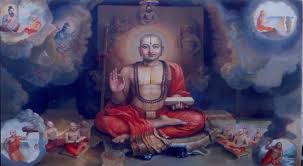
 Dr. Rukumangada Acharya
 A Dvaita Vedānta Exploration – Article 30: Kāryāntarasaṃyogādyapekṣatvācca
By Dr. Rukumangada Acharya
In the boundless expanse of Sanātana Dharma, where the pursuit of tattva-jñāna (knowledge of ultimate reality) pierces the ephemeral veil of saṃsāra, the Brahmasutras stand as a divine monument, authored by Śrī Vedavyāsa, the incarnation of Śrī Nārāyaṇa Himself. Within the Dvaita Vedānta sampradāya, as illuminated by the revered Āchārya Śrī Madhvāchārya, these 564 sūtras—enumerated thus in this tradition due to specific textual divisions—are not mere philosophical treatises but sacred revelations of eternal truths. They proclaim the unassailable supremacy of Śrī Hari as Parabrahman, the Sarvottama (supreme among all), affirm the reality of the jagat as His creation, and establish the pañca-bheda (fivefold difference) that eternally distinguishes jīva (individual soul), jagat (world), and Īśvara (the Supreme Lord), as well as the differences among jīvas and between jīvas and jagat.
This series, launched under the aegis of New Zealand Bharat News (NZB News), embarks on a transformative odyssey to unravel the profound spiritual and esoteric secrets of the Brahmasutras, guided by the authoritative bhāṣyas of Śrī Madhvāchārya, Śrī Jayatīrtha (Tikāchārya), and Śrī Rāghavendra Tīrtha. Each article provides a direct translation of the sūtras from their pristine Sanskrit, a meticulous exploration of their multilayered meanings, and a seamless integration with the Vedas, Upanishads, Itihāsas, and Purāṇas. The Dvaita perspective, anchored in the principle of bheda (difference), unequivocally rejects the illusory unity of Advaita and the qualified unity of Viśiṣṭādvaita, asserting instead the eternal distinction and absolute dependence of the jīva upon Śrī Hari.
Having kindled the spark of inquiry with “Athāto Brahma-jijñāsā,” identified Śrī Viṣṇu as the jagat’s cause in “Janmādy asya yataḥ,” established the śāstras as His revelation in “Śāstra-yonitvāt,” harmonized them in “Tat tu samanvayāt,” affirmed His sentient causation in “Īkṣater nāśabdam,” clarified His primacy in “Gaunaś cen nātma-śabdāt,” rooted it in śruti with “Yat tat śruteḥ,” opened meditative realization in “Api ca samrādhane pratyakṣānumānābhyām,” affirmed His control over prakṛti in “Prakṛtiś ca pratijñā-dṛṣṭānta-anuparodhāt,” designated Him as the ruler of souls in “Abhimānivyapadeśas tu viśeṣānugatibhyām,” confirmed His substantial nature in “Dravyavattvāt,” validated it through inference in “Anumānāc ca,” affirmed the jagat’s dependence in “Tad-ananyatvam ārambhaṇa-śabdādibhyaḥ,” specified His causation of elements in “Kāraṇatvena cākāśādiṣu yathāvyapadiṣṭokteḥ,” reinforced it with śruti in “Śrutatvāc ca,” declared Him the sole object of knowledge in “Jñānena tu tadeva,” distinguished Him from the jīva in “Nātmā śruteḥ,” affirmed His eternality in “Nityatvāc ca tābhyaḥ,” declared Him the supreme knower in “Jño’ta eva,” clarified His non-departure in “Utkramati na tu tat,” affirmed His inner control in “Antaryāmyadhidaivādisthāneṣu hi tathā hi darśayati,” highlighted His transcendent qualities in “Adṛśyatvādiguṇako dharmokteḥ,” established His unique distinction in “Vaiśeṣyāt tu tad-vākya-śeṣāt,” negated His equivalence with prāṇa in “Śruti-vipratiṣedhāc ca na prāṇādi-vat,” clarified His partial similarity to devas in “Deva-vacca na nikhilam,” affirmed His uncaused nature in “Na ca kārya-vyapadeśāt,” reinforced His supremacy through śruti in “Śruteś ca,” affirmed His role as sustainer in “Prāṇabhṛcca,” and declared His distinction in “Bhedavyapadeśācca,” we now turn to the thirtieth sūtra, “Kāryāntarasaṃyogādyapekṣatvācca”—a sacred affirmation that Śrī Viṣṇu’s independence is confirmed by His non-dependence on other effects or conjunctions.
The Brahmasutras, as the nyāya-prasthāna, form the logical cornerstone of Vedānta, complementing the śruti-prasthāna (Upanishads) and smṛti-prasthāna (Bhagavad Gītā). In Dvaita, their purpose transcends mere debate: they establish Śrī Hari’s paratva (supremacy) and the jīva’s sēṣatva (servitude), dismantling erroneous doctrines of rival schools. Śrī Madhvāchārya’s Brahmasūtra-bhāṣya, enriched by Śrī Jayatīrtha’s Nyāya-sudhā and Śrī Rāghavendra Tīrtha’s Tātparya-chandrikā, serves as the guiding light of this series, ensuring fidelity to the paramparā while unveiling the sūtras’ timeless relevance. This sūtra strengthens the Samanvaya Adhyāya’s mission, emphasizing Śrī Viṣṇu’s absolute independence, guiding the jīva toward His lotus feet through śāstra and bhakti.
The Thirtieth Sūtra: Text and Translation
The thirtieth sūtra, “Kāryāntarasaṃyogādyapekṣatvācca” (Brahmasutra 1.1.30), translates as “And also because of non-dependence on other effects, conjunctions, and the like.” Its phrasing underscores Śrī Viṣṇu’s autonomy. In Sanskrit, the sūtra reads:
कार्यान्तरसंयोगाद्यपेक्षत्वाच्च
- कार्यान्तरसंयोगाद्यपेक्षत्वात् (Kāryāntarasaṃyogādyapekṣatvāt): Because of non-dependence on other effects, conjunctions, and the like.
- च (Ca): And also.
Śrī Madhvāchārya interprets this sūtra as affirming that Śrī Viṣṇu, as Parabrahman, is independent of other kāryas (effects), saṃyoga (conjunctions), or external conditions, unlike dependent entities such as jīvas, devas, or prāṇa. Dvaita upholds Śrī Hari’s svatantratva (independence) as the sole self-existent reality, guiding the jīva to recognize His unconditioned supremacy through śāstric insight.
Detailed Analysis: Dissecting the Sūtra
This sūtra reinforces Śrī Viṣṇu’s absolute independence, a cornerstone of Dvaita’s ontology, by negating His reliance on external effects or conditions. Let us unpack its components through the Dvaita lens.
Kāryāntarasaṃyogādyapekṣatvāt: Because of Non-Dependence on Other Effects, Conjunctions, and the Like
“Kāryāntarasaṃyogādyapekṣatvāt” emphasizes that Śrī Viṣṇu does not depend on other effects (kāryāntara), conjunctions (saṃyoga), or similar conditions (ādi), unlike created entities. Śrī Madhvāchārya cites the Taittirīya Upanishad (2.1.1): “Satyam jñānam anantam Brahma” (Brahman is truth, knowledge, infinite), where Śrī Viṣṇu’s self-existent, infinite nature precludes dependence on external factors. He also references the Śvetāśvatara Upanishad (6.8): “Na ca tasya kaścit kāraṇam” (He has no cause), affirming Śrī Viṣṇu’s autonomy.
Śrī Jayatīrtha, in Nyāya-sudhā, ties this to “Na ca kārya-vyapadeśāt” (1.1.26), where Śrī Viṣṇu’s uncaused nature was established, now extended to non-dependence on effects like prāṇa or devas, per “Bhedavyapadeśācca” (1.1.29). He employs tarka: dependent entities like jīvas require conjunctions (e.g., body-mind union) to function, whereas Śrī Viṣṇu’s guṇas are intrinsic. Śrī Rāghavendra Tīrtha illustrates this with Śrī Kṛṣṇa’s Gītā (9.4): “Mayā tatam idaṃ sarvaṃ jagad avyakta-mūrtinā” (By Me, in My unmanifest form, this universe is pervaded), showing Śrī Viṣṇu’s independence from creation’s conditions.
For the sādhaka, this inspires chanting “Svatantra-rūpa” (Independent form) during dhyāna, internalizing Śrī Hari’s self-existent nature.
Ca: And Also
“Ca,” meaning “and also,” connects this affirmation to prior sūtras, reinforcing Śrī Viṣṇu’s supremacy. Śrī Madhvāchārya links this to “Prāṇabhṛcca” (1.1.28), where Śrī Viṣṇu’s sustenance of prāṇa implies His independence from it, per the Chāndogya Upanishad (6.2.1): “Sad eva somya idam agra āsīt” (Existence alone was in the beginning). Śrī Jayatīrtha’s Nyāya-sudhā aligns this with “Tat tu samanvayāt” (1.1.4), harmonizing śāstric affirmations of Śrī Viṣṇu’s autonomy. Śrī Rāghavendra Tīrtha sees “ca” as Śrī Hari’s grace, as Śrī Rāma’s independent valor in the Rāmāyaṇa (Yuddha-kāṇḍa, 6.117) required no external aid.
The jīva reflects this by chanting “Sarva-svatantra” (Wholly independent), uniting Śrī Hari’s attributes.
Śāstric Connections: The Vedic Tapestry
The sūtra resonates across śruti and smṛti. The Bṛhadāraṇyaka Upanishad (4.4.22), “Eṣa ta ātmā antaryāmī,” affirms Śrī Viṣṇu’s independent control, needing no external support. The Gītā (7.7), “Mattaḥ parataram nānyat” (Nothing higher than Me), underscores His self-existence. The Viṣṇu Purāṇa (1.2.13), “Viṣṇuḥ sanātanaḥ,” highlights His independence from effects. The Ṛgveda (1.156.2), “Viṣṇuḥ kavir manīṣī,” portrays Him as self-sufficient. The Rāmāyaṇa’s Śrī Rāma acting independently (Yuddha-kāṇḍa, 6.59) and the Bhāgavata’s Śrī Kṛṣṇa’s self-sustained līlā (10.14.14) reflect this truth.
The Dvaita tradition’s svatantra-dhyāna lives this sūtra, uniting jīva with Śrī Hari’s autonomous essence.
Hidden Secrets: Cosmology and the Jīva’s Purpose
The sūtra unveils esoteric depths. Śrī Hari’s svatantratva, per Śrī Madhvāchārya’s viśeṣa, is absolute, His guṇas self-existent, unlike effects bound by conjunctions. Śrī Rāghavendra Tīrtha sees this as Śrī Hari’s līlā, manifesting creation without dependence. The jagat’s satyatva rests on His independent will, all else conditioned. The jīva’s purpose is to know Śrī Hari’s autonomy, attaining sāyujya, as Śrī Hanumān revered Śrī Rāma’s independent glory.
This secret fuels bhakti, for Śrī Hari’s independence is His eternal sovereignty.
Refutation of Pūrva-pakṣa
Śrī Madhvāchārya counters Advaita’s dependent Brahman, citing “Na ca tasya kaścit” as Śrī Viṣṇu’s autonomy. Sāṅkhya’s pradhāna, reliant on conjunctions, fails per “Kāryāntarasaṃyogādyapekṣatvāt.” Viśiṣṭādvaita’s composite Brahman risks dependence, negated by Dvaita’s independent Śrī Hari. Śrī Jayatīrtha’s tarka refutes conditioned existence, while Śrī Rāghavendra Tīrtha’s bhakti affirms Śrī Hari’s unconditioned lordship.
The Path Ahead
“Kāryāntarasaṃyogādyapekṣatvācca” affirms Śrī Viṣṇu’s absolute independence, deepening the Samanvaya Adhyāya’s truths. This series will unfold His infinite autonomy, guiding us to His lotus feet. “Om Namo Nārāyaṇāya.”

























Awesome
Awesome
Good