



 Eleanor Thompson
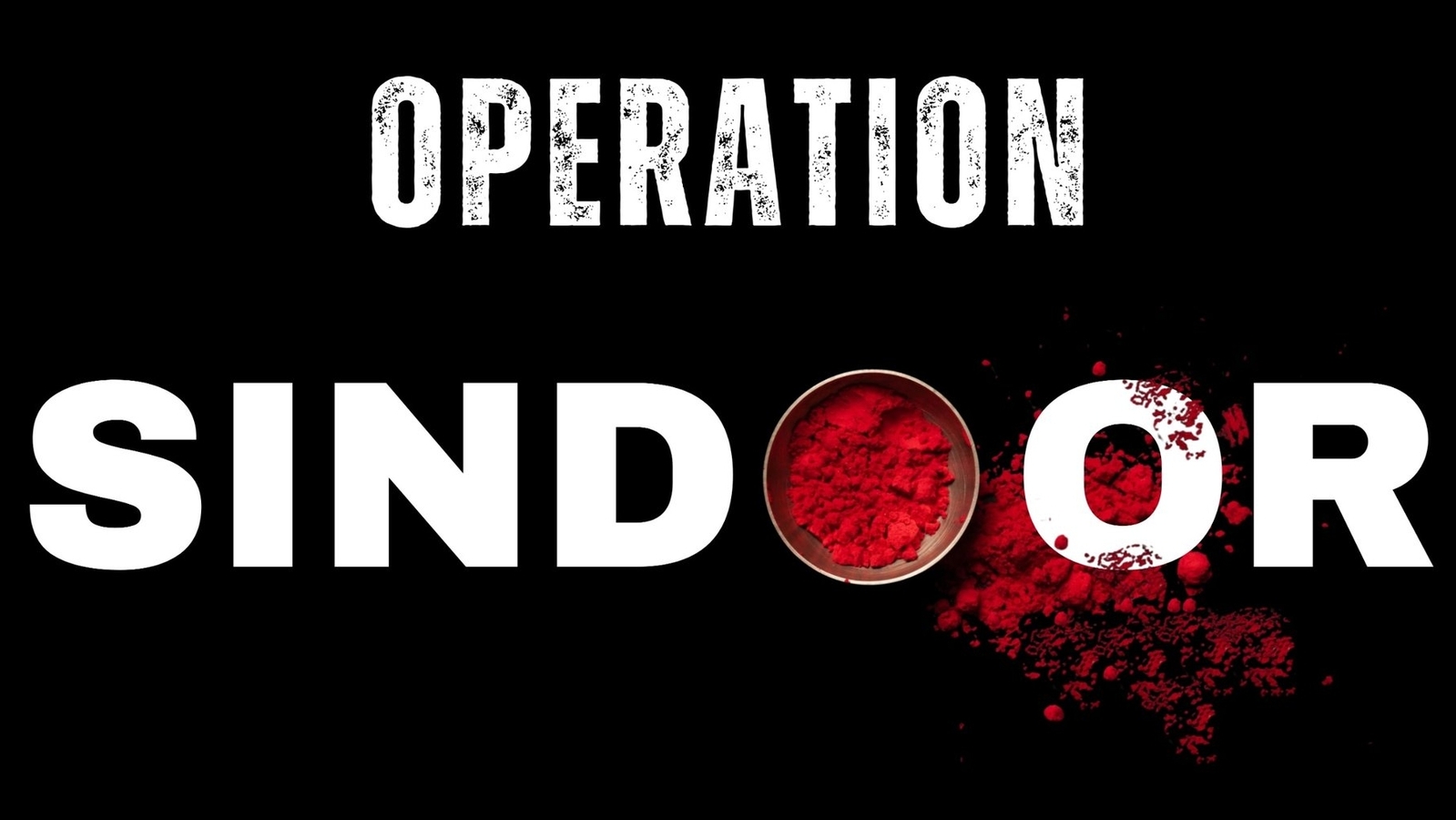
 New Delhi, May 7, 2025 – In a landmark press conference this morning, senior officials from the Ministry of Defence and the Indian Armed Forces provided a detailed debrief on Operation Sindoor, the coordinated military response to the April 22 Pahalgam terror attack in Jammu & Kashmir’s Anantnag district. The operation, carried out at 1:44 am today, targeted nine terrorist infrastructure sites in Pakistan and Pakistan-occupied Jammu and Kashmir (PoJK), including the notorious strongholds of Lashkar-e-Taiba in Muridke and Jaish-e-Mohammed in Bahawalpur.
Key Points from the Press Briefing
1. Purpose and Justification
The Ministry reaffirmed that Operation Sindoor was launched in direct response to the Pahalgam massacre, which claimed 26 lives-25 Indians and one Nepali citizen. Officials emphasized that the operation was rooted in India’s commitment to hold the perpetrators and masterminds of cross-border terrorism accountable.
2. Targets and Execution
The Indian armed forces executed 24 precision missile strikes on nine high-value terror targets, focusing exclusively on infrastructure directly linked to terrorist planning and operations against India. The sites were selected based on cumulative intelligence, including technical inputs, survivor testimony, and satellite imagery. No Pakistani military, civilian, or economic facilities were targeted, underscoring the operation’s measured and non-escalatory nature.
3. Operational Details
Operation Sindoor was a tri-services mission, with the Army, Navy, and Air Force jointly deploying advanced precision weaponry, including kamikaze drones (loitering munitions) and stand-off missiles. The strikes were coordinated to maximize impact on the operational capabilities of Lashkar-e-Taiba and Jaish-e-Mohammed, with initial assessments indicating over 70 terrorists killed and more than 60 wounded.
4. Restraint and Escalation Control
Defence officials highlighted India’s restraint in both target selection and method of execution. The operation was described as “focused, measured, and non-escalatory,” with every effort made to avoid civilian casualties or damage to non-terror infrastructure. The Ministry stressed that India’s actions were responsible and in line with international norms.
5. National and International Coordination
Prime Minister Narendra Modi monitored the operation throughout the night, while Defence Minister Rajnath Singh remained in close contact with all three service chiefs. National Security Advisor Ajit Doval briefed key international partners, including US officials, immediately after the strikes. The Indian Embassy in Washington reiterated that India had credible evidence of Pakistan-based involvement in the Pahalgam attack, and that all diplomatic channels were kept informed to ensure transparency.
6. Civil Defence and Preparedness
Coinciding with the operation, the government announced a nationwide security mock drill across 244 districts to test and strengthen civil defence mechanisms against potential hostile attacks. This is the largest such exercise since 1971, reflecting the government’s commitment to public safety and preparedness.
7. Response to Pakistani Actions
The Ministry also addressed reports of unprovoked ceasefire violations by the Pakistan Army in Jammu and Kashmir following the strikes, which resulted in civilian casualties on the Indian side. Officials stated that India is responding proportionately and remains vigilant against further provocations.
Who Briefed the Press on Operation Sindoor: Names, Designations, and Key Details
In the wake of Operation Sindoor, the Ministry of Defence held a high-profile press briefing to provide the nation and international community with official details on the precision strikes against terrorist infrastructure in Pakistan and Pakistan-occupied Kashmir. The briefing was notable for its transparency, the seniority of the officials present, and the inclusion of women officers at the forefront.
Who Addressed the Press?
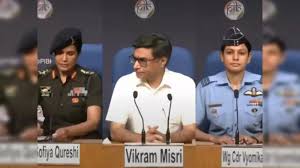
The main spokespersons at the press conference were:
- Foreign Secretary Vikram Misri
As India’s top diplomat, Vikram Misri provided the strategic and diplomatic context for the operation. He detailed the events leading up to the strikes, including the Pahalgam terror attack, and emphasized the government’s commitment to holding perpetrators accountable. Misri explained that the operation was a direct response to the killing of 25 Indian nationals and one Nepali citizen, stating, “They shot tourists in the head in front of their family members,” and underscored the necessity of dismantling the infrastructure that enabled such acts. - Colonel Sofiya Qureshi
A senior Army officer, Colonel Qureshi played a key role in briefing on the operational aspects of the strikes. She outlined the planning, target selection, and execution, emphasizing that all three branches of the armed forces participated and that the strikes were “focused, measured, and non-escalatory.” She clarified that no Pakistani military facilities were targeted and highlighted the use of precision weaponry, including kamikaze drones and stand-off missiles. - Wing Commander Vyomika Singh
Representing the Indian Air Force, Wing Commander Singh provided technical and tactical insight into the air operations. She discussed the integration of advanced air power, the role of real-time intelligence, and the coordination with Army and Navy assets. Her remarks underscored the tri-services nature of the mission and the technological sophistication involved.
Key Details Shared in the Press Meet
- The operation was a joint effort by the Army, Navy, and Air Force, targeting nine sites with a history of involvement in major terror plots.
- Strikes were carried out at 1:44 am, using precision-guided munitions from Indian territory, with no incursions into Pakistani airspace.
- Over 70 terrorists were killed and more than 60 wounded, according to initial assessments, significantly degrading the operational capability of Lashkar-e-Taiba and Jaish-e-Mohammed.
- The selection of targets was based on cumulative intelligence, technical leads, and testimony from survivors of the Pahalgam attack.
- The government reiterated its restraint and focus, with no civilian, economic, or military targets in Pakistan struck-only known terror camps.
- The press conference also highlighted the nationwide security mock drill being conducted in parallel, reflecting the government’s commitment to civil defence and preparedness.
The Significance of the Briefing
This press conference was notable for the inclusion of two senior women officers-Colonel Sofiya Qureshi and Wing Commander Vyomika Singh-demonstrating the increasing leadership roles of women in India’s defence establishment. The presence of Foreign Secretary Vikram Misri underscored the operation’s diplomatic and strategic dimensions, ensuring that both domestic and international audiences received a clear, unified message.
The officials’ statements reflected a coordinated, transparent approach, designed to reassure the public, deter further aggression, and communicate India’s resolve to the global community.
Strategic Significance
Operation Sindoor marks the most significant retaliatory action by India since the 2019 Balakot airstrikes, demonstrating a new level of precision, jointness, and restraint. By focusing exclusively on terror infrastructure and avoiding military escalation, India has sent a clear message: the country will pursue justice for its citizens and hold those responsible for cross-border terrorism to account, while acting within the bounds of international law.
Looking Ahead
The Ministry of Defence concluded the briefing by reiterating India’s resolve to pursue the perpetrators of the Pahalgam attack “to the ends of the earth” and to continue degrading the capabilities of terror groups operating from across the border. Officials indicated that further updates would be provided as more information becomes available from ongoing assessments and intelligence gathering.
As the nation observes heightened security and preparedness, the government called for unity and vigilance, assuring citizens that every measure is being taken to safeguard India’s sovereignty and security.