


 Eleanor Thompson
 In a historic and highly controversial move, New Zealand’s Parliament has handed down its harshest-ever penalties to three Te Pāti Māori MPs for performing a haka protest on the chamber floor. The unprecedented suspensions and censure have ignited fierce debate over the boundaries of protest, cultural expression, and parliamentary order in Aotearoa.
The Protest: Haka Against the Treaty Principles Bill
The incident at the heart of the controversy occurred during the first reading of the contentious Treaty Principles Bill, which proposes to redefine the legal interpretation of the Treaty of Waitangi, New Zealand’s founding document. The bill, backed by the ACT Party and the government, has been widely criticised by Māori leaders and opposition parties as a threat to Māori rights and constitutional stability.
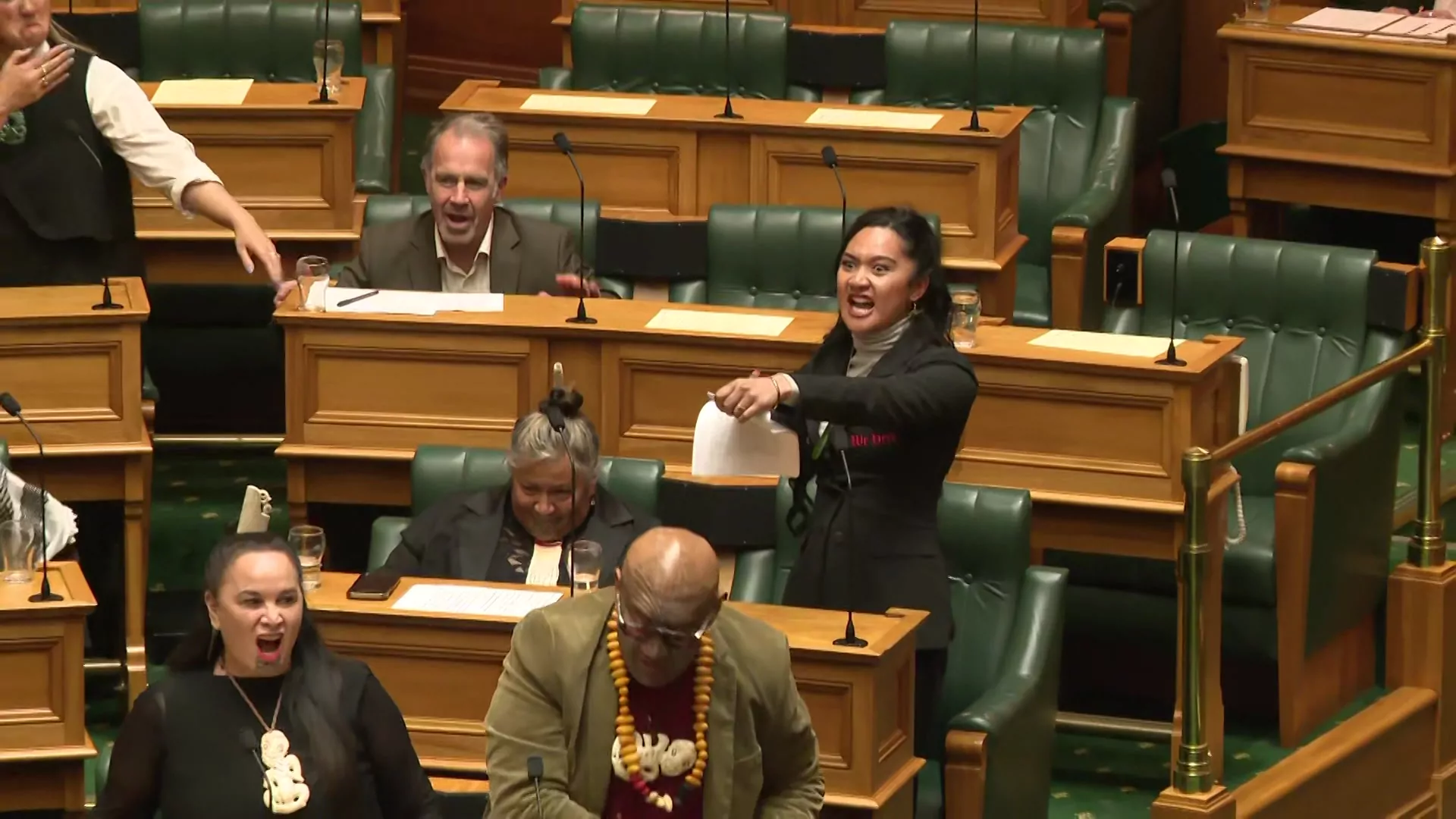
During the debate, Te Pāti Māori co-leaders Rawiri Waititi and Debbie Ngarewa-Packer, along with MP Hana-Rāwhiti Maipi-Clarke, crossed the chamber and performed a haka-a traditional Māori dance of challenge-directed at ACT MPs. The act was a dramatic protest against what they described as an assault on Māori rangatiratanga (self-determination) and Treaty protections.
The Committee’s Ruling: Intimidation and Contempt
The Privileges Committee, comprising members from all political parties, found that the MPs’ actions constituted contempt of Parliament. The committee concluded that the haka, performed in the manner and at the time it was, could have intimidated other MPs and disrupted the voting process-a fundamental part of parliamentary democracy.
- Rawiri Waititi and Debbie Ngarewa-Packer were recommended for 21-day suspensions, the longest in New Zealand’s parliamentary history.
- Hana-Rāwhiti Maipi-Clarke received a 7-day suspension, reduced after she expressed contrition in a letter to the Speaker for the impact of her actions.
The committee’s report stressed that the punishment was not for performing the haka itself-a cherished and respected part of New Zealand’s cultural life-but for the timing and manner, which interrupted a parliamentary vote and physically approached other members in a way deemed potentially intimidating.
The Response: Outrage, Defiance, and Accusations of Injustice
The penalties have been condemned by Labour, Green, and Māori Party MPs as grossly unjust and excessive. Critics argue that the suspensions will deprive Māori constituencies of representation during critical parliamentary business, including the upcoming Budget debate, and set a dangerous precedent for the treatment of indigenous protest in the House.
Te Pāti Māori leaders have remained defiant, refusing to appear before the committee and denouncing the process as “grossly unjust, unfair, and unwarranted.” They argue that the findings perpetuate institutional racism and that labelling their protest as intimidation frames Māori cultural expression as inherently threatening.
“They can suspend our MPs, but they can’t suspend our movement,” said Māori Party MP Mariameno Kapa-Kingi.
The Government’s Position: Maintaining Order and Respect
Committee chair Judith Collins defended the decision, calling it a sad but necessary day for Parliament. She emphasised that the right to cast a vote without intimidation is fundamental to democracy and that all MPs must respect the rules of the House, regardless of their cause or cultural background.
“It is an absolute privilege to do that job. That is why to try and stop and interrupt a vote of Parliament while members of Parliament are trying to cast their votes in a debate is an extremely serious matter. We have not done this lightly,” Collins said.
The government’s three-party majority is expected to affirm the suspensions in a formal vote, making the penalties official.
The Wider Impact: Cultural Expression and Parliamentary Protocol
This unprecedented disciplinary action has triggered a national conversation about the place of Māori protest and cultural expression in New Zealand’s highest decision-making body. Many Māori see the punishment as a warning against indigenous resistance and a chilling signal that expressions of rangatiratanga are unwelcome if they disrupt colonial norms.
Supporters of the MPs point out that haka is regularly used in international diplomacy and national events to showcase New Zealand’s unique identity, and argue that Parliament should be no different. The committee, however, maintains that the issue was not the haka itself, but the disruption of parliamentary proceedings and the manner in which the protest was conducted.
What Happens Next?
- The suspensions will take effect after a parliamentary vote, with the MPs losing pay and being barred from the chamber for the duration.
- The Māori Party has vowed to continue its movement outside Parliament, insisting that their voices-and those of their communities-will not be silenced.
- The debate over the Treaty Principles Bill and the rights of Māori in New Zealand’s democracy is far from over, with the issue now gaining global attention.
Summary
The unprecedented punishment of Te Pāti Māori MPs for their haka protest marks a defining moment for New Zealand’s Parliament. It raises difficult questions about the balance between order and protest, the role of indigenous culture in national institutions, and the future of Māori–Crown relations. As the suspensions take effect and the debate continues, the country faces a critical test of its commitment to both democratic principles and cultural respect.