 Eleanor Thompson
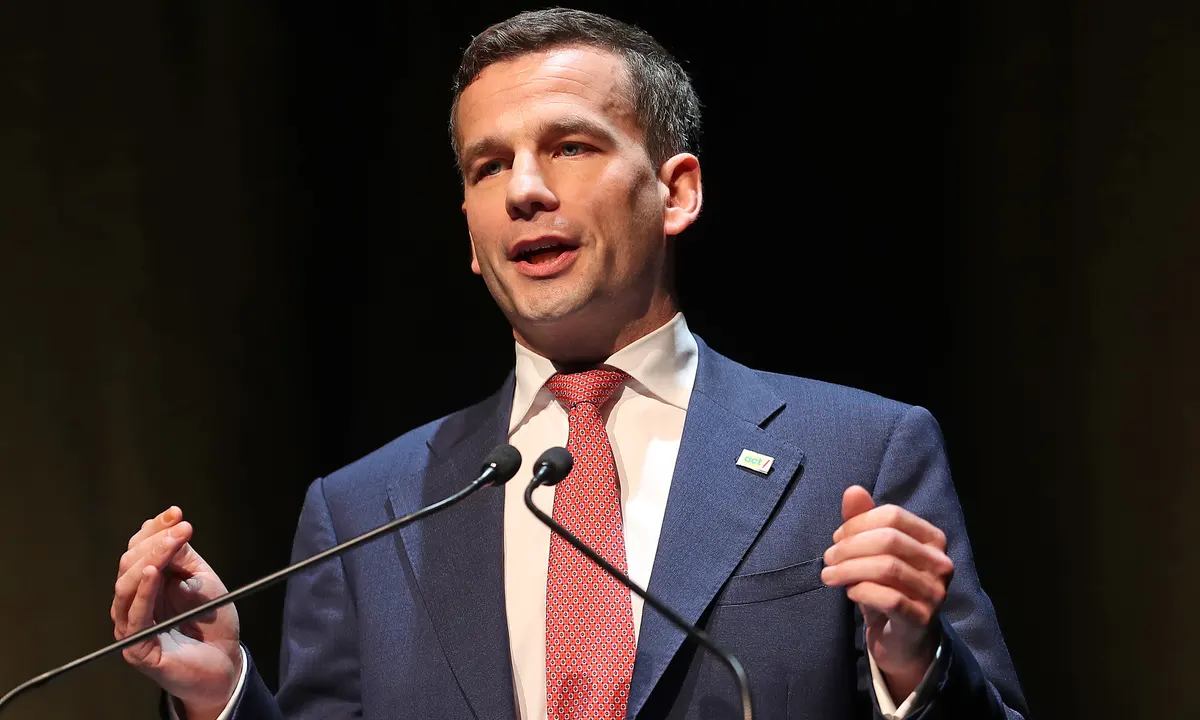
 On 31 May 2025, David Seymour was sworn in as New Zealand’s Deputy Prime Minister, succeeding Winston Peters in a carefully choreographed ceremony at Government House in Auckland. For Seymour, leader of the ACT Party and long-serving MP for Epsom, this moment marked both a personal milestone and a transformative chapter for his party. For New Zealand, it signalled a new era in coalition government, with the ACT Party’s influence now firmly entrenched at the heart of executive power.
The Journey to Deputy Prime Minister
David Seymour’s political ascent is a story of resilience, conviction, and strategic vision. Born in 1983 in Whangārei, Seymour attended Auckland Grammar and later graduated from the University of Auckland with degrees in electrical engineering and philosophy. His early career took him to Canada, where he worked as a policy analyst for think tanks, before returning home to pursue politics.
Seymour’s first foray into electoral politics was in 2005, running against then-Prime Minister Helen Clark. It wasn’t until 2014, however, that he entered Parliament, winning the Epsom seat and immediately taking on the leadership of a party that had been reduced to a single MP. Over the next decade, Seymour rebuilt ACT from the ground up, transforming it from a marginal player to a formidable force with 11 MPs and a seat at the Cabinet table.
The Coalition Context
Seymour’s elevation to Deputy Prime Minister is the result of a unique coalition arrangement between National, ACT, and New Zealand First. Following the 2023 general election, coalition negotiations produced a power-sharing agreement: Winston Peters would serve as Deputy Prime Minister for the first half of the parliamentary term, with Seymour taking over for the second. This arrangement reflects the delicate balance of influence within the coalition and the growing clout of ACT.
The position itself, while often described as ceremonial, carries significant symbolic and practical weight. The Deputy Prime Minister acts as the government’s second-in-command, stepping in when the Prime Minister is unavailable and providing leadership in key portfolios. For Seymour, the role is both an acknowledgement of ACT’s rise and a platform to advance his party’s agenda.
Seymour’s Political Philosophy and Priorities
David Seymour is widely recognised as a principled advocate for classical liberalism. He champions individual freedom, personal responsibility, small government, and robust debate. His tenure in Parliament has been marked by a willingness to take unpopular stands, most notably his successful campaign for the End of Life Choice Act, which legalised assisted dying after a national referendum.
Seymour’s approach to government is characterised by a relentless focus on efficiency, accountability, and fiscal prudence. He has consistently argued that government spending should be restrained, with resources redirected to areas that drive productivity and long-term growth. In his recent Budget Day speech, Seymour emphasised the need to “return to surplus and pay down debt,” warning against the dangers of burdening future generations with unsustainable fiscal commitments.
Education and regulation are two areas where Seymour has sought to leave a lasting mark. As Associate Minister of Education, he has advocated for greater parental choice, support for private schools, and a reduction in bureaucratic red tape. As Minister for Regulation, he has pushed for a new approach to lawmaking, one that prioritises transparency and minimises unnecessary restrictions on businesses and individuals.
The Treaty Principles Debate
Perhaps the most contentious aspect of Seymour’s recent political career has been his stance on the Treaty of Waitangi. ACT’s Treaty Principles Bill, which sought to redefine the principles of the Treaty in law and remove references to partnership or co-governance, sparked intense debate and widespread protest. The bill received more than 300,000 public submissions and prompted a large-scale hīkoi to Parliament.
Supporters of the bill argued that it was a necessary step towards equal rights for all New Zealanders, while critics saw it as an attempt to undermine Māori rights and the foundational role of the Treaty in New Zealand’s constitutional framework. Ultimately, the bill was defeated in Parliament, but the debate it ignited continues to shape the national conversation about identity, justice, and the future of biculturalism.
Leadership Style and Public Persona
Seymour’s leadership style is direct, unapologetic, and often provocative. He has built a reputation as a straight talker, unafraid to challenge orthodoxy or confront political opponents. This approach has earned him both admirers and detractors. To his supporters, Seymour is a breath of fresh air—principled, articulate, and willing to stand alone when necessary. To his critics, he can appear combative and ideologically rigid.
Despite the polarising nature of his politics, Seymour has demonstrated an ability to build consensus on key issues. His work on the End of Life Choice Act, for example, required cross-party collaboration and extensive public engagement. He has also shown a pragmatic streak in coalition negotiations, securing significant policy wins for ACT while maintaining the stability of the government.
The ACT Party’s Rise
The story of Seymour’s rise is inseparable from the resurgence of the ACT Party. When he took over the leadership in 2014, ACT was widely regarded as a spent force, its support base eroded and its relevance questioned. Through a combination of grassroots organising, clear messaging, and relentless campaigning, Seymour rebuilt the party’s profile.
ACT’s appeal has broadened beyond its traditional base of small business owners and classical liberals. The party has attracted support from farmers, firearm owners, and voters disillusioned with the major parties. Its emphasis on free speech, regulatory reform, and fiscal responsibility has resonated in an era of political volatility and economic uncertainty.
The 2023 general election was a watershed moment. ACT secured 8.64 percent of the popular vote and 11 seats in Parliament, its best result ever. This success translated into real influence at the Cabinet table, with Seymour and his colleagues taking on significant ministerial portfolios.
Challenges and Opportunities Ahead
As Deputy Prime Minister, Seymour faces a series of complex challenges. The coalition government is navigating a period of economic headwinds, with inflationary pressures, public sector demands, and global uncertainty testing the limits of fiscal discipline. Seymour’s insistence on savings and efficiency will be put to the test as the government seeks to balance competing priorities.
The debate over the Treaty of Waitangi and the future of biculturalism remains unresolved. Seymour’s position has energised supporters but also mobilised significant opposition. How he manages this issue in his new role will be closely watched by both allies and critics.
Within the coalition, Seymour must balance the need for assertiveness with the imperative of unity. The Deputy Prime Minister’s role is, by tradition, one of support and stability. Seymour’s instinct for straight talk and ideological clarity may at times clash with the demands of coalition management and collective responsibility.
Seymour’s Influence on Government Machinery
Beyond the headlines, Seymour’s influence is being felt in the machinery of government. As Minister for Regulation, he has secured a key procedural change: ministries are now required to consult the Ministry of Regulation at the earliest stages of policymaking. This shift gives Seymour and his team unprecedented access to the development of new regulations, allowing ACT to shape policy from the ground up.
This behind-the-scenes power may prove more consequential than the ceremonial aspects of the Deputy Prime Ministership. By embedding ACT’s philosophy into the regulatory process, Seymour is positioning his party as a long-term force in government, with the ability to influence outcomes across a wide range of portfolios.
Public Perception and Media Relations
Seymour’s relationship with the media has been marked by both engagement and confrontation. He has maintained a high public profile, frequently appearing in interviews and debates. At the same time, he has boycotted certain programmes, citing concerns about bias and treatment. This selective approach to media engagement reflects his broader strategy: control the narrative, stay on message, and speak directly to supporters.
Public opinion on Seymour is divided. Some see him as a necessary disruptor, challenging complacency and demanding accountability. Others view him as a polarising figure, whose uncompromising style risks deepening divisions. As Deputy Prime Minister, Seymour will need to navigate these perceptions while remaining true to his core convictions.
Policy Achievements and Legislative Legacy
Seymour’s legislative record is notable for both its ambition and its impact. The End of Life Choice Act stands as a landmark achievement, reflecting his commitment to personal autonomy and compassionate policy. His efforts in education have focused on increasing choice, improving standards, and reducing unnecessary regulation.
In the realm of fiscal policy, Seymour has championed savings and efficiency. His recent drive to identify public sector savings freed up $115 million annually, contributing to a broader effort that saved $5.3 billion overall. These achievements underscore his belief in prudent management and the responsible use of public funds.
Seymour’s approach to regulation is similarly reformist. He has argued that excessive red tape stifles innovation and productivity, and has worked to streamline processes across government. The passage of the Regulatory Standards Bill is a testament to this philosophy, aiming to ensure that new regulations are justified, transparent, and subject to rigorous scrutiny.
The Road Ahead: Vision and Goals
As he takes up the mantle of Deputy Prime Minister, Seymour has outlined a vision centred on growth, opportunity, and empowerment. He has pledged to continue speaking freely, representing the concerns and aspirations of ordinary New Zealanders. His priorities include:
- Strengthening the economy through lower taxes, reduced spending, and targeted investment in productivity.
- Reforming education to ensure choice, quality, and accountability.
- Streamlining regulation to unleash innovation and reduce compliance costs.
- Upholding individual rights and freedoms, including free speech and equal treatment under the law.
- Ensuring that government remains accountable, transparent, and responsive to the needs of all citizens.
Seymour’s challenge will be to translate these principles into practical outcomes, working within the constraints of coalition government and the realities of a diverse, changing society.
Reflections on Leadership and Legacy
David Seymour’s journey from a lone MP to Deputy Prime Minister is a testament to the power of perseverance, clarity of purpose, and strategic acumen. He has reshaped the ACT Party, expanded its influence, and positioned himself as a key player in New Zealand’s political landscape.
His leadership is defined by a willingness to confront difficult issues, a commitment to principle, and a belief in the capacity of individuals and communities to shape their own destinies. As he embarks on this new chapter, Seymour faces both high expectations and significant scrutiny.
The coming years will test his ability to balance conviction with pragmatism, to lead both his party and the country through a period of change and challenge. The legacy he leaves will depend not only on the policies he champions but on his capacity to unite, inspire, and deliver for all New Zealanders.
Looking Forward
David Seymour’s appointment as Deputy Prime Minister marks a turning point for New Zealand politics. It reflects the maturation of the ACT Party, the evolving dynamics of coalition government, and the enduring appeal of principled, articulate leadership. As Seymour steps into this role, the nation watches with anticipation—aware that the decisions made in the coming months and years will shape the course of New Zealand’s future.
His story is, in many ways, a microcosm of New Zealand’s own journey: a blend of tradition and innovation, debate and consensus, challenge and opportunity. Whether one agrees with his politics or not, David Seymour’s rise is a reminder that in New Zealand, determination, vision, and hard work can still take you to the very top.