





 Eleanor Thompson
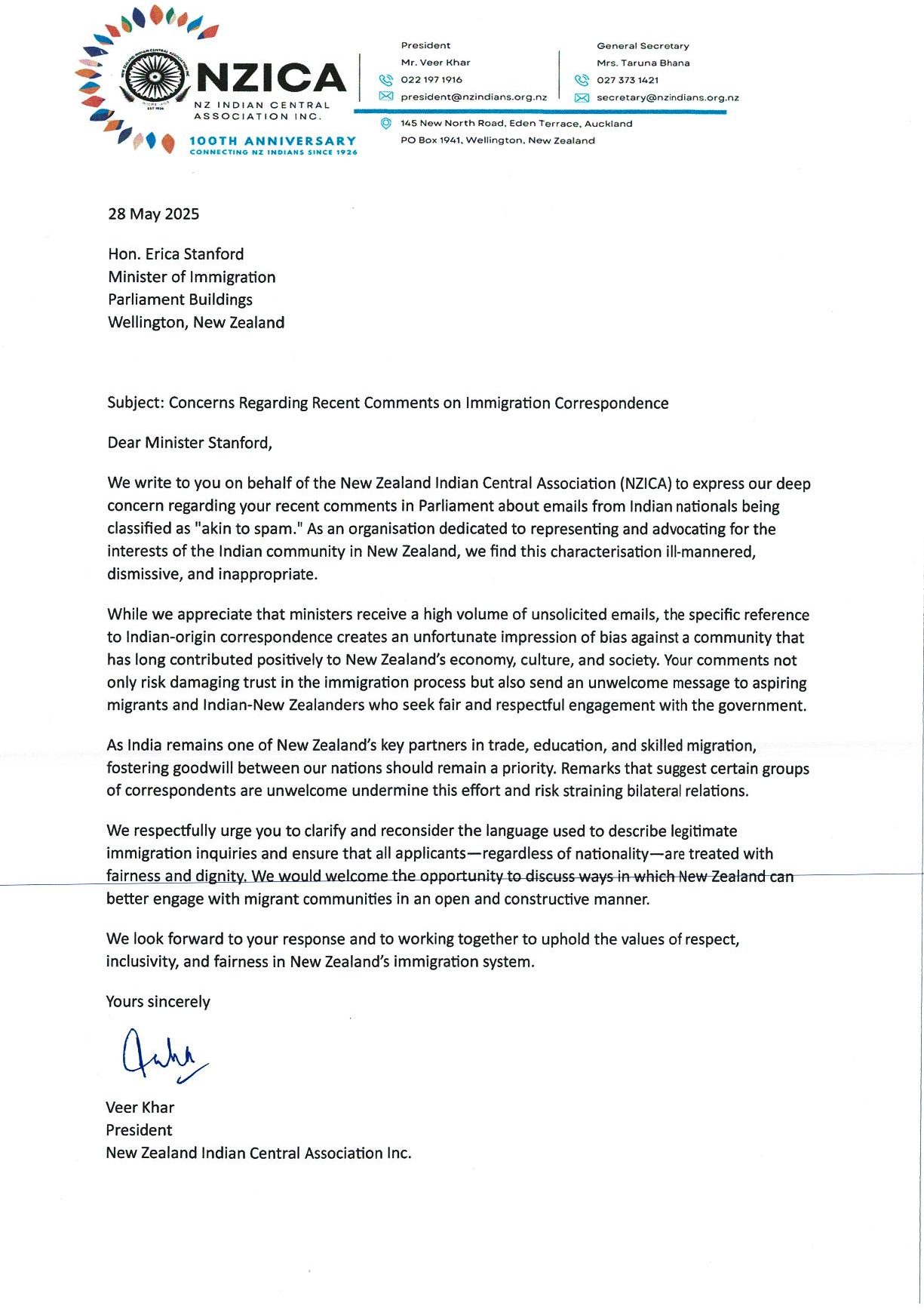
 A recent letter addressed to Hon. Erica Stanford, Minister of Immigration, has brought to light growing concerns within New Zealand’s migrant and ethnic communities regarding immigration policy, communication, and ministerial conduct.
The letter, sent in the wake of public controversy over comments made by Minister Stanford in Parliament, reflected the deep unease felt by many following her remarks likening unsolicited emails from Indian nationals seeking immigration advice to “spam.” The comments, which drew widespread criticism both domestically and internationally, prompted leaders from the New Zealand Indian Central Association and other community representatives to formally express their disappointment and urge the Minister to reconsider her approach.
In the letter, community leaders highlighted the positive contributions of Indian migrants to New Zealand’s economy, culture, and society, and emphasised the importance of respectful engagement from government officials. They described the Minister’s reference to Indian-origin correspondence as “ill-mannered, dismissive and inappropriate,” warning that such characterisations risked damaging trust in the immigration process and sending an unwelcome message to both aspiring migrants and established Indian-New Zealanders.
The correspondence also raised broader issues about implicit and explicit bias within immigration decision-making. Community advocates noted that when negative stereotypes are perpetuated at the highest levels, they can influence frontline immigration officials and shape policy outcomes in ways that disadvantage certain groups. The letter called for greater sensitivity and fairness, urging the Minister to ensure that all applicants are treated with respect and that the immigration system remains transparent and equitable.
Beyond the immediate controversy, the letter addressed ongoing concerns about recent changes to immigration policy, including the tightening of health requirements for dependent children of temporary visa holders and modifications to the Accredited Employer Work Visa scheme. Community leaders requested more robust consultation with affected groups and clearer communication around policy changes, arguing that a “one-size-fits-all” approach fails to account for the diverse needs and circumstances of migrants.
The letter also echoed calls from other sectors, such as hospitality and legal advocacy groups, for the Minister to prioritise transparency, consistency, and responsiveness in immigration policy. Suggestions included providing settlement information in multiple languages to prevent exploitation, streamlining visa processing, and ensuring that policy development follows proper procedures and includes meaningful stakeholder input.
In response to the letter and the broader backlash, Minister Stanford publicly expressed regret for her earlier remarks, clarifying that she had not intended to single out any particular country and acknowledging the hurt caused. However, community leaders have continued to press for assurances that future engagement will be more inclusive and respectful.
The episode has underscored the vital role of open dialogue between government and migrant communities in maintaining trust and ensuring that New Zealand’s immigration system remains fair, effective, and welcoming. As the country navigates ongoing changes to migration policy and responds to evolving economic and social needs, the voices of community leaders and advocates will remain essential in shaping a system that reflects New Zealand’s values of diversity, respect, and opportunity for all.




























Good