





 Vincent Mathews
 Japan’s ambitious lunar exploration program faced another setback on June 5, 2025, when the private spacecraft Resilience, operated by Tokyo-based ispace, crash-landed during its attempt to touch down on the Moon. This mission, known as Hakuto-R Mission 2, was not only a crucial test for Japan’s private space sector but also carried the distinction of transporting Europe’s first lunar rover. The hard landing marks the second consecutive failure for ispace, following the crash of its first lunar lander in 2023. The event has reignited discussions about the challenges of lunar exploration, the rise of commercial space ventures, and the path forward for Japan’s lunar ambitions.
The Mission: Hakuto-R Mission 2 and the Resilience Spacecraft
Background and Objectives
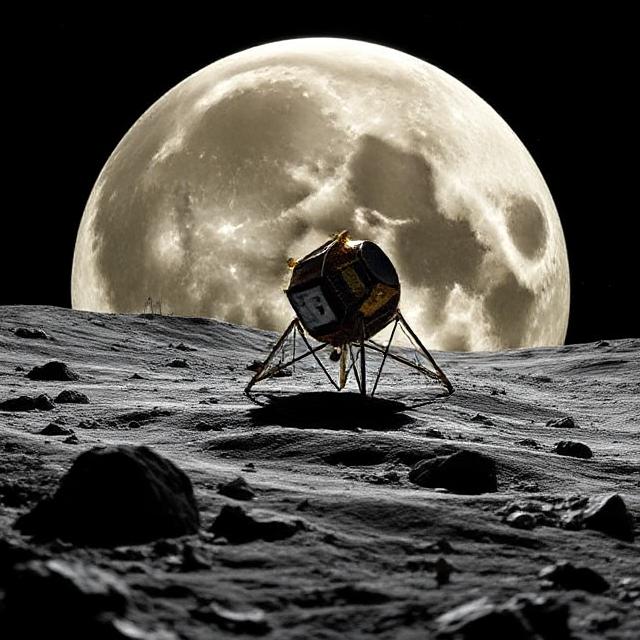
Hakuto-R Mission 2 was designed as a demonstration of ispace’s capability to deliver payloads to the lunar surface. The Resilience lander stood 2.3 meters tall and weighed about 1,000 kilograms when fully fueled. Its primary objective was to achieve a soft landing in the Mare Frigoris region—known as the “Sea of Cold”—on the Moon’s near side. The mission was to deliver multiple payloads, most notably “Tenacious,” the first European-built lunar rover, among several other scientific instruments and commercial cargo.
Trajectory and Approach
Launched in January 2025 from Florida aboard a SpaceX rocket, Resilience took a longer, energy-efficient trajectory to the Moon, including a close lunar flyby on February 14. The spacecraft entered lunar orbit on May 6 and spent several weeks performing maneuvers to position itself in a stable, circular orbit about 100 kilometers above the lunar surface. The landing site, Mare Frigoris, was chosen for its relatively unexplored terrain and scientific value.
The Landing Attempt: Sequence of Events
Descent and Loss of Contact
On June 6, 2025, at 3:13 a.m. Japan Standard Time, mission controllers at ispace’s Tokyo headquarters initiated the landing sequence. The lander began its descent from 100 kilometers altitude, firing its main engine to decelerate and orient itself nearly vertically for touchdown. Everything appeared nominal as the lander dropped to about 20 kilometers above the surface and continued its controlled descent.
However, about one minute and 45 seconds before the scheduled landing, telemetry data from Resilience abruptly ceased. The last confirmed data showed the lander at approximately 192 meters above the surface, descending faster than planned. Despite attempts to reestablish communication—including sending a reboot command—ground control was unable to regain contact.
Mission Control’s Response
ispace’s mission team analyzed the available telemetry and concluded that the spacecraft likely performed a “hard landing,” meaning it crashed into the lunar surface at a speed too high for survival. The company’s live webcast ended abruptly after the loss of contact, and a press conference hours later confirmed the mission’s failure.
Technical Analysis: What Went Wrong?
Sensor and Deceleration Issues
Preliminary analysis by ispace engineers revealed that the lander’s laser rangefinder, responsible for measuring the distance to the lunar surface, experienced delays in obtaining valid data. This caused the lander’s guidance system to misjudge its altitude, resulting in insufficient deceleration during the final moments of descent. As a result, Resilience impacted the surface at a velocity far exceeding the threshold for a safe landing.
Comparison with Previous Failures
This failure echoed the company’s first lunar landing attempt in April 2023, when the original Hakuto-R lander also crashed after losing contact during descent. In both cases, the spacecraft’s onboard systems failed to accurately interpret its position and speed relative to the lunar surface, highlighting the persistent challenges of autonomous lunar landing.
The Payload: Europe’s First Lunar Rover and Other Experiments
Tenacious: The European Lunar Rover
Among the most significant payloads lost in the crash was Tenacious, the first lunar rover built in Europe. The rover was designed to demonstrate mobility and scientific operations in the Moon’s harsh environment, paving the way for future European missions.
Other Scientific and Commercial Payloads
The lander also carried a suite of scientific instruments and commercial cargo, including technology demonstrations, lunar dust analysis tools, and data collection devices for future lunar infrastructure. The loss of these payloads represents a setback for multiple international partners and customers who had invested in the mission.
The Broader Context: Private Lunar Exploration and Global Competition
Rise of Private Lunar Ventures
The ispace missions are part of a global wave of private lunar exploration that began with Israel’s Beresheet lander in 2019. Like ispace, Beresheet failed during its landing attempt, underscoring the technical difficulty of soft-landing on the Moon. The commercial lunar sector has since grown rapidly, with companies from the United States, India, and other nations joining the race to provide lunar delivery services.
Japan’s Lunar Ambitions
Japan has made significant strides in lunar exploration. In January 2024, the Japan Aerospace Exploration Agency (JAXA) successfully landed its SLIM (“Smart Lander for Investigating Moon”) spacecraft, albeit upside down. The SLIM lander survived two lunar nights, demonstrating resilience in the face of adversity. The ispace missions, however, represent Japan’s push to establish a commercial foothold in lunar logistics and resource utilization.
Industry and Public Reactions
Statements from ispace
Takeshi Hakamada, founder and CEO of ispace, expressed regret and determination in the wake of the crash: “We have to take seriously what happened. Our top priority is to swiftly analyze the telemetry data and identify the cause. We will strive to restore trust by providing a report of the findings to our shareholders, payload customers, partners, government officials, and all supporters of ispace.”
Expert Perspectives
Space analysts note that failures are an expected part of lunar exploration, especially for new entrants and private companies. Each unsuccessful attempt provides critical data for improving hardware and software, refining landing algorithms, and training mission teams. The fact that Resilience came within 200 meters of the surface before losing contact is seen as a sign of progress, despite the crash.
The Challenges of Lunar Landing
Technical Obstacles
Soft-landing on the Moon remains one of the most demanding feats in space exploration. The lack of atmosphere means no aerodynamic braking is possible, requiring precise thruster control and real-time altitude measurement. Even minor errors in navigation or sensor data can result in catastrophic failure.
Autonomy and AI
Modern lunar landers rely heavily on autonomous systems and artificial intelligence to process sensor data and make split-second decisions during descent. The Resilience mission’s failure highlights the need for robust redundancy and error correction in these critical systems.
The Road Ahead: Lessons Learned and Future Prospects
ispace’s Next Steps
ispace has pledged to conduct a thorough investigation into the crash and apply lessons learned to future missions. The company maintains contracts with international partners and plans to continue its lunar delivery program, with a third mission already in the planning stages.
Global Lunar Exploration
The setback for ispace comes amid renewed global interest in the Moon. NASA’s Artemis program, China’s Chang’e missions, and India’s Chandrayaan series are all advancing lunar science and technology. Private companies are increasingly seen as essential partners in building a sustainable lunar economy.
Japan’s Commitment
Despite the failure, Japan’s commitment to lunar exploration remains strong. The government and private sector are expected to continue investing in lunar technologies, with an eye toward supporting international lunar bases, resource extraction, and scientific discovery.
Summary
The crash of the Resilience lunar lander marks another challenging moment for Japan’s private space sector and the global commercial lunar industry. While the loss of the lander and its valuable payloads is a setback, each failure brings new insights and opportunities for improvement. As ispace and its partners analyze what went wrong, the lessons learned will inform the next generation of lunar missions. The pursuit of the Moon remains fraught with risk, but the determination to succeed continues to drive innovation and international collaboration in space exploration.