Lara Zijl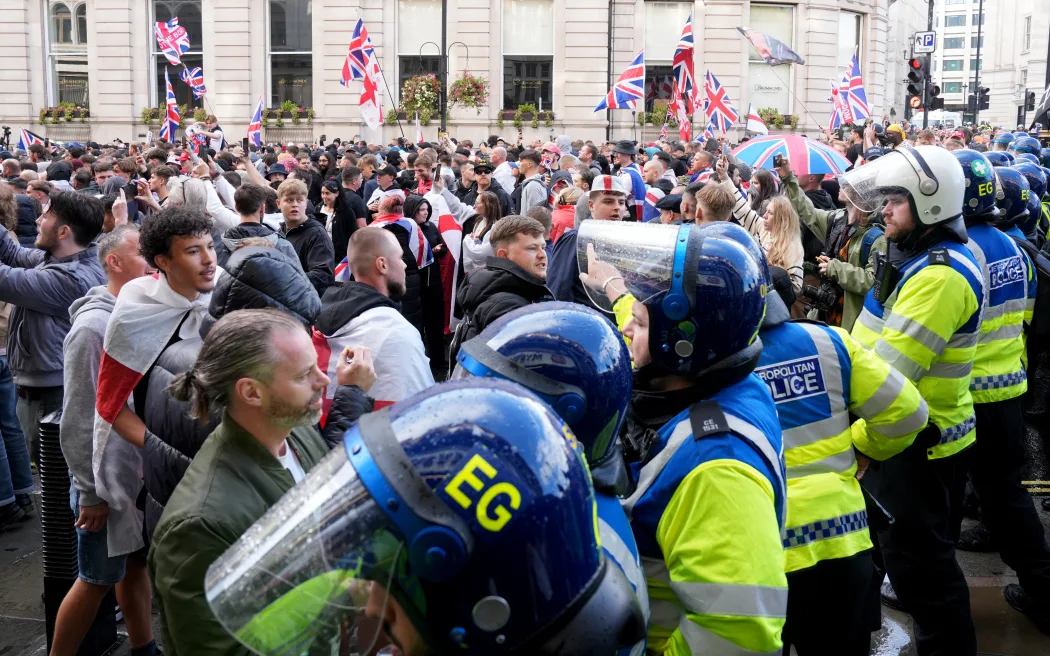
London witnessed one of its largest right-wing rallies in decades as more than 110,000 anti-immigration protesters, led by Tommy Robinson, took to the streets on Saturday in the “Unite the Kingdom” march. Scuffles with police, viral footage, and deep ironies around the movement’s message made the event a talking point across Britain and beyond.
The March: Scale, Violence, and Viral Attention
The protest saw central London filled with English and British flags, MAGA hats, and placards calling for a halt to immigration. Far-right figure Robinson extolled what he called a “tidal wave of patriotism,” while US billionaire Elon Musk delivered a speech via video link, urging regime change and stricter border controls.
Violence broke out when some protesters breached police barriers and flung bottles, flares, and projectiles at officers, injuring at least 26 police, four seriously. More than 25 arrests were made, and police said this was likely only the start as they comb through viral video evidence. The march overwhelmed Whitehall, with police admitting the crowd was “too big to fit,” despite a force of over 1,600 officers on duty.
The Irony and Social Media Uproar
A moment that quickly went viral encapsulated the irony of the day: a demonstrator railing against immigration in thick non-British-accented English, inadvertently revealing his own migrant origins while chanting “Send them home.” The video logged millions of views and sparked intense debate about identity, migration, and what it means to be British.
Commentators, including comedian Nish Kumar and multiple MPs, highlighted the contradiction—calling it “a striking portrait of modern Britain.” Others noted the diverse backgrounds of many attendees and the visible presence of non-white protesters supporting anti-immigrant rhetoric, deepening the sense of paradox.
Political and Social Reactions
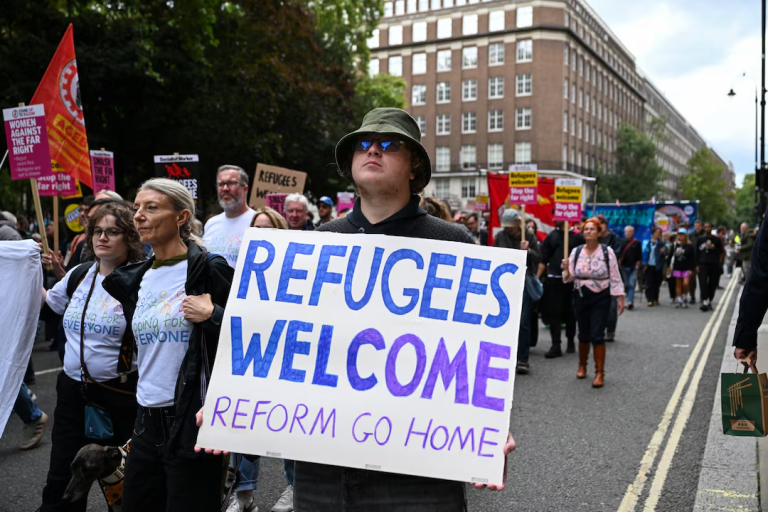
Prime Minister Keir Starmer condemned both the violence and the group’s “highly disturbing” messaging, vowing never to “surrender the flag” to the far right. Vice-mayor Sian Berry and opposition MPs spoke of the dangers of hate-mongering and misinformation, while anti-racist counter-protesters, numbering more than 5,000, gathered nearby under the “Stand Up to Racism” banner.
The rally and its viral moments spread rapidly online, featuring clips of Robinson referencing the late Charlie Kirk and echoing conspiracy theories about “replacement” and loss of national identity. Critics decried the mainstreaming of extremist rhetoric, while supporters insisted it was a defence of free speech.
Context: Immigration, Nationalism, and the ‘New’ Britishness
The protest capped a summer of divisive debate, as the UK sees record asylum claims and national anxieties about migration rise. Flags and slogans were painted across cities and towns, with both sides of the debate using broadcast and social platforms to claim the narrative.
Ultimately, the march exposed the complexity of Britain’s national conversation—where historic cosmopolitanism and deep-seated suspicion of outsiders exist side by side, sometimes within individuals themselves.
Summary
The “Unite the Kingdom” anti-immigration rally in London, marked by police clashes and an irony-laden viral video, laid bare the contradictions and passions at the heart of Britain’s immigration debate. As images from the protest sweep across social media, the event stands as an emblem of a society wrestling with identity, belonging, and the politics of exclusion.