



 Vinay Karanam
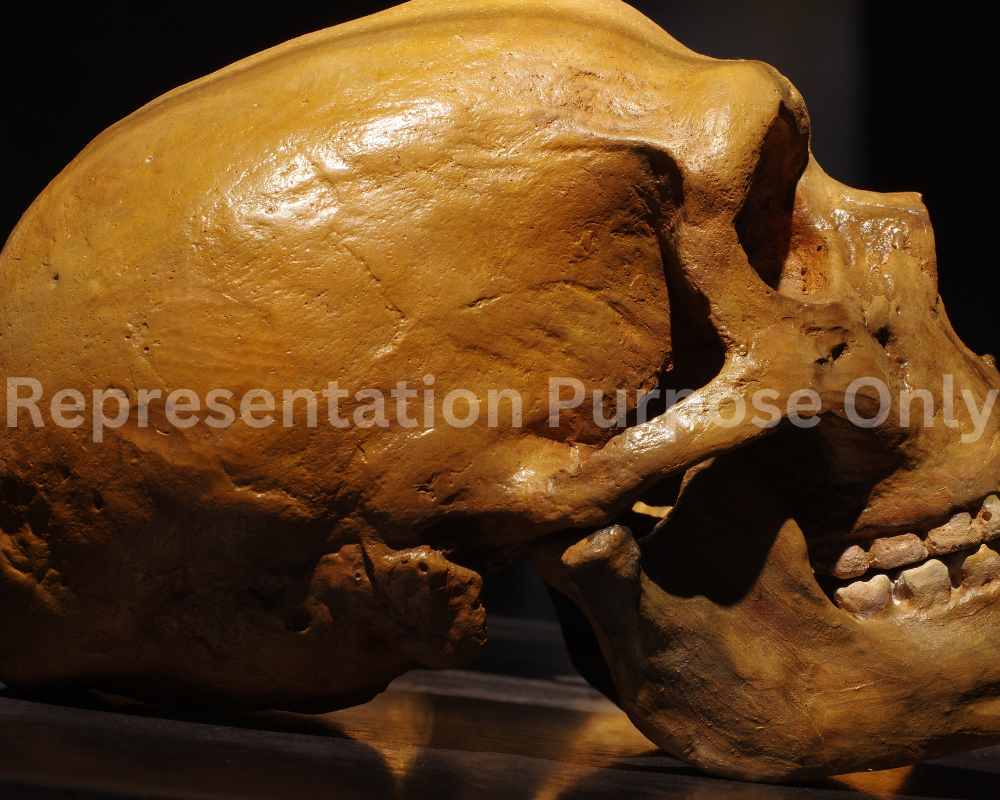
 The renowned Robert Bruce Foote Sangankal Archaeological Museum (RBFSAM) in Ballari has recently augmented its remarkable collection with a significant addition – a 3-4 lakh-year-old skull belonging to Homo Narmadensis, a pivotal find in India’s prehistoric narrative.
Discovered by the esteemed geologist late Arun Sonakia in 1982 along the banks of the Narmada River in Hathnora, this cranial segment stands as a singular relic of early human existence within the country. The acquisition of Homo Narmadensis’s skull enriches the museum’s repertoire, offering scholars a unique opportunity to delve deeper into the biological evolution of humanity.
As the sole institution in India dedicated to prehistory, the RBFSAM holds a distinctive position in the exploration of human origins. Its collection encompasses skulls that provide invaluable insights into the evolution of humankind across the globe.
This latest inclusion marks a watershed moment, as it represents the first specimen of early human presence from India within the museum’s esteemed halls. Anticipated to catalyze a resurgence in the study of prehistory within the country, this addition underscores the significance of indigenous discoveries in shaping our understanding of human evolution.
With this latest acquisition, the museum’s display now features fifteen skulls, each offering a glimpse into the intricate tapestry of human biological and cultural development. Among these are renowned specimens such as the iconic Lucy, dating back approximately 3.2 million years.
Professor Korishettar, a distinguished archaeologist instrumental in the museum’s establishment, expressed enthusiasm for the expanded collection. “Previously, our display comprised fourteen clone skulls sourced from various corners of the world,” he remarked. “Now, with the inclusion of Homo Narmadensis, we have a tangible link to India’s prehistoric heritage.”
Through engaging infographics and meticulously curated artifacts, the RBFSAM offers visitors a comprehensive exploration of human evolution, tracing its origins to approximately 3.2 million years ago. This interdisciplinary approach facilitates a deeper understanding of our shared ancestry and the myriad forces that have shaped the course of human history.
As the Robert Bruce Foote Sangankal Archaeological Museum continues to evolve, its commitment to illuminating the mysteries of human evolution remains steadfast. With each new discovery, it expands the frontiers of knowledge, inviting visitors to embark on a captivating journey through the annals of prehistory.