 Imogen King
 Zealandia News | Tuesday, 28 April 2026 | Trade & Diplomacy · Indo-Pacific Edition
Bharat | Aotearoa NZ | Historic FTA – 27 April 2026
A Deal Sixteen Years in the Making: Bharat–New Zealand FTA Signed
*From a joint feasibility study in 2007 to a landmark signing in New Delhi, the story of how two Pacific nations forged a once-in-a-generation economic compact — and the community voices that championed it every step of the way.*
By Zealandia News Staff | New Delhi / Auckland | Published 28 April 2026
Key Stats at a Glance
- NZ$3.68B – Current Two-Way Trade
- 95% – NZ Exports Tariff Relief
- 5,000 – Work Visas for Indians
- NZ$20B – Investment Commitment
- 16 Yrs – In the Making
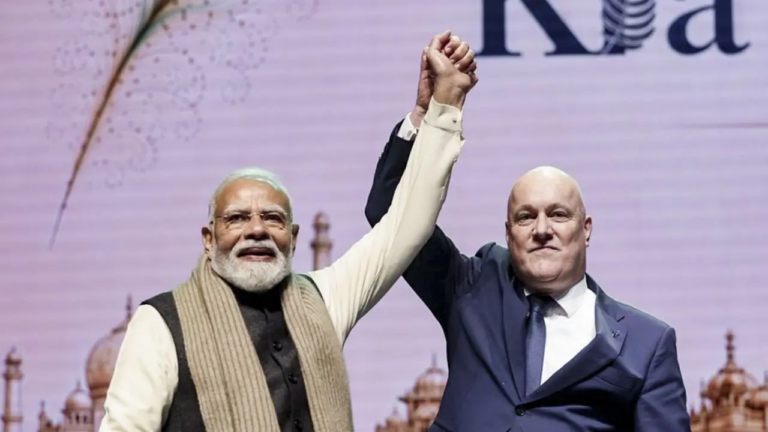
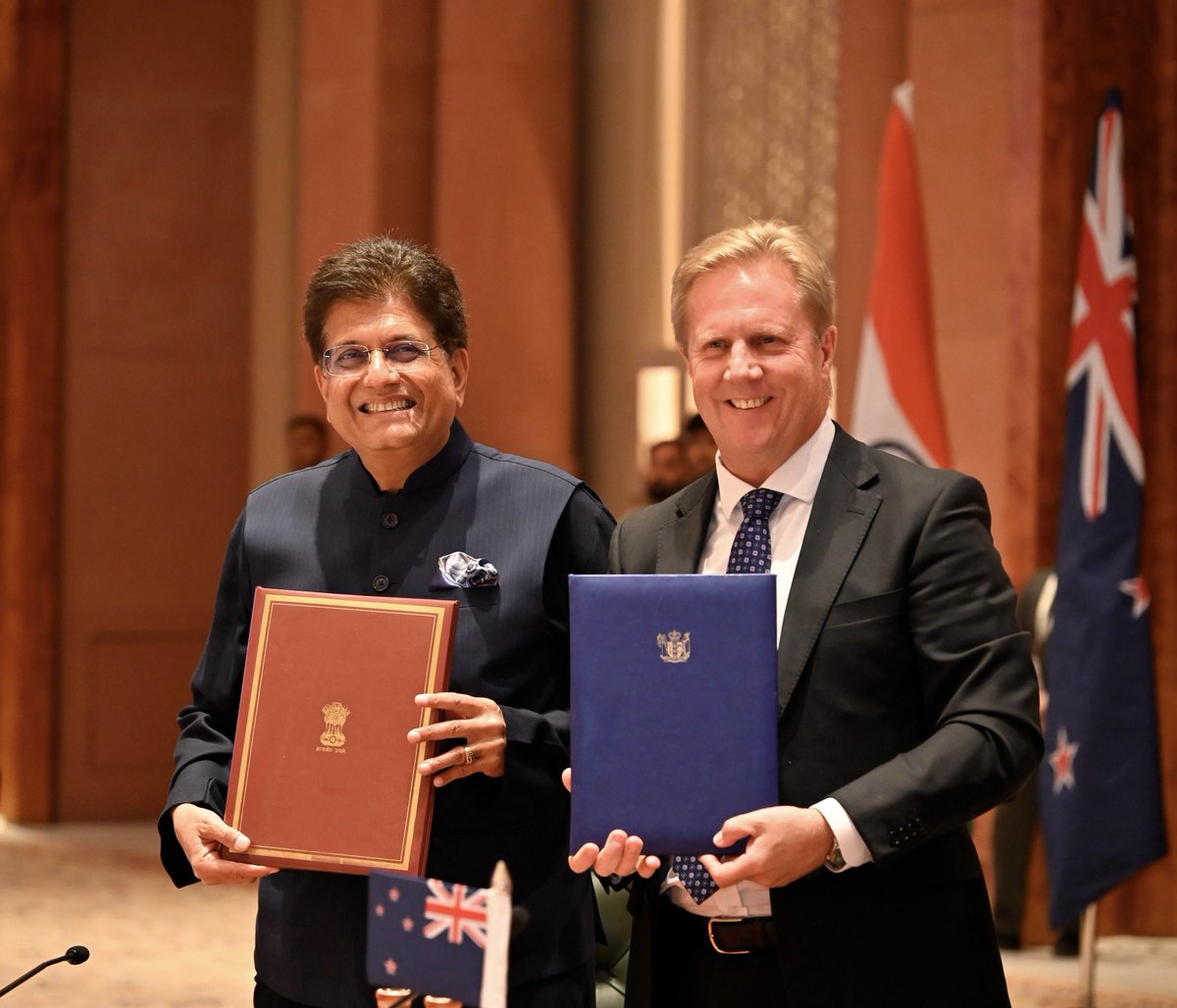
On the afternoon of Monday, 27 April 2026, in the presence of a large gathering of business leaders, diplomats, and community representatives, New Zealand Trade and Investment Minister Todd McClay and India’s Commerce and Industry Minister Piyush Goyal set pen to paper in New Delhi, completing a journey that had spanned the tenures of four New Zealand Prime Ministers, multiple rounds of stalled negotiations, and the patient advocacy of hundreds of thousands of Kiwis of Indian origin. The Bharat–New Zealand Free Trade Agreement is, by any measure, a defining moment in the bilateral relationship between Aotearoa and the world’s most populous nation.
The agreement eliminates or reduces tariffs on 95 per cent of New Zealand’s exports to India, with 57 per cent of those goods receiving duty-free access from the very first day the deal enters into force. It commits New Zealand to invest 68 billion annually, the potential is transformational.
Context: Why This Agreement Matters Now – The FTA arrives at a moment of acute global trade disruption. New Delhi has been seeking to diversify export markets, while Wellington is actively reducing its trading dependence on China. Both nations chose each other deliberately — positioning themselves for deeper integration as India’s economy accelerates towards becoming the world’s third-largest by 2030.
01. A Long Road: The Full History of Negotiations
The story of the Bharat–New Zealand FTA is, in equal measure, a story of ambition, bureaucratic patience, geopolitical timing, and — ultimately — political will. Its roots stretch back nearly two decades, through joint studies, formal rounds, an extended hiatus, a prime ministerial handshake, and a remarkable nine-month sprint to the finish line.
Timeline of Key Milestones
- 2004 — Foundation Contacts: Prime Minister Helen Clark visits India, laying the groundwork for closer economic engagement.
- 2007–2008 — Feasibility Study: A joint study recommends moving forward with a Free Trade Agreement.
- March 2009 — Cabinet Approval: New Zealand Cabinet formally approves commencing FTA negotiations with India.
- January 2010 — Negotiations Launch: India’s Cabinet approves commencement; first formal negotiating round takes place.
- 2010–2014 — Nine Rounds of Negotiations: Intensive talks cover goods, services, investment, and IP, but sensitive areas (dairy, investment access) prove difficult.
- Feb 2015 — Final Formal Round: Talks stall in Delhi; negotiations are suspended indefinitely.
- October 2016 — A Prime Ministerial Pledge: PMs Key and Modi commit to working towards a “high-quality, comprehensive” FTA.
- 2016–2024 — A Long Pause: Talks remain dormant. Meanwhile, the Indian diaspora in New Zealand grows to over 300,000, becoming a politically significant advocacy voice.
- November 2023 — A Campaign Commitment: National Party leader Christopher Luxon publicly pledges to secure an FTA with India during a televised debate.
- 21 March 2025 — Negotiations Reopen: Talks resume after a near-decade hiatus, driven by high-level political engagement.
- March 2026 — Community Consultations: Nationwide sessions engage the diaspora, including a landmark meeting in Waikato led by Consul General Dr Madan Mohan Sethi.
- 22 December 2025 — Conclusion of Negotiations: Talks conclude in just nine months — one of India’s fastest-ever FTAs.
- 27 April 2026 — Historic Signing in New Delhi: Ministers McClay and Goyal formally sign the agreement, marking the culmination of sixteen years of effort.
“This once-in-a-generation Agreement creates opportunities New Zealand exporters have never had in India. This deal is in New Zealand’s best interest and will deliver thousands of jobs and billions in additional exports.”
— Todd McClay, New Zealand Minister for Trade and Investment
“India today works with the rest of the world from a position of strength, full of confidence to engage, expand the relationship. India and New Zealand have chosen each other at a time when the world economy is being recast.”
— Piyush Goyal, India’s Minister for Commerce and Industry
02. What the Agreement Delivers
The NZ–India FTA is a comprehensive agreement covering goods, services, investment, labour mobility, IP, customs, and sustainable development.
Key Outcomes:
- Tariffs on Goods (95% of NZ Exports): 57% duty-free from day one, rising to 82% at full implementation.
- Horticulture (World-First Access): Duty-free kiwifruit quota nearly four times current exports; manuka honey tariffs cut by 75%.
- Dairy (Phased & Future-Proofed): 33% tariff on infant formula phased out over seven years; fast-track mechanism for dairy ingredients.
- Wine & Beverages (66–83% Tariff Cut): Wine tariffs slashed from 150% over ten years.
- Work Visas (Up to 5,000/Year): For skilled Indian professionals in IT, healthcare, engineering, and trades.
- Investment (NZ$20 Billion): New Zealand commits to private-sector investment in India over fifteen years.
Indian exporters gain as well: New Zealand removes tariffs on 100% of Indian goods from day one, benefiting textiles, engineering goods, pharmaceuticals, and more.
Immediate Tariff Eliminations – New Zealand’s Day-One Concessions: Sheep meat, wool, coal, 95% of forestry exports, most seafood, and industrial products. For Indian exporters, 100% of goods enter NZ tariff-free from day one.
The agreement also includes modern provisions on geographical indications (protecting manuka, marlborough, etc.), e-commerce, financial services, and a Māori economic development chapter.
03. Strategic Context: Why April 2026
The timing is no accident. Sweeping US tariffs have disrupted global supply chains, pushing both India and New Zealand to seek new partnerships. For NZ, diversification away from an over-reliance on China is critical. For India, the FTA extends its Pacific network with a like-minded democracy. Minister Goyal’s phrase — “chosen each other” — is deliberate.
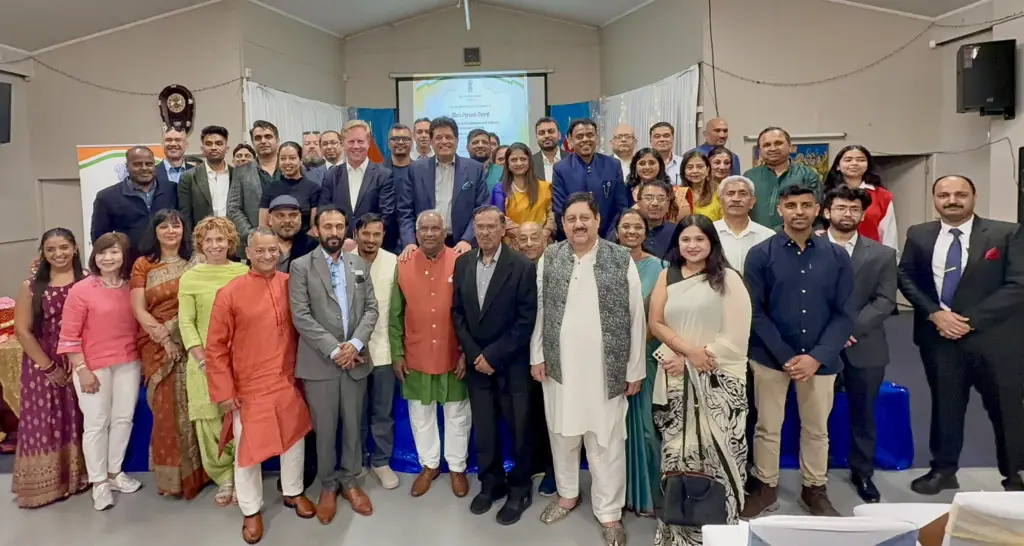
The “Living Bridge” Factor: New Zealand’s Indian diaspora (now over 300,000, or ~6% of the population) is a vital “living bridge” between the nations. Their professional networks and deep ties have transformed the domestic politics of the India relationship in Aotearoa.
04. NZICA: A Century of Advocacy, Recognised
For the New Zealand Indian Central Association (NZICA) — founded in 1926 and celebrating its centenary in 2026 — the FTA signing carries profound significance. It represents a century of patient advocacy.
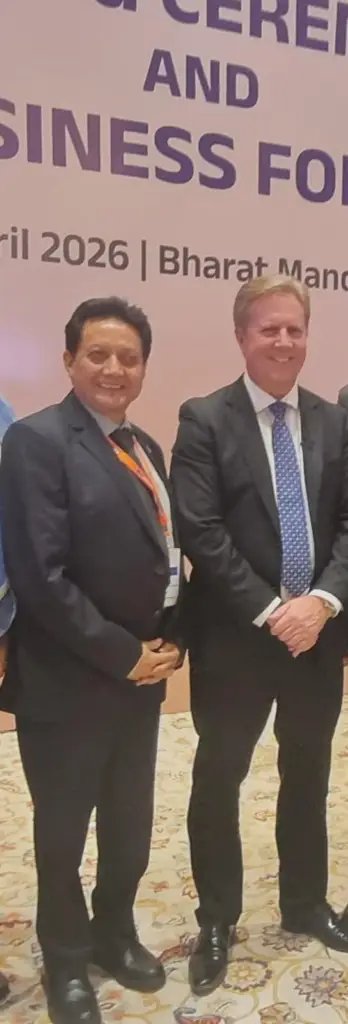
At the signing ceremony, Minister Todd McClay took a moment to acknowledge NZICA’s centenary year.
“Tears in my eyes as Todd recognises our 100 years at the signing ceremony. It is very special. Hats off to NZICA family and wider partnering organisations. Together we make the two nations proud.”
— Veer Khar, President, New Zealand Indian Central Association (NZICA), following the FTA signing ceremony, New Delhi, 27 April 2026
NZICA’s centenary was formally launched on 28 February 2026 at the Cordis Auckland.
05. Groundwork in Grassroots: Dr Sethi’s Community Consultations
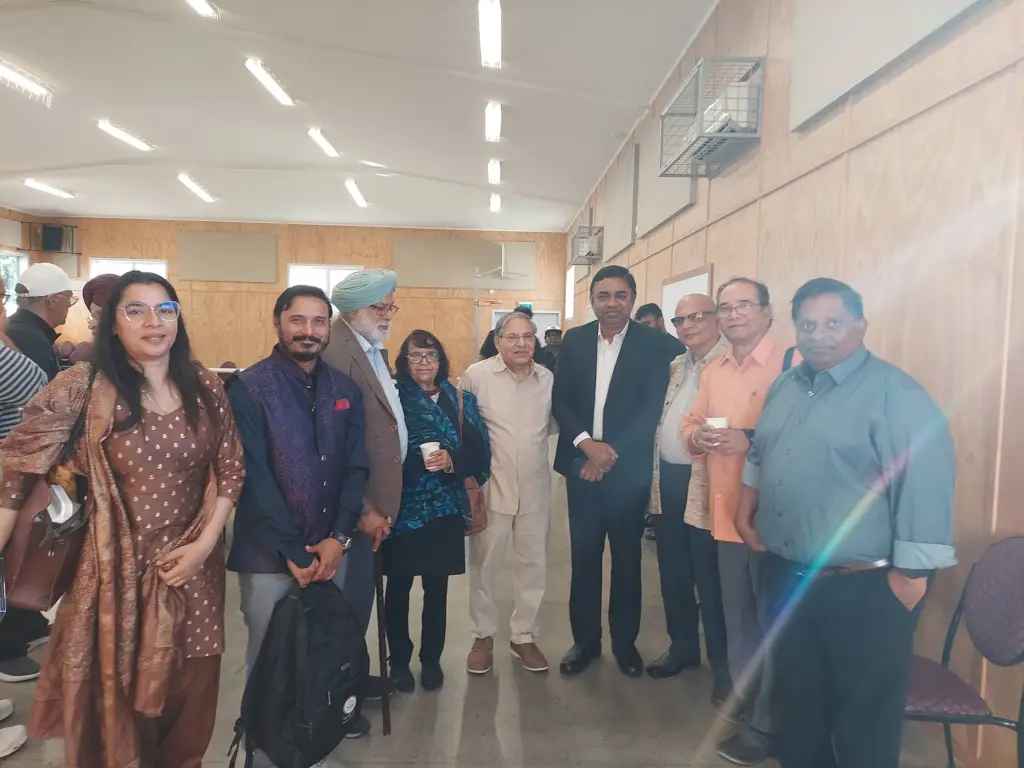
Transformative agreements do not spring from diplomatic tables alone. Dr Madan Mohan Sethi, Consul General of India for Auckland, embarked on a series of interactive community consultations nationwide.
Consulate General of India, Auckland – Community Engagement Initiative (Waikato Consultation)
On Saturday, 28 March 2026, Dr Sethi convened a landmark session in Hamilton, bringing together community leaders and professionals for dialogue on investment, trade, and cooperation. Similar sessions were held in Auckland, Wellington, and Christchurch. These consultations served a dual purpose: enriching the Indian government’s understanding of diaspora needs and signalling that community expertise is valued in shaping the bilateral agenda.
06. Hindu Council, Women’s Forum, & HOTA: Turning Policy Into Action
The Hindu community organisations have led energetic mobilisation around the FTA.
Hindu Council of New Zealand (HCNZ) & NZ Hindu Women Forum – FTA Seminar Series (Wellington · Auckland · Christchurch)
The NZ Hindu Women Forum (HWF) is launching a series of free public seminars on the FTA, in association with the Indian High Commission and supported by the HOTA (Hindu Organisations, Temples and Associations) Forum New Zealand. These seminars serve as a prelude to the 2nd New Zealand Hindu Women Conference on Sunday, 30 August 2026, in Auckland, themed “Women Entrepreneurs — Leading Progress, Powering Prosperity.”
To register interest in attending the seminars: tinyurl.com/HWFSeminarFTA
Seminar Coordinators:
- Wellington: Amita Fotedar, Varsha Jagdish Bhai, Shyama Kumar
- Auckland: Shivani Arora, Neelu Taore, Madhavi Vora
- Christchurch: Archana Tandon, Prachee Gokhale, Geetha Kopparapu
About the HOTA Forum: A global network that in Bharat works with prominent Hindu organisations (Art of Living, Chinmaya Mission, ISKCON, BAPS, etc.). The New Zealand chapter provides a platform for temples and cultural associations to coordinate on matters of economic and cultural significance.
07. The Road Ahead: Ratification and Implementation
Signing is a milestone, not a conclusion. The FTA must be ratified by the New Zealand Parliament. The National–ACT government has the numbers, and Labour has offered qualified support, though NZ First remains opposed. Debates will continue over labour conditions, sustainability, and dairy provisions.
But for the hundreds of thousands of New Zealanders with roots in Bharat — the engineers, nurses, business owners, temple trustees, and women entrepreneurs — the agreement represents the formalisation of a relationship built, generation by generation, through their own labour, sacrifice, and community investment.
“The Indian community has always been a living bridge between our two nations. Today that bridge has been strengthened with the steel of commerce, the warmth of shared values, and the promise of a shared future.”
— Zealandia News Editorial
Sixteen years of negotiation. Decades of community advocacy. Hundreds of thousands of individual migrants who built a living relationship between Aotearoa and Bharat long before any government formalised it. The FTA is their achievement as much as it is any minister’s.
Key Reference: How to Engage With the FTA
- Full text and chapter summaries: www.mfat.govt.nz/nz-india-fta
- NZ Hindu Women Forum FTA Seminar Registration: tinyurl.com/HWFSeminarFTA
- Consulate General of India, Auckland: www.cgiauckland.gov.in
- NZICA: www.nzica.org.nz
- HCNZ: hcnz.org
- HOTA: hotaforumnz.org
This article was prepared by Zealandia News with reference to official government statements, MFAT documentation, community communications, and press reports. NZ English spellings throughout.
Zealandia News — Independent journalism for Aotearoa’s South Asian community and beyond.
Published Tuesday, 28 April 2026 · Trade & Diplomacy · Indo-Pacific Edition
© 2026 Zealandia News. All rights reserved. Reproduction in full or in part requires attribution.