




 Dorothy Brown
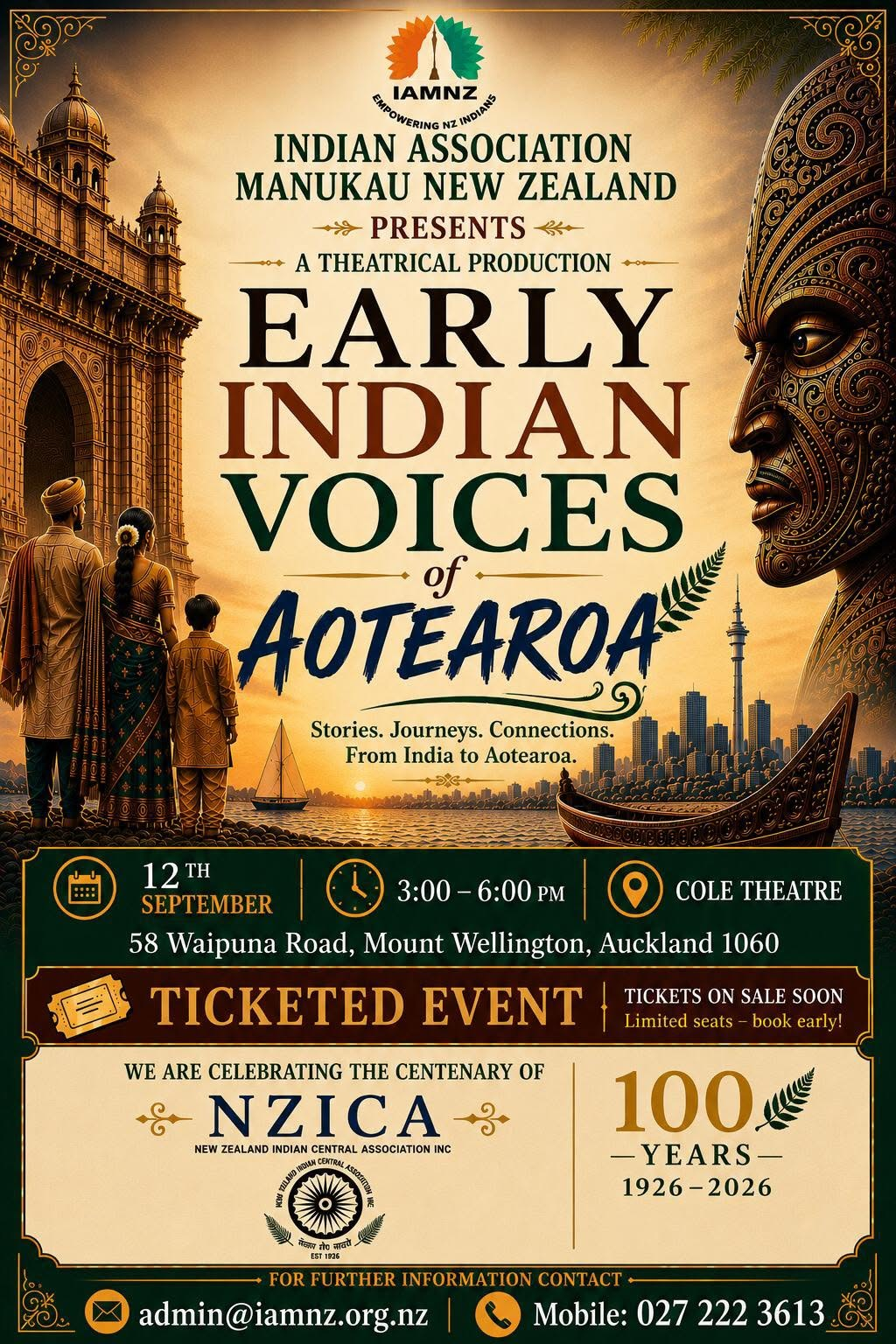
 Auckland audiences are being offered a rare chance to step into the shoes of the earliest Indian settlers to reach New Zealand’s shores, with the Indian Association Manukau New Zealand (IAMNZ) staging a theatrical production titled Early Indian Voices of Aotearoa on Saturday 12 September.
The performance, running from 3pm to 6pm at the C1 Le Theatre on Waipuna Road in Mount Wellington, promises to weave together stories, journeys and connections that trace the path of Indian migration to this country. It’s billed as a ticketed event, with tickets going on sale soon, and organisers are urging the community to get in early given the significance of the occasion.
That significance is considerable. The production forms the centrepiece of celebrations marking the centenary of IAMNZ, an organisation that has been serving Auckland’s Indian community since 1926. A hundred years is a long time by any measure, and reaching that milestone says something about the resilience, adaptability and quiet perseverance of the generations who came before.
What makes this production worth paying attention to isn’t just the milestone itself, but the choice of how to mark it. Rather than a straightforward gala or awards dinner, IAMNZ has opted to put history on stage, giving voice to the everyday journeys, hardships and hopes of early Indian settlers who built lives in a country far from home. It’s a generous gift to the wider community too, offering Pākehā, Māori and other New Zealanders a genuine window into a migration story that has shaped the country’s cultural fabric for a century, often without much fanfare.
There’s real value in this kind of storytelling. So much of the public conversation about migrant communities in New Zealand focuses on the present day, on statistics and settlement numbers, while the deeper human stories, the ones about why people left, what they carried with them, and what they built once they arrived, tend to go untold. By turning those stories into theatre, IAMNZ is doing something that policy documents and census data never quite manage: putting a human face and a heartbeat on a century of history.
It’s also a timely reminder of just how long Indian communities have been part of New Zealand’s story. A hundred years of continuous community organisation is no small feat, and it deserves to be marked publicly and celebrated widely, not just within the Indian community but across Auckland as a whole.
For those keen to attend, further information and ticketing details are available through IAMNZ at admin@iamnz.org.nz or by phone on 027 222 3613.
It’s a fitting tribute to a century of contribution, and a welcome addition to what is shaping up to be a busy and meaningful weekend for Auckland’s diverse communities.Note: the map search returned Waipuna Hotel and Conference Centre near that address rather than an exact match for “C1 Le Theatre” — worth double-checking the venue name against IAMNZ’s official flyer before publishing, since theatre venue names can sometimes be housed within larger complexes.
What began as a single theatrical production has grown into something far bigger: a citywide moment of reflection on 100 years of Indian settlement in New Zealand, and on just how deeply that community has shaped the country’s economic and social fabric.
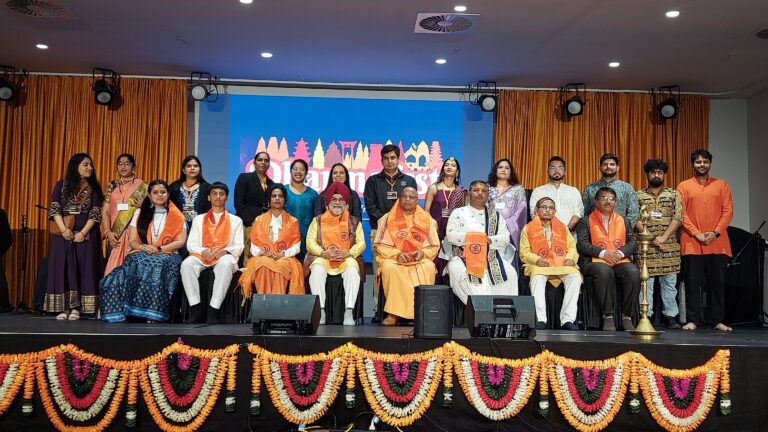
The Indian Association Manukau New Zealand’s (IAMNZ) Early Indian Voices of Aotearoa, staged on Saturday 12 September at C1 Le Theatre in Mount Wellington, doesn’t sit in isolation. It’s one part of a much larger centenary story being told this year by the New Zealand Indian Central Association (NZICA), the umbrella body founded in 1926 that has watched over, and helped grow, Indian community life in this country for a full century.
The centenary year officially launched back on 28 February with a curtain-raiser event at the Cordis Hotel in Auckland, a night that set the tone for what has become a sustained, year-long programme of commemoration. That was followed in early August by one of the more quietly powerful gestures of the celebrations: the planting of 1,000 redwood trees at Waikaretu Valley Road in Glen Murray, Waikato, part of a wider plantation project involving more than 16,600 trees. It’s a fitting symbol, a community putting down literal roots in the New Zealand landscape to mark a century of doing exactly that in a figurative sense. Cordis Auckland will host another major centenary event on 3 July, described by organisers as a night of recognition, entertainment and celebration.
Against that backdrop, IAMNZ’s theatrical production takes on added weight. Rather than simply retelling dates and milestones, the play turns to the human stories, the journeys, hardships and small victories of the early Indian settlers who arrived on these shores with little more than hope and hard work. It’s storytelling as history lesson, and by all accounts a moving one.
But the centenary celebrations aren’t just about looking back. They land at a moment when the scale of the Indian community’s contribution to modern New Zealand has never been clearer. A report released this year found that Kiwi Indians contributed an estimated $37.3 billion to the New Zealand economy in the year to March 2025, equivalent to 8.6 percent of the country’s entire GDP. That’s a striking figure set against a community that makes up just 5.8 percent of the population, an economic footprint well beyond its numbers, driven by a young, well-educated and increasingly entrepreneurial demographic. RNZ described the community’s contribution to national prosperity as “outsized,” a description that’s hard to argue with once the numbers are laid out.
That contribution spans everything from small business ownership and the trades to healthcare, IT, engineering, education and hospitality, sectors where Indian New Zealanders have become not just participants but often the backbone of local workforces, particularly across South Auckland. It’s the kind of grinding, generational contribution that rarely makes headlines on its own, which is exactly why moments like this centenary matter: they give a community permission to pause and say, plainly, look what we’ve built here.
Taken together, the tree planting in Waikaretu, the Cordis curtain-raiser, the theatre production in Mount Wellington and the economic figures now doing the rounds tell a coherent story: 100 years of quiet arrival, hard work and steady integration, culminating in a community that is now woven inextricably into New Zealand’s national life, economically, culturally and socially.
For a country still working out how best to celebrate and support its migrant communities, NZICA and IAMNZ have offered a template worth studying, one that pairs commemoration with genuine, tangible contribution to the land and economy they now call home.
Tickets for Early Indian Voices of Aotearoa are available through IAMNZ at admin@iamnz.org.nz or 027 222 3613. Further centenary events are being coordinated through NZICA’s regional and country sections throughout the year.