


 Lara Zijl
 The Sacred Journey and the Power of Solidarity: Supporting Nepal Flood Victims through HCNZ
In the heart of the majestic Himalayas, where the earth meets the heavens, lies a landscape that has inspired seekers, sages, and pilgrims for millennia. For the global Hindu community, this region is not merely a geographic marvel but the spiritual epicenter of the universe. However, the recent and devastating floods in Nepal have cast a shadow of sorrow over this sacred terrain, turning a path of pilgrimage into a scene of struggle and survival.
As we witness the resilience of the Nepalese people and the plight of international travelers caught in the deluge, the Hindu Council of New Zealand (HCNZ) has stepped forward. This is more than a call for charity; it is a profound expression of "Vishwa Bandhutva"—universal brotherhood. Through upcoming cultural milestones and dedicated relief efforts, the community is mobilizing to provide a beacon of hope for those who have lost so much in the shadow of the world’s highest peaks.
The Spiritual Magnitude of the Kailash and Manasarovar Yatra
To understand the weight of the current crisis, one must first grasp the spiritual significance of the journey that draws thousands to the region each year. The pilgrimage to Mount Kailash and Lake Manasarovar, often referred to as the "Kailash Yatra," is widely considered the ultimate spiritual odyssey. For a devout Hindu, it is not just a trip; it is a transformative rite of passage, a once-in-a-lifetime dream that represents the pinnacle of religious devotion.
Mount Kailash: The Abode of Shiva
Mount Kailash is revered as the earthly manifestation of Mount Meru, the cosmic axis around which the universe revolves. In Hindu cosmology, it is the eternal abode of Lord Shiva and his consort, Goddess Parvati. Unlike other major Himalayan peaks, Kailash remains unclimbed, out of respect for its sanctity. It is believed that to set foot on its slopes would be a sacrilege; instead, pilgrims perform the "parikrama"—a 52-kilometer circumambulation of the mountain—often at altitudes exceeding 5,000 meters.
Lake Manasarovar: The Mind of Brahma
Nestled at the foot of Mount Kailash is Lake Manasarovar, the highest freshwater lake in the world. The name is derived from the Sanskrit words "Manas" (mind) and "Sarovar" (lake). Ancient scriptures suggest the lake was first created in the mind of Lord Brahma before manifesting on Earth. It is synonymous with absolute purity. To bathe in its icy waters is said to cleanse the sins of a hundred lifetimes, liberating the soul from the relentless cycle of birth and rebirth.
"The Kailash Yatra is a journey inward as much as it is outward. It tests the physical limits of the body while expanding the spiritual horizons of the soul. When tragedy strikes such a sacred path, the impact is felt by the entire global Hindu family."
- Parikrama: Completing the trek around Kailash is believed to bring immediate spiritual enlightenment.
- Purity: Lake Manasarovar represents the cooling, feminine energy that balances the raw, masculine power of Kailash.
- Unity: The site is sacred not only to Hindus but also to Buddhists, Jains, and followers of the Bon religion.
Tragedy in the Himalayas: The Devastating Nepal Floods
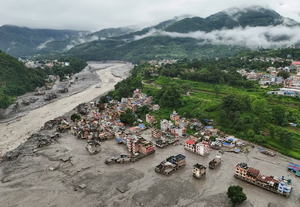
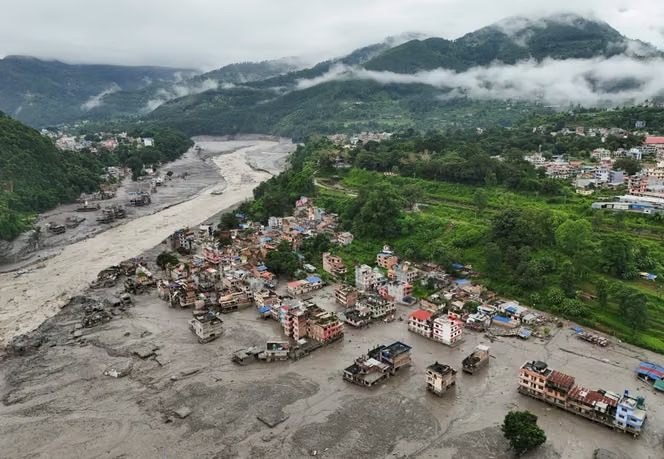
While the spiritual allure of the region is timeless, the physical reality of the Himalayas can be unforgiving. Recently, severe and relentless flooding across Nepal has triggered massive landslides and destroyed vital infrastructure. The scale of the disaster has been profound, claiming lives, displacing thousands, and leaving many more stranded in remote, inaccessible areas.
For the New Zealand Hindu community, this tragedy hit particularly close to home. Many Kiwis were in the midst of their sacred pilgrimage when the weather turned. The Hindu Council of New Zealand has been in constant contact with families who have endured agonizing waits for news of their loved ones. Tragically, some families have received the news they feared most, while others continue to search for missing relatives caught in the affected regions.
The disaster has highlighted the extreme vulnerability of the Himalayan ecosystem to climate-induced weather patterns. It has also underscored the urgent need for coordinated international relief. In these moments of crisis, the spiritual bond shared with the land of Nepal transforms into a practical duty of care and compassion.
Leading the Way: Who is the Hindu Council of New Zealand?
In times of crisis, leadership and organization are paramount. Established in 1996 and formally registered in 2006, the Hindu Council of New Zealand (HCNZ) stands as the country's oldest and largest representative body for the Hindu community. However, its mission extends far beyond simple representation.
HCNZ is a community-focused organization that operates on the foundational values of Hindu Dharma. It is important to note that HCNZ defines itself not as a purely religious or philosophical body, but as a service-oriented entity. Their work focuses on:
- Social Welfare: Providing support systems for the vulnerable and mobilizing aid during disasters.
- Cultural Preservation: Ensuring that the rich heritage of Hindu traditions is passed down to younger generations in New Zealand.
- Integration: Acts as a bridge between the Hindu community and wider New Zealand society, fostering mutual respect and contribution.
- Advocacy: Providing a unified voice for Hindu interests in government and policy discussions.
By acting as a central hub, HCNZ ensures that when a crisis like the Nepal floods occurs, the community’s response is not fragmented but focused and effective.
Empathy in Action: The 2nd NZ Hindu Women Conference
One of the most inspiring responses to the Nepal crisis has come from the organizers of the upcoming 2nd NZ Hindu Women Conference, set to take place on 30 August 2026 at the ISSO Swaminarayan Complex in Papatoetoe, Auckland. This event is a testament to the concept of "Matru Shakti"—the inherent maternal power and nurturing strength of women.
In a powerful display of solidarity, the conference organizers and participating women entrepreneurs have pledged that 50% of all registration fees will be donated directly to Nepal flood relief efforts. This initiative proves that professional development and philanthropy are not mutually exclusive. The conference serves as a platform for women to lead, innovate, and network, while simultaneously fulfilling a higher purpose of global service.
The conference will feature discussions on leadership, health, entrepreneurship, and spirituality, all through the lens of Hindu values. By dedicating half of their proceeds to Nepal, these women are demonstrating that the spirit of motherhood extends to the protection and care of the global family.
Raksha Bandhan: A Universal Bond of Protection
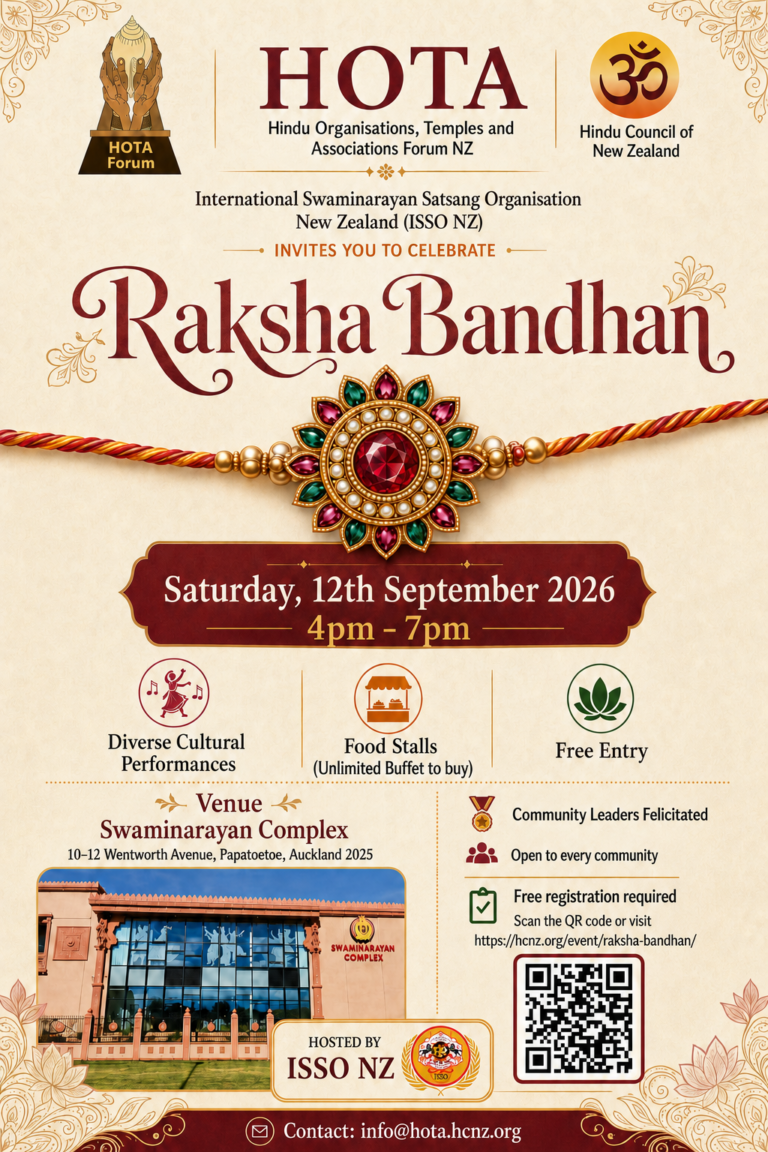
Following the women's conference, the community will gather again on 12 September 2026 for the 16th Annual Raksha Bandhan Community Celebration. Hosted by ISSO Swaminarayan NZ on behalf of the HOTA (Hindu Organisations, Temples and Associations) Forum, this event takes on a new layer of meaning this year.
Traditionally, Raksha Bandhan celebrates the bond between brothers and sisters, symbolized by the tying of a "Rakhi" (sacred thread) as a promise of protection. However, the HOTA Forum has expanded this concept to include the "bond of protection" for the entire community. This year’s celebration will be dedicated to collective prayers for the victims of the Nepal floods.
The event brings together dozens of different Hindu organizations under one roof, demonstrating a level of unity that is essential for large-scale disaster relief. It serves as a reminder that we are all responsible for one another’s safety and well-being, regardless of geographical borders.
- 30 August 2026: 2nd NZ Hindu Women Conference (50% fees to Nepal Relief).
- 12 September 2026: 16th Annual Raksha Bandhan Celebration (Focus on community safety and disaster support).
- Location: ISSO Swaminarayan Complex, Papatoetoe, Auckland.
Conclusion: Standing Together in the Face of Adversity
The journey to Kailash and Manasarovar is often described as a path of liberation. Today, that path is fraught with the physical challenges of a natural disaster, but the spiritual resolve of the community remains unbroken. The efforts of the Hindu Council of New Zealand, the leadership of Hindu women, and the collective prayers of the HOTA forum represent the best of humanity—turning grief into action and faith into service.
Nepal is not just a destination on a map; it is a spiritual home for millions. When our home is in pain, we must respond with the same devotion we bring to our prayers. Whether through attending the upcoming conferences or making a direct contribution, every effort counts toward rebuilding the lives of those impacted by the floods.
How You Can Help Today
Your generosity can provide immediate financial aid, medical supplies, and food to those struggling in the aftermath of the Nepal floods. Join the Hindu Council of New Zealand in this vital mission of compassion.
For support, inquiries, or assistance regarding affected family members, please contact Dr. Vinay Karanam at vinay@hcnz.org.