


 Vinay Karanam
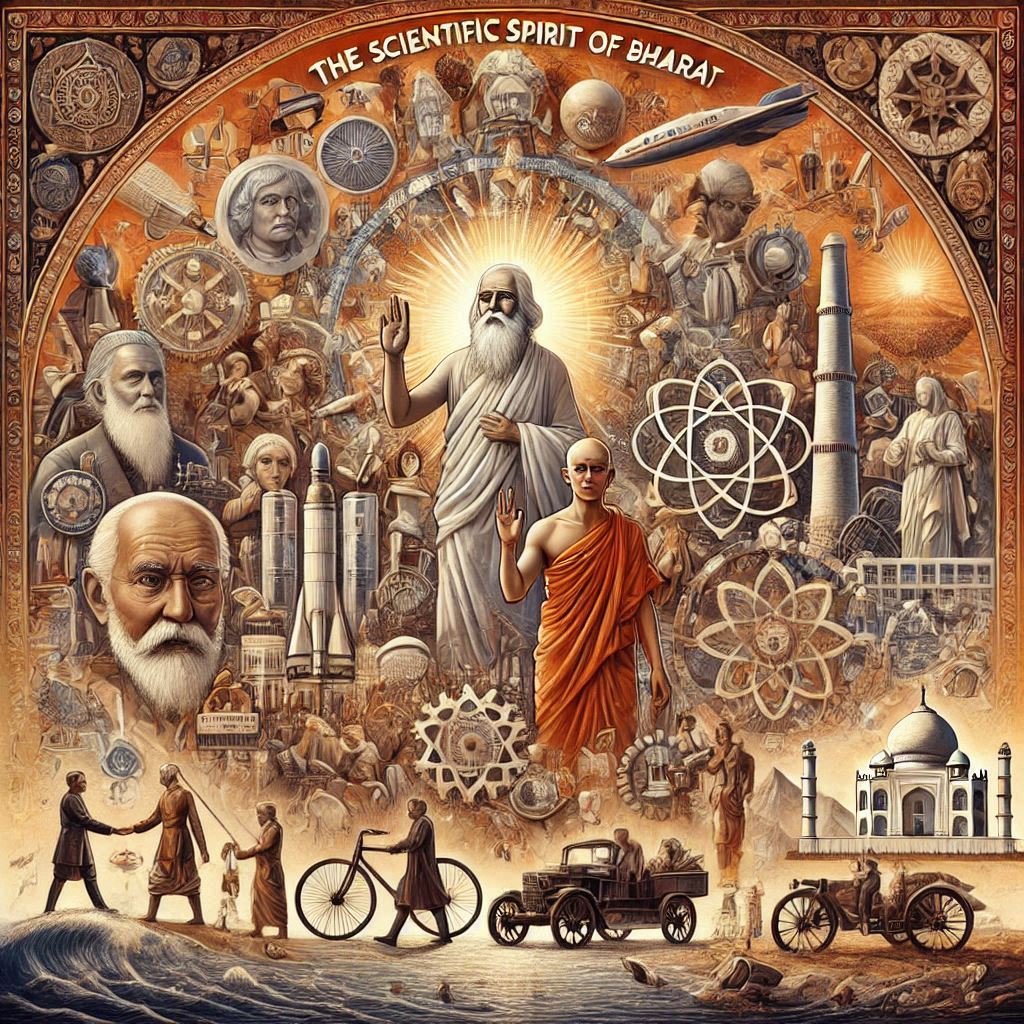
 Bharat has been a cradle of scientific thought and innovation for millennia, with its intellectual heritage spanning diverse fields such as mathematics, astronomy, medicine, metallurgy, and engineering. Long before the modern scientific era, Bharatiya thinkers and practitioners developed principles, theories, and technologies that continue to influence global knowledge systems.
In this sixteenth article of the “Bharat Is Not for Beginners” series, we explore the scientific achievements of Bharat, tracing their origins, impact, and relevance in contemporary times.
Mathematics: A Legacy of Precision and Innovation
Bharat’s contributions to mathematics are unparalleled, laying the foundation for modern numerical and algebraic systems.
- Decimal System and Zero: The concept of zero (shunya) as a placeholder and numerical digit was first articulated by Indian mathematicians. The decimal system, crucial to modern arithmetic, originated here.
- Aryabhata’s Contributions: Aryabhata (476 CE) formulated methods for solving quadratic equations and approximated the value of π (pi) with remarkable accuracy.
- Bhaskaracharya’s Genius: Bhaskara II (12th century) authored the Lilavati, a treatise on arithmetic, algebra, and geometry, demonstrating advanced mathematical understanding.
- Trigonometry: Indian astronomers developed early concepts of trigonometry, including sine and cosine functions, which were later adopted and expanded by Islamic and European scholars.
Astronomy: Mapping the Cosmos
Bharat’s astronomical tradition blends scientific observation with philosophical inquiry.
- Vedanga Jyotisha: This ancient text outlines the principles of timekeeping and calendar systems, based on celestial observations.
- Aryabhata’s Astronomy: Aryabhata proposed that Earth rotates on its axis and accurately calculated the duration of a solar year.
- Varahamihira’s Insight: Varahamihira (6th century) compiled astronomical and meteorological knowledge, influencing both Eastern and Western traditions.
- Observatories: Structures like the Jantar Mantar in Jaipur reflect Bharat’s sophisticated approach to astronomical studies.
Medicine: The Holistic Science of Healing
Bharat’s medical systems, particularly Ayurveda, emphasize holistic health and well-being.
- Charaka and Sushruta: Charaka’s Charaka Samhita and Sushruta’s Sushruta Samhita are foundational texts in Ayurveda, covering diagnostics, pharmacology, and surgical techniques.
- Surgical Innovations: Sushruta is considered the “father of surgery,” describing procedures such as cataract removal, rhinoplasty, and caesarean sections.
- Herbal Medicine: Ayurveda’s extensive pharmacopeia includes treatments derived from plants, minerals, and animal products, many of which are now validated by modern science.
- Global Influence: Ayurvedic principles inspired Unani medicine and continue to influence integrative healthcare practices worldwide.
Metallurgy: The Alchemy of Craft
Bharat’s expertise in metallurgy is evident in its ancient monuments and artifacts.
- Iron Pillar of Delhi: This 1,600-year-old pillar, which has resisted corrosion, exemplifies advanced ironworking techniques.
- Wootz Steel: Bharat’s high-carbon steel, known as wootz, was renowned for its strength and was used to forge Damascus swords.
- Zinc Extraction: Bharat was among the first civilizations to master the extraction of zinc, a critical process in alloy production.
Engineering and Architecture
Bharat’s architectural marvels showcase not only artistic brilliance but also engineering ingenuity.
- Stepwells and Irrigation: Structures like the Rani ki Vav and advanced canal systems highlight Bharat’s expertise in water management.
- Temple Architecture: Temples such as Brihadeeswarar in Tamil Nadu demonstrate precision engineering, with massive stone structures constructed without modern machinery.
- Civil Engineering: The city planning of the Indus Valley Civilisation, including drainage systems and granaries, reflects advanced civil engineering knowledge.
Textiles: Weaving Innovation
Bharat’s textile traditions combined artistry with scientific techniques.
- Muslin and Silk: Techniques for producing fine muslin and vibrant silks were unparalleled, making these fabrics sought after worldwide.
- Natural Dyes: The use of indigo, turmeric, and other natural dyes demonstrates a deep understanding of chemistry.
Philosophy of Science
Bharat’s scientific achievements were deeply rooted in its philosophical outlook.
- Integration of Science and Spirituality: Ancient texts, such as the Vedas and Upanishads, encouraged inquiry and understanding of natural laws, forming the basis for scientific exploration.
- Interdisciplinary Approach: Fields like astronomy, mathematics, and medicine often intersected, reflecting a holistic approach to knowledge.
Contemporary Relevance
Bharat’s scientific heritage continues to inspire and inform modern research:
- Space Exploration: The Indian Space Research Organisation (ISRO) builds on ancient astronomical traditions, achieving milestones like the Mars Orbiter Mission.
- Ayurveda and Biotechnology: Modern pharmaceutical research often integrates Ayurvedic principles with cutting-edge biotechnology.
- Mathematics and Computing: The foundational work in algorithms and numerical systems finds resonance in modern computing and data science.
Challenges and Future Directions
Challenges
- Preservation: Many ancient manuscripts and artifacts require proper documentation and conservation.
- Integration: Bridging traditional knowledge systems with modern scientific frameworks poses both challenges and opportunities.
Future Directions
- Global Collaboration: Sharing Bharat’s scientific heritage with the world can foster cross-cultural understanding and innovation.
- Education and Research: Promoting the study of ancient sciences in modern curricula can inspire new generations of thinkers and innovators.
Excerpt
Bharat’s scientific journey is a testament to its ingenuity, curiosity, and resilience. From the mathematical precision of Aryabhata to the holistic healing of Ayurveda, Bharat’s contributions have enriched global knowledge systems and continue to do so.
In the next article, we will explore Bharat’s spiritual traditions, delving into the philosophies, practices, and legacies of systems like Yoga, Vedanta, and Tantra. Join us as we uncover the profound spiritual wisdom of this timeless civilization!