



 Vinay Karanam
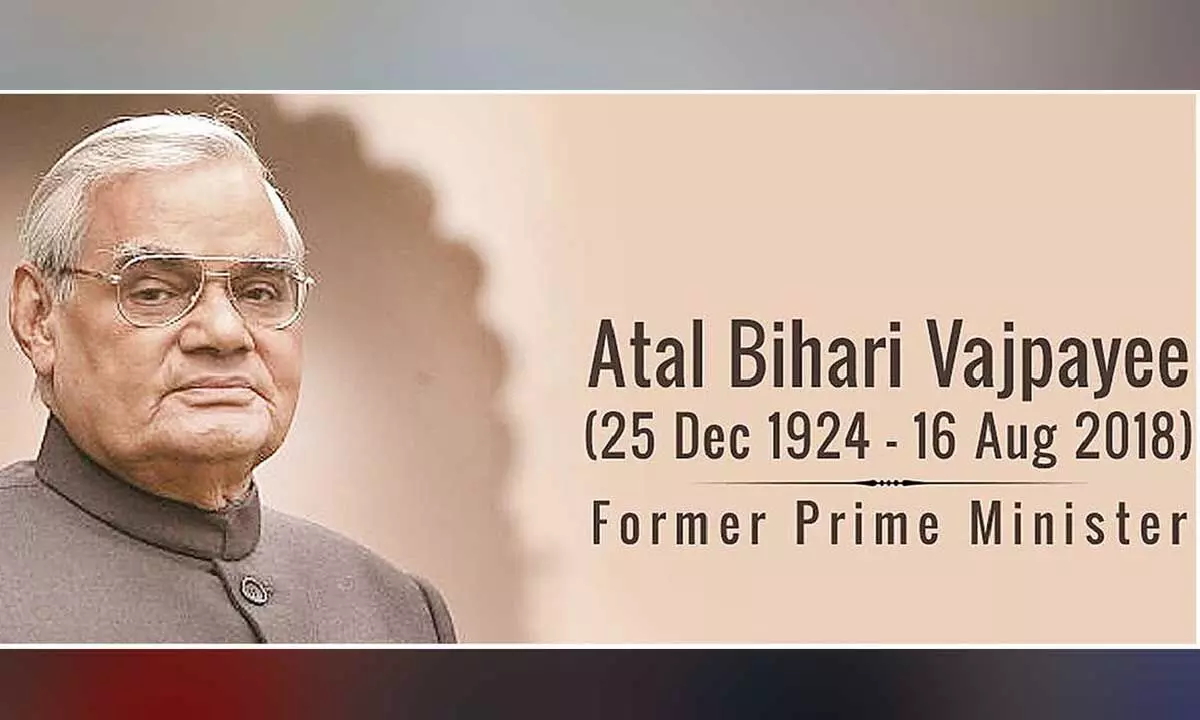
 Atal Bihari Vajpayee, a towering figure in Indian politics, left an indelible mark on both Bharat and the global stage. As a founding member of the Bharatiya Janata Party (BJP) and a three-time Prime Minister of India, Vajpayee’s leadership was characterized by his commitment to democratic values, economic reforms, and a vision for a strong and self-reliant India. His tenure saw significant events such as the Kargil War and the Pokhran-II nuclear tests, which underscored his strategic acumen and dedication to national security. Vajpayee’s principles of good governance, inclusive development, and diplomatic engagement continue to influence India’s political landscape and its relations with the world. Notably, December 25th, 2024, marks the centenary year of his birth, a testament to his enduring legacy.
Childhood and Early Political Career
Atal Bihari Vajpayee was born on December 25, 1924, in Gwalior, Madhya Pradesh. From a young age, he displayed a keen interest in academics and public speaking. Vajpayee was known for his oratory skills and his ability to articulate his thoughts clearly and persuasively. He pursued his education at Victoria College (now Laxmi Bai College) in Gwalior and later attended DAV College in Kanpur, where he completed his postgraduate degree in political science.
Vajpayee’s foray into politics began with his involvement in the Rashtriya Swayamsevak Sangh (RSS) in 1939, where he was deeply influenced by the organization’s ideology and values. His early political career saw him participating actively in the Quit India Movement of 1942, which was a significant turning point in India’s struggle for independence. Despite his youth, Vajpayee’s dedication and leadership qualities earned him recognition within the RSS and the broader political landscape.
By the early 1950s, Vajpayee had emerged as a prominent figure within the Bharatiya Jana Sangh (BJS), the precursor to the Bharatiya Janata Party (BJP). His eloquence and commitment to the cause quickly propelled him to national prominence. In 1957, he was elected to the Lok Sabha, the lower house of India’s Parliament, marking the beginning of a long and distinguished parliamentary career.
Mid-Career: The Rise of a Political Luminary
Atal Bihari Vajpayee’s mid-career was marked by his transformation from a promising politician to a stalwart leader with a significant influence on Indian politics. During the 1960s and 1970s, Vajpayee continued to build his reputation as an articulate and visionary parliamentarian.
In 1968, he became the national president of the Bharatiya Jana Sangh (BJS), succeeding Deendayal Upadhyaya. Under his leadership, the BJS focused on issues of national importance, such as social justice, economic development, and cultural nationalism. Vajpayee’s leadership style was characterized by his inclusive approach and ability to bridge ideological divides.
The emergency period (1975-1977) imposed by Prime Minister Indira Gandhi was a defining moment in Vajpayee’s political career. He was arrested along with other opposition leaders for his staunch opposition to the suspension of democratic rights and civil liberties. This period of political turmoil galvanized opposition forces, leading to the formation of the Janata Party, a coalition of parties opposed to the Emergency. Vajpayee played a pivotal role in this coalition, which eventually led to the defeat of Indira Gandhi’s government in the 1977 general elections.
In the post-Emergency era, Vajpayee served as the Minister of External Affairs in the Janata Party government led by Prime Minister Morarji Desai. His tenure was marked by efforts to improve India’s relations with neighboring countries and foster a more assertive foreign policy. One of his notable achievements was delivering a speech in Hindi at the United Nations General Assembly, making a strong case for India’s perspectives on global issues.
Vajpayee’s political journey was not without challenges. The dissolution of the Janata Party and the subsequent formation of the Bharatiya Janata Party (BJP) in 1980 marked a new phase in his career. As one of the founding members of the BJP, Vajpayee, along with his close associate Lal Krishna Advani, worked tirelessly to establish the party as a major force in Indian politics.
During the 1980s and early 1990s, Vajpayee’s stature as a statesman grew, and he became widely respected for his moderation, pragmatism, and commitment to democratic values. His speeches and writings during this period reflected his deep understanding of India’s socio-political landscape and his vision for a progressive and united nation.
Prime Minister: Leadership and Legacy
Atal Bihari Vajpayee’s tenure as Prime Minister of India was marked by significant achievements and challenges that shaped the nation’s trajectory. He served three terms as Prime Minister: first for a brief period in 1996, then from 1998 to 1999, and finally from 1999 to 2004. His leadership was characterized by a pragmatic approach to governance, economic reforms, and a focus on national security.
First Term (1996)
Vajpayee’s first term as Prime Minister lasted only 13 days, from May 16 to May 28, 1996. Despite his brief tenure, he set the tone for his future leadership with his emphasis on good governance and economic development.
Second Term (1998-1999)
Vajpayee’s second term began on March 19, 1998, and was marked by significant events that showcased his strategic vision and commitment to India’s security. One of the most notable achievements during this period was the successful conduct of the Pokhran-II nuclear tests in May 1998. These tests established India as a nuclear power and demonstrated Vajpayee’s resolve to enhance the country’s defense capabilities.
However, this period also saw challenges, including economic sanctions imposed by several countries in response to the nuclear tests. Vajpayee’s government navigated these challenges through diplomatic efforts and economic resilience.
Third Term (1999-2004)
Vajpayee’s third term, beginning in October 1999, was marked by a focus on economic reforms and infrastructure development. His government introduced several key initiatives, including the National Highway Development Project and the Pradhan Mantri Gram Sadak Yojana, aimed at improving connectivity and rural development.
The Kargil War of 1999 was a defining moment in Vajpayee’s leadership. His handling of the conflict, marked by strategic military decisions and diplomatic efforts, earned him widespread acclaim. The successful resolution of the conflict reinforced India’s position on the global stage and highlighted Vajpayee’s commitment to national security.
Vajpayee’s tenure also saw efforts to improve relations with neighboring countries, particularly Pakistan. His historic bus journey to Lahore in 1999 and the subsequent Lahore Declaration were significant steps towards fostering peace and cooperation in the region.
Despite facing political challenges and coalition dynamics, Vajpayee’s leadership was marked by his ability to build consensus and navigate complex issues. His tenure as Prime Minister left a lasting legacy of economic growth, infrastructure development, and a strengthened national security framework.
Special Section: The Kargil War
The Kargil War of 1999 stands out as one of the most significant conflicts in Indian history, and Atal Bihari Vajpayee’s leadership during this period was exemplary. The war was a result of the infiltration of Pakistani soldiers and militants into Indian territory in the Kargil district of Jammu and Kashmir. Vajpayee’s government was quick to respond, launching Operation Vijay to reclaim the occupied territories.
Vajpayee’s handling of the Kargil War showcased his strategic acumen and commitment to national security. He ensured that the conflict was contained within the region and did not escalate into a full-scale war, thereby preventing further loss of lives and resources. His decision to limit the scope of military operations to Indian territory and avoid crossing the Line of Control (LoC) was a testament to his diplomatic prudence and respect for international boundaries.
On the diplomatic front, Vajpayee’s government worked tirelessly to garner international support and isolate Pakistan on the global stage. The conflict was widely condemned, and India received backing from major powers, including the United States and the United Nations. This international pressure played a crucial role in bringing the conflict to an end and restoring peace in the region.
Vajpayee’s leadership during the Kargil War was marked by his emphasis on national unity and morale. He visited the war zone, boosting the morale of the troops and the nation. His speeches during this period were a rallying cry for the nation, reflecting his deep sense of patriotism and unwavering resolve.
Special Section: The Indian Nuclear Program
Atal Bihari Vajpayee’s tenure as Prime Minister was marked by a significant milestone in India’s quest for strategic autonomy—the successful conduct of the Pokhran-II nuclear tests in May 1998. These tests marked India’s entry into the league of nuclear-armed nations and demonstrated Vajpayee’s resolve to enhance the country’s defense capabilities.
The decision to carry out the nuclear tests was not without challenges. Vajpayee faced international pressure and the threat of economic sanctions from several countries. However, he remained steadfast in his belief that a nuclear-armed India was essential for maintaining national security and regional stability.
The Pokhran-II tests, conducted under the utmost secrecy, were a scientific and strategic triumph. They demonstrated India’s ability to develop and deploy nuclear weapons, thereby establishing a credible deterrence against potential adversaries. The tests also showcased India’s technological prowess and the dedication of its scientific community.
Following the tests, Vajpayee’s government faced economic sanctions imposed by several countries. However, through diplomatic efforts and economic resilience, India managed to mitigate the impact of these sanctions. Vajpayee’s leadership during this period was marked by his ability to navigate complex international dynamics and maintain India’s strategic autonomy.
The Indian Nuclear Program under Vajpayee’s leadership was not merely about achieving military capabilities; it was also about fostering a sense of national pride and self-reliance. His vision for a strong and self-reliant India was reflected in his commitment to advancing the country’s scientific and technological capabilities.
These sections highlight Vajpayee’s strategic vision and his dedication to national security. His leadership during the Kargil War and the Pokhran-II nuclear tests left a lasting legacy and continue to inspire India’s approach to defense and security.
Legacy and Influence
Atal Bihari Vajpayee’s legacy extends far beyond his tenure as Prime Minister. His contributions to Indian politics, economic reforms, and international diplomacy have left a lasting impact on the nation and the world.
Economic Reforms
Vajpayee’s leadership saw the implementation of significant economic reforms that laid the foundation for India’s rapid economic growth in the 21st century. His government’s policies focused on liberalization, privatization, and globalization. The introduction of the New Telecom Policy in 1999 revolutionized the telecommunications sector, making mobile phones accessible to millions of Indians. Vajpayee also emphasized infrastructure development, launching the Golden Quadrilateral project to connect major cities through a network of highways.
Social Initiatives
Vajpayee’s government introduced several social initiatives aimed at improving the lives of ordinary citizens. The Sarva Shiksha Abhiyan, a flagship program for universalizing elementary education, was launched during his tenure. The initiative sought to ensure that every child in India had access to quality education. Additionally, Vajpayee’s emphasis on rural development was reflected in programs like the Pradhan Mantri Gram Sadak Yojana, which aimed to improve rural connectivity.
Diplomatic Achievements
Vajpayee’s approach to diplomacy was characterized by his efforts to build strong relations with neighboring countries and the wider international community. His tenure saw significant strides in improving India’s relations with Pakistan and China. Despite the challenges posed by the Kargil War and other conflicts, Vajpayee’s diplomatic initiatives, such as the Lahore bus journey and the Agra Summit, demonstrated his commitment to peace and stability in the region.
On the global stage, Vajpayee’s leadership helped elevate India’s stature as a responsible nuclear power and an emerging economic giant. His efforts to engage with the international community and promote India’s interests in global forums were instrumental in shaping the country’s foreign policy.
Cultural Contributions
Vajpayee was not only a politician but also a poet and a writer. His literary contributions, including his poetry and speeches, reflect his deep understanding of India’s cultural heritage and his vision for the nation’s future. His eloquence and ability to connect with people through his words endeared him to millions of Indians.
Centenary Year Celebrations
The centenary year of Atal Bihari Vajpayee’s birth, marked on December 25, 2024, is a time for reflection and celebration of his enduring legacy. As Bharat pays tribute to this great statesman, it is an opportunity to revisit his principles and ethos that continue to shape the nation’s political and social landscape.
Vajpayee’s vision for a strong, prosperous, and inclusive India remains relevant today. His legacy inspires current and future generations of leaders to uphold democratic values, pursue economic growth, and foster global harmony. As we commemorate his 100th birth anniversary, we honor the life and contributions of a leader whose impact transcends time and borders.