 Vinay Karanam
 Festivals in Bharat are more than mere celebrations; they are a vibrant tapestry of traditions, spirituality, and communal harmony. Reflecting the rhythm of life, these festivals are intricately linked to the cycles of nature, mythology, and cultural identity. Whether celebrating the harvest, marking celestial transitions, or honouring divine legends, each festival carries deep significance and fosters a sense of belonging.
In this nineteenth article of the “Bharat Is Not for Beginners” series, we explore the diverse and colourful festivals of Bharat, delving into their origins, customs, and enduring relevance.
The Diversity of Bharat’s Festivals
Bharat’s festivals are as diverse as its geography, languages, and communities. They can broadly be categorised into seasonal, religious, and cultural celebrations.
Bharat, often referred to as India, is a land where history, myth, and modernity converge, creating a rich mosaic of cultural expressions. Festivals in Bharat go beyond the surface of jubilant festivities, serving as powerful expressions of the country’s intricate socio-cultural fabric. They are living stories passed down through generations, encapsulating the essence of Indian ethos. These festivals are intrinsically woven into the nation’s identity, playing a crucial role in preserving cultural heritage while adapting to contemporary changes.
At the heart of these celebrations lies a deep-rooted respect for nature and its cycles. From the verdant paddy fields of the south to the arid deserts of the west, festivals are a means to honor the land and its bounty. The cyclical nature of these celebrations is often tied to the agricultural calendar, marking periods of sowing, growing, and reaping.
Furthermore, many festivals commemorate historical events, victories, and the lives of revered deities, thereby immortalizing these tales in the collective memory of the people. Through vibrant processions, elaborate rituals, and communal feasts, these events transcend the ordinary, drawing people together in a shared cultural experience.
As we delve into the vast landscape of Bharat’s festivals, it becomes evident that these celebrations are more than just occasions for merriment. They are opportunities for introspection, community bonding, and spiritual rejuvenation. In this article, we journey through the myriad festivals that illuminate Bharat’s cultural calendar, examining their unique origins, customs, and the profound sense of continuity they provide in an ever-changing world.
With each festival, we unravel layers of symbolism and tradition, understanding how these age-old customs have managed to stay relevant by adapting to contemporary contexts while retaining their core essence. Whether you are a seasoned enthusiast of Indian culture or a curious newcomer, this exploration promises to offer fresh insights and deepen your appreciation for the intricate, beautiful world of Bharat’s festivals.
Bharat, with its myriad landscapes ranging from the Himalayan peaks to the coastal shores, is a land of immense diversity. This geographical variety is mirrored in its cultural and linguistic mosaic, where over 2,000 distinct ethnic groups and more than 1,600 languages coalesce to form a unique cultural tapestry. This rich diversity is profoundly reflected in the nation’s festivals, which are not just celebrations but a testament to India’s unity amidst its diversity. Each festival tells a story, a narrative that is both unique and universal, highlighting the importance of nature, community, faith, and heritage.
By delving into the different categories of festivals—seasonal, religious, and cultural—we can appreciate how these celebrations encapsulate the essence of life in Bharat. Let’s explore these categories in greater detail:
Seasonal Festivals: A Tribute to Nature
Seasonal festivals in Bharat are deeply connected to the agricultural calendar and natural cycles. They celebrate the bounties of nature, express gratitude, and mark significant transitions in the agrarian year.
- Makar Sankranti (Pongal, Lohri, Bihu)
- When: Mid-January
- Significance: Celebrates the harvest season and the sun’s northward journey (Uttarayan).
- Traditions: Flying kites, preparing sweet dishes like sesame jaggery laddoos, and performing rituals to express gratitude for nature’s bounty.
- Details: This festival is celebrated in various forms across India. In Tamil Nadu, it is known as Pongal, marked by the boiling of new rice in pots until they overflow, symbolizing prosperity. In Punjab, Lohri is celebrated with bonfires, dancing, and singing, while in Assam, Bihu marks the joyous harvest season with traditional dances and feasts.
- Baisakhi
- When: April
- Region: Punjab
- Significance: Celebrates the harvest of Rabi crops and the founding of the Khalsa Panth by Guru Gobind Singh.
- Traditions: Folk dances like Bhangra and Gidda, fairs, and processions.
- Details: Baisakhi is not only a harvest festival but also a significant event in Sikh history. The formation of the Khalsa Panth in 1699 is commemorated with grand processions and Akhand Path (continuous reading of the Guru Granth Sahib) in Gurudwaras.
- Yugadi (Ugadi)
- When: March-April
- Region: Karnataka, Andhra Pradesh, Telangana
- Significance: Marks the beginning of the new year according to the Hindu lunisolar calendar.
- Traditions: Preparing traditional dishes like Ugadi Pachadi, cleaning and decorating homes, and reading the Panchanga (almanac).
- Details: Yugadi is celebrated with much fervour, symbolizing new beginnings. Families come together to prepare a special mixture called Ugadi Pachadi, which embodies the six tastes—sweet, sour, salty, bitter, tangy, and spicy—representing different experiences in life.
- Holi
- When: March
- Significance: The festival of colours celebrates the arrival of spring and the victory of devotion (Prahlada) over tyranny (Hiranyakashipu).
- Traditions: Throwing coloured powders, singing folk songs, and enjoying festive sweets like gujiya.
- Details: Holi is celebrated with great enthusiasm all over India. The night before Holi, people light bonfires, a practice known as Holika Dahan, symbolizing the burning of evil. On the day of Holi, people play with colours, sing, and dance to traditional music, and share sweets.
- Ratha Saptami
- When: January-February
- Significance: Celebrates the sun god Surya’s journey towards the northern hemisphere.
- Traditions: Taking ritual baths, offering prayers to Surya, and preparing special dishes.
- Details: Ratha Saptami is considered highly auspicious and is observed with rituals that include taking a bath at sunrise, drawing rangolis of the sun’s chariot, and offering prayers to Surya. It symbolizes the change of season to spring and the increased intensity of the sun’s rays.
Religious Festivals: Faith and Devotion
Religious festivals in Bharat are deeply rooted in its spiritual traditions and are celebrated with immense devotion and fervor. They honor deities, commemorate mythological events, and uphold the teachings of various religions. These festivals often involve elaborate rituals, vibrant processions, and communal gatherings, reflecting the profound faith and cultural heritage of the people.
Deepavali (Diwali)
- When: October-November
- Significance: The festival of lights symbolizes the triumph of good over evil and the return of Lord Rama to Ayodhya.
- Traditions: Lighting oil lamps (diyas), bursting fireworks, and worshipping Goddess Lakshmi for prosperity.
- Details: Diwali is one of the most widely celebrated festivals in India. Homes are decorated with rangolis and illuminated with diyas and fairy lights. People dress in new clothes, exchange sweets and gifts, and perform Laxmi Puja to invite prosperity and wealth. The festival spans five days, starting with Dhanteras and ending with Bhai Dooj, each day holding its own significance.
Navaratri and Durga Puja
- When: September-October
- Significance: A nine-day celebration of the divine feminine energy (Shakti), culminating in the victory of Goddess Durga over Mahishasura.
- Traditions: Fasting, Garba and Dandiya dances, and elaborately decorated pandals in Bengal.
- Details: Navaratri is celebrated differently across India. In Gujarat, it is marked by vibrant Garba and Dandiya Raas dances that continue late into the night. In West Bengal, Durga Puja is celebrated with grandeur, featuring beautifully crafted idols of Goddess Durga, cultural performances, and community feasts. The immersion of Durga idols in rivers marks the end of this festival.
Rath Yatra
- When: June-July
- Region: Odisha
- Significance: Celebrates the annual chariot procession of Lord Jagannath in Puri.
- Traditions: Pulling massive chariots, singing devotional songs, and preparing community feasts.
- Details: Rath Yatra is an annual festival that attracts millions of devotees from around the world. The deities Jagannath, Balabhadra, and Subhadra are placed on grand chariots and paraded through the streets of Puri. This festival symbolizes the journey of Lord Jagannath to his aunt’s house and is a grand spectacle of devotion and community spirit.
Janmashtami
- When: August
- Significance: Celebrates the birth of Lord Krishna.
- Traditions: Fasting, singing devotional songs, enacting scenes from Krishna’s life, and breaking the Dahi Handi (pot of curd) in Maharashtra.
- Details: Janmashtami is celebrated with great enthusiasm, especially in Mathura and Vrindavan, where Krishna is believed to have been born and spent his childhood. Devotees decorate their homes, temples, and participate in night-long vigils filled with bhajans and kirtans.
Ganesh Chaturthi
- When: August-September
- Significance: Celebrates the birth of Lord Ganesha.
- Traditions: Installing clay idols of Ganesha, performing aarti, and immersing the idols in water.
- Details: Ganesh Chaturthi is particularly popular in Maharashtra, where large public pandals (temporary structures) are set up, and cultural activities, including music and dance, are organized. The festival culminates with the immersion (Visarjan) of the idols in local water bodies, symbolizing Ganesha’s return to his celestial abode.
Guru Nanak Jayanti
- When: November
- Significance: Celebrates the birth of Guru Nanak, the founder of Sikhism.
- Traditions: Holding Akhand Path (continuous reading of the Guru Granth Sahib), processions, and community meals (Langar).
- Details: Guru Nanak Jayanti is marked by processions carrying the Guru Granth Sahib through the streets, accompanied by singing hymns and performances of martial arts by the Sikh community. Langar, a community kitchen, serves free meals to all, symbolizing equality and service.
Cultural Festivals: Celebrating Heritage
Cultural festivals in Bharat are a vibrant celebration of the nation’s rich heritage, showcasing traditional arts, crafts, music, dance, and cuisine. These festivals provide a platform for various communities to express their cultural identity, share their customs, and celebrate their unique heritage.
Pushkar Camel Fair
- When: November
- Region: Rajasthan
- Significance: A unique blend of cultural showcase and trade fair.
- Traditions: Camel races, folk music, and vibrant markets.
- Details: The Pushkar Camel Fair is one of the largest cattle fairs in the world. It transforms the desert town of Pushkar into a bustling carnival with thousands of camels, horses, and cattle being traded. The festival also features cultural performances, traditional arts and crafts, and competitions like the “longest moustache” and “bridal competition,” making it a colorful and lively event.
Hornbill Festival
- When: December
- Region: Nagaland
- Significance: A celebration of the Naga tribes’ heritage.
- Traditions: Tribal dances, traditional crafts, and culinary delights.
- Details: Named after the hornbill bird, which is highly revered by the Naga people, the Hornbill Festival is a grand showcase of Naga culture and traditions. It is held in the Naga Heritage Village, Kisama, and includes performances of traditional war dances, folk songs, and games. The festival aims to preserve and promote the unique heritage of the Naga tribes.
Pongal
- When: January
- Region: Tamil Nadu
- Significance: A harvest festival dedicated to the Sun God.
- Traditions: Boiling rice in milk (Pongal), decorating homes with kolams, and offering prayers.
- Details: Pongal is a four-day festival that marks the end of the harvest season. It is celebrated with great enthusiasm and includes various rituals such as the boiling of newly harvested rice with milk and jaggery, making colorful kolams (rangoli), and paying homage to cattle. The festival also features traditional games, music, and dance.
Bihu
- When: April, January, and October
- Region: Assam
- Significance: Celebrates the Assamese New Year, the harvest, and the changing seasons.
- Traditions: Bihu dances, feasting, and community gatherings.
- Details: There are three types of Bihu festivals: Rongali or Bohag Bihu in April, Kongali or Kati Bihu in October, and Bhogali or Magh Bihu in January. Each Bihu marks a different phase of the agricultural calendar and is celebrated with traditional dances, music, and feasting. The most vibrant is Rongali Bihu, which marks the Assamese New Year and the arrival of spring.
Onam
- When: August-September
- Region: Kerala
- Significance: Marks the homecoming of King Mahabali and celebrates the harvest.
- Traditions: Pookalams (flower rangoli), Vallamkali (boat races), and the grand Onasadya (feast).
- Details: Onam is a 10-day festival that brings together the people of Kerala, irrespective of their religion, to celebrate with fervor. The highlight of Onam is the grand feast, Onasadya, which includes over 20 varieties of traditional dishes served on banana leaves. The festival also features Pookalams, intricate flower arrangements, and Vallamkali, thrilling snake boat races.
Kumbh Mela
- When: Every 12 years (with smaller Ardh Kumbh Melas every 6 years)
- Region: Alternates between Prayagraj, Haridwar, Nashik, and Ujjain
- Significance: One of the largest religious gatherings in the world, it celebrates the Hindu tradition of bathing in sacred rivers.
- Traditions: Ritual bathing in rivers, religious discourses, and cultural performances.
- Details: Kumbh Mela is a massive pilgrimage where millions of devotees gather to take a holy dip in sacred rivers. The event is marked by religious discussions, devotional singing, and mass feedings of the poor. The festival has a profound spiritual significance, symbolizing the cleansing of sins and the attainment of salvation.
Hemis Festival
- When: June-July
- Region: Ladakh
- Significance: Celebrates the birth anniversary of Guru Padmasambhava, the founder of Tibetan Buddhism.
- Traditions: Cham dances, traditional music, and masked performances.
- Details: The Hemis Festival is celebrated at the Hemis Monastery in Ladakh with colorful masked dances (Cham), traditional music, and spiritual rituals. The festival showcases the rich cultural heritage of Ladakh and the teachings of Guru Padmasambhava. The highlight is the unfurling of a giant thangka, a religious painting, which attracts pilgrims and tourists alike.
Unity in Diversity
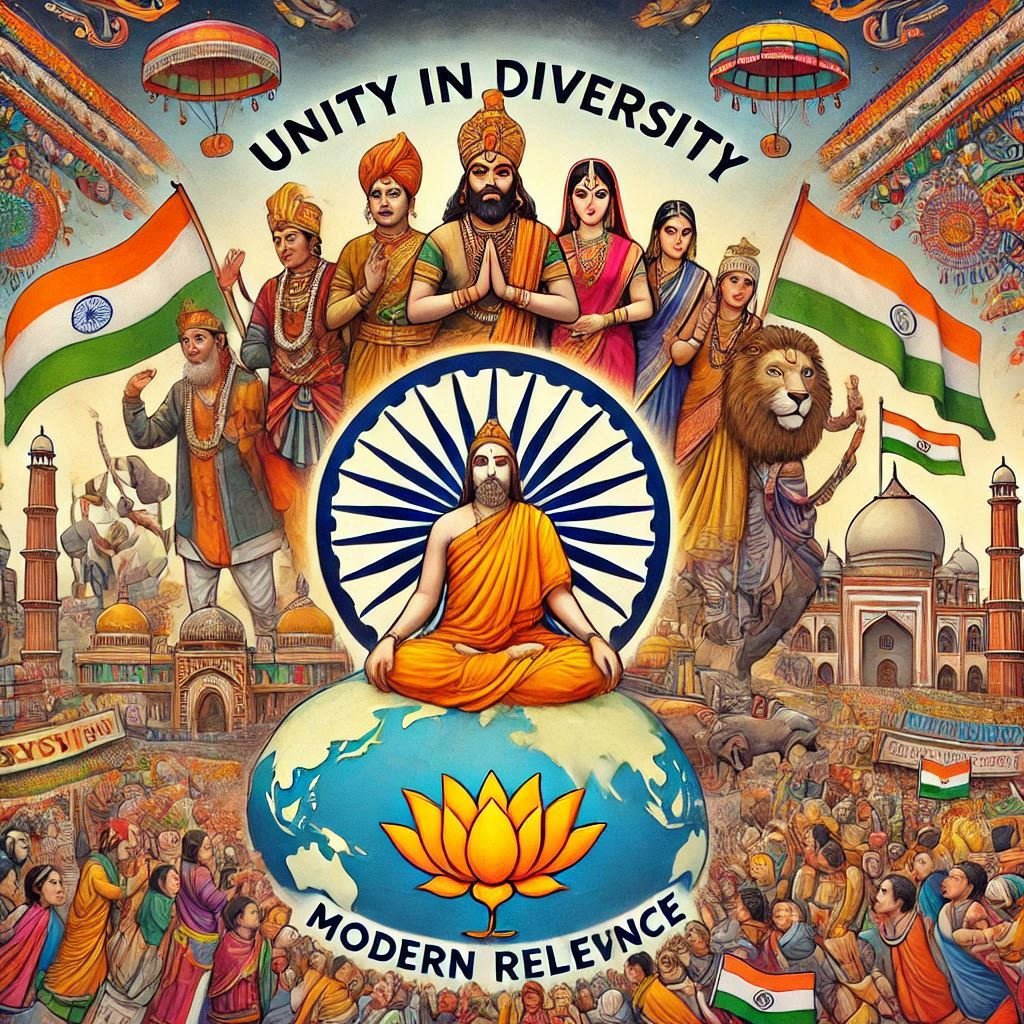
The phrase “unity in diversity” truly encapsulates the spirit of Bharat. Despite the vast differences in language, culture, and traditions, the festivals of Bharat serve as a unifying force, bringing people together in shared celebration. Each festival, whether it is Diwali, Eid, Christmas, or Baisakhi, transcends the barriers of religion, caste, and ethnicity, promoting a sense of communal harmony and collective joy.
The essence of these festivals lies in their ability to unite people. During Diwali, neighbors from different faiths come together to light diyas and share sweets. On Eid, families visit their friends to enjoy a meal together, regardless of their religious beliefs. Similarly, during Christmas, people from all walks of life participate in the festivities, exchanging gifts and attending Christmas masses.
Moreover, festivals often include public celebrations and community events, which further foster social cohesion. For instance, the grand processions of Ganesh Chaturthi in Maharashtra or the Durga Puja pandals in West Bengal are attended by people from various communities, reflecting the inclusive nature of these celebrations.
The concept of unity in diversity is not only a celebration of cultural plurality but also a testament to the enduring spirit of coexistence and mutual respect that defines Bharat. Festivals provide an opportunity for people to appreciate and learn about each other’s traditions, thereby strengthening the social fabric of the nation.
Global Influence of Bharat’s Festivals
The influence of Bharat’s festivals extends far beyond its borders, reflecting the global spread and cultural integration of the Indian diaspora. Festivals such as Diwali, Holi, and Navaratri are now celebrated with much enthusiasm in countries around the world, including the United States, United Kingdom, Canada, Australia, Singapore, and many more. These celebrations are not only confined to Indian communities but have also captivated the interest of people from various cultural backgrounds, promoting multiculturalism and global harmony.
Diwali
- Details: Known as the Festival of Lights, Diwali is celebrated with grand fervor in many countries. Major landmarks such as the Empire State Building in New York and the Sydney Opera House are often illuminated in vibrant colors. Public Diwali events include lighting diyas, fireworks displays, cultural performances, and Indian markets selling traditional sweets and handicrafts. In London, the Diwali festival at Trafalgar Square attracts thousands of visitors every year, making it a key cultural event.
Holi
- Details: Holi, the festival of colors, has gained immense popularity worldwide. In cities like New York, Los Angeles, and Berlin, Holi events are organized in public parks and community centers, where participants of all ages throw colored powders, dance to Bollywood music, and enjoy Indian delicacies. The joyous and inclusive nature of Holi has made it a favorite among people from diverse backgrounds, symbolizing the breaking of barriers and the celebration of life.
Navaratri and Durga Puja
- Details: Navaratri and Durga Puja are celebrated with grandeur by Indian communities in countries like the United States, Canada, and the UK. Elaborate pandals (temporary structures) are set up, housing beautiful idols of Goddess Durga. These festivals feature cultural programs, traditional dances like Garba and Dandiya, and communal feasts. They provide an opportunity for the diaspora to connect with their roots and share their rich cultural heritage with others.
Pongal
- Details: In countries with significant Tamil populations, such as Malaysia, Singapore, and Sri Lanka, Pongal is celebrated with traditional fervour. Public celebrations include cooking Pongal (sweet rice) in earthen pots, cultural performances, and community gatherings. The festival promotes cultural exchange and fosters a sense of community among the Tamil diaspora.
Yugadi (Ugadi / Gudi Padwa)
- Details: Yugadi is celebrated by the Kannada, Marathi and Telugu communities worldwide as the New Year according to the lunisolar calendar. In places like the United States, the UK, and Australia, families come together to prepare traditional foods like Ugadi Pachadi, read the Panchanga (Calendar), and participate in cultural programs that highlight the importance of new beginnings and renewal.
The global celebration of Bharat’s festivals highlights the universal appeal of their themes—joy, renewal, gratitude, and community. These festivals not only preserve cultural heritage but also promote cross-cultural understanding and harmony in an increasingly interconnected world.
Modern Relevance
In today’s modern world, where technology often isolates individuals despite its power to connect, festivals play a crucial role in fostering real, human connections. These traditional celebrations serve as a counterbalance to the rapid pace of contemporary life, offering moments of reflection, joy, and togetherness. They bring families and communities together, often becoming the glue that holds social bonds intact.
Festivals provide a break from the daily grind, allowing people to immerse themselves in cultural rituals and communal activities. This immersion in cultural heritage helps reinforce a sense of identity, especially for younger generations who might be more detached from traditional practices due to globalization and urbanization. Celebrating festivals ensures the continuity of customs and traditions, thereby preserving cultural heritage for future generations.
Moreover, festivals offer an inclusive space where individuals from various backgrounds can come together and celebrate shared values. In a diverse nation like Bharat, where multiple religions, languages, and cultures coexist, festivals serve as a common ground that fosters mutual respect and understanding. This unity is essential in maintaining social harmony and promoting peace.
In the global context, the celebration of Bharat’s festivals by the diaspora helps maintain a connection with their roots, providing a sense of belonging even when far from home. These celebrations also serve as a cultural bridge, promoting Bharat’s rich traditions to a global audience and fostering cross-cultural understanding.
Additionally, festivals contribute to the economy by boosting tourism and supporting local artisans and craftsmen. The demand for traditional attire, handicrafts, and festive foods during these times provides livelihood opportunities and sustains cultural industries.
As society evolves, the ways in which festivals are celebrated may change, incorporating new elements and technologies. However, the core essence of these celebrations—bringing people together, celebrating life, and fostering a sense of community—remains unchanged. In this way, festivals continue to be relevant, serving as a timeless reminder of the values and traditions that bind us together.
Conclusion
The festivals of Bharat are a testament to the rich and diverse cultural fabric that defines the nation. Each celebration, whether it marks a religious event, a seasonal change, or a cultural tradition, serves as a vibrant thread in the intricate tapestry of Indian life. These festivals are more than just moments of joy and celebration; they are profound expressions of the country’s history, spirituality, and communal values.
In every corner of Bharat, from bustling urban centres to quiet rural villages, festivals breathe life into the everyday. They offer a respite from the routine, providing opportunities for people to come together, renew familial and social bonds, and celebrate the myriad facets of life. The sounds of traditional music, the sights of colourful decorations, and the aromas of festive foods create a sensory experience that is both immersive and unforgettable.
As the world changes and societies evolve, so too do the ways in which these festivals are celebrated. Innovations in technology, changing social norms, and global influences all contribute to the dynamic nature of these traditions. Yet, the core values of gratitude, unity, and reverence remain steadfast, ensuring that the essence of these celebrations endures.
Moreover, the global celebration of Bharat’s festivals underscores the universal appeal of their themes. In an increasingly interconnected world, these festivals serve as cultural ambassadors, fostering greater understanding and appreciation across borders. They highlight the beauty of diversity and the power of shared human experiences.
In the next article, we will explore Bharat’s contribution to global mathematics and sciences, delving into the ancient innovations that shaped modern understanding and technology. Stay tuned for this journey into Bharat’s scientific legacy!