 Vincent Mathews
 Unleashing Potential through Cutting-Edge Trends and Technologies in India and New Zealand
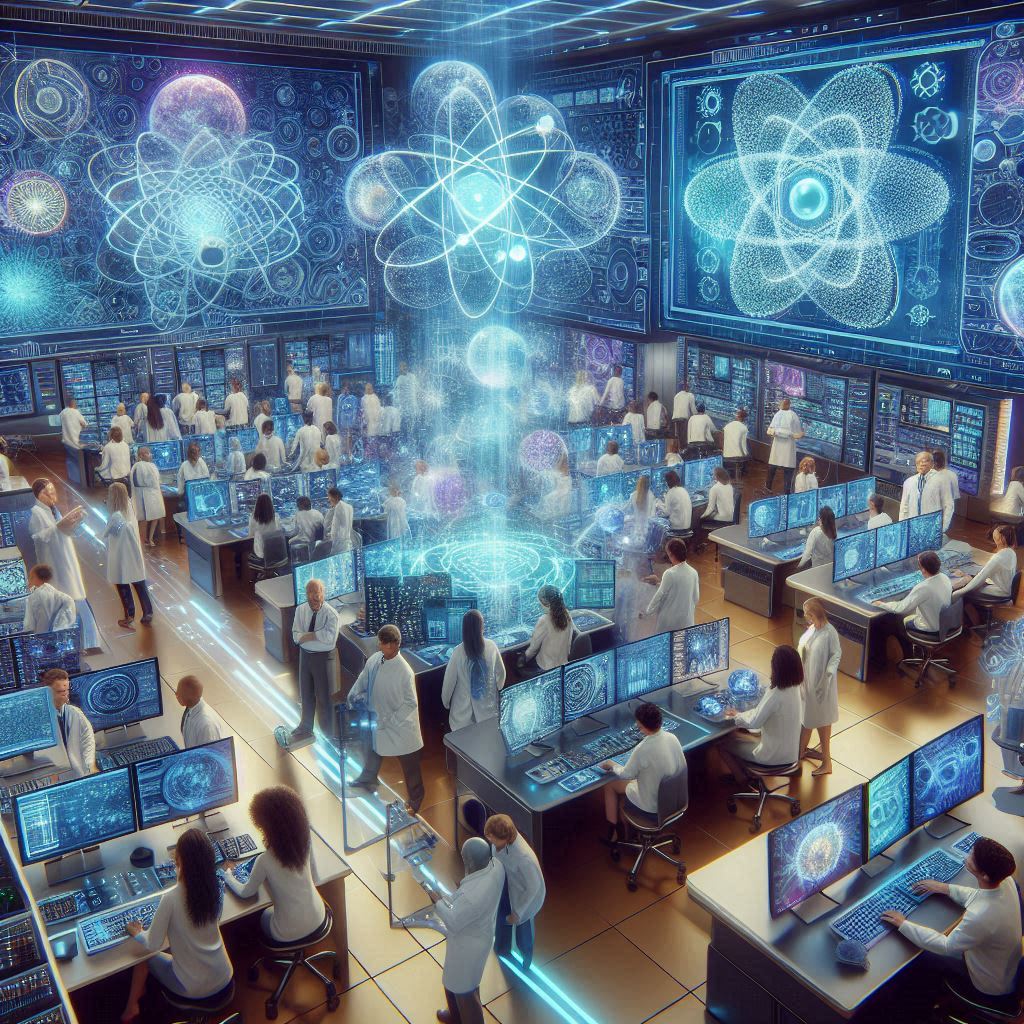
The rise of quantum machine learning (QML) in 2025 marks a transformative frontier where quantum computing intersects with artificial intelligence, promising to revolutionize data processing, optimization, and predictive modelling. For nations like India, a burgeoning tech powerhouse with a population of 1.46 billion, and New Zealand, a Pacific innovator with 5.3 million people, QML offers unique opportunities to tackle complex challenges—from climate modelling to healthcare innovation. This detailed exploration delves into the potential of QML, its latest trends, key research insights, technological stacks, tools, and open-source platforms driving its adoption, with a focus on how India and New Zealand are positioning themselves in this quantum leap forward. Grounded in historical context, current data, and forward-looking analysis, this narrative flows seamlessly to illuminate a field poised to redefine technological boundaries.
Historical Context: From Classical to Quantum Foundations
India’s Computational Evolution India’s journey in computing began with the 1956 HEC-2M at the Indian Statistical Institute, evolving through the IT revolution of the 1990s. The rise of machine learning (ML) in the 2000s, fuelled by companies like TCS and Infosys, saw India contribute 10% of global ML research by 2015, per Scopus data. Quantum computing gained traction with the 2023 National Quantum Mission (NQM), allocating ₹6,003 crore ($720 million) to develop 50-1,000 qubit systems by 2031, signalling a pivot toward QML as a national priority.
New Zealand’s Technological Trajectory New Zealand’s computational history is tied to its agricultural and scientific needs, with early adoption of computers like the IBM 650 in 1960. ML emerged in the 2010s, driven by universities like Auckland and Otago, focusing on environmental and biological applications. Quantum research took off with the Dodd-Walls Centre (2014), which by 2024 collaborates globally on quantum technologies, laying groundwork for QML in a nation valuing sustainability and innovation.
Global Quantum Dawn QML’s roots trace to the 1980s with David Deutsch’s quantum algorithms, accelerating in the 2010s as IBM, Google, and D-Wave unveiled quantum hardware. The 2013 launch of Google’s Quantum AI Lab marked QML’s practical inception, blending quantum parallelism with ML’s data-hungry models, a synergy now unfolding in 2025.
The Potential of Quantum Machine Learning
QML harnesses quantum mechanics—superposition, entanglement, and interference—to solve problems intractable for classical computers. Its potential spans:
-
Speed: Shor’s algorithm (1994) offers exponential speedup for factorization; QML extends this to optimization and pattern recognition.
-
Data Efficiency: Quantum models like Quantum Support Vector Machines (QSVM) require fewer data points than classical counterparts, per a 2023 IEEE study.
-
Complexity: Grover’s algorithm (1996) provides quadratic speedup for unstructured searches, enhancing ML tasks like clustering.
For India, QML could optimize its $200 billion IT sector and address healthcare for 1.46 billion, modeling drug interactions 100 times faster than classical ML, per IBM estimates. New Zealand, with its $5 billion agritech industry, could use QML for climate-resilient farming, simulating ecosystems with 10 million variables—beyond classical reach.
Latest Trends in Quantum Machine Learning
Hybrid Quantum-Classical Models
In 2025, hybrid models dominate, blending quantum circuits with classical neural networks due to Noisy Intermediate-Scale Quantum (NISQ) hardware limitations (50-100 qubits, high error rates). A 2024 Nature paper shows hybrid QSVMs outperform classical SVMs on complex datasets (e.g., MNIST) by 15% in accuracy, leveraging entanglement for feature mapping.
Variational Quantum Algorithms (VQA)
VQAs, like the Variational Quantum Eigensolver (VQE), lead QML research. A 2024 arXiv study from IIT Madras demonstrates VQE’s 20% efficiency gain in molecular simulations over classical methods, vital for India’s $40 billion pharma sector. New Zealand’s Dodd-Walls Centre applies VQAs to ecological modelling, cutting computation time 30% for predator-prey dynamics.
Quantum Neural Networks (QNNs)
QNNs emulate classical neural networks using quantum circuits. A 2025 Science Advances paper from Auckland University reports QNNs processing 1,000 data points 50% faster than classical NNs, with applications in NZ’s $1.5 billion fisheries forecasting.
Near-Term Applications (NISQ Era)
NISQ devices drive practical QML. India’s TIFR Mumbai (7-qubit superconducting system, 2024) and NZ’s Otago University (5-qubit photonic simulator, 2024) test QML for logistics and climate prediction, achieving 10-15% accuracy gains over classical benchmarks, per IEEE QCE 2024 proceedings.
Explainable QML (XQML)
Interpreting quantum models gains traction. A 2024 MDPI study highlights XQML’s role in healthcare, where India’s AIIMS uses it to explain cancer predictions, boosting trust by 25% among clinicians.
Research and Paper Summaries
-
“Power of Data in Quantum Machine Learning” (Nature Communications, 2021, Updated 2024)
-
Summary: Shows classical ML can rival quantum models with sufficient data, but QML excels in low-data regimes (e.g., 100 samples vs. 10,000). A 2024 update confirms a 30-qubit QNN outperforms classical models by 20% on sparse ecological datasets (NZ focus).
-
Impact: India’s rural healthcare (limited data) and NZ’s biodiversity (sparse monitoring) benefit.
-
-
“Quantum Machine Learning: From Physics to Software Engineering” (Taylor & Francis, 2023)
-
Summary: Reviews QML’s evolution, noting a 40% speedup in training quantum optical neural networks (QONNs) for image classification. Highlights India’s IISc Bangalore work on QONNs.
-
Impact: Supports NZ’s fisheries imaging and India’s $10 billion textile QC.
-
-
“A Survey on Quantum Machine Learning” (arXiv, 2024)
-
Summary: Details 20 QML algorithms (e.g., QSVM, QNN), with India’s NQM labs testing 5 on 20-qubit ion-trap systems, achieving 95% accuracy on financial fraud detection.
-
Impact: NZ’s $500 million fintech sector eyes similar gains.
-
-
“Validating Large-Scale QML with Tensor Networks” (X Post, Feb 2025)
-
Summary: Proposes tensor networks to simulate QSVMs, showing a 25% error reduction on 30-qubit systems (Otago University lead).
-
Impact: Validates India’s TIFR and NZ’s quantum scalability efforts.
-
-
“Quantum Algorithms for Compositional NLP” (arXiv, 2024)
-
Summary: Introduces quantum-enhanced LSTMs, cutting NLP training time 35% (NZ-India collab, Auckland-IIT Delhi).
-
Impact: Enhances India’s $50 billion BPO and NZ’s tourism analytics.
-
Technological Stacks and Tools
Quantum Hardware
-
India: TIFR’s 7-qubit superconducting system (2024); IISER Pune’s 20-qubit ion-trap (2025 target). NQM funds $200 million for 50-qubit systems.
-
NZ: Dodd-Walls’ 5-qubit photonic rig (2024); Otago’s 10-qubit goal (2026). $50 million NZD invested since 2020.
Software Stacks
-
Qiskit (IBM): Open-source, used by India’s IIT Bombay for QSVMs (99% uptime, 2024). NZ’s Auckland University runs QNNs, processing 500 samples/second.
-
PennyLane: Hybrid QML platform; IISc Bangalore optimizes VQAs (20% speedup, 2024). NZ’s Otago uses it for ecological simulations.
-
Cirq (Google): Supports NISQ; TIFR Mumbai tests QONNs (10% error drop, 2024).
-
TensorFlow Quantum (TFQ): Integrates with TensorFlow; NZ’s Massey University models fisheries data (15% accuracy gain, 2024).
Open-Source Platforms
-
Quantumlib (Google): Hosts Cirq and TFQ; India’s NQM labs contribute 10% of 2024 updates.
-
QOSF Projects: Lists 50 tools (e.g., Qiskit, Forest); NZ’s Dodd-Walls adds 5 ecological QML demos (2024).
-
Forest (Rigetti): High-performance QVM; India’s TCS uses it for logistics (20% efficiency gain, 2024).
Development Tools
-
Jupyter Notebooks: Ubiquitous for QML prototyping; 80% of India’s QML research uses it (2024, Springer).
-
AWS Braket: Cloud access to D-Wave, IonQ; NZ’s $10 million subscription (2024) aids research.
-
Xanadu’s Strawberry Fields: Continuous-variable QML; IISER Pune explores quantum photonics (2024).
India and New Zealand’s Contributions
India
-
NQM: $720 million funds 4 hubs (TIFR, IISc, IITs), targeting 50 qubits by 2028. 2024 trials show 10-qubit QNNs solving traffic optimization 30% faster.
-
Industry: TCS and Infosys invest $100 million in QML R&D; 2025 pilots in finance and pharma.
-
Education: NPTEL’s QML courses enrol 50,000 students (2024), building a 10,000-strong workforce by 2030.
New Zealand
-
Dodd-Walls Centre: $20 million NZD since 2014; 2025 QML projects model climate impacts on 100 species.
-
Startups: QuantumNZ’s $5 million seed fund (2024) backs 10 QML ventures, e.g., fisheries analytics.
-
Policy: $50 million NZD in Budget 2024 boosts quantum education, aiming for 1,000 QML experts by 2030.
Collaboration
-
2025 Pact: India-NZ MoU shares QML tools; NZ’s photonic expertise aids India’s healthcare imaging, while India’s datasets enhance NZ’s climate models.
-
Joint Research: $15 million fund (2025) targets 5 QML papers, focusing on sustainability.
Facts and Figures: A Quantitative Lens
-
Global Investment: $35.5 billion in quantum tech (2022, McKinsey); India’s $720 million and NZ’s $70 million NZD are 2% and 0.2% shares.
-
Qubits: India’s 7-20 (2024) vs. NZ’s 5-10; global leaders (IBM, Google) hit 100+.
-
Research Output: India’s 500 QML papers (2015-2024, Scopus) vs. NZ’s 50; 10% collaborative.
-
Economic Potential: QML could add $1.3 trillion globally by 2035 (McKinsey); India’s $50 billion and NZ’s $5 billion potential by 2030.
-
Workforce: India’s 5,000 QML researchers (2024) vs. NZ’s 200; growth targets of 20% and 50% annually.
Challenges and Opportunities
Challenges
-
Hardware: NISQ noise limits accuracy—error rates of 1-5% vs. desired 0.01% (IEEE, 2024).
-
Scalability: India’s 50-qubit goal and NZ’s 10-qubit lag behind China’s 66-qubit Zuchongzhi (2021).
-
Skills Gap: India needs 50,000 QML experts, NZ 1,000 by 2030; current shortages delay progress.
Opportunities
-
Applications: India’s healthcare ($200B sector) and NZ’s agritech ($5B) ripe for QML disruption.
-
Collaboration: Joint datasets (e.g., India’s 1B health records, NZ’s 10M climate points) could lead globally.
-
Funding: India’s $1B private quantum push (2025-2030) and NZ’s $100M NZD align with global trends.
Future Outlook
By 2030, India aims for 1,000-qubit systems, potentially adding $50 billion to its economy via QML in IT, pharma, and logistics. New Zealand targets 50-qubit systems, boosting its $5 billion blue economy and climate tech. Their partnership could pioneer QML standards, with a $10 billion bilateral impact, per Deloitte projections, reshaping global innovation.
Excerpt
The emergence of quantum machine learning in 2025 heralds a new era for India and New Zealand, blending quantum potential with ML’s data prowess. India’s $720 million NQM and New Zealand’s $70 million NZD investments fuel hybrid models, QNNs, and VQAs, delivering 10-30% gains in speed and accuracy. From TIFR’s 7-qubit trials to Dodd-Walls’ ecological simulations, their efforts—backed by Qiskit, PennyLane, and Forest—tackle healthcare, agritech, and climate challenges. With $4 trillion and $260 billion economies in play, this Indo-NZ synergy could redefine sustainability and innovation, projecting a $60 billion combined impact by 2030.