 Dorothy Brown
 Kia ora, friends—imagine brewing rongoā in a Coromandel kete, herbs steeping under moonlight, but picture instead a Kerala clinic, where an Ayurvedic vaidya pulses a wrist to balance doshas, or a Mumbai hospital, where a surgeon threads a stent with laser precision. This is the 53rd remedy in our 100-article journey through Bharat Is Not for Beginners, a remarkable trek that’s unveiled a land of vibrant wisdom and bold progress. Now, we’re tending back into Bharat’s healing hands—its medical innovations and living care—where every cure, every touch, is a taonga, a treasure crafted from Vedic herbs to cutting-edge labs. This isn’t just about medicine; it’s Bharat mending its whakapapa with a gentle heart and a sharp mind.
Bharat doesn’t approach healing with a hasty bandage—it nurtures with depth and devotion. Its medical kaupapa isn’t a faded scroll; it’s a vibrant hui, a gathering of remedies, rituals, and research that stretches from the sacred yajna’s herbal offerings to the gleaming wards of today’s institutes. This land is a living apothecary, a vital ticker that’s soothed its people through plagues, wars, and wellness with a profound respect for body and soul. This isn’t for those after a quick pill—it’s an exploration of a civilisation that’s made its care a remarkable legacy, a practice that weaves its past into its present with compassion and ingenuity.
The Vedic Pulse: Healing’s Sacred Beginnings
Let’s step back to 1500 BCE, when healing was more than cure—it was divine. The Rigveda invokes Ashvins, twin gods of medicine, their chariot bearing herbs to mend the sick, their praises sung in yajna chants where soma juice was offered for vitality. Rta, the cosmic order, guided health—disease was imbalance, a rift in prana’s flow, to be righted with plants and prayers. The Atharvaveda, by 1000 BCE, listed oshadhi—medicinal herbs—like tulsi for fever, arjuna for heart, a rishi’s pharmacopoeia rooted in forest and field.
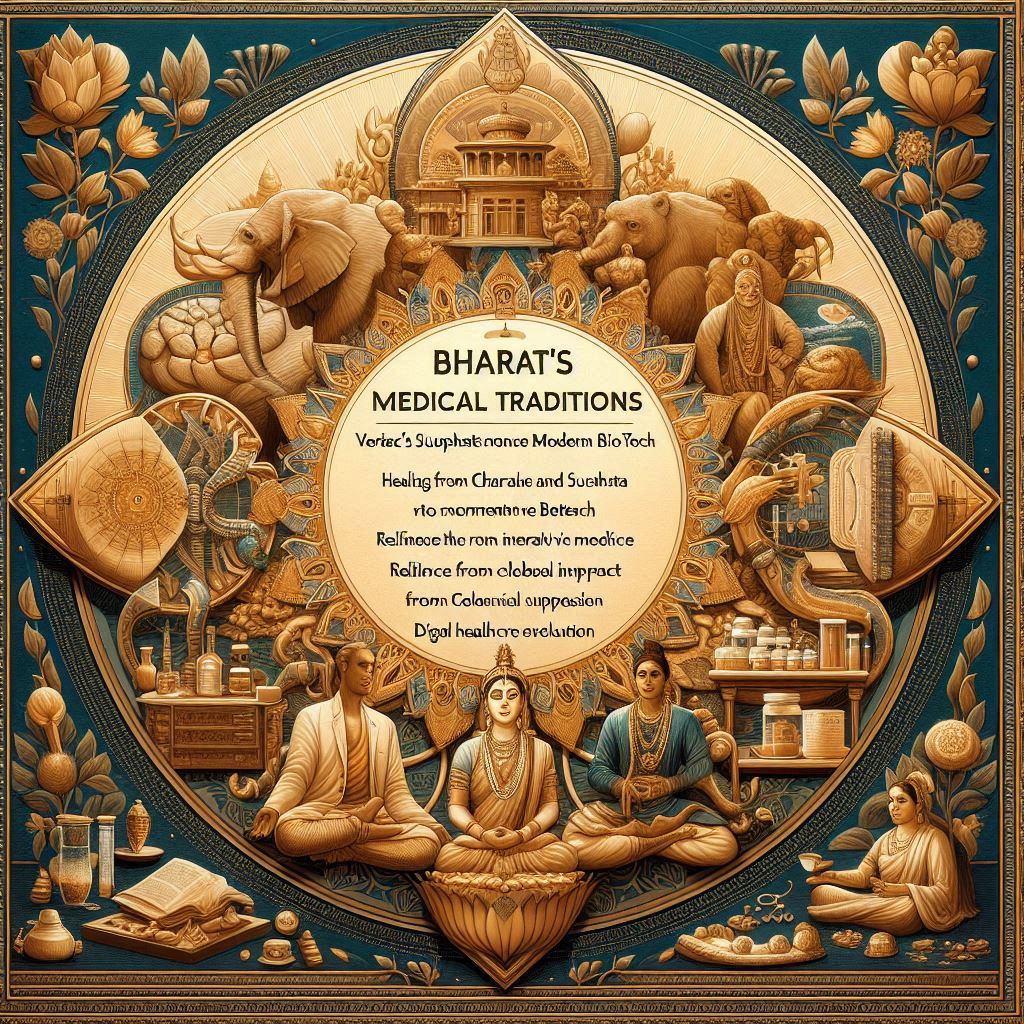
By 600 BCE, Ayurveda took shape—Charaka Samhita mapped doshas (vata, pitta, kapha), diagnosing ailments through pulse and tongue, prescribing diets, oils, and mantras. Sushruta Samhita, from the same era, detailed surgery—cataract couching, skin grafts, even nose repairs—using shastra tools honed sharper than Vedic iron. Yogashastra added breath—pranayama—to steady mind and lung, a jyotisha-timed cure for spirit. Village vaidyas boiled kashayam—herbal brews—in clay pots, their steam a homam gift to health.
This wasn’t mere doctoring—it was chikitsa, the art of life. Healers weren’t just physicians; they were bhisaj, bearers of a sacred trust, their care a hui that linked Bharat’s spirit to its herbs and hands with a sage’s wisdom and a deep wairua, a spiritual healing that endures.
A Whānau of Remedies: Healing Across the Land
Bharat’s medical traditions form a whānau, a family of practices, each region brewing its own cure. Kerala’s Ayurveda thrives—Panchakarma cleanses with sesame oil massages, while Kottakkal clinics blend siddha herbs for joint pain, a Malabar taonga steeped in coconut groves. Up north, Himachal’s Tibetan medicine grinds yak-bone powders in Lahaul, a Buddhist hui that aligns rLung with Himalayan winds.
Tamil Nadu’s Siddha system, born in Sangam hills, mixes mercury and neem for skin woes, its vaidyars chanting Tamil mantras over copper vats. Bengal’s Unani—Greco-Arabic healing—stews saffron for digestion, a Mughal legacy alive in Kolkata’s bazaars. Rajasthan’s folk vaidyas rub guggul resin on arthritis, a desert remedy as old as its forts, while Gujarat’s Jain healers brew triphala for gut health, an ahimsa-guided tonic.
In Assam, Bodo tribes boil bhumura roots for fever, a Brahmaputra cure tied to forest spirits, while Odisha’s Santal shamans use haritaki for eyes, their chants a pre-Vedic pulse. From Ladakh’s Amchi bone-setters to Andaman’s Jarawa leaf poultices, Bharat’s remedies are a whānau—diverse, rooted, and truly impressive, each a vital thread in the land’s healing web.
Healing Mana: Care Meets Spirit
Bharat’s medicine carries mana—sacred vitality infused in every dose. Ayurveda isn’t just science; it’s dharma, aligning body with rta’s rhythm, every kashayam a homam prayer for balance. Tulsi, planted in courtyards, is devi—its leaves a tika to health, its roots a yajna anchor. Soma, the Vedic elixir, lifted spirit to Brahman, a ritual brew for mind and soul.
Festivals weave this mana—Dhanvantari Jayanti honours the healing god, vaidyas blessing herbs with sandalwood paste. Temples like Tirupati offer prasadam—sweets laced with saffron—for strength, a sacred chikitsa for pilgrims. Even daily life reflects it—mothers stir haldi—turmeric—into milk for cuts, a rta-guided warmth, while farmers chew neem twigs for teeth, an ahimsa brush.
Yoga ties breath to being—asanas like Surya Namaskar mend spine and spirit, a Vedic flow in morning dew. Tribal jhaad-phoonk—shamanic chants—cast out ailments, a forest mantra alive in Jharkhand’s hills. Healing wasn’t a transaction here—it was wairua, a sacred hui tying Bharat’s spirit to its herbs and hands, a living nada brahma in pulse and potion.
The Global Hui: Care Reaches Out
Bharat’s healing wisdom didn’t stay rooted—it spread wide. By 200 BCE, Ayurveda’s triphala reached Persia, its gut-cleansing fame a Silk Road taonga. Buddhist monks carried Sushruta’s surgical notes to China, their scalpels shaping Tang clinics. Chola ports shipped sandalwood oils to Arabia, a yajna balm for desert sores.
Mughal Unani blended Greek humors with Desi herbs, its majoon tonics cheering Ottoman courts. British colonials pinched haldi for antiseptic balms, a Vedic trick in Victorian kits. Today, it’s a global hui—NZ’s naturopaths brew tulsi teas in Nelson, a Vedic twist in Kiwi cups. In Wellington, yoga studios teach pranayama, while Auckland’s surgeons study Sushruta’s grafts for skin repair.
From California’s Ayurveda spas to Dunedin’s herbal clinics, Bharat’s care is a friend—gentle, wise, and truly far-reaching, a Vedic pulse healing the global whānau.
The Modern Rāka: Care Keeps Mending
Colonial times tried to stifle it—Western allopathy pushed vaidyas aside—but Bharat’s healing stood firm. Post-1947, the waka turned with purpose. AIIMS, founded 1956, blends Sushruta’s precision with CT scans, training surgeons who mend hearts worldwide. Patanjali revives Ayurveda, its triphala pills in every chemist, a rishi’s cure gone retail.
Jan Aushadhi clinics, launched 2008, bring cheap generics to villages, a dharma-driven health net. Biotech booms—Bengaluru’s Biocon crafts insulin, a global lifeline, while Hyderabad’s vaccines shield millions. Telemedicine apps, like Practo, link vaidyas to remote patients, a digital chikitsa for Himalayan hamlets.
Kiwi friends see the spark—Auckland’s integrative clinics echo Ayurveda’s holistic vibe, Wellington’s physios nod Yoga’s asanas. It’s not a relic—it’s a live rāka, Bharat’s healing mana mending from Vedic oshadhi to robotic surgery, a care that keeps thriving.
Why the Hands Stay Healing
What keeps this care alive? Bharat’s devotion runs deep—nanas boil kashayam for colds, tamariki learn Yoga in schoolyards. Vaidyas guard chikitsa like treasures, passing down Ayurveda with a Hurricanes ruck’s focus. It’s Vedic at its core—prana’s flow, rta’s balance, still hold it tapu, a sacred trust unbroken.
Communities keep it vital—village herb gardens, urban wellness hubs, temple prasadam kitchens. UNESCO’s marked Ayurveda as heritage, but it’s the people who uphold the kaupapa—stirring haldi in kitchens, researching vaccines in labs, teaching pranayama to the next wave. It’s not just medicine—it’s whakapapa, a care Bharat’s offered since the rishis crushed tulsi, a healing that stands strong.
Why It’s a Vital Yarn
Why tend back into Bharat’s healing hands? Because it’s a vital yarn—cures that soothe, restore, and inspire, a remarkable tale that deserves a deep breath. It’s taonga—oshadhi older than the Treaty waka, haldi glowing with Vedic fire—and it’s alive, mending from Kaikoura’s shores to anywhere health matters. For us in Aotearoa, it’s a hui—sip a tulsi tea, stretch a Surya Namaskar, catch Bharat’s spark in every remedy.
This care bridges worlds—past and present, herb and hospital, Bharat and beyond. It’s in the kashayam that cools a fever, the stent that saves a heart, the asana that lifts a spirit. It’s not just medicine; it’s wairua, a spiritual force, and Bharat’s got it healing strong, a care that invites us all to mend, to nurture, to join the pulse.
Excerpt
That’s 53 remedies in our 100-article rāka of Bharat Is Not for Beginners, and Bharat’s still mending—a land of remarkable gifts. Keep your heart open as we tend more of its taonga. Join us tomorrow for Article 54: “Bharat Is Not for Beginners – The Starlit Path Returns: Bharat’s Philosophical Traditions and Living Wisdom”, where we’ll wander back into the truths that guide a civilisation’s soul.