 Dorothy Brown
 Kia ora, friends—imagine carving kōwhaiwhai patterns in a Rotorua workshop, the wood warm under your chisel, but picture instead a Jaipur bazaar, where a silversmith hammers a kundan necklace under lantern glow, or a Bengaluru studio, where artisans blend terracotta with tech for global galleries. This is the 60th creation in our 100-article journey through Bharat Is Not for Beginners, a remarkable trek that’s unveiled a land of vibrant legacies and bold artistry. Now, we’re carving back into Bharat’s sacred craft—its handicraft traditions and living art—where every curve, every stitch, is a taonga, a treasure shaped from Vedic tools to modern hands. This isn’t just about objects; it’s Bharat crafting its whakapapa with skill and soul.
Bharat doesn’t approach its handicrafts with a careless stroke—it shapes with precision and reverence. Its artisan kaupapa isn’t a dusty relic; it’s a vibrant hui, a gathering of materials, techniques, and stories that stretch from the sacred yajna’s ritual vessels to the designer boutiques of today’s cities. This land is a living atelier, a soulful ticker that’s adorned its people through rituals, trade, and beauty with a profound respect for craft and culture. This isn’t for those after a quick trinket—it’s an exploration of a civilisation that’s made its artistry a remarkable legacy, a craft that binds its past to its present with care and creativity.
The Vedic Chisel: Handicrafts’ Sacred Beginnings
Let’s step back to 3000 BCE, when the first crafts took form. In the Indus Valley, Harappa’s artisans shaped steatite seals with unicorn motifs, their precision a rta-guided art, older than Mesopotamia’s beads. The Rigveda, from 1500 BCE, praises Vishwakarma, the divine craftsman, his hammer forging yajna kundas—fire altars—from bronze, their shine a homam offering to Agni. Atharvaveda blessed wood and clay, their carvings a mantra for protection.
By 800 BCE, Shilpa Shastra—craft texts—detailed murti sculpting, jewellery forging, and pottery glazing, its mandala patterns a jyotisha-timed guide for harmony. Mauryan artisans, around 300 BCE, polished Ashokan pillars—40-tonne monoliths—without cracks, their lotus capitals a dharma in stone. Chola bronzes, from 900 CE, cast Nataraja in lost-wax, their shakti a yajna-fired dance. Arthashastra taxed gold filigree and ivory inlays, praising vaidya-etched copper for healing.
This wasn’t mere crafting—it was shilpa-kala, the art of form. Artisans weren’t just makers; they were shilpis, keepers of a sacred spark, their works a hui that linked Bharat’s spirit to its chisels and clays with a rishi’s reverence and a deep wairua, a spiritual craft that endures.
A Whānau of Crafts: Handicrafts Across the Land
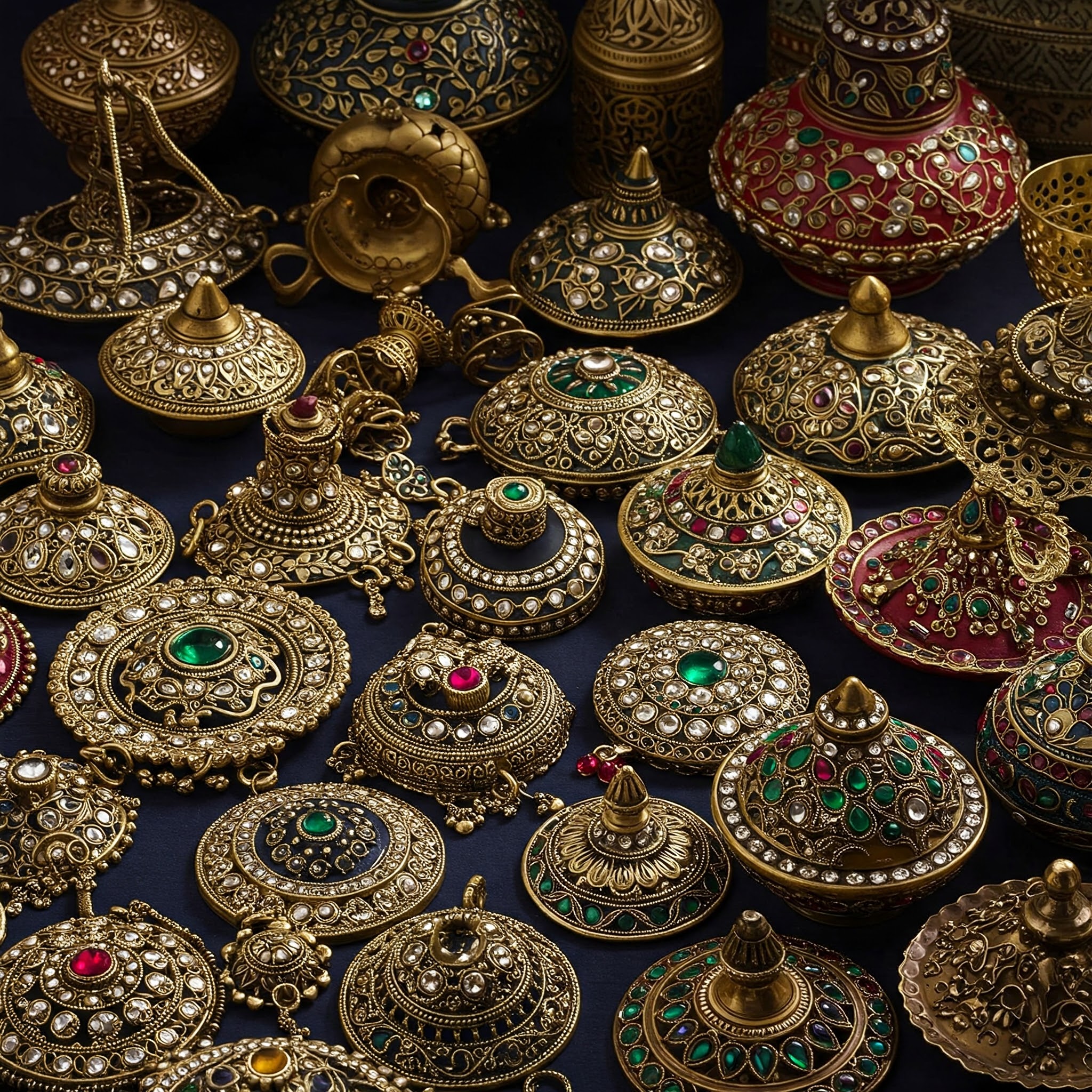
Bharat’s handicrafts form a whānau, a family of creations, each region shaping its own art. In Rajasthan, Jaipur’s kundan jewellery sets gems in gold, a Rajput taonga for bridal tikas. Down south, Tamil Nadu’s Tanjore paintings gild deities with gold leaf, a Chola shine for temple walls. Bengal’s terracotta plaques sculpt Durga in Bishnupur, a delta hui fired in clay kilns.
Gujarat’s Kutch embroidery stitches mirrorwork on ghagra, a Jain-tempered ahimsa in thread. Kerala’s Aranmula mirrors polish bronze to reflect Vishnu, a coastal shilpa for puja. Punjab’s jutti shoes embroider leather with phulkari blooms, a Sikh warmth for gurdwara steps. Odisha’s Pattachitra paints Jagannath on palm leaf, its ink a temple chant.
Assam’s cane baskets weave bamboo into jaapi hats, a Brahmaputra craft for tea pickers. Maharashtra’s Warli art dots mud walls with rice paste, a tribal rta for harvests. Kashmir’s papier-mâché boxes bloom lotuses in lacquer, a Himalayan glow, while Andaman’s shell carvings etch coral motifs, a tidal shilpa. From Ladakh’s thangka scrolls to Uttar Pradesh’s chikan kurtas, Bharat’s crafts are a whānau—rich, varied, and truly impressive, each a stroke in the land’s artistic soul.
Crafted Mana: Handicrafts Meet Spirit
Bharat’s handicrafts carry mana—sacred essence shaped in every form. Shilpa isn’t just craft; it’s dharma, aligning atman with rta’s beauty, every murti a homam prayer for grace. Nataraja’s bronze dance is Shiva’s tandava, a tika to Brahman. Kumkum boxes, carved in sandalwood, hold devi’s blessing, a yajna touch for foreheads.
Festivals forge this mana—Diwali lights terracotta diyas, their wick a jyotisha glow. Ganesh Chaturthi crafts clay Ganeshas, their visarjan a rta-guided return to earth. Even daily life reflects it—mothers stitch kantha on saris, artisans gild Tanjore frames, a rta-guided warmth. Ayurveda uses copper kalsi for healing, a shilpa cure in every sip.
Jain woodcarvers skip ivory for ahimsa, their jalis a sadhana in grain. Tribal Bheels in Madhya Pradesh etch totem stones, a pre-Vedic shilpa-kala alive in ritual. Crafts weren’t just objects here—they were wairua, a sacred hui tying Bharat’s spirit to its hammers and hues, a living nada brahma in carve and cast.
The Global Hui: Crafts Reach Out
Bharat’s craft wisdom didn’t stay shelved—it travelled far. By 200 BCE, Chola bronzes sailed to Java, their Nataraja a shilpa taonga for Bali’s temples. Gupta ivory combs reached Rome, a Vishwakarma finesse for emperors. Mughal miniatures inspired Persian manuscripts, a Desi brush gone global.
British colonials pinched chikan for lace, a Vedic needle in Victorian gowns. Today, it’s a global hui—NZ’s artisans weave Kutch mirrorwork in Nelson markets, a Vedic twist on Kiwi throws. In Wellington, Tanjore prints grace galleries, while Auckland’s jewellers study kundan for bespoke rings.
From Paris’s Pattachitra exhibits to Dunedin’s thangka fairs, Bharat’s crafts are a friend—artful, timeless, and truly far-reaching, a Vedic chisel shaping the global whānau’s treasures.
The Modern Rāka: Crafts Keep Shaping
Colonial times tried to dull it—British factories outshone shilpis—but Bharat’s crafts held firm. Post-1947, the waka turned with pride. Cottage Industries, founded 1950s, revived chikan and terracotta, its co-ops a dharma-driven spark for villages. Dilli Haat, Delhi’s 1993 market, sells Pattachitra and juttis, a shilpa-kala gone retail.
Designers like Ritu Kumar fuse zari with denim, their kurtas strutting Milan, while FabIndia markets Warli bags globally, a Vishwakarma touch for totes. Tech joins in—3D printers in Bengaluru craft jalis, yet hand-chisels keep sandalwood alive. Eco-crafts in Gujarat use banana fibre, a haldi-hued ahimsa for sustainability.
Kiwi friends see the spark—Auckland’s Ponsonby stalls sell chikan scarves, Wellington’s makers mimic thangka’s scroll. It’s not a relic—it’s a live rāka, Bharat’s craft mana shaping from Vedic kundas to designer shelves, an art that keeps carving.
Why the Craft Stays Sacred
What keeps this artistry alive? Bharat’s devotion runs deep—nanas teach kantha to tamariki, their needles threading tales. Shilpis guard shilpa-kala like treasures, passing down kundan with a Hurricanes ruck’s focus. It’s Vedic at its core—rta’s harmony, dharma’s grace, still hold it tapu, a sacred trust unbroken.
Communities keep it vibrant—village craft melas, urban design hubs, temple murti workshops. UNESCO’s marked Pattachitra as heritage, but it’s the people who uphold the kaupapa—hammering silver in sheds, painting Warli in huts, teaching shilpa to the next wave. It’s not just craft—it’s whakapapa, an art Bharat’s shaped since the rishis carved Vishwakarma’s kunda, a creation that stands soulful.
Why It’s a Soulful Yarn
Why carve back into Bharat’s sacred craft? Because it’s a soulful yarn—creations that adorn, endure, and inspire, a remarkable tale that deserves a deep touch. It’s taonga—steatite older than the Treaty waka, kundan glowing with Vedic fire—and it’s alive, crafting from Kaikoura’s shores to anywhere beauty matters. For us in Aotearoa, it’s a hui—wear a jutti, frame a Tanjore, catch Bharat’s spark in every carve.
This craft bridges worlds—past and present, kunda and gallery, Bharat and beyond. It’s in the murti that guards a puja, the jali that shades a home, the thangka that lifts a prayer. It’s not just handicrafts; it’s wairua, a spiritual force, and Bharat’s got it shaped strong, a craft that invites us all to create, to cherish, to join the art.
Excerpt
That’s 60 creations in our 100-article rāka of Bharat Is Not for Beginners, and Bharat’s still crafting—a land of remarkable gifts. Keep your tools sharp as we shape more of its taonga. Join us tomorrow for Article 61: “Bharat Is Not for Beginners – The Sacred Verse Returns Again: Bharat’s Literary Traditions and Living Words”, where we’ll weave back into the stories that voice a civilisation’s soul.