




 Tracey Beatrice
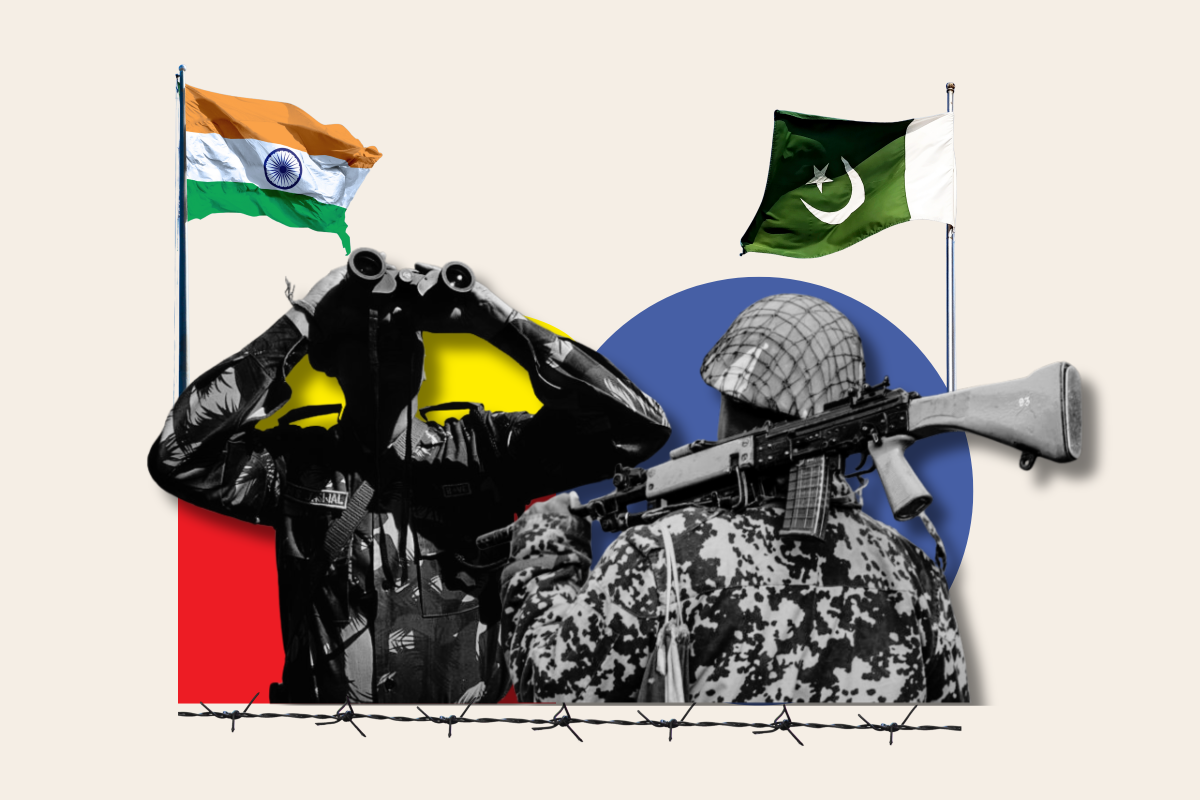
 The latest India-Pakistan crisis, triggered by Pakistan-backed terror attacks in Kashmir and India’s decisive strikes on terror camps in Pakistan-occupied Jammu & Kashmir (PoJK), has once again drawn the world’s attention to South Asia’s volatile security environment. As the two nuclear-armed neighbours stand at the brink, global powers are watching closely-each with its own interests, strategies, and agendas. This article examines how China, Turkey, Israel, the US, and Russia are responding, whether China might exploit the situation, why Turkey continues to back Pakistan and terror proxies, and how the military capabilities of India and Pakistan compare in 2025.
China: Calculated Support, Reluctance for Direct Escalation
Diplomatic Maneuvering and “Ironclad” Rhetoric
China’s relationship with Pakistan is often described as “all-weather” and “ironclad.” In this crisis, Beijing has offered diplomatic support to Islamabad, backing Pakistan in international forums and helping dilute United Nations statements critical of Pakistan’s role in cross-border terrorism. Chinese Foreign Minister Wang Yi has reiterated support for Pakistan’s “sovereignty and security interests,” and Beijing has called for an “impartial investigation” into the Pahalgam massacre, subtly shifting the focus away from Pakistan’s culpability.
Reluctance for Direct Military Involvement
Despite its rhetoric, China is unlikely to offer direct military support to Pakistan. Several factors drive this caution:
- Trade with India: Bilateral trade exceeds $100 billion, and China cannot afford to jeopardise its economic interests, especially amid a trade war with the US and tariffs on Chinese goods.
- Border Stability: After the 2024 de-escalation along the Line of Actual Control (LAC), China seeks a stable Himalayan frontier, not another flashpoint.
- Global Distractions: With tensions in the Taiwan Strait and the South China Sea, China cannot risk a costly military entanglement in South Asia.
Mediation Aspirations, Indian Skepticism
China has signalled willingness to “play a constructive role” in de-escalating tensions, but New Delhi remains wary, given Beijing’s close ties with Islamabad and its past record of shielding Pakistan-based terrorists at the UN. India views China’s mediation offers as self-serving and unlikely to be impartial.
Exploiting the Crisis?
While China will avoid direct confrontation, it may use the crisis to:
- Divert Indian Military Focus: By keeping India preoccupied on its western front, China can maintain strategic leverage along the LAC.
- Strengthen CPEC: Any instability in Pakistan gives China more influence over the China-Pakistan Economic Corridor and Gwadar port.
- Undermine Indian Diplomacy: Beijing may continue to block or dilute anti-Pakistan resolutions at the UN, limiting India’s diplomatic gains.
Turkey: Unabashed Support for Pakistan and Terror Proxies
Ideological and Geopolitical Alignment
Turkey under President Erdogan has become a vocal backer of Pakistan, often echoing Islamabad’s narrative on Kashmir and providing diplomatic cover for Pakistan’s actions. Turkey’s support is rooted in:
- Islamist Solidarity: Erdogan’s regime seeks to position itself as a leader of the Muslim world, using Kashmir as a rallying point.
- Strategic Partnerships: Turkey and Pakistan have deepened military ties, with Ankara supplying drones, training, and even advocating for Pakistan’s position in international forums.
Backing Terror Proxies
Turkey’s intelligence networks have been accused of facilitating the movement and funding of extremist groups, including those with a footprint in South Asia. Turkish support emboldens Pakistan-based terror outfits and complicates India’s counter-terror diplomacy.
Diplomatic Fallout
Turkey’s stance has led to a cooling of relations with India, with New Delhi reducing diplomatic engagement and curbing economic ties. Turkey’s actions are increasingly seen as destabilising and out of step with the broader international consensus on terrorism.
Israel and the United States: Calls for Restraint, Strategic Calculations
Israel: Quiet Support for India
Israel has become one of India’s closest defence partners, supplying advanced weaponry, drones, and intelligence systems. While Jerusalem has called for restraint and de-escalation, it quietly backs India’s right to self-defence against terrorism. Israeli defence technology, including missile defence and surveillance systems, has played a role in bolstering India’s border security and counter-terror operations.
United States: Balancing Act
The US response is nuanced:
- Encouraging Dialogue: The US State Department and Secretary of State have urged both sides to de-escalate and resolve differences through dialogue.
- Strategic Interests: Washington views India as a key partner in the Indo-Pacific, but also values its security ties with Pakistan, particularly for counter-terrorism and regional stability in Afghanistan.
- No Appetite for Escalation: The US is unlikely to support any military adventurism by either side, focusing instead on crisis management and mediation.
Intelligence and Defence Cooperation
Both Israel and the US have provided India with actionable intelligence and technological support, strengthening India’s ability to pre-empt and respond to terror threats. However, neither is likely to intervene directly in the conflict.
Russia: Traditional Ally, Cautious Mediator
Defence Ties with India
Russia remains India’s largest arms supplier, providing advanced fighter jets, tanks, and the S-400 air defence system. Moscow has expressed concern over the escalation, urging restraint but stopping short of taking sides.
Limited Leverage Over Pakistan
While Russia has cultivated ties with Pakistan in recent years, its influence remains limited. Moscow’s primary interest is in preventing a wider war that could destabilise the region and disrupt its own strategic calculations, especially as it faces challenges in Ukraine and the Middle East.
Diplomatic Mediation
Russia may offer to mediate, but its role is likely to be secondary to the US and China, given its deeper alignment with India.
India vs. Pakistan: Military Capabilities in 2025
Manpower and Defence Spending
| Metric | India | Pakistan |
|---|---|---|
| Global Military Rank | 4th | 12th |
| Active Personnel | 1,237,000 (Army) | 560,000 (Army) |
| 75,500 (Navy) | 30,000 (Navy) | |
| 149,900 (Air Force) | 70,000 (Air Force) | |
| Defence Budget (2024) | $86 billion | ~$8.6 billion |
India’s military is more than double the size of Pakistan’s, with a far larger budget and deeper reserves.
Land Forces
- India:
- 4,201 tanks (T-90S, Arjun, T-72)
- 2,000+ BMP-II infantry fighting vehicles
- 100+ K9 Vajra self-propelled howitzers
- Advanced air defence: S-400, Barak-8, Tunguska
- Pakistan:
- 2,627 tanks (Al Khalid, VT-4, T-80UD)
- 600+ Al Khalid-1 MBTs (Chinese origin)
- M109A5 self-propelled howitzers
- HQ-9/P, LY-80 air defence systems
India’s ground forces have greater depth, modernisation, and indigenous production capacity.
Air Power
- India:
- 2,229 military aircraft (including Su-30MKI, Rafale, Mirage 2000, Tejas)
- 542 fighter jets
- Advanced surveillance and AWACS platforms
- Pakistan:
- 1,399 military aircraft (including JF-17, F-16, Mirage III/V)
- 357 fighter jets
- Chinese and US-origin platforms
India’s air force is larger, more modern, and has superior force-multiplier assets.
Naval Power
- India:
- 75,500 personnel
- 293 naval assets
- 2 aircraft carriers (INS Vikramaditya, INS Vikrant)
- 10 destroyers, 13 frigates, 17 submarines (including nuclear-powered)
- Blue-water capability, dominance in the Indian Ocean
- Pakistan:
- 30,000 personnel
- 121 naval assets
- 9 frigates, 8 submarines (no nuclear-powered)
- Primarily a coastal defence force
India’s navy is far larger, with true blue-water capability and strategic reach.
Nuclear Capabilities
- India:
- ~172 nuclear warheads
- Triad capability (land, air, sea)
- Agni series ballistic missiles (up to 5,000+ km range)
- No-first-use doctrine
- Pakistan:
- ~170 nuclear warheads
- Land and air delivery systems (short, medium range)
- First-use policy
Both countries have credible nuclear deterrents, but India’s is more robust and diversified.
Defence Industry and Technology
India’s indigenous defence industry is rapidly growing, with significant investments in missile technology, electronic warfare, and cyber capabilities. Pakistan remains more reliant on Chinese and US imports.
Will China Exploit the Crisis?
China is unlikely to intervene militarily but will:
- Use diplomatic channels to shield Pakistan internationally.
- Seek to distract India from the LAC and Indo-Pacific.
- Expand its economic and strategic footprint in Pakistan.
- Avoid direct confrontation to protect its own trade and stability.
Why Is Turkey Backing Terror Proxies?
Turkey’s support for Pakistan and terror proxies is driven by:
- Islamist ideology and Erdogan’s ambitions for global Muslim leadership.
- Strategic alignment with Pakistan against India and to counterbalance Saudi and UAE influence.
- Military-industrial cooperation, including drone sales and joint exercises.
This stance has isolated Turkey from India and raised concerns in the West.
What Are Israel and the US Saying?
- Israel: Quietly supports India’s right to self-defence, continues defence cooperation, and calls for restraint.
- US: Urges both sides to de-escalate, offers to mediate, but is unlikely to support any military escalation. Washington’s priority is regional stability and counter-terrorism, with India seen as a key Indo-Pacific partner.
What About Russia?
- Russia: Backs India as a traditional ally, urges restraint, and offers to mediate. Moscow’s arms supplies and defence cooperation with India remain robust, but it is keen to avoid regional instability as it manages its own strategic challenges.
Comparative Summary: India vs. Pakistan Military
| Domain | India | Pakistan | Advantage |
|---|---|---|---|
| Manpower | 1.4 million+ active | ~700,000 active | India |
| Defence Budget | $86 billion | ~$8.6 billion | India |
| Tanks | 4,201 | 2,627 | India |
| Aircraft | 2,229 | 1,399 | India |
| Navy | 293 assets, 2 carriers, 17 subs | 121 assets, 0 carriers, 8 subs | India |
| Nuclear | ~172 warheads, triad, no-first-use | ~170 warheads, first-use policy | Parity |
| Technology | Indigenous R&D, advanced missiles | Reliant on imports | India |
India holds a decisive edge in manpower, technology, and overall military capability, while both sides maintain credible nuclear deterrents.
Summary
As India and Pakistan face off, global powers are positioning themselves carefully. China and Turkey back Pakistan diplomatically and strategically, but neither is likely to intervene militarily. Israel and the US support India’s right to self-defence but urge restraint, while Russia maintains its traditional partnership with India and calls for de-escalation. India’s military superiority is clear across all domains, but the risk of miscalculation remains high. The world’s eyes are on South Asia, hoping diplomacy prevails over conflict, and that global powers act responsibly to prevent a wider war.