




 Tracey Wilson
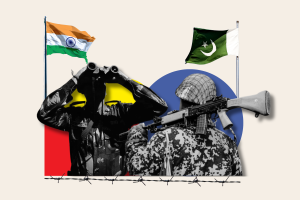
 As tensions remain high following India’s decisive response to Pakistan-sponsored terror attacks, it is crucial to objectively compare the military capabilities of both nations. The facts are clear: India holds a decisive edge across all conventional domains-air, land, and sea-while also maintaining a credible and diversified nuclear deterrent. Any further escalation by Pakistan would not only be futile but could invite catastrophic consequences for itself.
Air Power: India’s Clear Superiority
Fighter Jets and Air Force Strength
- India:
- Total Military Aircraft: ~2,229
- Fighter Jets: ~513 (including Su-30MKI, Rafale, Mirage 2000, MiG-29, Tejas Mk1A)
- Force Multipliers: 6 aerial refueling tankers, advanced AWACS and electronic warfare platforms
- Helicopters: ~899 (attack, utility, and transport)
- Pakistan:
- Total Military Aircraft: ~1,399
- Fighter Jets: ~328 (including F-16, JF-17, J-10CE, Mirage III/V)
- Force Multipliers: 4 aerial refueling tankers, limited AEW&C coverage
- Helicopters: ~373
Analysis:
India’s air force not only outnumbers Pakistan’s but also fields more advanced platforms. The induction of Rafale jets-armed with Meteor beyond-visual-range missiles-provides India an unmatched air dominance capability. Pakistan’s recent acquisition of J-10CE jets from China narrows the qualitative gap, but India’s fleet is larger, more modern, and better integrated with network-centric warfare tools.
Air Defence
- India: S-400 Triumf (long-range), Barak-8, Akash-NG, and Tunguska systems
- Pakistan: HQ-9/P (long-range, Chinese origin), LY-80 (medium-range)
India’s S-400 system gives it a significant edge in intercepting enemy aircraft and missiles at long ranges.
Land Forces: Depth, Modernisation, and Firepower
Main Battle Tanks and Armoured Vehicles
- India:
- Tanks: ~4,201 (T-90S, Arjun Mk1A, T-72)
- Armoured Vehicles: 2,000+ BMP-II IFVs, over 148,000 armoured vehicles
- Artillery: 100+ K9 Vajra-T SPH, M777 howitzers, Pinaka rocket systems
- Pakistan:
- Tanks: ~2,627 (Al Khalid-1, VT-4, T-80UD)
- Armoured Vehicles: Fewer and mostly Chinese-origin
- Artillery: M109A5 SPH, SH-15 howitzers, fewer modern rocket systems
Analysis:
India’s land forces are not only numerically superior but also benefit from ongoing modernisation and indigenous production. Pakistan’s tank fleet relies heavily on Chinese designs and upgrades, while India fields a mix of Russian and indigenous tanks with superior firepower.
Ground-Based Air Defence
India’s layered air defence, with S-400 and Barak-8, is more advanced and integrated than Pakistan’s, providing robust protection for key assets.
Naval Power: Blue-Water vs. Green-Water
Fleet Size and Capabilities
- India:
- Total Naval Vessels: 293
- Aircraft Carriers: 2 (INS Vikramaditya, INS Vikrant)
- Destroyers: 13
- Frigates: 13
- Submarines: 18 (including nuclear-powered)
- Maritime Aviation: P-8I Poseidon, MH-60R Seahawks
- Pakistan:
- Total Naval Vessels: 121
- Aircraft Carriers: 0
- Destroyers: 0
- Frigates: 9 (Type 054A/P, F-22P)
- Submarines: 8 (Agosta-90B, Hangor-class under induction)
- Maritime Aviation: Limited, mostly Chinese-origin
Analysis:
India’s navy is a true blue-water force, capable of projecting power far beyond its shores, protecting sea lanes, and blockading adversaries if needed. Pakistan’s navy, while modernising, remains a green-water force focused on coastal defence. The absence of aircraft carriers and limited submarine fleet restricts Pakistan’s maritime reach.
Nuclear and Missile Capabilities: Deterrence and Delivery
India
- Warheads: ~130-140
- Delivery: Agni-III/V (3,000–5,000+ km), BrahMos cruise missiles, Mirage 2000, Rafale, INS Arihant (nuclear submarine)
- Doctrine: No First Use, massive retaliation
Pakistan
- Warheads: ~140-150
- Delivery: Shaheen-II/III (up to ~2,750 km), Babur cruise missiles, F-16s, Agosta submarines (under development)
- Doctrine: Full-spectrum deterrence, tactical nuclear weapons
Analysis:
Both nations are credible nuclear powers, but India’s triad (land, air, sea) is more robust and survivable. Pakistan’s reliance on tactical nuclear weapons is a risky attempt to offset India’s conventional superiority.
Defence Budgets and Modernisation
- India: $86 billion (2024), ongoing modernisation, indigenous R&D, and joint ventures with Israel, France, Russia, and the US
- Pakistan: ~$8.6 billion, heavy reliance on Chinese imports and US legacy systems
India’s higher defence spending enables continuous upgrades, force expansion, and self-reliance initiatives.
Recent Acquisitions and Technological Edge
India
- Rafale fighter jets (36)
- S-400 Triumf air defence systems
- K9 Vajra-T self-propelled guns
- MH-60R Seahawk helicopters
- Tejas Mk1A indigenous fighters
- P-8I maritime patrol aircraft
Pakistan
- J-10CE fighters (Chinese)
- HQ-9/P air defence systems
- VT-4 tanks (Chinese)
- SH-15 self-propelled howitzers
- MILGEM corvettes (Turkish)
India’s acquisitions are more diverse and technologically advanced, with a focus on network-centric warfare and force multipliers.
Military Doctrine and Readiness
- India: Focuses on integrated theatre commands, rapid mobilisation (“Cold Start”), and jointness across services. Exercises regularly with global powers, enhancing interoperability and readiness.
- Pakistan: Emphasises “minimum credible deterrence,” asymmetric warfare, and tactical nuclear weapons to deter Indian incursions.
Why Escalation by Pakistan Would Be a Strategic Blunder
- Overwhelming Indian Superiority:
India’s conventional and strategic edge means any conflict would be heavily one-sided. Pakistan would suffer disproportionate losses in air, land, and sea domains. - Global Isolation:
Further escalation would draw international condemnation, risk sanctions, and erode whatever diplomatic support Pakistan retains. - Economic Ruin:
Pakistan’s economy is already fragile. War would devastate its financial system, disrupt trade, and trigger domestic instability. - Nuclear Brinkmanship Is Not an Option:
Any attempt to use tactical nuclear weapons would invite massive retaliation, ensuring mutual destruction. The world would hold Pakistan responsible for crossing the nuclear threshold. - China’s Support Is Limited:
While China provides diplomatic and military assistance, it will not risk direct intervention against India, especially given its own global interests and economic ties with New Delhi. - No Asymmetric Advantage:
India’s intelligence, counter-terror, and special forces capabilities have been significantly upgraded. Any proxy or asymmetric strategy will be rapidly neutralised.
Summary
The numbers, technology, and strategic depth are all stacked against Pakistan. India’s military is not only larger but also more modern, networked, and combat-proven. Any further escalation by Pakistan would be an act of desperation, not strategy, and would bring catastrophic consequences upon itself. The prudent path for Pakistan is to de-escalate, dismantle its terror infrastructure, and seek peace and stability for the region. The world is watching, and history will not be kind to those who choose folly over reason.