



 Col. (retd.) Dinesh Ramaswamy
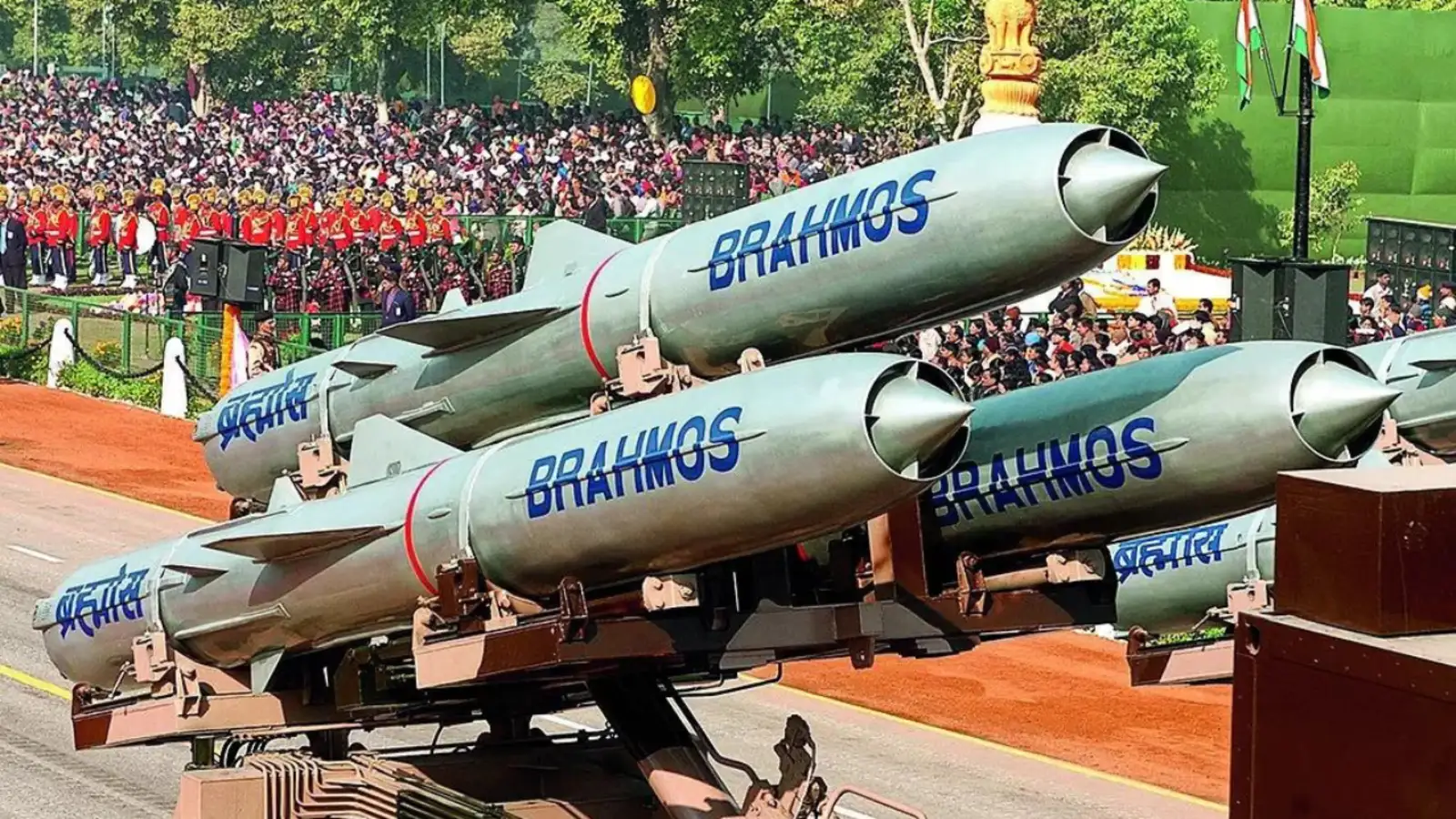
 The BrahMos missile, a hallmark of India’s indigenous missile technology, continues to evolve with the latest generation featuring significant advancements in speed, range, precision, and versatility. The new BrahMos variants, including the BrahMos-NG (Next Generation) and extended-range models, are the product of decades of scientific collaboration, innovation, and strategic investment by Indian and Russian organizations.
Origins and Development
BrahMos Aerospace is a joint venture between India’s Defence Research and Development Organisation (DRDO) and Russia’s NPO Mashinostroyeniya. The name “BrahMos” is derived from the Brahmaputra (India) and Moskva (Russia) rivers, symbolizing the partnership. The missile’s design is based on the Russian P-800 Oniks, but it has been extensively modified and upgraded by Indian scientists and engineers for multi-platform deployment and indigenous production.
Key People and Organizations
- DRDO (India): Lead agency for research, development, and integration of indigenous technologies.
- NPO Mashinostroyeniya (Russia): Provided initial design and propulsion expertise.
- BrahMos Aerospace Limited: Responsible for production, integration, and export.
- Dr. Jaiteerth R. Joshi: Current Director General of BrahMos, DRDO, and CEO & MD of BrahMos Aerospace, leading recent advancements and production scaling.
- Sudhir Kumar Mishra: Former CEO & MD, pivotal in technology transfer and indigenization.
Technical Specifications
| Feature | BrahMos (Standard) | BrahMos-ER (Extended Range) | BrahMos-NG (Next Gen) |
|---|---|---|---|
| Length | 8.4 m | 8.4 m | 6 m |
| Diameter | 0.6 m | 0.6 m | 0.5 m |
| Weight | 3,000 kg | 3,000 kg | 1,200–1,500 kg |
| Warhead | 200–300 kg (conventional, semi-armour-piercing, nuclear-capable) | Same | Same |
| Speed | Mach 2.8–3.5 | Mach 3.5 | Mach 3.5 |
| Range | 290–650 km (now up to 800 km for ER) | 800 km | 290 km (planned up to 600 km) |
| Flight Altitude | 10–15 km (cruise), 3–10 m (terminal sea-skimming) | Same | Same |
| Guidance | INS + SatNav (mid-course), Active radar homing (terminal) | Same | Advanced seeker, ECCM |
| Accuracy | 1 m CEP | 1 m CEP | <1 m CEP (planned) |
| Launch Platforms | Land, Ship, Submarine, Aircraft (Su-30MKI) | Same | Land, Air, Ship, Submarine (future) |
Scientific and Engineering Features
Propulsion System
- Two-stage Propulsion:
- First Stage: Solid-propellant booster for initial acceleration.
- Second Stage: Liquid-fueled ramjet sustainer for supersonic cruise.
- Ramjet Technology: Enables sustained speeds of Mach 2.8–3.5, making interception by current air defense systems extremely difficult.
Stealth and Survivability
- Low Radar Cross-Section (RCS): Stealth shaping and materials reduce detectability.
- Sea-Skimming Trajectory: Terminal phase descends to as low as 3–10 meters above sea level, evading radar and missile defenses.
- Advanced ECCM: Next-gen variants feature enhanced resistance to electronic countermeasures.
Guidance and Accuracy
- Fire-and-Forget Principle: Requires no operator input post-launch.
- Multi-Mode Guidance: Combines inertial navigation, satellite updates, and active radar homing for terminal precision.
- Pinpoint Accuracy: Circular error probable (CEP) of 1 meter or better.
Warhead and Lethality
- Kinetic Energy: Supersonic impact delivers 9–32 times the kinetic energy of subsonic missiles like Tomahawk, ensuring deep penetration and high lethality.
- Payload Flexibility: Capable of carrying conventional, semi-armour-piercing, and (in theory) nuclear warheads.
Versatility and Modularity
- Universal Design: Identical configuration for land, sea, sub-sea, and air platforms.
- Mobile Autonomous Launchers: Land-based systems use mobile launchers for rapid deployment and survivability.
- Air-Launched Variant: Custom booster and tail fins for integration with Su-30MKI, expanding strike range and flexibility.
Production and Indigenization
- Manufacturing Hubs: Facilities in Lucknow, Hyderabad, Nagpur, Pilani, Thiruvananthapuram, and others.
- Annual Output: New Lucknow facility can produce 80–100 BrahMos missiles and 100–150 next-gen variants annually.
- Indigenous Content: The missile is now almost entirely Indian, with only select components imported.
Scientific Analysis and Operational Impact
Speed and Survivability
- Supersonic Speed: Mach 3+ velocity drastically reduces enemy reaction time and makes interception by most legacy air defense systems nearly impossible.
- Sea-Skimming and Terrain-Following: Increases survivability against naval and land-based defenses.
Range and Strategic Reach
- Extended Range (ER): Post-MTCR membership, India has fielded variants with ranges up to 800 km, allowing deep-strike capability against high-value targets.
- Multi-Platform Integration: Enables rapid, coordinated strikes from land, sea, and air, saturating enemy defenses.
Precision and Lethality
- High Accuracy: 1 m CEP allows engagement of point targets (command centers, warships, hardened bunkers).
- Kinetic Impact: High mass and speed ensure destruction even against heavily armored targets.
Stealth and Countermeasures
- Low RCS and Advanced Seeker: Reduces vulnerability to detection and jamming.
- ECCM Upgrades: Next-gen variants are designed to operate in contested electronic environments.
Next-Generation Developments
- BrahMos-NG: Lighter, smaller, and even faster, designed for wider platform compatibility, including lighter aircraft and submarines.
- BrahMos-II: Future hypersonic variant under development, expected to reach speeds above Mach 6, leveraging advances from the Russian Zircon program.
Strategic and Industrial Impact
- Force Multiplier: Multi-role, multi-target, and multi-platform capabilities make BrahMos a central pillar of India’s deterrence and rapid-strike doctrine.
- Export Success: BrahMos has already been exported to the Philippines and is being considered by other countries, boosting India’s defense exports.
- Industrial Ecosystem: The program has catalyzed a network of Indian suppliers, research labs, and high-tech manufacturing units, furthering self-reliance.
Summary
The new BrahMos missile, developed by a partnership between DRDO, NPO Mashinostroyeniya, and BrahMos Aerospace, stands as one of the world’s most advanced supersonic cruise missiles. Its combination of speed, accuracy, stealth, and versatility provides Bharat with a formidable precision-strike capability across all domains. The ongoing evolution of the BrahMos family, including lighter and hypersonic variants, ensures that India remains at the forefront of missile technology and strategic deterrence for years to come.