




 Col. (retd.) Dinesh Ramaswamy
 By Col. (retd.) Dinesh Ramaswamy, Defence and Security Analyst, Former Indian Army Officer
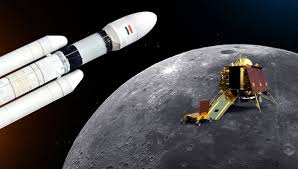
In the quiet expanse of the lunar south pole, a small robotic lander named Vikram sits atop a barren plain, silently transmitting data from one of the most hostile environments in the solar system. The success of India’s Chandrayaan-3 mission in August 2023 was more than a scientific triumph—it was a strategic signal. By becoming the first nation to soft-land near the lunar south pole and the fourth country ever to achieve a controlled lunar landing, India has firmly positioned itself as a leading space power, reshaping the geopolitical dynamics of the Indo-Pacific and accelerating a quiet but intense regional space race.
One year on, the ripple effects of Chandrayaan-3’s success are evident. Japan’s SLIM mission, which achieved a precision lunar landing in January 2024, followed by the United Arab Emirates’ partnership with Japan on the Emirates Lunar Mission, underscores a growing trend: space is no longer the domain of superpowers alone. Middle-ranking nations are investing heavily in space capabilities, not just for scientific prestige, but for strategic autonomy, technological sovereignty, and long-term economic and military advantage.
India’s space journey, led by the Indian Space Research Organisation (ISRO), has been marked by frugal innovation and mission discipline. Chandrayaan-3 cost approximately ₹600 crore (NZ$108 million)—a fraction of comparable missions by NASA or ESA. Yet, it delivered high-value scientific data on lunar soil composition, surface temperature, and seismic activity. The Pragyan rover confirmed the presence of sulphur, aluminium, calcium, and iron—elements critical for future in-situ resource utilisation (ISRU), including oxygen extraction and construction materials for lunar habitats.
But beyond science, the mission carried unmistakable strategic messaging. The south pole region is believed to contain vast deposits of water ice in permanently shadowed craters. This resource could be pivotal for sustaining long-term human presence on the Moon and fuelling deep-space missions. Control over such resources—whether through physical presence, data dominance, or international partnerships—will define influence in the next phase of space exploration.
India is not alone in recognising this. China’s Chang’e programme has already deployed three rovers and returned lunar samples, with Chang’e-6 in 2024 becoming the first mission to collect material from the far side of the Moon. Beijing has also announced plans for the International Lunar Research Station (ILRS), a joint venture with Russia, Venezuela, and Pakistan, aimed at establishing a permanent robotic and eventually human presence on the Moon by 2035.
In response, India has deepened its space diplomacy. In 2024, ISRO signed agreements with Japan’s JAXA, France’s CNES, and the European Space Agency for joint lunar and Mars missions. It also formalised a space cooperation framework with Australia, focusing on satellite tracking, deep-space communication, and monitoring of the Southern Ocean and Antarctica—regions of growing strategic interest.
New Zealand, though not a spacefaring nation, is emerging as a key node in the global satellite ecosystem. With its clear skies, low light pollution, and geographic position, the country hosts multiple ground stations operated by Rocket Lab, the US Space Force, and private firms. In 2025, the New Zealand Space Agency announced a partnership with ISRO to explore co-location of tracking facilities in the South Island, enhancing data relay for lunar and Earth observation missions.
The military dimension of space cannot be ignored. While Chandrayaan-3 was a civilian mission, the technologies it demonstrated—precision navigation, autonomous landing, secure communications—are dual-use. India’s broader space infrastructure now includes over 50 operational satellites, many supporting surveillance, missile guidance, and secure military communications. The Defence Space Agency (DSA), established in 2019, oversees India’s growing space warfare capabilities, including anti-satellite (ASAT) weapons tested in 2019 under Mission Shakti.
China’s space programme is similarly intertwined with its military. The People’s Liberation Army Strategic Support Force controls China’s reconnaissance, navigation, and electronic warfare satellites. The BeiDou navigation system, now global, reduces Beijing’s reliance on GPS and enhances the accuracy of its missile systems.
The United States, through Space Command and NASA’s Artemis Accords, is working to establish a rules-based order in space. India joined the Accords in 2023, aligning itself with a coalition of 42 nations committed to peaceful exploration, transparency, and interoperability. This move was widely interpreted as a strategic counterbalance to China’s ILRS and its non-participation in the Artemis framework.
Regional dynamics are further complicated by private sector involvement. India’s space industry is opening to private players, with startups like Agnikul Cosmos and Skyroot Aerospace developing small-lift rockets. Similarly, Australia’s Southern Launch and New Zealand’s Rocket Lab are enabling low-cost access to orbit for Indo-Pacific nations seeking independent satellite capabilities.
For smaller nations, space is becoming a tool of sovereignty. Fiji, Samoa, and Vanuatu have launched their first Earth observation satellites with international support, using data for disaster monitoring, fisheries management, and climate resilience. These capabilities reduce dependence on foreign intelligence and enhance regional autonomy.
Yet, the risk of conflict is rising. The absence of a binding international treaty governing military activities in space leaves room for ambiguity. Incidents such as satellite jamming, laser targeting, and debris creation are increasingly reported. In 2024, India and Japan jointly proposed a UN resolution calling for a ban on destructive ASAT tests—a move supported by New Zealand and Australia but opposed by Russia and China.
As lunar ambitions grow, so do concerns about a “Moon grab.” Legal scholars warn that the 1967 Outer Space Treaty, which prohibits national appropriation of celestial bodies, may be insufficient to prevent de facto control through sustained presence and resource extraction.
India’s approach has been cautious but assertive. It advocates for equitable access and opposes monopolisation, while steadily building its operational footprint. Upcoming missions—Chandrayaan-4 (a lunar sample return), Gaganyaan (crewed orbital flight), and Shukrayaan (Venus orbiter)—signal long-term ambition.
The success of Chandrayaan-3 was not just about reaching the Moon. It was about demonstrating that technological excellence, strategic patience, and civil-military synergy can elevate a nation’s global standing. In the evolving Indo-Pacific order, where influence is measured not just by fleets and fighters, but by satellites and software, India has made its move.
Excerpt: India’s lunar success has ignited a new phase of strategic competition in space, where scientific achievement, resource access, and national security converge. As Indo-Pacific nations expand their orbital and extraterrestrial ambitions, the Moon is no longer just a destination—it is a geopolitical frontier.