 Genevieve Montgomery
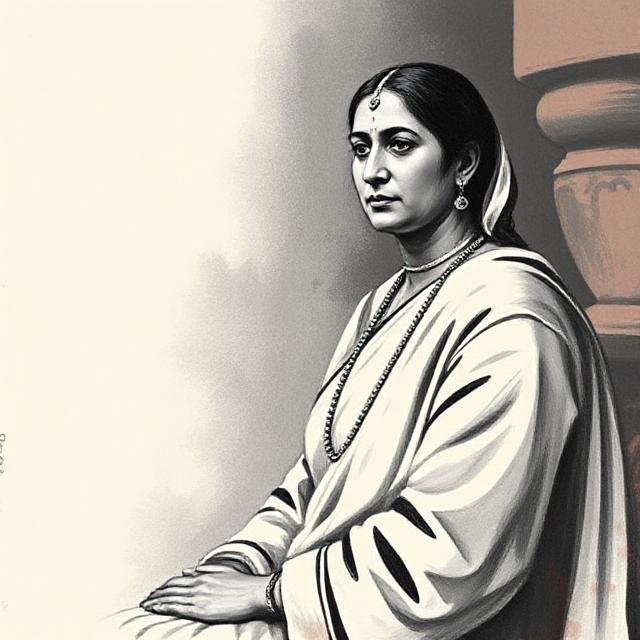
 Ahilyabai Holkar, the iconic ruler of Malwa in the 18th century, stands as one of India’s most revered women leaders—her reign marked by justice, compassion, and visionary statecraft. From transforming Maheshwar into a center of culture and commerce, to rebuilding sacred temples across India and pioneering social reforms, Ahilyabai’s impact is felt even today. On her 300th birth anniversary, IIM Nagpur hosted a landmark national conference to honor her contributions, bringing her life and philosophy into the heart of contemporary discourse. This article offers a comprehensive exploration of Ahilyabai Holkar’s history, her multifaceted contributions, and the significance of her recent tribute at IIM Nagpur.
Early Life and Rise to Power
Born on May 31, 1725, in the village of Chaundi (now in Maharashtra), Ahilyabai was the daughter of Mankoji Shinde, a respected village head. Her early life was marked by simplicity and traditional values, but her intelligence and compassion set her apart. At the age of eight, she married Khanderao Holkar, the son of Malhar Rao Holkar, a prominent noble in the Maratha Confederacy.
Ahilyabai’s life took a tragic turn with the deaths of her husband and only son, Male Rao Holkar. In the face of personal loss, she displayed remarkable fortitude. With the support of her father-in-law, Malhar Rao, and later the people of Malwa, Ahilyabai ascended to the throne in 1767, becoming the ruler of the Holkar dynasty at a time when female leadership was rare and often contested.
Governance and Administrative Reforms
Justice and Accessibility
Ahilyabai’s reign is often described as the zenith of the Holkar dynasty. She broke social conventions by not observing purdah and was known for her direct engagement with her subjects. She held daily public audiences, where anyone—regardless of caste or creed—could approach her for justice. She established courts for arbitration and ensured that her administration was transparent and accountable.
Economic Policies and Empowerment
Ahilyabai implemented progressive economic policies, focusing on agriculture, trade, and handicrafts. She provided low-interest loans to farmers, encouraged the cultivation of cash crops, and supported irrigation projects. Her policies improved food security and rural prosperity, while her support for artisans led to the flourishing of the Maheshwari sari industry, which empowered women and provided stable livelihoods.
Women’s Empowerment
A pioneer in women’s rights, Ahilyabai appointed women to high positions in her administration and promoted their participation in economic and religious life. She introduced schemes for women’s financial independence, encouraged property ownership, and supported women’s education. Her leadership inspired generations of women to seek empowerment through self-reliance and education.
Social and Cultural Reforms
Religious Tolerance and Social Harmony
Ahilyabai’s rule was characterized by a deep commitment to religious tolerance. She fostered unity among diverse communities, encouraged participation in religious events regardless of caste or gender, and worked to eradicate social divisions. She appointed people from marginalized castes to responsible positions and promoted social justice as a core value of her administration.
Reconstruction of Temples and Cultural Heritage
One of Ahilyabai’s most celebrated contributions was the reconstruction and restoration of temples and sacred sites across India. At a time when many temples had been destroyed or neglected, she took it upon herself to revive India’s spiritual and cultural heritage.
- Kashi Vishwanath Temple, Varanasi: Perhaps her most famous project, Ahilyabai rebuilt this iconic temple after it was razed by Mughal Emperor Aurangzeb. Her efforts restored the temple’s status as a major pilgrimage center.
- Grishneshwar Temple, Aurangabad: She reconstructed this Jyotirlinga temple, reviving its significance for devotees.
- Other Sites: Ahilyabai’s patronage extended to temples in Somnath, Gaya, Ayodhya, Mathura, Pushkar, Vrindavan, Haridwar, Badrinath, and Kedarnath, among others.
Her endowments funded the construction of ghats, wells, dharamshalas (rest houses), and water tanks, benefiting pilgrims and the poor alike.
Promotion of Arts and Crafts
Ahilyabai’s court was a center of cultural renaissance. She invited artists, musicians, and scholars to Maheshwar, turning it into a vibrant hub of creativity. The Maheshwari sari, a legacy of her patronage, is still renowned for its elegance and craftsmanship.
Military Leadership and Defense
Despite her reputation for compassion, Ahilyabai was a capable military leader. She personally led her armies to defend Malwa against invasions and internal rebellions, most notably from neighboring states and the aftermath of the Third Battle of Panipat. Her commander, Tukoji Rao Holkar, served her loyally for 28 years, helping to modernize the army and maintain stability.
Inclusive Governance: “Ram Rajya” in Malwa
Ahilyabai’s reign is often compared to the ideal of “Ram Rajya”—a just and inclusive society. She mainstreamed marginalized communities like the Bhils and Gonds, promoted social harmony, and ensured that her policies benefited all sections of society. Her governance model emphasized:
- Justice for All: Accessible courts and fair arbitration.
- Economic Inclusion: Support for farmers, artisans, and women.
- Social Unity: Eradication of caste barriers and religious discrimination.
Legacy and Historical Significance
Lasting Impact
Ahilyabai Holkar’s legacy is visible across India—in the temples she rebuilt, the communities she uplifted, and the social reforms she championed. Her model of governance, rooted in compassion and justice, remains a benchmark for inclusive leadership.
Recognition and National Memory
While celebrated regionally, Ahilyabai’s national recognition has often been limited by gender bias and the passage of time. However, historians and scholars increasingly acknowledge her contributions as foundational to India’s social and cultural fabric.
Recent Tribute: IIM Nagpur’s National Conference
Commemorating the 300th Birth Anniversary
On May 25, 2025, IIM Nagpur hosted a major national conference titled “Philosopher Queen Devi Ahilyabai Holkar” to mark her 300th birth anniversary. The event was organized in collaboration with the Devi Ahilyabai Smarak Samiti, Mythic Society (Bengaluru), Smt. Manoramabai Mundle College of Architecture, and Maharashtra National Law University.
Highlights of the Conference
- Academic Engagement: The conference featured 51 research papers in various languages, covering topics such as governance, taxation, environment, justice, women’s empowerment, and cultural revival.
- Keynote Speakers: Eminent scholars, including Dr. Leena Gahane and Dr. Anuradha, delivered keynote addresses on Ahilyabai’s philosophy and leadership.
- Special Sessions: Union Minister Annapurna Devi inaugurated the event, with special addresses by Smriti Irani and a valedictory session led by Nitin Gadkari.
- Book Releases: Two books were launched, focusing on leadership, design thinking, and the legacy of Malhar Rao Holkar.
- Hybrid Format: The conference was accessible both physically and virtually, broadening its reach and impact.
Themes and Discussions
The conference spotlighted Ahilyabai’s contributions to:
- Governance and Justice: Her administrative reforms and legal innovations.
- Cultural Revival: Restoration of Indian heritage and promotion of arts.
- Women’s Empowerment: Her pioneering role in advancing women’s rights.
- Sustainable Development: Environmental and economic policies that fostered self-reliance.
Contemporary Relevance
Speakers emphasized Ahilyabai’s relevance for modern India, particularly in the context of women’s leadership, inclusive governance, and cultural preservation. The event called for integrating her values into contemporary policy and education.
Ahilyabai Holkar’s Enduring Inspiration
Ahilyabai’s life is a testament to the power of compassion, resilience, and visionary leadership. Her ability to balance tradition with progress, and authority with empathy, offers enduring lessons for leaders and citizens alike.
Quotes and Tributes
- “Lokmata” (Mother of the People): Ahilyabai is affectionately remembered as Lokmata for her maternal care of her subjects.
- Historians’ Praise: She is often cited as a model ruler whose governance embodied the ideals of social harmony and justice.
Summary
Ahilyabai Holkar’s legacy transcends her era, offering a blueprint for ethical governance, social reform, and cultural revival. Her recent tribute at IIM Nagpur has reignited national interest in her life and philosophy, ensuring that her story continues to inspire generations. As India reflects on her contributions, Ahilyabai stands as a beacon of hope, unity, and progress—a true philosopher queen whose vision remains relevant in the quest for a just and inclusive society.