



 Kara Riggs
 What began as a historic celebration for Royal Challengers Bengaluru (RCB) and their fans quickly turned into one of the darkest days in Indian sporting history. On June 4, 2025, the streets of Bengaluru were awash with jubilation as RCB, after 18 years, finally clinched their first Indian Premier League (IPL) title. But the city’s joy was shattered by a tragic stampede during the team’s victory parade and felicitation event at the M Chinnaswamy Stadium, which left 11 people dead and dozens injured. The tragedy has since sparked a nationwide debate about crowd management, event planning, and accountability in public celebrations.
This article provides a comprehensive account of the events leading up to the stampede, the chaos of the day, the immediate response, ongoing investigations, and the broader implications for public safety and sporting celebrations in India.
The Build-Up: Euphoria and Unprecedented Crowds
RCB’s Long-Awaited Triumph
RCB’s victory in the IPL 2025 final was more than just a cricketing achievement; it was an emotional release for millions of fans who had waited nearly two decades for their team to lift the trophy. Celebrations erupted across Bengaluru on Tuesday night, with fans thronging MG Road, Church Street, and other parts of the Central Business District. The city was alive with chants, fireworks, and impromptu gatherings as supporters marked the end of a long drought.
Announcements and Confusion
The next morning, the RCB management announced plans for a grand victory parade, to be followed by a felicitation ceremony at the Chinnaswamy Stadium. The parade was scheduled to start at 5 pm from Vidhana Soudha and end at the stadium, where players would address fans and celebrate with the trophy. The announcement included a link for free passes, stating that entry to the stadium would be limited and urging fans to follow police guidelines.
However, confusion quickly set in. While RCB’s official social media accounts confirmed the parade, Bengaluru Traffic Police issued advisories stating there would be no parade. The conflicting messages created uncertainty among fans, but did little to dampen their enthusiasm. By noon, thousands had already begun gathering outside Vidhana Soudha and the stadium, hoping to catch a glimpse of their heroes.
Warnings Ignored
Behind the scenes, police and city officials were growing increasingly concerned. Both the Karnataka government and RCB management had been advised by law enforcement to postpone the event or hold it in a more controlled manner, ideally on a weekend when crowd pressure might be lower. Police recommended that the celebrations be limited to the stadium, with a clear ticketing system and robust crowd control measures. RCB, citing the imminent departure of overseas players, insisted on holding the event as planned.
The Day Unfolds: From Celebration to Chaos
Early Crowd Build-Up
By 2 pm, the area around Chinnaswamy Stadium was teeming with fans. The stadium, with a capacity of 34,000, was soon surrounded by a crowd estimated at over 300,000, with some officials later suggesting that as many as 800,000 people converged on the area throughout the day. Metro stations nearby recorded record footfalls, and city roads were gridlocked as fans arrived from across Bengaluru and neighbouring districts.
Gates Shut, Tension Rises
As the stadium reached capacity, security personnel began shutting the gates to prevent further entry. Many fans, some with valid tickets and others with free passes or none at all, were left outside. The pressure at the gates mounted as more people tried to force their way in, climbing over barriers and pushing through narrow entrances. Videos from the scene showed desperate fans scaling walls and chanting “RCB, RCB” as they jostled for space.
The situation deteriorated rapidly. Police, overwhelmed by the sheer size of the crowd, resorted to lathi charges at some points in an attempt to restore order. The narrow gates and lack of clear crowd control measures contributed to the chaos, as people at the front were pushed against the barriers by the surging mass behind them.
The Stampede
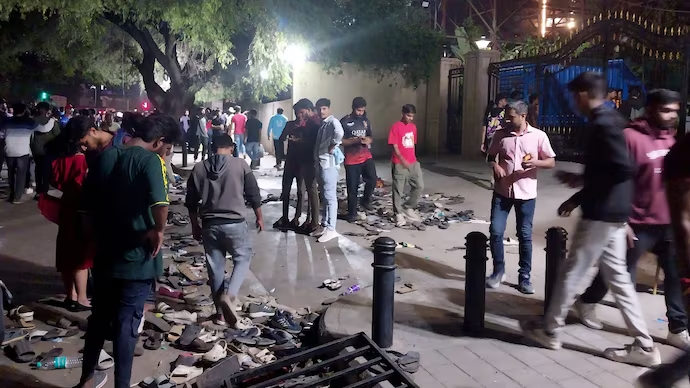
Shortly after 5 pm, as the RCB team was being felicitated inside the stadium, tragedy struck outside. The crush at the gates turned into a full-blown stampede. Many fans, including young students, were caught in the melee. Some were trampled, while others suffocated in the dense crowd. Emergency services struggled to reach the injured, with ambulances delayed by traffic and the sheer volume of people.
Within minutes, the scale of the disaster became apparent. Eleven people lost their lives, and at least 56 others were injured, some critically. The injured were rushed to nearby hospitals, including Vydehi and Bowering, where medical teams worked through the night to treat victims.
Immediate Response: Shock, Grief, and Scrutiny
Official Reactions
The news of the stampede sent shockwaves through the city and the nation. Karnataka Chief Minister Siddaramaiah and Home Minister G Parameshwara visited the scene, expressing deep sorrow and promising a thorough investigation. The Chief Minister announced a magisterial inquiry into the incident and pledged compensation for the families of the deceased and injured.
RCB released a statement mourning the loss of lives and expressing condolences to the affected families. The team amended its celebration plans, urging supporters to stay safe and promising to cooperate fully with the authorities.
Cricketing legends and public figures, including Sachin Tendulkar, voiced their grief and called for accountability. Social media was flooded with messages of condolence and anger, with many questioning how such a tragedy could occur during what should have been a moment of joy.
The Human Toll
Most of the victims were young, including students who had come to celebrate with their sporting idols. Families of the deceased gathered at hospitals and morgues, seeking information and support. The city observed moments of silence, and vigils were held in memory of those lost.
Investigations and Developments
Legal and Administrative Probes
In the days following the tragedy, multiple investigations were launched. Bengaluru Police and a magisterial inquiry panel began scrutinising the planning and execution of the event. The role of the RCB management, Karnataka State Cricket Association (KSCA), and city officials came under the scanner.
A key focus of the probe is a social media post by RCB, made just hours before the event, announcing the parade and providing a link for free passes. Authorities are examining whether this post contributed to the overwhelming turnout and whether proper permissions were obtained. The police have also questioned the timing and necessity of the event, given prior warnings and the lack of adequate crowd control measures.
Crowd Management Failures
Preliminary findings point to a series of failures:
- Underestimation of Crowd Size: Organisers and authorities failed to anticipate the sheer number of fans who would turn up, despite the city’s history of massive turnouts for cricket events.
- Conflicting Announcements: Mixed messages from RCB and the police created confusion, leading to uncontrolled crowds at multiple entry points.
- Inadequate Security: Only about 1,000 police personnel were deployed, far fewer than required for a crowd of this magnitude.
- Poor Gate Management: Narrow gates and a lack of clear entry protocols led to bottlenecks and panic.
- Lack of Emergency Planning: Ambulances and medical teams struggled to access the scene, delaying treatment for the injured.
Political and Public Backlash
The tragedy has sparked intense criticism of both the RCB management and the Karnataka government. Opposition parties have called for resignations, and public anger has been directed at those responsible for planning and overseeing the event. The government has promised to introduce new Standard Operating Procedures (SOPs) for large public gatherings, with a focus on safety and coordination.
The Aftermath: Grieving, Reflection, and Calls for Change
Mourning and Support
Bengaluru has been united in grief. Memorials and vigils have been organised across the city, with fans, players, and officials paying tribute to the victims. The RCB team visited hospitals to meet the injured and offered support to bereaved families. The franchise has pledged to cover medical expenses and provide financial assistance to those affected.
Broader Implications
The stampede has raised urgent questions about how India manages large-scale public celebrations, especially in the context of sporting events. Experts have called for a comprehensive review of event planning, crowd management, and emergency response protocols. There is growing consensus that:
- Event organisers must work closely with law enforcement and emergency services from the outset.
- Clear, consistent communication is essential to avoid confusion and panic.
- Ticketing and entry systems must be robust, with strict limits on capacity and real-time monitoring of crowd size.
- Emergency access routes and medical facilities must be prioritised in planning.
Lessons for the Future
The tragedy has already prompted some changes. The Karnataka government has announced that all future large-scale events will require detailed safety plans and approval from a multi-agency committee. The KSCA and other sporting bodies are reviewing their protocols, and police have begun training in advanced crowd control techniques.
There is also a push for greater public awareness about the dangers of overcrowding and the importance of following safety guidelines during mass gatherings.
The Global Perspective
The RCB stampede has drawn international attention, with media outlets around the world reporting on the disaster and its aftermath. The incident has been compared to other stadium tragedies, highlighting the universal challenges of managing large, passionate crowds.
Sports organisations, both in India and abroad, are watching closely as the investigation unfolds, with many expected to adopt stricter safety measures in the wake of the tragedy.
Summary
The RCB victory parade stampede stands as a sobering reminder of the risks inherent in large public celebrations, especially when planning and crowd control fall short. Eleven lives were lost, dozens injured, and a city’s joy turned to mourning in a matter of minutes. As investigations continue and reforms are promised, the hope is that the lessons learned from this tragedy will lead to safer, more responsible celebrations in the future, ensuring that the spirit of sport unites rather than divides, and that joy is never again overshadowed by grief.