



 Lara Zijl
 By Zealandia News | Feature
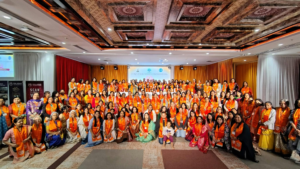
There are stories that arrive quietly, in whispers passed from grandparent to grandchild across kitchen tables in Pukekohe and Ponsonby. And there are stories that arrive like a monsoon — sudden, overwhelming, impossible to ignore. This week, the story of the New Zealand Indian Central Association (NZICA) has done both. Uploaded to YouTube barely a day ago, the centenary documentary charting NZICA’s hundred-year journey has already drawn more than a thousand views and is climbing by the hour, rippling out from lounge rooms in Auckland to timelines the world over. Watch the film here.
It is, in truth, a story worth the world’s attention.
Ships, Scrub-Cutting, and the Cruelty of Small Print
Picture it: the late 1800s, the tail end of an empire that promised its subjects freedom of movement and dignity in return for loyalty. Indians boarded ships bound for Aotearoa as free British subjects, hearts full of hope, only to discover on arrival that hope alone would not keep the cold at bay, nor soften the suspicion in a stranger’s eyes.
One boy’s grandfather stepped off a ship in March 1919 — one of forty-two souls that day — and was confined to the vessel, granted only a day pass to wander the streets of a city that was not yet ready to call him neighbour. Of the forty-two, only two sat the test that might grant them free entry. One was his grandfather. Multiply that story by a thousand quiet arrivals, and you begin to grasp the scale of what was endured simply to belong.
Others came by accident of history rather than design — one family’s patriarch had set his sights on America or Canada, but the doors of the Komagata Maru era slammed shut on those routes, and so, by sheer and unplanned fortune, he found himself bound for New Zealand instead. Fate, it seems, has always had a fondness for redirecting the Indian diaspora toward these shores.
They arrived to scrub-cutting in the King Country, to bottle-hawking through the frozen streets of Christchurch, to fruit shops in Herne Bay that doubled as way-stations for the next wave of arrivals — kitchens that fed both stomachs and spirits, storerooms that held a newcomer’s entire future in a few borrowed pounds and a borrowed bed. At Taihape, a young Sardarinder Singh Randhawa and his companions were told flatly by a stationmaster that there was no work for them, and to catch the next train home. They stayed anyway, through sheer conviction, until nightfall softened the stationmaster’s heart and scrub-cutting contracts were found. From that single act of stubborn hope, the Country Section of NZICA was born.
The White Man’s Country, and the Quiet Defiance of Those Who Stayed
It would be a disservice to romanticise this history without naming its cruelty plainly. The White New Zealand League rose in Pukekohe with the express purpose, as its own records state, of keeping this “a white man’s country.” Newspapers of the day gave it oxygen; a 1926 editorial in the Franklin Times dismissed Hindus as “mentally and morally incapable of real civilization” — words that ought to make any reader wince, and rightly so.
Land would not be sold to Asians, went the League’s unwritten law — and so the Indian settlers simply offered a little more money than anyone else, and in that quiet act of persistence, found their foothold on the very soil that had tried to exclude them. Barbershops turned away Indian customers outright — one man recalls sitting for hours in a chair that was never going to be his, told plainly he could “sit there all day” but would never leave with a haircut. A young woman aced a mathematics test for a coveted Queen Street position, only to watch the job go to a European friend who had failed it — because, as she says with unflinching honesty decades later, she was “the brown face there.” Children were called curry-munchers in the schoolyard and dressed by careful mothers in the old way, plaited hair and modest dresses, not quite belonging until the great leveller of high school finally, slowly, let them in.
And yet — and this is the marrow of the story — they did not retreat. They organised. Auckland formed its Indian Association in 1918. Wellington followed in 1925. The Country Section rose in April of 1926. And that same year, under the quiet urging of an Indian government envoy named Srinivasa Bhattacharjee, who saw that a fractured community could be picked apart but a united one could not, the three associations became one voice: the New Zealand Indian Central Association. Sardarinder Singh Randhawa, the very man once turned away at Taihape station, became its first General Secretary, and it was his hand that penned the founding minutes — a small, humble irony that history seems to have written on purpose.
By the numbers that matter to historians, NZICA stands as the fifth-oldest Indian diaspora association anywhere on the globe, trailing only London, South Africa, Bahrain, and Singapore. A century of continuous voice, born from discrimination and forged by defiance.
From Bollywood by Rail to Diplomacy by Necessity
If the early chapters of this story are written in grit, the middle chapters shimmer with colour and community. The Nehru Hall, raised in the late 1940s and formally opened in 1953 — the very year Hillary and Tenzing stood atop Everest, the very year a young queen was crowned — became the first hall built for Indians, by Indians, without a shilling of outside charity. Within its walls, reels of Bollywood film journeyed by rail from Fiji, passed from association to association like a relay baton of joy, screened every second Sunday to communities who dressed their children in their finest and gathered as one. Gujarati classes rang out from the same rooms, keeping tongues limber and grandmothers understood.
The Mahatma Gandhi Centre rose from the bones of an old Finlay’s bakery, community hands doing the digging and the timber-shifting themselves, until Prime Minister Jim Bolger stood before its opening crowd and called it, simply and rightly, “a dream come true.” In Wellington, the Bharat Bhawan became what one elder calls the proudest moment in the community’s history there — a hall grown from Tasman Street’s modest beginnings into a multi-purpose home on Kemp Street.
And when politics failed the community, NZICA became something more than a cultural society — it became, quietly, a nation’s diplomat. When the Muldoon government shuttered New Zealand’s High Commission in Delhi in 1982 and India answered in kind by closing its Wellington mission, it was Ramesh Patel, a private citizen with no portfolio but conviction, who held the thread between two nations for three long years — until David Lange’s government sent Sir Edmund Hillary himself to New Delhi in 1985 to mend what politics had broken. Few community organisations anywhere in the world can claim to have quietly kept a bilateral relationship breathing through sheer force of goodwill.
The advocacy went further still. In 1956, NZICA wrote to the Immigration Department on behalf of New Zealand-born daughters who could not bring home the husbands they had married in India — and by 1960, the law bent, and sons-in-law were welcomed. A points-based immigration system, modelled by a young advocate on Canada’s approach and pressed personally upon Minister Tom Shand, eventually swept away the old “Kith and Kin” preference for English and Northern European migrants — and today, some two hundred nationalities call this country home, a diversity this small association helped midwife into being.
The Women Who Would Not Stay in the Subcommittee
No century-long story is complete without its women, and NZICA’s is no exception. In 1971, the association formed New Zealand’s first female committee of its kind — not merely for the Indian community, but for the country. What began as a modest two-night Navratri gathering organised by one determined mother at the Gandhi Hall has blossomed into a ten-day extravaganza that now defines the community’s calendar. By 2004, a dedicated Women’s Forum had taken root within NZICA, and in a moment described by those who lived it as genuinely historic, men were for the first time invited to sit inside the women’s conference — a small gesture that marked a shift from “women for women” to women and men, shoulder to shoulder.
The firsts kept coming: the first woman appointed Justice of the Peace within the Gurdwara, in 1989. The first Punjabi nurse at Health Waikato, twenty-eight years of service. The first Indian-born woman elected to the New Zealand Parliament, who credits — in her own words — decades of NZICA’s groundwork as the foundation beneath her feet.
A Diaspora Now Woven Into the Fabric
From fewer than a thousand souls a century ago, the Indian community in New Zealand has grown into a force of more than four hundred thousand, young — a median age near thirty — and economically vital, contributing something close to a tenth of the nation’s GDP. What began as three scattered associations now numbers twenty-two branches strung across the country, a map of belonging where once there was only the outline of exclusion.
They are cricketers and hockey players, yes, but also windsurfers, judoka, and footballers — some fifty New Zealand representatives across seventy years of sport, proof that a rugby field cares nothing for the colour of the hands that catch the ball. They are doctors and dairy farmers, engineers and lawyers, the first Sikh teacher to stand before a New Zealand classroom in a turban, the first to bring digital medical records into the country’s health system, the first Telugu voice ever to hold office in a hundred years of NZICA’s history.
A Century Closes, a Century Opens
The documentary that has ignited such extraordinary attention this week — climbing past a thousand views within a single day of its release and showing no sign of slowing — does not offer a tidy ending, because there isn’t one. NZICA’s own voices, candid to the last, admit the challenge ahead: newly arrived Indians are more educated, more global, hungrier for entrepreneurship than their grandparents’ generation ever dared dream possible, and the association that once fought simply to be seen must now learn to lead.
But as one voice in the film puts it, with the quiet confidence of someone who has watched a community rise from a single stationmaster’s grudging permission to cut scrub: the youth are the powerhouse of the next hundred years, just as they were the quiet, determined engine of the first.
A hundred years ago, a handful of Indians stood on a wharf, uncertain whether this land would ever call them its own. Today, their great-grandchildren stand in parliament, in hospitals, on the sports field, in the newsroom — and the world, quite suddenly, cannot stop watching their story unfold.
Zealandia News will continue to follow the NZICA Centenary Celebrations throughout the year.