


 Eleanor Thompson
 By Zealandia News | Special Centenary Edition | February 2026
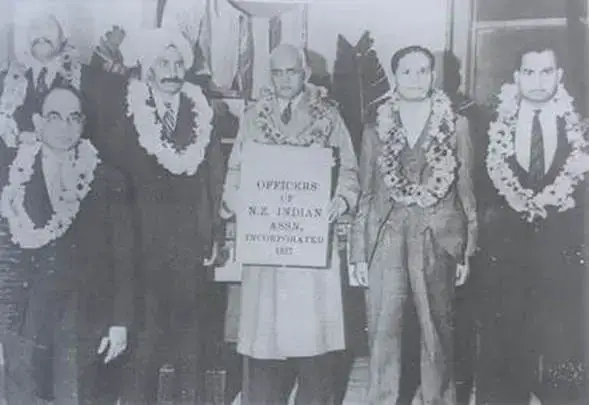
There is a photograph, preserved on the New Zealand Indian Central Association’s website, of the organisation’s elected officers from 1938. The men in that image were navigating a New Zealand that had passed laws specifically designed to exclude people like them — laws that denied entry permits to Indian immigrants, classified them as unsuitable for settlement, and gave legal cover to a society that barred them from barbers’ chairs, hotel bars, and cinema balcony seats. That they maintained a functioning national organisation through such conditions is, in retrospect, an act of extraordinary courage.
In 2026, NZICA turns one hundred. The centenary is not merely a milestone for New Zealand’s Indian community. It is a milestone for Aotearoa itself.
From Three Branches to a National Movement
NZICA was established in 1926 — the same year the White New Zealand League was founded to campaign for the exclusion of Chinese and Indian immigrants. The timing was not coincidental. Three regional Indian associations — the Auckland Indian Association (founded 1920), the Wellington Indian Association (founded 1925), and the Country Section New Zealand Indian Association (founded 1926 in Taumarunui) — came together in the recognition that a unified national voice was the only credible response to the legislative and social hostility the community faced.
The community those associations served was tiny by today’s standards: roughly 1,500 people, overwhelmingly Gujarati and Punjabi Sikh, concentrated in Auckland, Wellington, and scattered rural pockets of the North Island. Many were men who had left wives and children in India. They cut flax, drained swamps, collected bottles, and hawked fruit and vegetables from carts. They lived in cramped shared accommodation, stored spices in large drums imported from Fiji twice a year, and grew their own chillies and coriander in the backyard because there was no other way to eat the food they knew.
NZICA was born from their necessity.
A Century of Hard-Won Wins
Across ten decades, NZICA’s achievements have been substantial and, in several cases, transformative. The most consequential was its sustained advocacy for the shift from a quota-based to a points-based immigration system — a change effected in 1987 that opened New Zealand’s doors to Indian professionals in medicine, engineering, information technology, and academia. The Indian population, which stood at roughly 30,000 in 1987, has since grown to more than 300,000. By the 2023 census, Indians had become the country’s third-largest ethnicity, surpassing Chinese New Zealanders for the first time.
NZICA has also secured the opening of an Indian Consul General’s office in Auckland — a long campaign that finally gave New Zealand’s largest city its own Indian consular services. Alongside Indian Newslink, it paved the way for people of Indian origin to enter Parliament from the 2008 general election onwards. It clarified superannuation provisions for elderly Indian migrants, regularised the partnership visa pathway for Indians who had married overseas, and — in one of its most visible recent achievements — raised over NZ$200,000 during India’s catastrophic COVID-19 second wave in 2021, purchasing 120 oxygen concentrators that were air-freighted to government hospitals via the Indian Red Cross.
None of these wins came easily. Each required patient, persistent engagement with ministers, officials, and government departments across years and, in some cases, decades.
The Community Today
New Zealand’s Indian community in 2026 is almost unrecognisable from the small, embattled group of men that NZICA was founded to represent. Hindi is now the fourth most widely spoken language in the country. Punjabi, the ninth, is growing faster than any other language — up 45.1 percent between the 2018 and 2023 censuses. Papatoetoe, in South Auckland, is widely known as New Zealand’s Little India. Hamilton has the highest concentration of Indian people of any city outside Auckland, at 7.3 percent of its population.
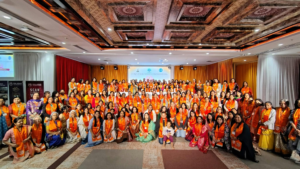
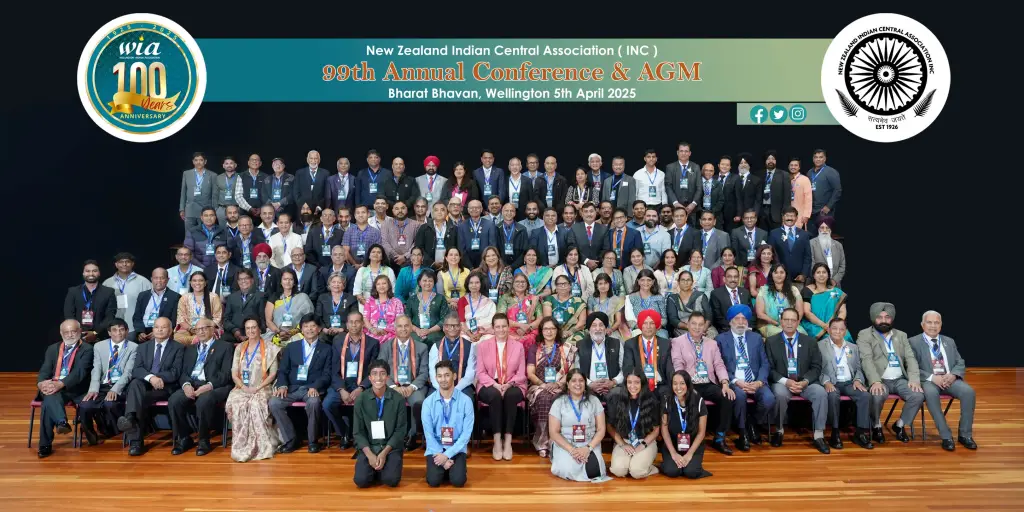
NZICA today represents this community through a federal network of twenty affiliated branches stretching from Northland to Christchurch. It co-presents Diwali in Parliament, which has been celebrated since 2010. Its annual Gala Awards — attended by Cabinet ministers, governors-general, and senior diplomats — have become fixtures of New Zealand’s civic calendar. Former Prime Minister Helen Clark was made an Honorary Member of NZICA at the 2022 ceremony.
The Curtain Raiser: 28 February 2026
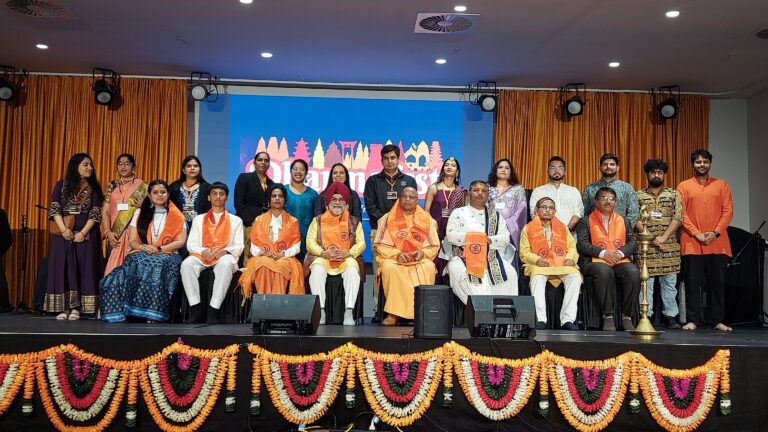
The centenary celebrations begin formally on Saturday, 28 February 2026, with a Curtain Raiser at the Cordis Hotel, Auckland. The event — by invitation and ticket — will honour past leaders, celebrate the community’s cultural heritage, and outline NZICA’s vision for its second century. It is, by any measure, a gathering that no significant figure in New Zealand’s Indian community, political establishment, or diplomatic corps will want to miss.
Tickets and further details are available from President Veer Khar (022-1971916; president@nzindians.org.nz) or General Secretary Taruna Bhana (027-3731421; secretary@nzindians.org.nz).
Challenges Unresolved
A centenary, if it is to be meaningful rather than merely self-congratulatory, must also be honest about what remains undone. Despite its size, economic contribution, and four-generation history in this country, the Indian community remains strikingly underrepresented in Parliament and on the boards of major organisations. A Free Trade Agreement between New Zealand and India — two countries whose relationship NZICA has spent a century building — remains frustratingly elusive. Mental health services for newly arrived migrants and elderly community members remain inadequate. And the challenge of transmitting Indian languages, faiths, and cultural values to third and fourth-generation Kiwi Indians — who are fundamentally New Zealanders while carrying the richness of a heritage that spans dozens of languages and millennia of civilisation — is one that language schools and cultural programmes address but cannot fully resolve on their own.
These are the challenges that should occupy NZICA’s second century.
The Longer View
To mark its centenary, NZB News has produced a comprehensive special report — A Century of Unity, Advocacy & Cultural Pride — covering NZICA’s full history from 1926 to the present, the stories of the leaders who shaped it, the network of branches that sustain it, detailed demographic data on New Zealand’s Indian community, and a vision for the fifty years ahead. It is available to download at nzb.news.
One hundred years ago, a small group of men who had been told, in every way society could communicate such a message, that they did not belong here, sat down together and decided to build an institution that would ensure their community’s voice would be heard. That institution still stands. It is older now, larger, more diverse, and more confident — but the impulse that founded it, the refusal to be invisible, remains as vital as ever.
शतं जीव शरदो वर्धमानः (Shatam Jeeva Sharado Vardhamanah) — May you live for a hundred years. NZICA has.
Read the full NZB News special report: ‘NZICA at 100 — A Century of Unity, Advocacy & Cultural Pride’ at nzb.news.
The Mokaa Book
For enquiries about the Curtain Raiser event on 28 February 2026 at Cordis Auckland, contact President Veer Khar (022-1971916) or General Secretary Taruna Bhana (027-3731421).