


 Vinay Karanam
 Imagine standing under a mango tree in an ancient village, the evening sun dipping low as a crowd gathers—dusty feet shuffling, eyes wide with wonder. A troupe of performers steps forward, their faces painted, voices rising in a tale older than the hills. Fast forward two thousand years: a sleek theater in Mumbai hums with anticipation, the curtain lifting on a story that’s both new and eternal. This is the 26th stop on our 100-article voyage through Bharat Is Not for Beginners, a journey that’s taken us from the Vedas’ sacred chants to the silver screen’s electric buzz. Now, we’re stepping onto Bharat’s timeless stage—a world where every gesture, every line, spins a living narrative of a civilization that refuses to let its stories fade. This isn’t just theater; it’s Bharat breathing through its performers, inviting us to listen, watch, and marvel.
Bharat doesn’t do anything halfway—not its festivals, not its flavors, and certainly not its art. Its theater? That’s a tapestry woven with threads of myth, music, and sheer human spirit. From dusty courtyards to polished auditoriums, it’s been a stage for kings, gods, and everyday dreamers, a space where Bharat’s past and present tangle in the most mesmerizing ways. This isn’t for the timid—it’s a full-on plunge into a land that turns performance into a pulse, proving once again why Bharat’s story is one of the world’s great wonders.
Shadows of the Ancients: Where It All Began
Let’s start at the roots—way back when Bharat’s stages weren’t stages at all, just open spaces where life unfolded. Around 200 BCE, a sage named Bharata Muni scribbled down the Natyashastra, a playbook for drama that’s less a rulebook and more a love letter to the art of performance. Picture it: a massive tome, 36 chapters deep, detailing everything from how to arch an eyebrow to how to summon tears. It wasn’t just about acting—it mixed dance, music, and storytelling into something Bharat called natya, a total experience meant to lift you out of the everyday and into the divine.
Sanskrit dramas took off—think Kalidasa, the Shakespeare of ancient Bharat, spinning Shakuntala into a tale of love and longing that still tugs at hearts. These weren’t dry recitals; they were bursts of color—actors in flowing robes, voices weaving poetry, every move dripping with meaning. Temples doubled as theaters, villages hosted impromptu shows, and kings threw gold at performers who could make them laugh or weep. It was raw, communal, and unstoppable—a reflection of a civilization that saw art as a bridge to something bigger. Those early stages set the tone: Bharat’s theater wasn’t here to whisper; it was here to roar.
Folk Fire: The People’s Stage
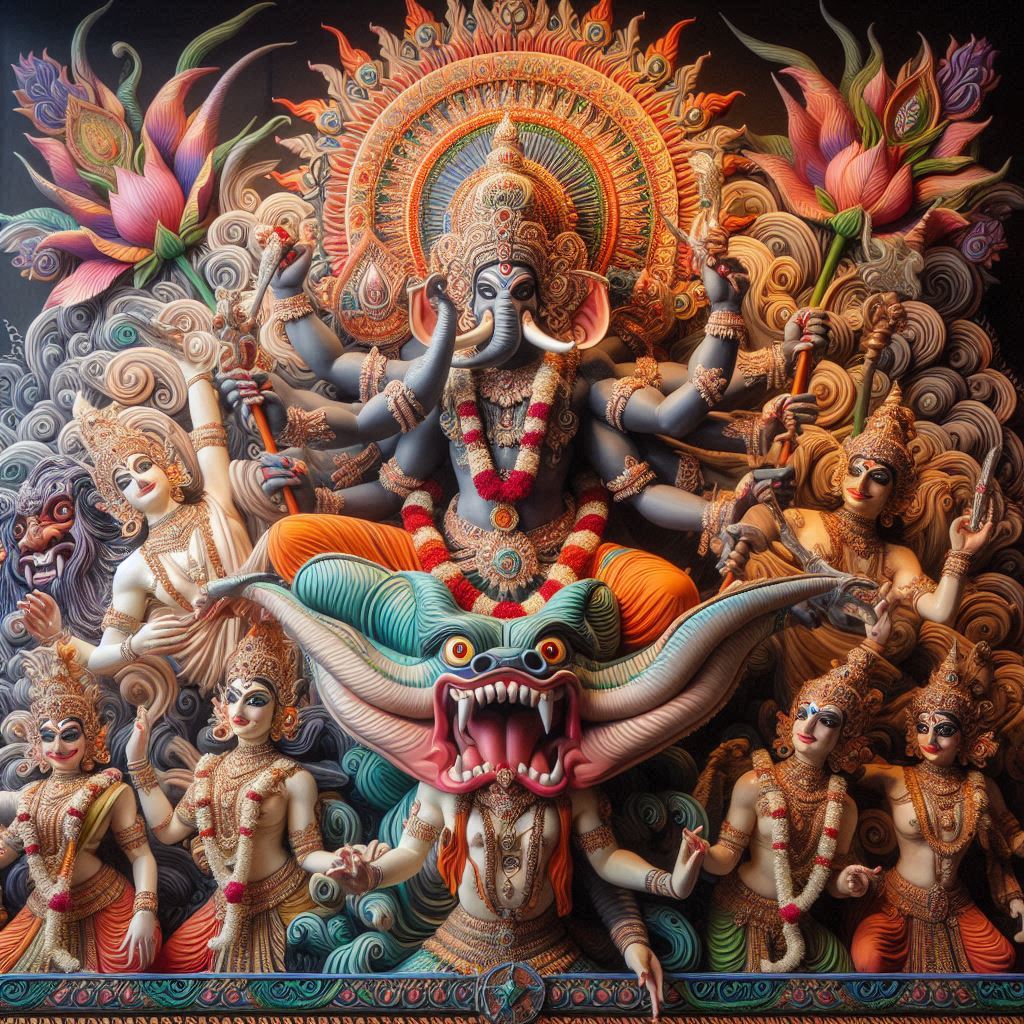
Zoom out from the royal courts, and you’ll find Bharat’s real heartbeat—the folk theater, alive in every corner of the land. Take Yakshagana from Karnataka: performers in wild costumes, faces smeared with red and gold, belting out tales of gods and demons under the stars. It’s loud—drums crashing, voices soaring—and it’s long, sometimes stretching till dawn. Or head to Tamil Nadu for Therukoothu, where street actors turn dusty lanes into battlegrounds for epic showdowns, their energy pulling in everyone from kids to grannies.
Up north, nautanki ruled the roost—think saucy songs, cheeky heroes, and plots so twisty you’d lose sleep guessing the end. In Kerala, Kathakali didn’t mess around—actors painted like living statues, eyes darting to tell stories without a word. These weren’t polished productions; they were Bharat unleashed—messy, joyful, and fiercely local. Farmers sang along, merchants tossed coins, and every show was a party where the line between watcher and performer blurred. It’s theater with dirt under its nails, proof that Bharat’s stories belong to its people, not just its poets.
The Modern Twist: Reinventing the Classics
Fast forward to the 19th century—Bharat’s under colonial sway, but its stage isn’t bowing down. Enter Rabindranath Tagore, a bearded genius who took theater and flipped it. His plays—like Chitrangada—mixed old myths with new questions, all wrapped in songs that linger like a monsoon breeze. Then came IPTA (Indian People’s Theatre Association) in the ’40s, hitting the streets with gritty dramas about workers, freedom, and hope. These weren’t museum pieces; they were Bharat talking back—to empires, to itself, to the future.
Today’s stages? They’re a mash-up of everything. You’ve got Girish Karnad’s Tughlaq, diving into history with a sharp edge, or Badal Sircar’s experimental vibes, stripping theater to its bones—bare rooms, raw voices. Big cities like Delhi and Kolkata buzz with plays that wrestle with love, politics, and tech-age angst, while rural troupes keep the old fires burning. It’s not stuck in the past; it’s Bharat remixing its roots, showing the world that its stage can flex with the times and still hold its soul.
Beyond Borders: The Stage Goes Global
Bharat’s theater doesn’t stop at its shores—it travels, and it slays. Think of Yakshagana troupes wowing London crowds, their costumes a riot of color against gray skies. Or Kathakali landing in New York, those silent stares leaving audiences speechless. Modern plays hit festivals—Edinburgh, Sydney—carrying Bharat’s knack for blending the epic with the everyday. And don’t sleep on the diaspora: in Auckland or Melbourne, you’ll catch a local crew staging Ramlila, the Ramayana reborn with Kiwi accents and a lot of heart.
Why’s it click? Because Bharat’s theater isn’t just a show—it’s a vibe. It’s got universal hooks—love, betrayal, triumph—but serves them with a twist only Bharat can pull off. It’s not afraid to get loud, weird, or deep, and that’s its superpower. Whether it’s a village kid clapping at a hero’s victory or a global critic nodding at the craft, Bharat’s stage speaks a language everyone gets, even if they don’t know they do.
Keeping the Curtain Up
This isn’t a relic gathering dust—Bharat’s theater is alive, kicking, and growing. Schools teach Natyashastra moves, troupes haul props across bumpy roads, and new writers scribble scripts that keep the spirit fresh. Sure, cinema’s the loud cousin (Article 25), but theater’s got staying power—intimate, real, and unbreakable. It’s Bharat’s quiet giant, thriving because its people won’t let it fade. Every performance is a promise: these stories, this fire, they’re here to stay.
Why You Should Care
So, why tune into Bharat’s theatrical beat? Because it’s a front-row seat to a civilization that’s been staging life’s big questions forever. It’s fun—wild costumes, killer lines—but it’s more: it’s Bharat showing off its grit, its glue, its genius. For us in New Zealand or anywhere, it’s a nudge to lean into our own stories, to see how art can bind us. Next time you’re near a stage—local or streamed—give Bharat’s theater a shot. It’s not polished perfection; it’s better—it’s alive, and it’s calling you in.
Excerpt
And there you have it—26 articles into our 100-part romp through Bharat Is Not for Beginners, and we’re still uncovering gems in this wild, wonderful land. From cinema’s reel magic to the stage’s timeless tales, Bharat keeps us hooked. Join us tomorrow for Article 27: Bharat Is Not for Beginners – Threads of Eternity: Bharat’s Textile Traditions and Living Artistry, where we’ll unravel the fabric of a civilization that weaves history, beauty, and innovation into every stitch.