

 Vinay Karanam
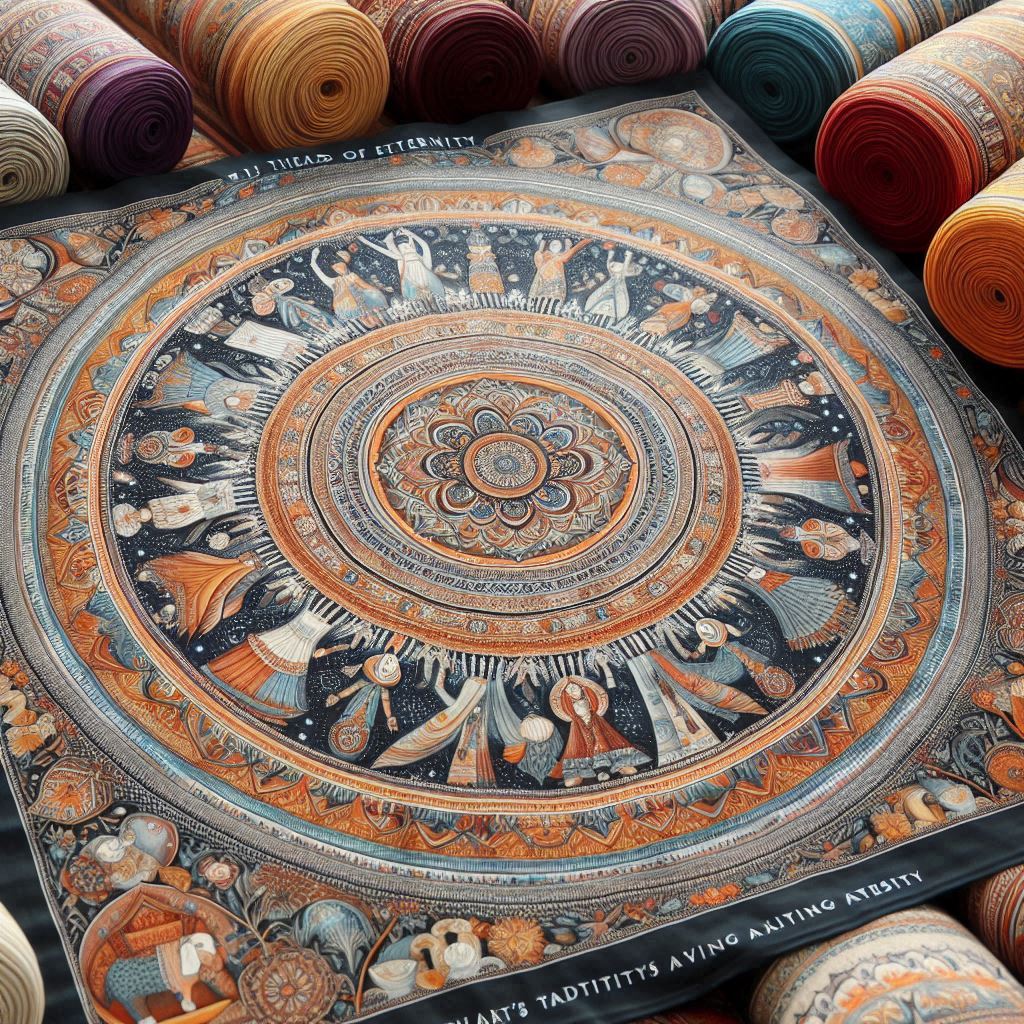
 Run your fingers along a sari from Varanasi, its silk shimmering with gold like a sunrise caught in cloth, or trace the bold geometry of a Gujarat bandhani, dyed with the desert’s defiance. This is the 27th weave in our 100-article tapestry, Bharat Is Not for Beginners, a journey that’s already spun us through Ayurveda’s gentle cures, the clang of ancient forges, and the flicker of cinematic dreams. Now, we’re threading through Bharat’s textile traditions—a living artistry that drapes its people in history, ingenuity, and sheer beauty. This isn’t just fabric; it’s Bharat’s soul stitched into every fold, a story of hands that create eternity from humble looms.
Bharat doesn’t merely clothe itself—it adorns the world with a legacy that’s as old as its rivers and as vibrant as its festivals. Its textiles aren’t throwaway threads; they’re heirlooms, trade treasures, and silent poets, whispering tales of a civilization that’s mastered the art of turning cotton, silk, and dye into something divine. From royal courts to village hearths, Bharat’s woven wonders have wrapped its spirit in colour and craft for millennia. This isn’t for the rushed—it’s a slow unravelling of a land where every knot ties you to its heart.
The Loom of Time: Where Threads Began
Cast your mind back to 5000 BCE—Indus Valley weavers were already teasing cotton into threads finer than a spider’s web. Dig sites like Mohenjo-Daro cough up spindles and dye vats, proof Bharat was spinning cloth when most of the world was still in hides. By 1500 BCE, Vedic hymns (Article 1) sang of vastra—garments as sacred as the fire they warmed. Cotton was king—light, tough, and born of Bharat’s fields, it was a gift the world didn’t know it needed yet.
Fast forward to 500 BCE, and silk slithered in. Tamil poets wrote of pattu—silk so soft it flowed like water—while Gujarat’s dyers dipped cotton in indigo, birthing a blue that’d conquer empires. These weren’t just clothes; they were Bharat’s first canvas—geometry from math wizards (Article 20), colours from nature’s palette, all woven with a precision that’d make a scientist jealous. The loom wasn’t a tool—it was a time machine, threading eternity into every pass.
A Tapestry of Craft: Regions in Bloom
Bharat’s textiles don’t sit still—they dance across its map, each corner stitching its own magic. In Varanasi, silk saris gleam with zari—gold and silver threads twisted by hand, a craft so old it feels like the Ganges itself taught it. A single Banarasi sari can take months—looms clacking through the night, weavers chanting rhythms to keep the pace. Head to Bengal, and muslin floats in—once called “woven air,” so fine emperors flaunted it sheer, a flex of Bharat’s finesse that left Rome drooling.
Down south, Kanchipuram’s silk glows heavy and rich—temple weavers threading peacocks and lotuses into wedding saris that weigh like promises. Gujarat’s Patola is a double-ikat marvel—dyed before weaving, every strand a puzzle only a master can solve, fetching prices that’d make a king blink. Rajasthan’s block prints stamp cotton with desert reds and mustard yellows, while Kashmir’s Pashmina wraps wool so soft it slips through a ring. Every region’s a thread—unique, bold, and tied to Bharat’s knack for turning the everyday into art (Article 3).
Trade Winds and Woven Gold
Bharat’s looms didn’t just dress its own—they clothed the world. By 200 BCE, cotton sailed from Gujarat’s ports (Article 21), landing in Egypt’s markets and Rome’s wardrobes—Pliny griped about the gold draining west for Bharat’s “flimsy rags.” Silk followed, threading the Silk Road with a shimmer that had China sweating. Medieval Europe couldn’t get enough—chintz from Machilipatnam, calico from Calicut, names still echoing in English dictionaries.
Mughal courts turned it up—emperors like Akbar draped in jamdani, a muslin so intricate it took years per piece. Traders bartered spices for cloth (Article 15), and colonial powers later twisted the game—Britain’s mills ripped off Bharat’s weaves, but couldn’t kill the soul. From Arab dhows to Dutch ships, Bharat’s textiles were cash and clout—a soft power that wove its way into history’s fabric.
Resilience in the Warp: Modern Threads
Colonial looms tried to unravel it—machine cotton flooded in, and handweavers starved. But Bharat’s threads don’t snap. Gandhi spun khadi—rough, honest cloth—into a freedom flag, and post-1947, the looms hummed back to life. Today, Surat’s power looms churn polyester, but the handcraft hangs tough—Banarasi weavers still thread gold, Kutch’s tie-dyers knot miracles, and Pashmina shepherds spin wool in Himalayan chill.
Fashion’s caught on—Sabyasachi’s lehengas strut global runways, while khadi’s gone chic in Paris boutiques. Tech’s in the mix—digital prints mimic ikat, but the handloom’s heart beats loud, backed by co-ops and fairs. It’s not nostalgia—it’s Bharat weaving its past into a future that shines, proving its artistry’s got stretch (Article 12).
Why the Threads Hold
What keeps this alive? It’s Bharat’s people—grandmas passing needles, kids learning knots, villages guarding dyes like gold. It’s in the festivals (Article 19)—saris for Diwali, turbans for weddings—cloth as life itself. UNESCO’s tagged it—intangible heritage—and designers chase it, but it’s the weaver’s hands that keep it eternal. Machines can’t replicate the love in a Patola’s warp—a love that’s Bharat to its core.
Why It Wraps You In
Why dive into Bharat’s textile tale? Because it’s a hug from a place that’s been weaving beauty forever. It’s stunning—silk that glows, cotton that breathes—and it’s smart, a craft that’s outlasted empires. For us in New Zealand or anywhere, it’s a call—buy a shawl, wear a story, feel Bharat’s warmth. It’s not just threads; it’s a lifeline to a civilization that dresses the world in wonder.
Excerpt
That’s 27 stitches in our 100-article weave of Bharat Is Not for Beginners, and Bharat’s still unfolding—cinematic reels, timeless stages, and now threads that tie it all together. Hang on as we keep threading through this dazzling land. Join us tomorrow for Article 28: Bharat Is Not for Beginners – The Celestial Compass: Bharat’s Astronomical Legacy and Cosmic Vision, where we’ll gaze at the stars that guided a nation’s science and spirit.