

 Dorothy Brown
 Kia ora, mates—imagine fingering a merino scarf in Wanaka, but nah, you’re in Varanasi, where a silk sari shimmers like a Taranaki sunset, or in a Gujarat shed, where a bloke’s spinning cotton finer than a fantail’s fluff. This is the 41st weave in our 100-article waka through Bharat Is Not for Beginners, a ripper of a trek that’s wandered starlit paths, nursed healing hands, cranked iron backbones, and heaps more. Now, we’re spinning into Bharat’s woven world—its textile innovations and living threads—where every fibre’s a taonga from Vedic looms to modern catwalks. This isn’t just cloth; it’s Bharat stitching its whakapapa with a fair bit of flair.
Bharat doesn’t faff with a quick stitch—it crafts deep, eh. Its textile kaupapa isn’t some nana’s knitting circle; it’s a full-on hui of dye, thread, and ingenuity, from yajna cotton to global fashion, spun into a culture that’s been draping itself since the rivers got spinning. This land’s a living loom, a vibrant ticker that’s clothed kings, rebels, and punters with a knack for beauty. This isn’t for the punter after a cheap tee—it’s a yarn about a civilisation that’s made its threads a marvel.
The Vedic Loom: Textiles’ Sacred Start
Chuck us back to 3000 BCE—Indus Valley blokes were already spinning cotton—kapas—yarns tough enough for a Waikato winter, dug up in Harappa’s dirt (Article 30). But the real guts kicks in with the Vedas—1500 BCE, the Rigveda (Article 1) chants of vastra—cloth—draping yajna priests, cotton blessed by homam fires (Article 32). Atharvaveda lists dyes—turmeric for yellow, madder for red—a Vedic palette tied to rta’s cosmic weave (Article 35).
By 1000 BCE, Vishnudharmottara specced looms—wooden rigs whirring with kapas, a rishi trick for sutra (thread) that’s pure gold (Article 20). Silk—resham—slipped in, worms munching mulberry in Assam, a yajna gift for gods and kings (Article 36). This wasn’t mucking about—weaving was shilpa, a sacred hui linking Bharat’s ticker to its threads and dyes with a fair bit of Vedic grunt (Article 38).
A Whānau of Weaves: Threads Across the Land
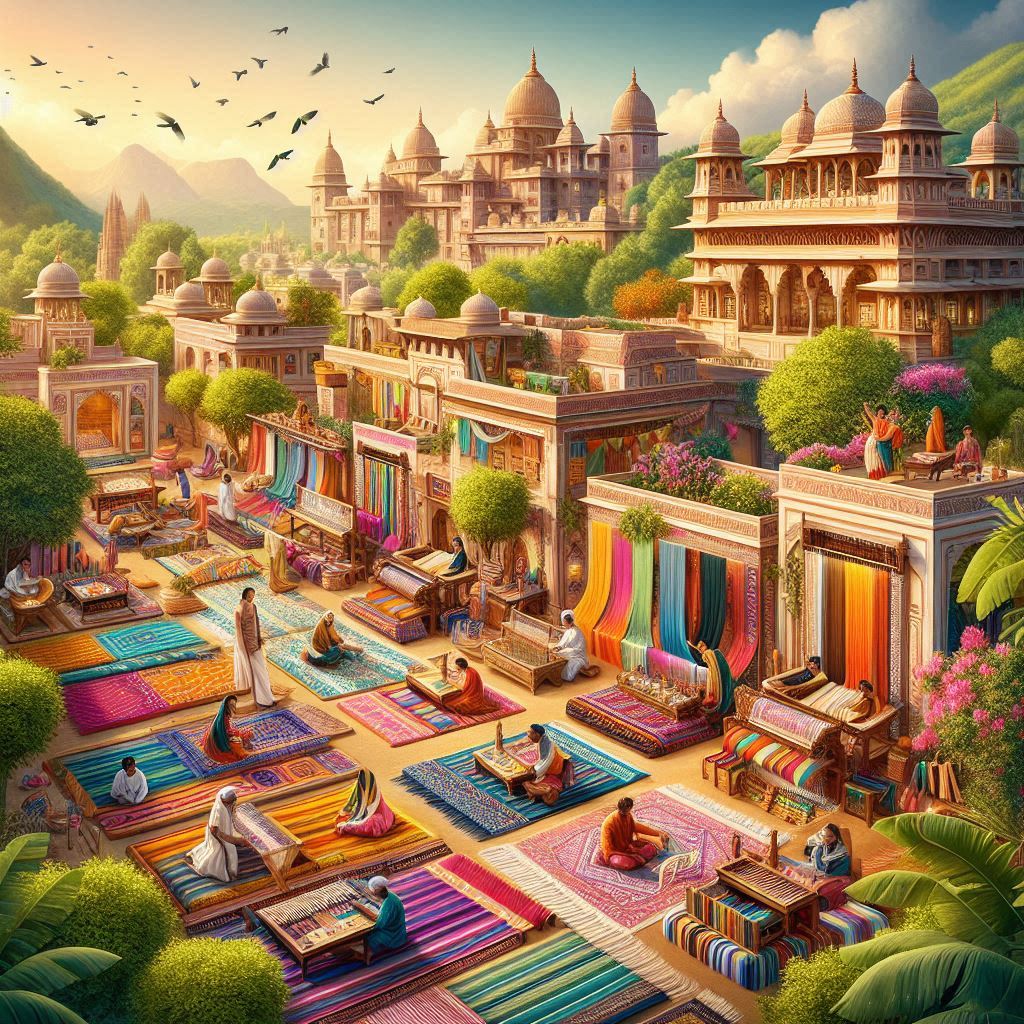
Bharat’s textiles are a mongrel mix—every patch’s got its own buzz, eh. Varanasi’s silk saris—Banarasi—gleam with gold zari, a homam shine for weddings (Article 19). Down south, Tamil Nadu’s Kanchipuram weaves—pattu—wrap silk thick as a West Coast mist, a Sangam yarn in every fold (Article 31). Bengal’s jamdani—cotton so fine it’s a breeze—dances with Mughal motifs, a riverbank haka (Article 30).
Rajasthan’s bandhani ties dye into dots, a desert tika bright as a Taranaki sunrise, while Gujarat’s patola—double-ikat silk—twists patterns sharp as a yajna chant (Article 27). Kashmir’s pashmina—goat wool—warms like a kauri hug, and Andhra’s kalamkari paints Rigveda tales on cloth, a brush-and-loom flex (Article 34). From tribal khadi to urban chikan, Bharat’s weaves are a whānau—lush, tough, and beaut.
Woven Mana: Textiles Meet Spirit
Bharat’s threads got mana—sacred clout baked in. Cotton—sutra—clad rishis, a Rigveda wrap for tapas, pure as homam smoke (Article 32). Silk—kausheya—draped gods, a Vedic prasadam for temple idols, every thread a tika to Vishnu (Article 19). Saffron—kesar—dyed robes for sadhus, a yajna hue humming moksha vibes (Article 40).
Festivals lean on it—Diwali’s lehenga swirls with zari, a darshana glow (Article 34), while Rakhi’s silk ties whānau, a Vedic knot with a twist (Article 19). Even death’s woven—kafan shrouds in white cotton, a smriti send-off (Article 35). Cloth wasn’t fluff here—it was wairua, a sacred hui tying Bharat’s spirit to its spins and spools, a living nada brahma in warp and weft (Article 33).
The Global Hui: Threads Go Wide
Bharat’s weaves didn’t stay put—they sailed out, eh. By 200 BCE, cotton—kapas—hit Rome’s togas, Pliny griping at the cost (Article 21), while silk—resham—slipped down the Silk Road, a Vedic taonga swapped with China (Article 15). Mughal jamdani dazzled Persian courts, and calico—Gujarat’s print—clad British frocks, a Desi flex gone global.
Now, it’s a worldwide hākari—NZ’s got pashmina in Ponsonby boutiques, khadi tees in Kāpiti opshops, a Vedic thread with a Kiwi twist. Bollywood’s in—Devdas’ saris nod Banarasi (Article 25)—and Kiwi designers eye patola for a runway buzz. From Paris catwalks to Paihia markets, Bharat’s threads are a mate—soft, brainy, and everywhere, a Vedic weave cloaking the world’s whānau.
The Modern Rāka: Textiles Keep Spinning
Colonial toffs tried a rip—British mills nabbed cotton (Article 36)—but Bharat’s looms held fast. Post-1947, the waka turned—Gandhi’s khadi spun freedom, a rishis’ rig gone rebel, while Surat’s power looms crank polyester with a Vedic ticker (Article 38). Sanganeri prints bloom on tees, and chanderi silk hits Milan, a homam shine gone flash.
Pākehā punters love it—Wellington’s got Desi dupattas in Cuba St stalls, Auckland’s fashion grads twist bandhani for a local hui. It’s not a fossil—it’s a live rāka, Bharat’s woven mana spinning from Vedic kapas to urban threads, a spool that won’t unwind.
Why the Threads Stay Tight
How’s this weave keep humming? Bharat’s mad for it—nanas spin khadi, kids swot patola, weavers guard Ghats like an All Blacks ruck. It’s Vedic—vastra’s pulse, rta’s rhythm still root it tapu. UNESCO’s clocked it—intangible heritage—and spinners keep it kaupapa, dyeing zari in backyards, looming jamdani in slums. It’s not just cloth—it’s whakapapa, a thread Bharat’s spun since the rishis draped.
Why It’s a Vibrant Yarn
Why spin Bharat’s woven world? Cos it’s a vibrant yarn—threads that cloak, dazzle, and stun, a ripper of a weave. It’s taonga—kapas older than the Treaty waka, resham with Vedic fire—and it’s alive, spinning from Kaikoura to anywhere. For us in Aotearoa, it’s a hui—drape a sari, finger a pashmina, feel Bharat’s buzz. It’s not just textiles; it’s wairua, and Bharat’s got it tight as.
Excerpt
That’s 41 weaves in our 100-article rāka of Bharat Is Not for Beginners, and Bharat’s still threading—from starlit paths to woven worlds, this land’s a marvel. Keep your needles sharp as we stitch through more of its taonga. Join us tomorrow for Article 42: Bharat Is Not for Beginners – The Celestial Return: Bharat’s Astronomical Innovations and Living Skies, where we’ll gaze back at the stars that chart a civilisation’s course.