



 Dorothy Brown
 Kia ora, friends—imagine honing taiaha skills in a Rotorua clearing, the wood whistling with purpose, but picture instead a Kerala kalari, where a kalaripayattu master leaps with a sword under palm shade, or a Punjab dojo, where a Gatka fighter twirls a talwar in a Sikh rhythm. This is the 57th stride in our 100-article journey through Bharat Is Not for Beginners, a remarkable trek that’s unveiled a land of vibrant legacies and fierce resolve. Now, we’re stepping back into Bharat’s warrior’s way—its martial traditions and living strength—where every stance, every strike, is a taonga, a treasure forged from Vedic ksatriyas to modern dojos. This isn’t just about combat; it’s Bharat tempering its whakapapa with discipline and honour.
Bharat doesn’t approach its martial arts with a reckless swing—it trains with focus and reverence. Its warrior kaupapa isn’t a rusted blade; it’s a vibrant hui, a gathering of techniques, philosophies, and legacies that stretch from the sacred yajna’s warrior hymns to the training grounds of today’s academies. This land is a living akhara, a dynamic ticker that’s honed its people through battles, dynasties, and drills with a profound respect for strength and dharma. This isn’t for those after a quick spar—it’s an exploration of a civilisation that’s made its martial spirit a remarkable legacy, a discipline that binds its past to its present with grit and grace.
The Vedic Blade: Martial Arts’ Sacred Beginnings
Let’s step back to 1500 BCE, when warriors were more than fighters—they were divine. The Rigveda hails Indra, the thunder-wielding ksatriya, his vajra a symbol of might, invoked in yajna chants where ghee was offered for victory. Rta, the cosmic order, demanded dharma in battle—strength tempered by justice, a code for archers and charioteers. The Atharvaveda blessed dhanush—bows—with mantras, their twang a homam prayer for precision.
By 1000 BCE, Dhanurveda—the science of archery—codified combat, detailing swordplay, macework, and wrestling in akhara pits, its sutra a rishi’s guide for ksatriya duty. Mahabharata, from 400 BCE, wove kshatra—warrior ethos—into Arjuna’s Gita, urging skill with ahimsa’s restraint. Arthashastra, around 300 BCE, trained spies and cavalry, its danda tactics a jyotisha-timed art for kings. Shastra—weapons—like khanda swords, were forged in yajna-fired smithies, their steel a Vedic spark.
This wasn’t mere fighting—it was yuddha-kala, the art of war. Warriors weren’t just soldiers; they were viras, bearers of sacred duty, their drills a hui that linked Bharat’s spirit to its blades and bows with a sage’s honour and a deep wairua, a spiritual strength that endures.
A Whānau of Warriors: Martial Arts Across the Land
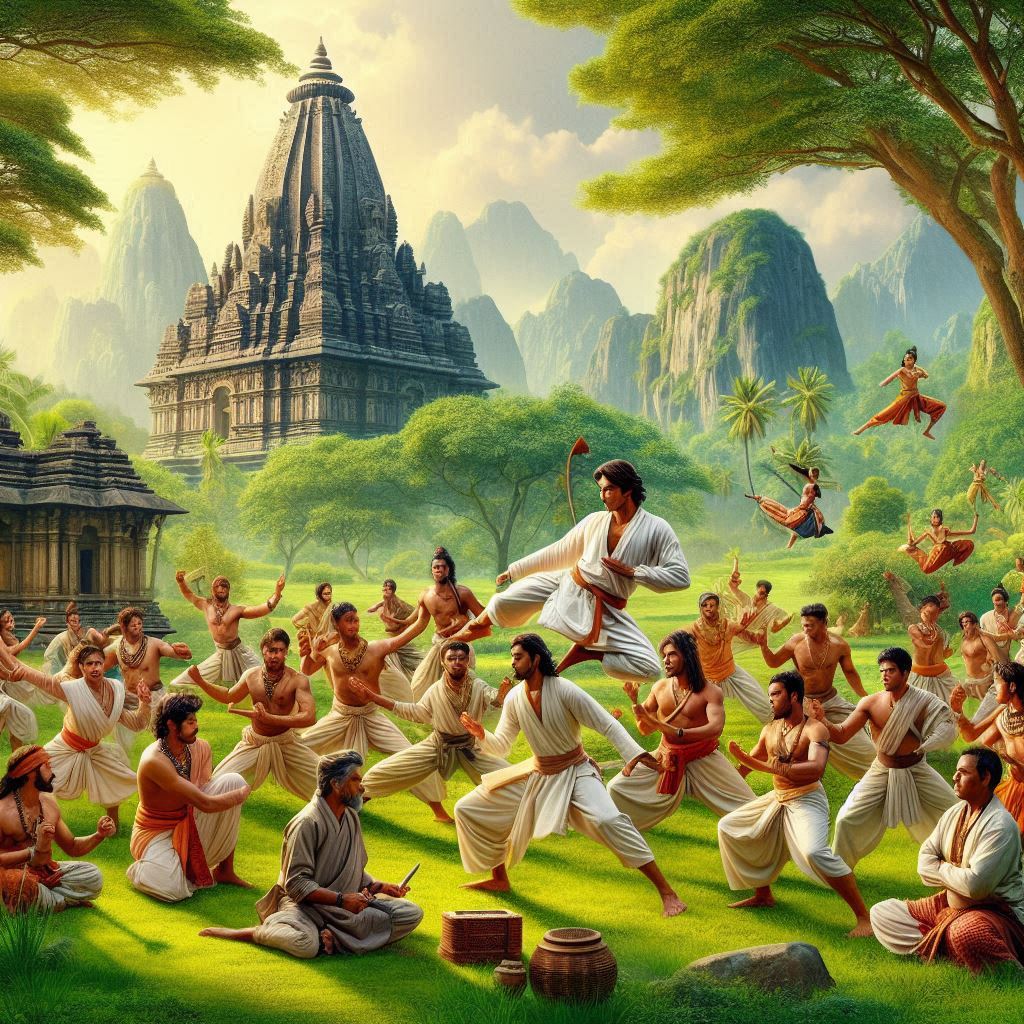
Bharat’s martial traditions form a whānau, a family of disciplines, each region forging its own path. In Kerala, Kalaripayattu—born in Sangam sands—blends urumi (whip-sword) with angam kicks, a coastal taonga that heals as it harms, its vaidya oils a nod to Ayurveda. Up north, Punjab’s Gatka spins talwar and lathi in Sikh shastar vidya, a Guru Gobind legacy danced in gurdwara yards.
Tamil Nadu’s Silambam twirls bamboo kambu, its kuthu strikes a Chola rhythm, while Bengal’s Lathi Khela wields cane in Durga Puja bouts, a delta dharma for village guards. Rajasthan’s Marwari clans train Kshatriya khadga—curved swords—in desert akharas, their haldi-smeared blades a yajna vow. Gujarat’s Malla-yuddha wrestlers grapple in dangal pits, a Jain-tempered ahimsa for strength.
Odisha’s Paika rebels, 19th-century ksatriyas, swing khukri in Kalinga drills, their steps a tribal rta. Assam’s Bodo tribes spar with bamboo soti, a Brahmaputra yuddha for harvest feasts. Maharashtra’s Mardani Khel, a Maratha art, pairs dandpatta—gauntlet-swords—with phari shields, a Deccan flash. From Ladakh’s archery fests to Andaman’s stick dances, Bharat’s warriors are a whānau—fierce, varied, and truly impressive, each a spark in the land’s martial fire.
Martial Mana: Strength Meets Spirit
Bharat’s martial arts carry mana—sacred resolve honed in every move. Yuddha-kala isn’t just combat; it’s dharma, aligning strength with rta’s justice, every kata a homam prayer for balance. Arjuna’s Gita vow—to fight for right—lives in akhara oaths, a tika to ksatriya honour. Shastra like katar daggers, blessed with mantras, channel shakti, a Vedic edge for vira.
Festivals forge this mana—Dussehra parades talwar dances, Rama’s victory a yuddha call. Nag Panchami honours naga kalaris, their urumi a serpent’s coil. Even daily life reflects it—farmers train lathi for self-defence, mothers teach ahimsa to tamariki, a rta-guided warmth. Kalaripayattu’s meippayattu—body drills—heal joints, a yajna stretch for health.
Sikh Gatka ties kirpan to Guru’s shanti, a dharma blade for peace. Tribal Gonds in Madhya Pradesh spar with bamboo for totem rites, a pre-Vedic yuddha-kala alive in drumbeats. Strength wasn’t just muscle here—it was wairua, a sacred hui tying Bharat’s spirit to its swords and stances, a living nada brahma in strike and step.
The Global Hui: Strength Reaches Out
Bharat’s martial wisdom didn’t stay sheathed—it struck far. By 200 BCE, Dhanurveda’s archery reached Persia, its dhanush shaping Achaemenid bows. Buddhist monks carried Kalaripayattu’s kata to China, their angam seeding Shaolin kung fu. Chola warriors trained khukri in Sri Lanka, a yuddha taonga for monsoon forts.
Mughal talwar drills blended Kshatriya cuts with Persian shamshir, a Desi spark in Ottoman camps. British colonials pinched Gatka’s lathi for police batons, a Vedic trick in Victorian hands. Today, it’s a global hui—NZ’s martial artists train Silambam in Auckland dojos, a Vedic twist on Kiwi mats. In Wellington, Gatka spins at Sikh festivals, while Christchurch’s kendo clubs eye Mardani Khel’s dandpatta.
From Hollywood’s Kalaripayattu stunts to Dunedin’s tai chi parks, Bharat’s strength is a friend—disciplined, artful, and truly far-reaching, a Vedic blade sharpening the global whānau’s resolve.
The Modern Rāka: Strength Keeps Forging
Colonial times tried to blunt it—British bans disarmed akharas—but Bharat’s warriors stood firm. Post-1947, the waka turned with pride. Kalaripayattu revived in Kerala, its kalaris training angam for global stages, a Chola art gone UNESCO. Gatka flourishes in Punjab, its talwar twirls a Sikh pride at Nagar Kirtan.
Shivaji’s Mardani Khel inspires Maharashtra’s dangals, their phari drills a Maratha spark. Paika festivals in Odisha stage khukri demos, a rebel yuddha for tourists. Silambam clubs in Chennai teach kambu to tamariki, a Sangam beat in urban gyms. NCC cadets train lathi for parades, a dharma-driven march.
Kiwi friends see the spark—Auckland’s capoeira blends Silambam’s spin, Wellington’s Sikh youth swing kirpan at Vaisakhi. It’s not a relic—it’s a live rāka, Bharat’s martial mana forging from Vedic dhanush to dojo mats, a strength that keeps striking.
Why the Way Stays Warrior
What keeps this strength alive? Bharat’s devotion runs deep—nanas share Ramayana’s Rama as ksatriya, tamariki spar lathi in village yards. Masters guard yuddha-kala like treasures, passing down Gatka with a Hurricanes ruck’s focus. It’s Vedic at its core—dharma’s justice, rta’s balance, still hold it tapu, a sacred trust unbroken.
Communities keep it sharp—village akharas, urban kalaris, gurdwara Gatka teams. UNESCO’s marked Kalaripayattu as heritage, but it’s the people who uphold the kaupapa—twirling talwar in fields, teaching urumi in gyms, drilling kata for the next wave. It’s not just combat—it’s whakapapa, a way Bharat’s honed since the rishis blessed Indra’s vajra, a strength that stands fierce.
Why It’s a Spirited Yarn
Why stride back into Bharat’s warrior’s way? Because it’s a spirited yarn—disciplines that forge, honour, and endure, a remarkable tale that deserves a deep salute. It’s taonga—dhanush older than the Treaty waka, talwar glowing with Vedic fire—and it’s alive, striking from Kaikoura’s shores to anywhere courage matters. For us in Aotearoa, it’s a hui—swing a kambu, honour a kirpan, catch Bharat’s spark in every stance.
This strength bridges worlds—past and present, akhara and arena, Bharat and beyond. It’s in the urumi that dances a kalari, the Gita that steadies a heart, the Gatka that guards a faith. It’s not just martial arts; it’s wairua, a spiritual force, and Bharat’s got it standing strong, a way that invites us all to train, to rise, to join the fight.
Excerpt
That’s 57 strides in our 100-article rāka of Bharat Is Not for Beginners, and Bharat’s still striking—a land of remarkable gifts. Keep your stance steady as we forge more of its taonga. Join us tomorrow for Article 58: “Bharat Is Not for Beginners – The Sacred Feast Returns Again: Bharat’s Culinary Traditions and Living Flavours”, where we’ll savour back into the dishes that nourish a civilisation’s soul.