

 Eleanor Thompson
 Kia ora, friends—imagine performing a kapa haka on a Waikato marae, each stomp pulsing with mana, but picture instead a Madurai temple, where a Bharatanatyam dancer weaves Shiva’s tandava under stone arches, or a Mumbai stage, where a fusion troupe blends Kathak with hip-hop under neon lights. This is the 65th rhythm in our 100-article journey through Bharat Is Not for Beginners, a remarkable trek that’s unveiled a land of vibrant legacies and bold expression. Now, we’re swaying back into Bharat’s sacred dance—its dance traditions and living rhythms—where every mudra, every tala, is a taonga, a treasure spun from Vedic rituals to modern choreography. This isn’t just about movement; it’s Bharat pulsing its whakapapa with grace and vitality.
Bharat doesn’t approach dance with a clumsy step—it moves with precision and reverence. Its rhythmic kaupapa isn’t a faded tala; it’s a vibrant hui, a gathering of nritya, natya, and nritta that stretches from the sacred yajna’s ritual gestures to the global stages of today’s festivals. This land is a living dance floor, an expressive ticker that’s stirred its people through worship, storytelling, and celebration with a profound respect for rhythm and spirit. This isn’t for those after a quick jig—it’s an exploration of a civilisation that’s made its dance a remarkable legacy, a movement that binds its past to its present with elegance and energy.
The Vedic Step: Dance’s Sacred Beginnings
Let’s step back to 1500 BCE, when movement was more than motion—it was divine. The Rigveda describes yajna priests circling Agni’s flames, their gestures—hasta—a rta-guided homam to Brahman, each step a mantra in motion. Samaveda, by 1000 BCE, paired svara chants with ritual sways, its ragas a jyotisha-timed pulse for soma rites. Atharvaveda blessed anklets—ghunghroo—for puja, their jingle a tala to devis.
By 200 BCE, Natya Shastra—Bharata Muni’s treatise—codified dance, its mudras (hand gestures), bhavas (emotions), and nritta (pure movement) a mandala for rasa—feeling. Vedic temple devadasis danced Shiva’s tandava, their karanas—poses—a yajna offering. Sangam Tamil texts, from 300 BCE, sang of koothu dancers in kurinji groves, their pann scales a sadhana swirl. Ramayana’s Sita inspired nritya—storytelling dance—in sabhas, a dharma in every spin.
This wasn’t mere movement—it was nritya-kala, the art of dance. Dancers weren’t just performers; they were nartakis, bearers of sacred rhythm, their talas a hui that linked Bharat’s spirit to its mudras and movements with a sage’s grace and a deep wairua, a spiritual step that endures.
A Whānau of Rhythms: Dance Across the Land
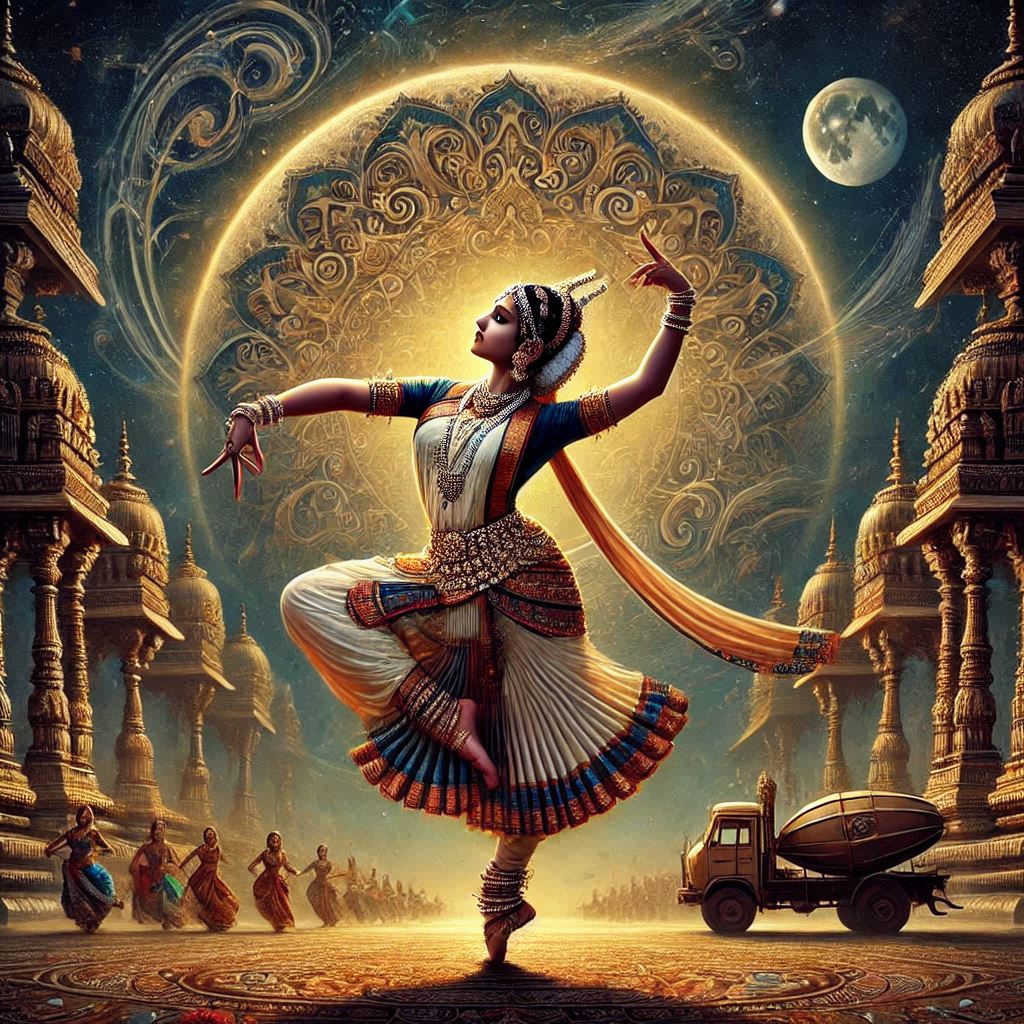
Bharat’s dance traditions form a whānau, a family of rhythms, each region swaying its own tala. In Tamil Nadu, Bharatanatyam—Sadir reborn—tells Krishna’s tales with adavus—steps—on temple floors, a Chola taonga for kutcheries. Up north, Uttar Pradesh’s Kathak spins Mughal ghazals with chakkars—twirls—its ghunghroo a bhakti chime for gurus.
Bengal’s Gaudiya Nritya sways Radha’s love, a delta hui for Vaishnava sabhas. Gujarat’s Garba circles Durga with dandiya sticks, a Jain-tempered tala for Navratri. Kerala’s Mohiniyattam flows Vishnu’s grace with lasya—soft steps—its sari a coastal rta for guruvayur.
Odisha’s Odissi curves Jagannath’s bhakti with tribhangi—triple bends—its anklets a temple pulse. Punjab’s Bhangra leaps for wheat harvests, its dhol a Sikh shanti for baisakhi. Maharashtra’s Lavani sways sari hips to Maratha powada, a Deccan rasa for tamasha. Assam’s Sattriya dances Krishna’s leela in monastery yards, a Brahmaputra nritya, while Kashmir’s Rouf sways Sufi verses for Eid. From Andaman’s tribal hunts to Ladakh’s Tibetan lama chhams, Bharat’s dances are a whānau—vivid, sacred, and truly impressive, each a beat in the land’s rhythmic soul.
Rhythmic Mana: Dance Meets Spirit
Bharat’s dance carries mana—sacred essence spun in every mudra. Nritya isn’t just movement; it’s dharma, weaving atman with rta’s rhythm, every tala a homam prayer for rasa. Bharatanatyam’s nataraja pose channels Shiva, a tika to Brahman. Kathak’s Krishna katha lifts bhakti, a yajna swirl for devotion.
Festivals pulse this mana—Navratri’s Garba circles Amba, its claps a jyotisha tala. Krishna Janmashtami sparks Rasleela, Radha’s nritya a love raga. Even daily life reflects it—villagers sway Bhangra at weddings, mothers teach adavus to tamariki, a rta-guided warmth. Odissi’s bhavas heal hearts, their lasya a sadhana for shanti.
Jain Garba spares leather ghunghroo for ahimsa, their steps a sangha prayer. Tribal Gonds in Madhya Pradesh dance karsan for totem rains, a pre-Vedic nritya-kala alive in drums. Dance wasn’t just art here—it was wairua, a sacred hui tying Bharat’s spirit to its rhythms and reels, a living nada brahma in step and spin.
The Global Hui: Rhythms Reach Out
Bharat’s dance wisdom didn’t stay still—it twirled far. By 200 BCE, Natya Shastra’s mudras sailed with Buddhist monks to China, their karanas shaping Tang opera. Sangam koothu inspired Java’s Ramayana ballet, a nritya taonga for Borobudur stages. Mughal Kathak spun ghazals to Persia, a Desi tala in Safavid courts.
British colonials pinched Lavani’s flair for Victorian revues, a Vedic sway in London halls. Today, it’s a global hui—NZ’s Bharatanatyam troupes perform at Auckland Diwali, a Vedic twist on Kiwi boards. In Wellington, Odissi classes teach tribhangi, while Christchurch’s choreographers blend Bhangra with pop.
From Bollywood’s Kathak to Dunedin’s Mohiniyattam recitals, Bharat’s rhythms are a friend—graceful, timeless, and truly far-reaching, a Vedic tala pulsing the global whānau’s stage.
The Modern Rāka: Rhythms Keep Swaying
Colonial times tried to still it—British balls outshone nritya—but Bharat’s dance stood firm. Post-1947, the waka turned with pride. Sangeet Natak Akademi, founded 1952, revived Bharatanatyam and Sattriya, its gurukuls a rishi’s nod to nartakis. Kalakshetra, Chennai’s 1936 gem, trains adavus, a Chola kala for global tours.
Bollywood blends Kathak with jazz, its item numbers a nritya for screens. Fusion troupes—Navdhara in Mumbai—mix Odissi with contemporary, a tala for Lincoln Center. Zee TV’s dance shows stream Bhangra to diasporas, a raga gone viral. Khajuraho Dance Festival draws Kathak crowds, a temple nritya for stars.
Kiwi friends see the spark—Auckland’s Garba nights echo Navratri’s claps, Wellington’s stages nod Sattriya’s leela. It’s not a relic—it’s a live rāka, Bharat’s rhythmic mana swaying from Vedic sabhas to LED stages, a dance that keeps pulsing.
Why the Dance Stays Sacred
What keeps this dance alive? Bharat’s devotion runs deep—nanas teach mudras at dusk, tamariki tie ghunghroo in gurukuls. Nartakis guard nritya-kala like treasures, passing down Bharatanatyam with a Hurricanes ruck’s focus. It’s Vedic at its core—rta’s rhythm, dharma’s grace, still hold it tapu, a sacred trust unbroken.
Communities keep it vibrant—village Rasleela circles, urban dance fests, temple nritya offerings. UNESCO’s marked Sattriya as heritage, but it’s the people who uphold the kaupapa—spinning chakkars in courtyards, choreographing adavus in studios, teaching tala to the next wave. It’s not just dance—it’s whakapapa, a rhythm Bharat’s pulsed since the rishis swayed to Agni, a movement that stands graceful.
Why It’s an Expressive Yarn
Why sway back into Bharat’s sacred dance? Because it’s an expressive yarn—rhythms that stir, endure, and inspire, a remarkable tale that deserves a deep twirl. It’s taonga—mudras older than the Treaty waka, talas glowing with Vedic fire—and it’s alive, pulsing from Kaikoura’s shores to anywhere hearts move. For us in Aotearoa, it’s a hui—spin a Garba, leap a Bhangra, catch Bharat’s spark in every step.
This dance bridges worlds—past and present, temple and theatre, Bharat and beyond. It’s in the nritya that tells a Purana, the nritta that lifts a soul, the tala that binds a crowd. It’s not just dance; it’s wairua, a spiritual force, and Bharat’s got it moving strong, a rhythm that invites us all to sway, to feel, to join the pulse.
Excerpt
That’s 65 rhythms in our 100-article rāka of Bharat Is Not for Beginners, and Bharat’s still swaying—a land of remarkable gifts. Keep your ghunghroo tied as we pulse more of its taonga. Join us tomorrow for Article 66: “Bharat Is Not for Beginners – The Sacred Bond Returns Again: Bharat’s Family Traditions and Living Kinship”, where we’ll embrace back into the ties that weave a civilisation’s heart.