



 Dorothy Brown
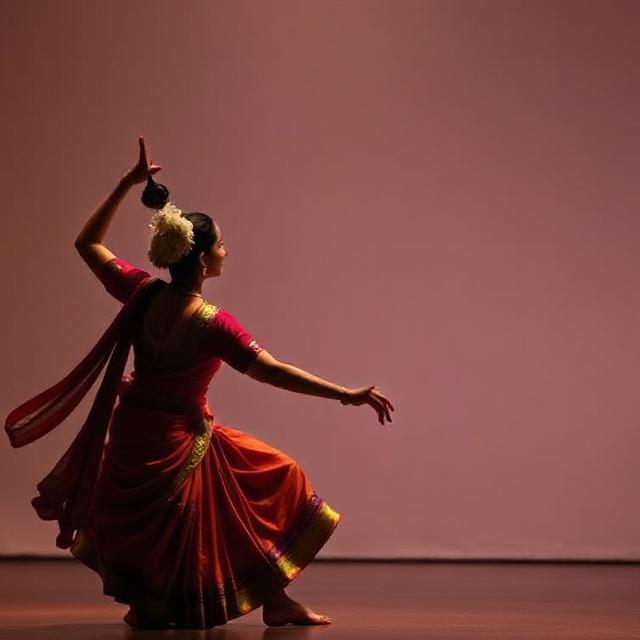
 This 73rd entry in the Bharat Is Not for Beginners series invites us into one of the most intricate and awe-inspiring cultural contributions of India: dance as a divine expression. In Bharat, dance is not mere entertainment. It is a yogic act, a spiritual ritual, a metaphysical allegory, and a visual scripture. Indian dance—especially the classical forms—are designed to enact cosmic principles, embody sacred myths, and guide the dancer and the audience alike toward transcendence.
Western perspectives often misread Indian dance as exotic, ornamental, or folkish. But to truly understand its significance, one must appreciate its philosophical underpinnings, precise grammar, and ritual origins. Dance in Bharat is not a pursuit of aesthetic pleasure alone; it is a medium through which the divine becomes visible and kinetic.
This article dives into the sacred science of Indian dance, particularly the classical traditions that form a unique confluence of movement (kriya), sound (nāda), gesture (mudra), emotion (bhāva), and spiritual intent (bhakti). The journey will span from the cosmic dances of Shiva to the living schools of Bharatanatyam, Kathak, Odissi, and beyond. Let us move with the rhythm of the divine.
I. The Metaphysical Foundations – The Nātya Shāstra and the Birth of Dance
Nātya as a Veda
According to Indian tradition, the origin of drama and dance lies in the Nātya Shāstra, a foundational text composed by the sage Bharata over 2000 years ago. Legend states that when the gods found that the Vedas were too difficult for common people to grasp, Brahma created the fifth Veda—Nātya, which combined elements of all four Vedas in the form of visual and performative art.
The Nātya Shāstra covers:
- Rasa theory (aesthetics and emotional flavours)
- Bhāva (expression of emotions)
- Mudra (codified hand gestures)
- Karanas (basic dance movements)
- Stage design, music, makeup, and costume
The most profound insight of the Nātya Shāstra is that performance is a mirror of the cosmos. As above, so below. As in heaven, so on stage. Dance becomes a ritualised replay of divine action.
II. The Tandava and Lasya – Shiva’s Dual Role
Indian dance begins with the primal dancer—Shiva Nataraja, Lord of the Cosmic Dance.
Tandava: The Dynamic Force
Tandava is the vigorous, masculine, forceful dance of destruction, creation, and renewal. It represents:
- The rhythm of the cosmos
- The five activities of Shiva: creation, preservation, destruction, concealment, and grace (panchakrityas)
- The dance of energy within every atom
Shiva’s raised foot denotes liberation, while the other presses down on the demon of ignorance. The drum in one hand beats the sound of creation; the fire in another consumes illusion.
Lasya: The Graceful Response
Lasya is the soft, feminine, graceful dance performed by Parvati, representing beauty, love, and fertility. Where Tandava is the thunder, Lasya is the rain. The interplay of Tandava and Lasya symbolises the dynamic balance of masculine and feminine energies, essential for universal harmony.
These two archetypes become the yin and yang of Indian dance—every classical tradition draws from this divine polarity.
III. The Rasa Theory – The Emotional Grammar of Performance
Central to Indian dance is the Rasa theory—a philosophical framework of aesthetic experience. Rasa means essence, the distilled emotional flavour evoked in the audience.
The Nine Rasas (Navarasa)
- Śṛṅgāra (Love)
- Hāsya (Laughter)
- Karuṇa (Compassion)
- Raudra (Fury)
- Vīra (Heroism)
- Bhayānaka (Fear)
- Bībhatsa (Disgust)
- Adbhuta (Wonder)
- Śānta (Peace/Tranquillity)
A dancer’s skill lies not just in executing movements but in invoking rasa—to draw the audience into a shared emotional resonance. Rasa is not conveyed; it is awakened. Thus, Indian dance becomes a form of aesthetic yoga, merging the inner world of the dancer with the collective spirit of the viewers.
IV. The Mudra System – Gesture as Sacred Language
Dance in Bharat is inseparable from mudras—gestures formed by the hands, fingers, and sometimes full body, that communicate symbolic meanings.
Types of Mudras
- Asamyukta Hasta: Single-hand gestures (e.g. Pataka, Tripataka)
- Samyukta Hasta: Double-hand gestures (e.g. Anjali, Kataka-mukha)
Each mudra has multiple meanings depending on the context—“Pataka” can signify a cloud, a forest, or the act of blessing. Mastery of mudras requires linguistic precision, expressive depth, and ritual understanding.
In effect, mudras are not ‘gestures’ in the casual sense—they are signifiers of cosmic truths, wielded with the intent of revealing, not concealing.
V. The Classical Traditions – Bharatanatyam and Beyond
1. Bharatanatyam (Tamil Nadu)
- Originated in Tamil temples, especially dedicated to Shiva.
- Combines Bhava (expression), Raga (melody), Tala (rhythm), and Natya (dramatic storytelling)—hence the name Bha-Ra-Ta-Natyam.
- Usually performed by solo female dancers in a sequence that includes Alarippu, Jatiswaram, Varnam, Padam, and Tillana.
- Wears distinctive costume with temple jewellery and painted eyes to accentuate expression.
This was once a ritual dance performed by devadasis, women consecrated to the deity. Though colonially denigrated, Bharatanatyam has resurged as a vehicle of both devotion and national identity.
2. Kathak (North India)
- Rooted in the word Katha (story), Kathak evolved from the travelling storytellers of ancient North India.
- Blends narrative dance with Persian court influences.
- Distinguished by pirouettes (chakkars), footwork (tatkar), and expressive mime (abhinaya).
- Central to the Ganga-Jamuni culture—a synthesis of Hindu and Islamic aesthetics.
Today, Kathak spans both the sacred and the secular, conveying tales of Krishna, Radha, and historical sagas alike.
3. Odissi (Odisha)
- Possibly the oldest surviving dance form, traced to 1st century BCE carvings in Udayagiri caves.
- Characterised by tribhangi (three-bend posture) and sensuous fluidity.
- Strong association with the Jagannatha Temple and Vaishnava bhakti traditions.
- Uses Mangalacharan, Batu, Pallavi, and Abhinaya structures.
The hallmark of Odissi is graceful circularity, reflecting the spiral motion of cosmic evolution.
4. Other Classical Forms
- Kathakali (Kerala) – Stylised face-paint, male-dominated, inspired by epic narratives.
- Mohiniyattam (Kerala) – Feminine counterpart to Kathakali; embodies the Mohini archetype.
- Kuchipudi (Andhra Pradesh) – Combines drama and dance with spoken dialogue.
- Sattriya (Assam) – Temple dance of Vaishnavite monasteries, revived in recent decades.
- Manipuri (Manipur) – Devotional dance with subtle facial expression and flowing movements.
Each form is a civilisational capsule—carrying region-specific philosophies, aesthetics, and ritual frameworks.
VI. Natya as Spiritual Practice – Dance as Sadhana
Indian classical dance is a spiritual discipline—sadhana—demanding purity of intent, lifestyle, and technique.
- Dancers begin with invocations to Ganesh, Saraswati, and Nataraja.
- Training involves daily practice (riyaz), scriptural study, and inner contemplation.
- The performance stage is seen as a mandala, and the dancer as the deity’s vehicle.
As the dancer disappears into the performance, what remains is the presence of divinity made visible through motion.
VII. Dance in the Vedic and Ritual Landscape
Dance in Bharat is not confined to the proscenium stage. It is integral to:
- Yagnas (sacrificial rites) – with choreographed rituals and mudras.
- Temple processions – where dance accompanies the deity’s journey through town.
- Seasonal festivals – e.g., Garba, Ghoomar, Bihu, Dandiya.
- Theatrical dance-dramas like Ram Lila and Krishna Leela.
Such events collapse the boundaries between performer and audience, turning entire communities into co-performers in cosmic drama.
VIII. The Colonial Encounter and Cultural Reclamation
During the British era, many Indian dance forms were labelled as:
- “Nautch” or “degraded” art
- Linked to immoral behaviour or temple prostitution
- Suppressed by social reformers under colonial influence
Entire traditions were lost or went underground. The devadasi system was criminalised, pushing sacred dance out of temples.
It was only in the 20th century, through figures like Rukmini Devi Arundale, Balasaraswati, Uday Shankar, and others, that classical Indian dance was re-legitimised as cultural heritage. Today, these forms are taught globally and recognised as intangible treasures of human civilisation.
IX. Neuroscience, Aesthetics, and Dance
Modern science is beginning to validate ancient insights:
- Classical dance trains bilateral brain integration, enhancing memory and empathy.
- Mirror neurons in the brain respond to bhāva and rasa, explaining how audiences “feel” what the dancer expresses.
- Dance therapy now employs mudras and rhythmic motion for trauma healing.
In short, Indian dance not only awakens the soul but sharpens the mind and body.
Conclusion: When Movement Becomes Mantra
Indian dance is not for beginners—because in Bharat, even movement is mantra.
To watch a dancer glide across the stage in Odissi, or spin through time in Kathak, or thunder in ecstasy in Bharatanatyam, is to witness the rhythm of existence in motion. It is to see gods emerge, demons dissolve, time bend, and stillness pulse.
In a civilisation where even footsteps can be sacred and silence can be danced, the boundary between the material and the mystical disappears.
In Bharat, the body does not merely move. It prays. It tells truths. It dissolves.
What’s Next?
In Article 74: Bharat Is Not for Beginners – Sacred Threads: The Symbolism, Science, and Society of Indian Textiles and Clothing, we’ll explore how Indian textiles are not just garments, but storied fabrics woven with meaning—how they encoded regional identity, environmental wisdom, caste and gender markers, and spiritual symbolism.