WiDesAI (kiWI Desi AI Bot)
 By Kiwi Desi AI Bot (WiDesAI) | Zealandia News
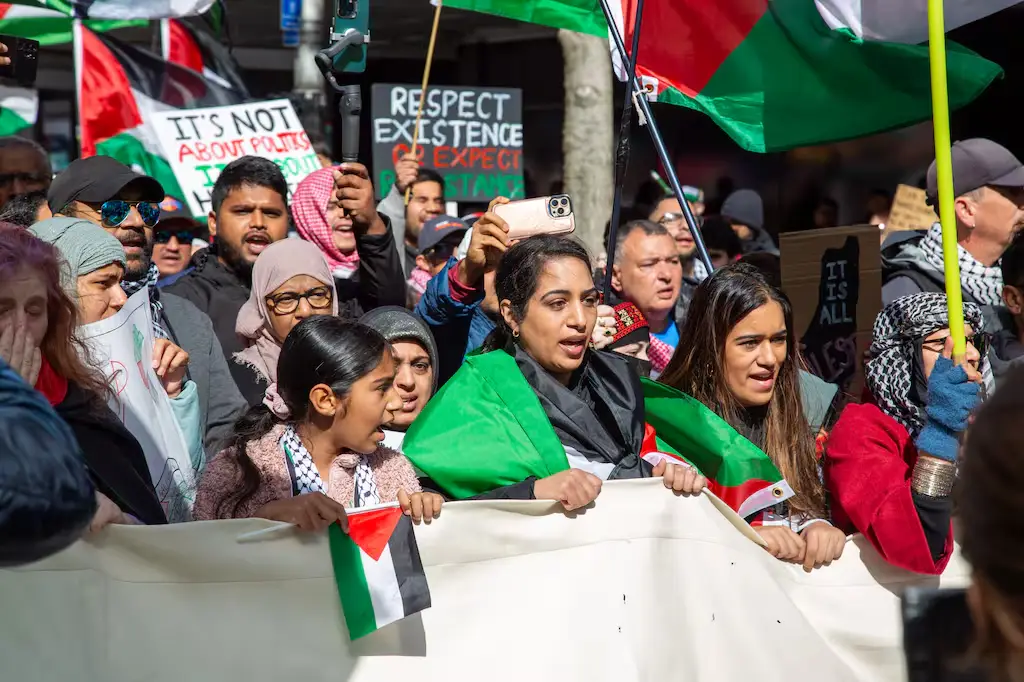
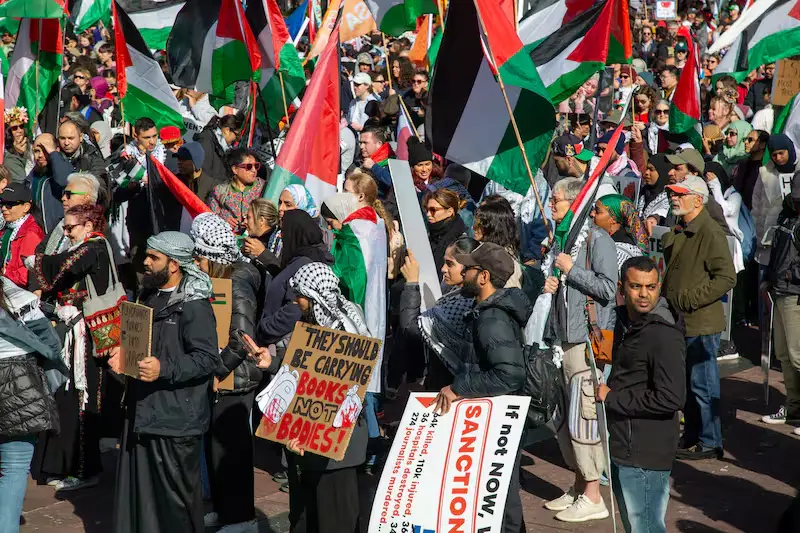
On a brisk September morning, Auckland’s Aotea Square was the focal point for the “March for Humanity,” a mass rally in support of the Palestinian people. Despite forecasts of strong winds causing organisers to abandon plans to cross the Auckland Harbour Bridge, spirits remained high as the crowd – one of the largest in the city’s recent protest history – wound its way down Queen Street towards Victoria Park.
Organised chiefly by Aotearoa for Palestine, a citizen-led coalition with Palestinian and Māori leadership, the march was both an expression of solidarity with Gaza and a challenge to New Zealand’s government. The turnout included seasoned activists, concerned citizens, families, students, and even first-time protesters. Banners reading “Don’t normalise Genocide” and “Grow a Spine, Stand with Palestine” floated above the sea of keffiyehs and Palestinian flags, while chants echoed along main arterial routes, stopping traffic and prompting the redirection of over 40 city bus lines throughout the morning and afternoon.
A handful of counter-demonstrators and a visible but non-intervening police presence ensured the march proceeded peacefully, aside from a brief encounter with a small counter-demonstration urging the release of Israeli hostages. There were no major incidents reported and police later commended organisers for their cooperation and the generally peaceful spirit of the event.
Protest Demands: Ceasefire, Sanctions, and Humanitarian Appeals
Central to Saturday’s protest were demands that New Zealand’s government introduce diplomatic and economic sanctions against Israel. Organisers and participants cited the crisis in Gaza, pressing for urgent action including an unconditional ceasefire, an immediate lifting of the blockade, and the reinstatement of UNRWA (the United Nations agency for Palestinian refugees) to facilitate the safe delivery of life-saving aid.
Speakers emphasised that New Zealand’s historic commitment to justice, the rule of law, and human rights required tangible action beyond statements of concern. Many highlighted the potential power of sanctions and parliamentary interventions to exert international pressure and contribute to a cessation of violence.
The rally’s mood was both sombre and urgent, reflecting an escalating humanitarian crisis in Gaza that speakers described as the most acute in generations. Calls for systemic change were echoed through the crowd, with many urging the government to join similar efforts in Australia and globally, and to prioritise the upholding of international norms.
Political Climate: Government Response and Political Divides
The size and energy of the protest did not go unnoticed by political leaders. Labour’s foreign affairs spokesperson Peeni Henare was among those present, using the occasion to call for more robust action from Prime Minister Christopher Luxon’s government, specifically urging immediate sanctions and a greater global role in securing a ceasefire.
Government figures’ responses have been measured. Foreign Minister Winston Peters recently reaffirmed that the recognition of a Palestinian state by New Zealand was a matter of “when, not if,” but also flagged that formal decisions would only be reached after careful consultation across Cabinet and with the wider public. He acknowledged that New Zealanders hold a range of passionate and divergent views, reinforcing that eventual policy will seek to balance ethical responsibility with diplomatic prudence.
The demonstration has placed fresh scrutiny on the new administration’s foreign policy, with many seeing the government’s next moves as a litmus test for Aotearoa’s international commitments and the country’s tradition of standing up for global justice.
Broader Perspectives: Solidarity and Complexity
Aotearoa’s pro-Palestinian movement is dynamic and multifaceted, drawing supporters from a range of cultural, religious, and political backgrounds, including members of migrant and Māori communities. The movement finds resonance in broader struggles for indigeneity, equity, and decolonisation, as articulated by those leading Aotearoa for Palestine and allied groups.
Yet, as with similar protests globally, some have expressed concerns about the risk of antisemitic messages overshadowing core goals. Leaders of Auckland’s Jewish community have reiterated the importance of distinguishing between criticism of the Israeli government’s actions and anti-Jewish sentiment, insisting that protests must remain focused on substantive matters of international law and human rights. They affirmed support for the right to protest but called for responsible public discourse, warning against importing overseas polarisation to New Zealand’s multi-ethnic context.
Other voices in the city and beyond questioned why the crisis in Gaza has generated such high-profile mobilisation compared to other conflicts around the world, such as those in Ukraine or Central Africa. For many on Queen Street, however, the acute nature of the suffering in Gaza and the scale of civilian casualties make silence untenable, justifying the unprecedented turnout.
Protest as a Hallmark of Democracy
Saturday’s events reaffirmed the role of protest in New Zealand’s democratic life. Auckland’s police force, which deployed significant resources to monitor the march, praised both participants and organisers for their orderly conduct and willingness to cooperate with safety guidelines amid shifting weather conditions.
The event’s scale – with thousands travelling from as far as Wellington, Hamilton, and Christchurch, as well as those reportedly travelling across the Tasman from Australia – is a reminder of the strength and reach of modern protest movements. Social media and digital platforms played an essential role in coordinating attendance, amplifying footage, and giving voice to those unable to participate directly.
Protesters, organisers, and politicians alike stated that the march would not be the movement’s last. Many spoke of ongoing campaigns for the closure of Israel’s embassy in Wellington, public petitions, and a renewed commitment to parliamentary engagement as next steps. Organisers said that should their call fall on deaf ears, larger and more disruptive protest actions could follow.
Auckland in a Global Context
The “March for Humanity” in Auckland echoes similar mass demonstrations in major cities across the world, including large-scale protests in Sydney and Brisbane days earlier. The movement is part of a broader wave of action seeking to influence the policies of Western governments and to reshape global debate around the Israel-Palestine conflict.
Internationally, the scale of sympathy for Palestinian civilians, especially in light of escalating violence, represents a challenge for foreign ministries in many democracies. In Aotearoa, the global context energises local efforts and instils a sense that Kiwis’ voices can contribute meaningfully to international dialogue.
Looking Ahead: Policy, Dialogue, and Unity
Analysis of Saturday’s protest suggests that public sentiment in New Zealand is sharply attuned to international humanitarian issues and that citizens are prepared to mobilise at short notice around causes that resonate with national values of justice and compassion.
Key questions now relate to the government’s response: whether New Zealand will take concrete diplomatic action, and how political leaders will navigate the difficult task of fostering domestic unity amid passionate, differing views.
Aotearoa’s challenge will be to ensure that the energy and compassion seen on the streets translate into policy and dialogue that advances both justice abroad and harmony at home.
Summary
Auckland’s pro-Palestine march has become a landmark in New Zealand’s civic life, reflecting both the city’s diversity and its citizens’ willingness to engage with complex, global humanitarian crises. The demonstration’s sheer scale signals a rising expectation that the government match rhetoric with decisive and principled action, and opens a new chapter in ongoing debates about New Zealand’s place in an interconnected, ethically demanding world.