




 Kara Riggs
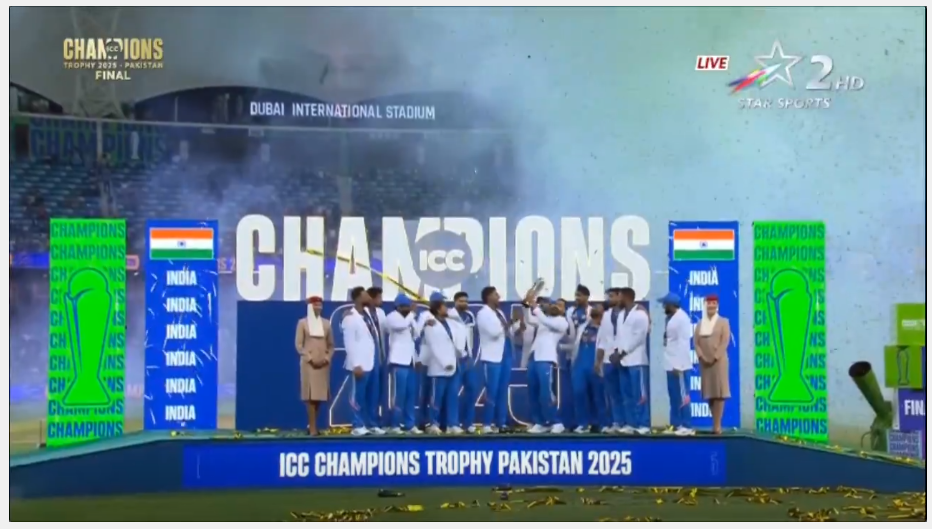
 The ICC Champions Trophy 2025 concluded on March 9, 2025, with India clinching their third title in a thrilling four-wicket victory over New Zealand in Dubai, remaining unbeaten throughout the tournament. The ninth edition, co-hosted by Pakistan and the UAE, featured eight teams across 15 matches, delivering standout performances from veterans and emerging stars alike. This article provides a detailed player-by-player performance analysis for key contributors from the top teams—India, New Zealand, South Africa, and Australia—while critically examining the establishment narrative of individual dominance versus team dynamics, aligning with NZB News’s ethos of “technology for everyone, empowerment for all.”
Tournament Overview
The 2025 Champions Trophy saw India dominate Group A, defeating Bangladesh, Pakistan, and New Zealand, before overcoming Australia in the semi-final and New Zealand again in the final. New Zealand, despite the final loss, reached the final with a strong semi-final win over South Africa. Australia and South Africa also showcased notable performances, though they fell short in the knockouts. The Dubai pitch, known for assisting spinners, played a significant role, as did tactical decisions amid political tensions that saw India’s matches moved to the UAE.
India: Unbeaten Champions
- Rohit Sharma (Captain, 185 runs, HS: 76): India’s captain led from the front, scoring 185 runs at an average of 46.25. His explosive 76 off 41 balls in the final set the tone for the chase of 252, though his dismissals often shifted momentum, as seen against Australia (LBW by Cooper Connolly). Posts on X praise his aggressive starts, but his inconsistency in closing innings raises questions about over-reliance on the top order.
- Shubman Gill (126 runs, HS: 45): Gill’s 126 runs at 31.50 included a vital 45 against Bangladesh, helping India chase 234. His 102-run opening stand with Rohit in the final was crucial, but early dismissals, like Ben Dwarhuis’s bowling him in the semi-final, exposed middle-order vulnerabilities. His 2,000 ODI runs in 38 innings highlight his potential.
- Virat Kohli (218 runs, HS: 100): Kohli’s 218 runs at 54.50 placed him fourth in the tournament’s run-scoring charts. His 100 against Pakistan, earning Player of the Match, and 84 off 98 in the semi-final against Australia were pivotal. However, his 1 off 5 in the final, dismissed LBW by Michael Bracewell, continued his lean patch in big finals, challenging the narrative of his clutch reputation.
- Shreyas Iyer (243 runs, HS: 79): Iyer’s 243 runs at 60.75 made him India’s top scorer and second overall. His 79 against New Zealand in the group stage (249/9) and 98-run stand with Axar Patel were match-defining, as was his 45 in the semi-final. His ability to counter spin, noted by Cricbuzz, solidified his role, though his final dismissal (48) by Mitchell Santner was a setback.
- KL Rahul (Wicketkeeper, 89 runs, 5 catches): Rahul’s 89 runs at 44.50, including an unbeaten 42 off 34 in the semi-final and 17* in the final, showcased his finishing prowess. His towering six to seal the semi-final against Australia was a highlight, alongside five catches, making him a key cog in India’s campaign.
- Axar Patel (85 runs, 2 wickets): Axar’s 85 runs at 28.33, with a best of 45 against New Zealand, and 2 wickets (including Glenn Maxwell in the semi-final) added balance. His 98-run stand with Iyer in the group stage was crucial, though his bowling (2/78 overall) was less impactful on spin-friendly tracks.
- Hardik Pandya (72 runs, 1 wicket): Pandya’s 72 runs at 36.00, including 28 off 24 in the semi-final and 19* in the final, were decisive in tight chases. His lone wicket (0/28 in the final) was underwhelming, but his all-round presence justified his selection.
- Ravindra Jadeja (15 runs, 1 wicket): Jadeja’s tournament was quiet, with 15 runs and 1 wicket (0/27 in the final). His economical bowling supported the spinners, but his lack of wickets and batting contribution drew criticism, especially given his 20 career Champions Trophy scalps.
- Mohammed Shami (5 wickets, BBI: 2/40): Shami’s 5 wickets at 32.60 included Steve Smith (73) in the semi-final. His 1/54 in the final was expensive, reflecting pace bowling challenges on slow pitches, though his experience was vital.
- Kuldeep Yadav (7 wickets, BBI: 2/45): Kuldeep’s 7 wickets at 22.14, including 2/45 in the final, made him India’s leading spinner. His double strike against New Zealand in the final (Rachin Ravindra, Will O’Rourke) was pivotal, showcasing his wrist-spin mastery.
- Varun Chakravarthy (9 wickets, BBI: 5/42): Chakravarthy’s 9 wickets at 14.55, with a 5/42 against New Zealand in the group stage (Player of the Match), were instrumental. His 2/42 in the final dismantled the Kiwi middle order, justifying his inclusion as a mystery spinner.
New Zealand: Resilient Runners-Up
- Rachin Ravindra (263 runs, 1 wicket, HS: 112): Ravindra’s 263 runs at 65.75 earned him the tournament’s leading run-scorer title and the ICC Player of the Tournament award. His 112 against Bangladesh and 108 off 92 in the semi-final against South Africa (plus 1/20 and two catches) were match-defining. His 37 in the final, despite a dropped catch, showed grit, though his Test struggles in India (129 runs in 2024) suggest format-specific mastery.
- Will Young (142 runs, HS: 65): Young’s 142 runs at 35.50, including a 65 against Pakistan, provided stability. His opening partnerships with Ravindra, like the 45-run stand in the final, set platforms, though his inconsistency (e.g., 12 in the semi-final) was a concern.
- Kane Williamson (184 runs, HS: 79): Williamson’s 184 runs at 46.00 included a 79 in the group stage against India. His experience was key, but his semi-final contribution (not specified) was overshadowed by Ravindra, highlighting a shift in batting reliance.
- Daryl Mitchell (153 runs, HS: 63): Mitchell’s 153 runs at 38.25, with a 63 in the final, anchored the middle order. His 45-run stand with Ravindra in the final kept New Zealand competitive, though his earlier starts (e.g., 22 vs. India) lacked conversion.
- Michael Bracewell (105 runs, 3 wickets, HS: 53): Bracewell’s 53 off 40 in the final and 3 wickets (including Kohli in the final) showcased his all-round impact. His 1/20 in the semi-final was economical, but his batting strike rate (85.36) suggests room for aggression.
- Mitchell Santner (7 wickets, BBI: 3/43): Santner’s 7 wickets at 27.71, including a 3/43 against South Africa, were crucial. His 2/46 in the final dismissed Iyer and Axar, nearly turning the game, though his batting (not specified) was minimal.
- Matt Henry (10 wickets, BBI: 5/42): Henry’s 10 wickets at 16.70 led the tournament, with a 5/42 against India in the group stage restricting them to 249/9. His absence in the final (injury) was felt, as New Zealand struggled to defend 251.
South Africa: Semi-Finalists
- Heinrich Klaasen (165 runs, HS: 73): Klaasen’s 165 runs at 55.00, including a 73 against England, powered South Africa to the semi-finals. His strike rate of 102.48 was a highlight, though his semi-final contribution (not specified) couldn’t counter New Zealand’s 362/6.
- Rassie van der Dussen (148 runs, HS: 68): Van der Dussen’s 148 runs at 49.33, with a 68 against Australia, provided stability. His consistency was key, but South Africa’s 50-run semi-final loss exposed middle-order frailties.
- Ibrahim Zadran (Afghanistan, 216 runs, HS: 85): Though Afghanistan didn’t advance, Zadran’s 216 runs at 72.00, with a strike rate of 106.40, were notable. His 15 fours and 7 sixes, including an 85 against England, showcased his attacking flair, marking Afghanistan’s rise.
Australia: Semi-Finalists
- Steve Smith (149 runs, HS: 73): Smith’s 149 runs at 37.25, with a 73 in the semi-final against India, were vital. His 50-run stand with Alex Carey (61) pushed Australia to 264, though Shami’s dismissal of him swung momentum.
- Travis Head (121 runs, HS: 39): Head’s 121 runs at 30.25, including a 39 off 33 in the semi-final, offered aggressive starts. His dismissal by Chakravarthy curtailed his impact, reflecting Australia’s top-order inconsistency.
- Adam Zampa (5 wickets, BBI: 2/45): Zampa’s 5 wickets at 28.40 included Shreyas Iyer (45) in the semi-final. His role in breaking partnerships was key, though his final over (run out) hurt Australia’s total.

Critical Examination
The establishment narrative focuses on individual brilliance—Ravindra’s 263 runs, Chakravarthy’s 9 wickets—but overlooks team dynamics. India’s unbeaten run relied on depth (Rahul, Pandya finishing chases), not just stars like Kohli. New Zealand’s final loss, despite Ravindra’s heroics, highlights over-reliance on their top order, with Henry’s absence proving costly. South Africa and Australia’s semi-final exits reflect batting collapses, a pattern the narrative of “balanced squads” ignores. Posts on X compare players directly (e.g., Kohli > Williamson), but this reductive view misses tactical contexts, like Dubai’s spin-friendly conditions favoring India’s bowlers.
Conclusion
The 2025 Champions Trophy showcased exceptional performances, from Ravindra’s tournament-leading 263 runs and Player of the Tournament award to Chakravarthy’s 9 wickets. India’s triumph, driven by Iyer, Kohli, and their spinners, contrasted with New Zealand’s resilience, led by Ravindra and Henry. As NZB News emphasizes empowerment, this analysis highlights collective efforts over individual hype, offering a balanced view of a thrilling tournament.
Excerpt: India’s 2025 Champions Trophy win, unbeaten, was powered by Iyer (243 runs) and Chakravarthy (9 wickets), while Ravindra’s 263 runs earned him Player of the Tournament. This player-by-player analysis reveals the true dynamics behind the triumph, beyond the hype of individual stars.