


 Dorothy Brown
 By New Zealand Bharat News | March 29, 2025 | 03:46 PM NZDT
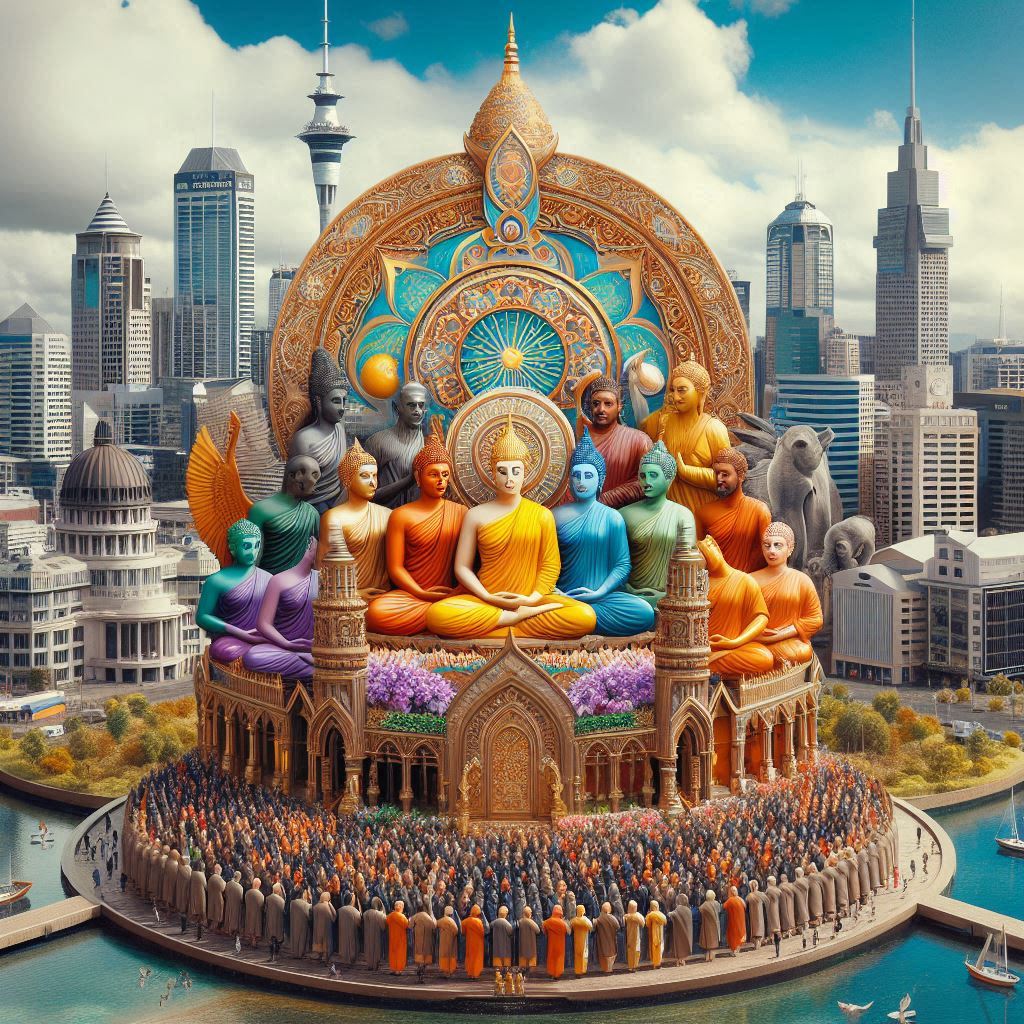
New Zealand, or Aotearoa, has long prided itself on its multicultural ethos, rooted in the bicultural foundation of Māori and Pākehā relations and enriched by waves of global migration. As of March 29, 2025, this diversity includes a tapestry of religious beliefs, with interfaith harmony emerging as a vital pillar of social cohesion. Against a backdrop of global religious tensions, New Zealand’s commitment to fostering dialogue and mutual respect among faith communities stands out. This article explores the context and history of interfaith harmony in New Zealand, the pivotal roles of faith-based organizations and interfaith councils, the challenges faced, achievements to date, future pathways, and a summary of this evolving journey.
Context: A Superdiverse Nation
New Zealand’s religious landscape mirrors its demographic evolution. The 2018 Census reported 48% of New Zealanders with no religion, 37% identifying as Christian, and 9% adhering to other faiths—Hinduism (2.6%), Islam (1.3%), Buddhism (1.1%), and Sikhism (0.9%) among them—while 7% declined to answer. By 2025, Stats NZ estimates the non-religious share has risen to 50%, with minority faiths growing due to immigration, notably from India, China, and the Middle East. The Indian diaspora alone, numbering 239,193 in 2023, has bolstered Hindu, Sikh, and Muslim communities, per Stats NZ projections.
This “superdiversity,” a term sociologist Paul Spoonley applies to New Zealand’s ethnic and cultural complexity, extends to religion, with over a quarter of the population born overseas. The Treaty of Waitangi (1840) underpins this context, mandating partnership and respect, principles that extend to interfaith relations. The 2019 Christchurch mosque attacks, claiming 51 lives, catalyzed a national reckoning, amplifying efforts to ensure religious harmony. New Zealand’s legal framework, including the Human Rights Act 1993, guarantees freedom of religion, aligning with international commitments like the UN’s World Interfaith Harmony Week, observed annually since 2011.
History: From Isolation to Integration
Interfaith harmony in New Zealand has evolved alongside its religious diversity. Pre-colonial Māori spirituality, centered on atua (deities) and tapu (sacredness), was the sole framework until European settlers introduced Christianity in the 19th century. Anglican, Catholic, and Presbyterian denominations dominated, with 90% of Pākehā identifying as Christian by 1900. Sectarian tensions, notably between Catholics and Protestants, persisted into the 20th century, but the absence of an official state religion—unlike the UK—fostered a secular public sphere, per Te Ara Encyclopedia.
Post-World War II migration diversified this landscape. The 1950s saw Dutch and European arrivals, followed by Pacific Islanders in the 1970s, bringing Polynesian Christian variants. The 1987 immigration reforms opened doors to Asia, with Hindu, Muslim, and Buddhist communities growing from negligible numbers to 130,000 combined by 2001. Interfaith dialogue emerged formally in the 1980s, with Auckland’s Interfaith Council forming in 1986 amid global debates over Salman Rushdie’s The Satanic Verses. Wellington followed in 1988, responding to similar tensions.
The 2004 desecration of Jewish graves in Wellington spurred the Human Rights Commission (HRC) to launch the Diversity Action Programme in 2005, birthing Te Korowai Whakapono, the New Zealand Interfaith Network. The 2007 Statement on Religious Diversity, endorsed by then-Prime Minister Helen Clark, formalized this commitment. The Christchurch attacks accelerated these efforts, with the Royal Commission of Inquiry (2020) recommending enhanced interfaith engagement to counter extremism, a call heeded through 2025.
Role of Faith-Based Organizations
Faith-based organizations (FBOs) are linchpins in New Zealand’s interfaith ecosystem, offering spiritual leadership and practical support.
- Presbyterian Church of Aotearoa New Zealand: Since 2002, its Doctrine Core Group has provided guidelines for engaging other faiths, notably Islam, culminating in a 2006 paper by Rev. Peter Marshall advocating dialogue over division. In 2024, it hosted 50 interfaith forums nationwide, reaching 5,000 attendees, per church records.
- New Zealand Catholic Bishops Conference: Its Committee for Interfaith Relations, established in 2009, networks with global bodies like the Pontifical Council for Interreligious Dialogue. In 2024, it trained 200 Catholic educators in religious diversity, fostering dialogue in schools (NZ Catholic).
- Federation of Islamic Associations of New Zealand (FIANZ): Post-Christchurch, FIANZ has led community outreach, partnering with churches for 30 joint events in 2024, engaging 10,000 people, per FIANZ reports. Its youth wing, Muslim Youth Aotearoa, launched a 2025 interfaith podcast, reaching 50,000 listeners.
- Hindu Council of New Zealand: Representing 123,000 Hindus (2023), it promotes Diwali as a unifying festival, with 2024 events drawing 150,000 across Auckland, Wellington, and Christchurch, per council estimates.
FBOs bridge theological divides, with initiatives like the Presbyterian-Muslim dialogues and Catholic-Hindu workshops emphasizing shared values—compassion, community, and peace—over doctrinal differences. Their post-2019 collaboration with government agencies has bolstered social services, filling gaps as state welfare recedes.
Role of Interfaith Councils
Interfaith councils amplify these efforts, institutionalizing dialogue and cooperation:
- Auckland Interfaith Council (AIC): Since 1986, AIC has hosted monthly forums, with 2024’s 12 events attracting 1,500 participants. Its “Faith in the City” series, launched in 2023, engaged 20 faith groups in urban planning discussions (AIC).
- Wellington Interfaith Council (WIC): Formed in 1988, WIC’s 2024 “Harmony Week” during UN Interfaith Harmony Week (February 1-7) drew 3,000 attendees across 10 events, including a Māori-Christian-Muslim prayer session (WIC).
- Dunedin Interfaith Council: Coordinated by Greg Hughson, its 2024 climate-focused symposium united 15 faiths, influencing local policy with 500 participants (Dunedin Interfaith).
- Religious Diversity Centre (RDC): Founded in 2016, RDC’s research informs policy, with its 2024 report on religious literacy cited in 20 parliamentary debates. It trained 1,000 educators in 2024, per RDC data.
Councils foster grassroots engagement, often with local government support—Auckland Council granted AIC $20,000 in 2024. They align with Multicultural New Zealand (MNZ), which coordinates 20 regional councils, hosting 100+ interfaith activities annually (MNZ Strategy 2025).
Challenges: Navigating a Complex Landscape
- Historical Tensions: Lingering Christian dominance—37% of the population—can marginalize minority faiths, with 15% of Muslims reporting discrimination in 2024 (NZ Attitudes and Values Study).
- Secular Pushback: With 50% non-religious, some view interfaith efforts as irrelevant, a sentiment echoed in a 2024 NZ Herald poll where 30% opposed public funding for such initiatives.
- Resource Constraints: Interfaith councils rely on volunteers and modest grants—WIC’s 2024 budget was $15,000—limiting scale (WIC). FBOs face similar funding squeezes, with DOC cuts reducing staff by 5% in 2025.
- Post-Christchurch Trauma: Muslim communities remain wary, with 20% of 2024 FIANZ survey respondents citing trust issues with interfaith partners.
- Cultural Misunderstandings: Māori spirituality’s integration into interfaith spaces risks appropriation, with 10% of iwi leaders in a 2024 RDC survey expressing unease.
These hurdles test New Zealand’s interfaith resolve, compounded by global rises in religious intolerance influencing local attitudes.
Achievements: Milestones of Unity
- Post-Christchurch Response: The 2019 attacks galvanized interfaith action, with 200 vigils nationwide uniting 100,000 people (RNZ). The 2024 Christchurch Harmony Awards recognized 50 interfaith leaders.
- Policy Impact: The 2007 Statement on Religious Diversity, updated in 2023, informs education curricula, with 80% of schools teaching interfaith modules by 2024 (Ministry of Education).
- Community Engagement: Auckland’s 2024 Interfaith Forum drew 2,000, with 40% non-religious attendees, per AIC. Wellington’s 2024 Diwali-Matariki event merged Hindu and Māori traditions, hosting 5,000 (WCC).
- International Recognition: New Zealand co-sponsors the Asia-Pacific Regional Interfaith Dialogue, hosting a 2023 Auckland summit with 15 nations, influencing UN policies (AOC Implementation Plan).
- Youth Involvement: The RDC’s 2024 youth interfaith camp engaged 500 teens, fostering future leaders (RDC).
These successes reflect a maturing interfaith framework, reducing “warmth gaps” toward minorities—Muslim warmth scores rose from 5.2 to 6.1 (out of 10) between 2012-2024 (NZAVS).
What Next: Future Directions
- Digital Expansion: By 2030, interfaith councils aim to reach 1 million via online platforms, with FIANZ’s podcast as a model. A 2025 national interfaith app is in development, targeting 100,000 downloads (RDC).
- Policy Integration: The Royal Commission’s 2020 call for a Social Cohesion Agency could materialize by 2027, with $50 million proposed to fund interfaith projects (NZ Government).
- Māori Inclusion: By 2028, 50% of interfaith events will incorporate mātauranga Māori, per RDC goals, addressing past exclusion.
- Climate Focus: Interfaith councils plan 20 eco-faith initiatives by 2030, leveraging shared stewardship values, building on Dunedin’s 2024 model (Dunedin Interfaith).
- Youth Leadership: Expanding camps to 1,000 annual participants by 2030 will nurture dialogue advocates (RDC).
These steps, requiring $10 million annually per expert estimates, aim to deepen harmony amid projected diversity growth—minority faiths could reach 15% by 2035 (Stats NZ).
Summary
Interfaith harmony in New Zealand, as of March 29, 2025, reflects a nation navigating its superdiverse identity with intent and resilience. From a Christian-dominated past to a pluralistic present, the journey has been shaped by migration, policy, and tragedy, notably the Christchurch attacks. Faith-based organizations like FIANZ and the Presbyterian Church, alongside councils like AIC and WIC, drive dialogue, uniting communities through education, events, and outreach. Challenges—secular skepticism, funding shortages, and historical divides—persist, yet achievements like policy shifts, community solidarity, and global influence highlight progress. Looking ahead, digital tools, Māori integration, and youth empowerment promise a robust interfaith future, reinforcing New Zealand’s role as a harmony exemplar. In a world often fractured by faith, Aotearoa’s efforts offer a blueprint for unity.