



 Dorothy Brown
 A Daily Exploration of Dharma, Jnana, and Relevance to Modernity
By Swami Gitananda
Published on New Zealand Bharat (NZB) News, May 4, 2025
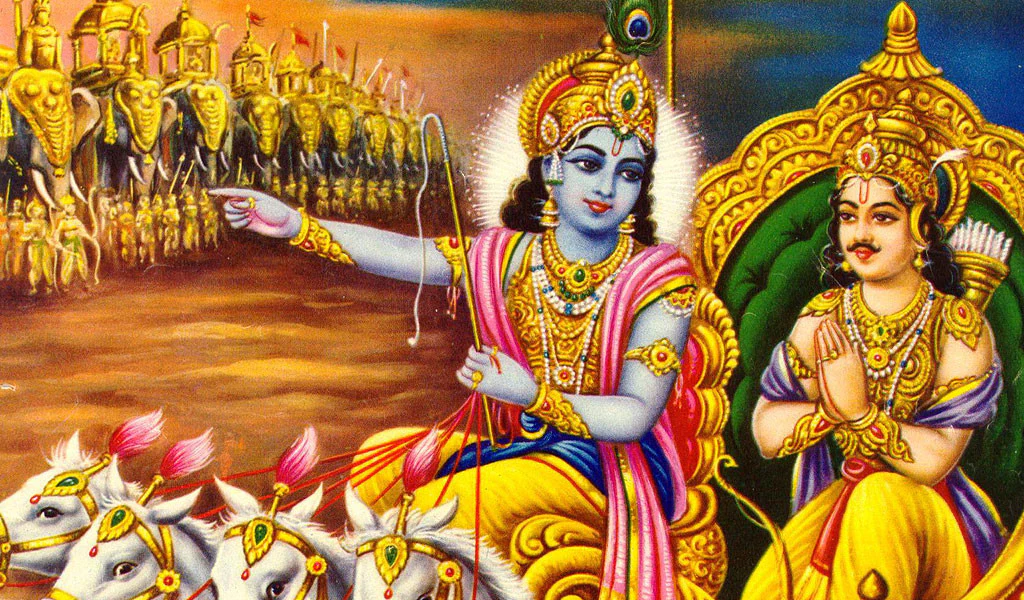
Om Shri Narasimhaya Namaha. Salutations to Narasimha, the fierce protector of dharma and destroyer of avidya (ignorance), as we deepen our journey into Adhyaya 2 of the Bhagavad Gita, the Divya-Upadesha (divine teaching) that transforms Kurukshetra into a dharmakshetra of eternal truth. Yesterday, in Adhyaya 2, Shloka 2, Krishna rebuked Arjuna’s kashmalam (delusion) as anarya (unworthy), asvargyam (non-conducive to heaven), and akirtikaram (causing infamy), questioning its source in the critical moment (vishame) of battle, urging Partha to rise. Today, in Shloka 3, Krishna intensifies his call, commanding Arjuna to abandon kshaudram (weakness) and klaibyam (impotence), addressing him as Parantapa (scorcher of foes) to awaken his kshatriya-dharma and overcome vishada. This shloka advances sankhya-yoga, Krishna’s jnana piercing moha’s veil with dharmic fire.
This series is a daily sadhana (spiritual practice), offering one shloka at a time—its direct meaning, a profound exploration of its tattva (essence), insights from sampradayas (spiritual traditions), a yogic and philosophical analysis, and its resonance with modern fields like quantum science, leadership, psychology, and svasthya (wellbeing). As the third shloka of Adhyaya 2—titled Sankhya-Yoga—it strengthens Krishna’s kripa (grace), both compassionate and commanding, guiding Arjuna from tamas to sattva. Let us immerse ourselves in Adhyaya 2, Shloka 3, where Krishna’s upadesha ignites Partha’s atma-shakti.
The Shloka
क्लैब्यं मा स्म गमः पार्थ नैतत्त्वय्युपपद्यति।
क्षुद्रं हृदयदौर्बल्यं त्यक्त्वोत्तिष्ठ परन्तप॥
Klaibyam ma sma gamah partha naitat tvayyupapadyati,
Kshaudram hridayadaurbalyam tyaktvottishtha parantapa.
Direct Meaning
“[Krishna said:] Do not yield to impotence (klaibyam ma sma gamah), O Partha (partha); it does not befit you (naitat tvayyupapadyati). Casting off (tyaktva) this petty (kshaudram) weakness of heart (hridayadaurbalyam), arise (uttishtha), O scorcher of foes (parantapa).”
In this verse, Krishna commands Arjuna to reject klaibyam (impotence) and kshaudram hridayadaurbalyam (petty weakness of heart), declaring them unbecoming (naitat tvayyupapadyati) of a kshatriya. Addressing him as Parantapa, Krishna urges Partha to rise (uttishtha) and fulfill svadharma, piercing vishada’s tamasic veil with dharmic resolve.
Detailed Explanation of the Shloka
This shloka intensifies Krishna’s upadesha, building on Shloka 2’s rebuke of kashmalam (delusion) with a direct command to abandon klaibyam (impotence) and hridayadaurbalyam (weakness of heart). By addressing Arjuna as Parantapa (scorcher of foes), Krishna invokes his kshatriya valor, stirring atma-shakti to overcome moha and krup (pity). Kurukshetra remains a manas-kshetra (field of mind), where svadharma battles shoka (grief) and kleshas (raga, dvesha, abhinivesha). This shloka is a dharmic clarion, advancing sankhya-yoga’s mission to restore viveka (discernment). Let us explore its layers with viveka, bhakti, and vichara (inquiry).
- Klaibyam Ma Sma Gamah: Do Not Yield to Impotence
- Klaibyam: “Impotence,” from kliba (weak, effeminate), denotes vishada’s tamasic paralysis, unbecoming a kshatriya’s virya (valor).
- Ma Sma Gamah: “Do not yield,” ma (not) + sma (emphatic) + gamah (go to), a strong imperative, commanding Partha to reject klaibyam.
This phrase is Krishna’s dharmic challenge—klaibyam as moha’s grip, vishada weakening buddhi (intellect), a klesha Krishna seeks to uproot.
- Partha: O Partha
- Partha: “Son of Pritha” (Kunti), Arjuna’s affectionate name, used by Krishna as sakha (friend), softening the rebuke with kripa.
This address balances firmness and compassion—Krishna as Guru and Sakha, urging Partha’s jiva to awaken kshatriya-dharma.
- Partha: “Son of Pritha” (Kunti), Arjuna’s affectionate name, used by Krishna as sakha (friend), softening the rebuke with kripa.
- Naitat Tvayyupapadyati: It Does Not Befit You
- Naitat: “This not,” refers to klaibyam, vishada’s weakness.
- Tvayyupapadyati: “Befits you,” tva (you) + upapadyati (is suitable), negates klaibyam’s place in Partha, the arya (noble) warrior.
This clause reinforces Shloka 2’s anaryajushtam (unworthy), klaibyam clashing with Partha’s sattvic legacy as Dhananjaya (conqueror of wealth), a call to align with svadharma.
- Kshaudram Hridayadaurbalyam: Petty Weakness of Heart
- Kshaudram: “Petty,” kshudra (small, mean), diminishes vishada’s validity, framing it as trivial against dharma’s grandeur.
- Hridayadaurbalyam: “Weakness of heart,” hridaya (heart) + daurbalyam (weakness), echoes Adhyaya 1’s krup and shoka, manas’s tamasic faltering.
This phrase diagnoses vishada’s core—hridaya’s sneha (attachment) for svajanam (kin), a klesha Krishna urges Partha to transcend.
- Tyaktva: Casting Off
- Tyaktva: “Casting off,” tyaj (to abandon), an imperative, commands Partha to renounce kshaudram hridayadaurbalyam, echoing Adhyaya 1’s visrijya sasharam chapam (casting aside bow, Shloka 47), but now in dharma’s service.
This term is sankhya-yoga’s spark—tyaga (renunciation) of moha, freeing buddhi for svadharma.
- Tyaktva: “Casting off,” tyaj (to abandon), an imperative, commands Partha to renounce kshaudram hridayadaurbalyam, echoing Adhyaya 1’s visrijya sasharam chapam (casting aside bow, Shloka 47), but now in dharma’s service.
- Uttishtha: Arise
- Uttishtha: “Arise,” ut-tishtha (stand up), a powerful imperative, contrasts Adhyaya 1’s upavishat (sat down, Shloka 47), urging Partha to reclaim his kshatriya stance in rana (battle).
This word is Krishna’s dharmic fire—uttishtha as atma-shakti’s awakening, viveka rising from tamas to sattva.
- Uttishtha: “Arise,” ut-tishtha (stand up), a powerful imperative, contrasts Adhyaya 1’s upavishat (sat down, Shloka 47), urging Partha to reclaim his kshatriya stance in rana (battle).
- Parantapa: O Scorcher of Foes
- Parantapa: “Scorcher of foes,” para (enemy) + tapa (scorcher), Arjuna’s epithet, invokes his kshatriya prowess, as in Adhyaya 1 (Shloka 25).
This address is kripa’s masterstroke—Krishna rekindles Partha’s virya (valor), aligning jiva with svadharma, countering klaibyam’s tamasic veil.
- Parantapa: “Scorcher of foes,” para (enemy) + tapa (scorcher), Arjuna’s epithet, invokes his kshatriya prowess, as in Adhyaya 1 (Shloka 25).
- The Fire of Sankhya-Yoga
Krishna’s upadesha escalates, klaibyam and kshaudram hridayadaurbalyam as moha’s chains, uttishtha parantapa a dharmic rallying cry. Kurukshetra mirrors samsara’s karmic forge, svadharma demanding viveka over krup. The Gita’s question persists: Can jnana ignite atma-shakti to burn moha? Krishna, as Jagadguru, advances sankhya-yoga, guiding Partha from tamas to sattva.
This shloka, then, is Krishna’s dharmic fire—klaibyam renounced, Parantapa urged to rise, jnana awakening svadharma. It invites us to reflect: Do we, like Arjuna, yield to weakness in crisis, and can we seek Shri Bhagavan to ignite our drishti (vision)?
Spiritual Wisdom from Authoritative Voices
The Bhagavad Gita’s divya-tattva (divine essence) shines through the bhashyas of acharyas, each illuminating its eternal truth. Let us draw from their insights, weaving a jnana-sutra (thread of wisdom).
- Adi Shankaracharya (Advaita Vedanta)
Shankaracharya sees klaibyam as maya’s veil—vishada binding atman to samsara’s sneha. Kshaudram hridayadaurbalyam reflects avidya’s distortion, kshatriya’s svadharma forsaken. He writes, “Krishna’s uttishtha is Brahman’s call,” urging discernment beyond moha. This shloka foreshadows Adhyaya 2: “Na jayate mriyate va”—“The soul is neither born nor dies” (Shloka 2.20), freeing jiva from hridayadaurbalyam. - Ramanujacharya (Vishishtadvaita)
Ramanuja interprets ma sma gamah as Krishna’s kripa, parantapa a call to prapatti (surrender). Uttishtha sparks bhakti, guiding vishada to dharma. He notes, “Krishna’s command is shishya’s awakening,” aligning with Adhyaya 12: “Bhaktya mam abhijanati”—“Through devotion, one knows me.” Klaibyam is a bhakta’s test, resolved by Narayana’s grace. - Madhvacharya (Dvaita)
Madhvacharya views kshaudram hridayadaurbalyam as tamasic delusion, klaibyam a karmic lapse prioritizing sneha over Vishnu’s sankalpa. He emphasizes daiva-shakti, Krishna as Parantapa’s guide, echoing Adhyaya 18: “Mam ekam sharanam vraja”—“Take refuge in me,” transcending kshaudram’s weakness. - Swami Vivekananda (Neo-Vedanta)
Vivekananda reads Shloka 3 as humanity’s call to strength. “Krishna’s uttishtha parantapa is the jiva’s fire,” he writes. Klaibyam reveals karuna, but moha blinds dharma. He urges awakening atma-shakti in the karmakshetra, aligned with Adhyaya 2: “Yoga-sthah kuru karmani”—“Established in yoga, perform actions” (Shloka 2.48).
Yogic and Philosophical Analysis
Shloka 3 is a yogic and philosophical catalyst, Krishna’s upadesha engaging Vedanta’s inquiry: Can viveka burn klaibyam’s tamas? Let us explore this through yogic, Vedantic, and Ayurvedic lenses.
- Yogic Perspective: Klaibyam as Klesha
In Patanjali’s Yoga Sutras (2.3), kleshas—raga (attachment), dvesha (aversion), abhinivesha (fear)—drive samsara. Arjuna’s klaibyam reflects raga for svajanam, dvesha for papa, and abhinivesha for karmic failure. Kshaudram hridayadaurbalyam shows chitta-vikshepa (mental agitation), tamasic inaction hindering chitta-shuddhi (mental purification). Krishna’s uttishtha initiates dhyana-yoga (Adhyaya 6), guiding manas to sattva. - Vedantic Inquiry: Moha vs. Atman
The Brihadaranyaka Upanishad (4.4.5) states, “Atma va are drashtavyah”—“The self alone is to be seen,” suggesting klaibyam’s root is avidya. Arjuna’s hridayadaurbalyam clings to preyas (worldly pity), missing shreyas (spiritual good). Krishna’s sankhya will affirm: “Na tvam shochitum arhasi”—“You should not grieve” (Shloka 2.11), freeing jiva from moha’s chains. - Ayurvedic Insight: Klaibyam as Tamas
Ayurveda sees klaibyam as vata-pitta imbalance, with tamas dulling ojas (vitality). Hridayadaurbalyam evokes tamas’ grip, kshaudram disrupting kapha’s stability. Practices like pranayama (nadi shodhana), asana (virabhadrasana for strength), and sattvic ahara (pure diet) restore chitta’s balance, aligning with Krishna’s uttishtha.
Relevance to Today’s Context
The Bhagavad Gita is a jivan-shastra (manual for life), vibrant in 2025. Let us explore how Shloka 3 resonates with quantum science, leadership, and svasthya.
- Quantum Science and Cosmology
Arjuna’s klaibyam mirrors quantum collapse—svajanam as entangled systems, hridayadaurbalyam as entropy’s grip. Krishna’s uttishtha evokes ekatva (oneness), harmonizing chaos. This shloka suggests a dharmakshetra cosmos, where buddhi shapes karma, resonant with quantum resilience theories. - Leadership and Business
In the corporate Kurukshetra, Arjuna’s kshaudram hridayadaurbalyam reflects leadership’s faltering—klaibyam as indecision, parantapa as untapped potential. Krishna’s uttishtha inspires dharma-driven leadership, fostering drishti to rise in crisis, aligned with 2025’s resilience frameworks. - Svasthya (Wellbeing)
Arjuna’s klaibyam mirrors modern burnout—chitta-vikshepa from fear of failure—while hridayadaurbalyam evokes emotional fragility. Practices like pranayama and dhyana nurture shanti, igniting atma-shakti, guided by Parantapa’s call.
Conclusion: The Fire of Uttishtha
This third shloka of Adhyaya 2 fuels sankhya-yoga—Krishna’s command to renounce klaibyam, Parantapa rising, jnana igniting svadharma. It mirrors samsara’s kleshas, dharma veiled by moha, yet Krishna’s kripa is sadhana’s flame. Each day, we unveil another shloka of this divya-gita, seeking satyam (truth) and sundaram (beauty).
Tomorrow, Arjuna responds, confessing his karpanya (weakness) and seeking Krishna’s shishya guidance. Let us approach with bhakti and vichar, chanting: “Yatra yogeshvarah krishno” (Gita 18.78)—where Krishna is, victory follows. May His kripa guide us onward.
Hari Om Tat Sat.