 Vincent Mathews
 A new wave of privacy-preserving mathematical techniques is empowering individuals to prove they were at a specific location without disclosing their exact whereabouts. This breakthrough, rooted in the principles of differential privacy and advanced cryptographic protocols, is reshaping how location-based services, security systems, and digital identity platforms balance verification with personal privacy.
Introduction
Location data is increasingly central to modern life, underpinning everything from navigation apps and contact tracing to access control and financial transactions. Yet, sharing precise location information exposes individuals to risks ranging from unwanted surveillance to targeted crime. The challenge: how can someone prove they were at a certain place and time, for legitimate reasons, without giving away their exact coordinates?
Mathematicians and computer scientists have developed a solution using differential privacy and related mathematical frameworks. These methods allow for the verification of a claim about location-such as being within a certain area-while mathematically guaranteeing that the underlying details remain private. This article explores the science behind these methods, their practical applications, and the equations and models that make privacy-preserving location proofs possible.
The Core Principle: Differential Privacy
What Is Differential Privacy?
Differential privacy is a mathematically rigorous framework that enables the sharing of useful information about datasets or events while protecting the privacy of individuals within those datasets. It works by introducing carefully calibrated random noise to the data, making it impossible to determine with high confidence whether any individual’s information is included or what their specific details are.
The formal definition: a mechanism MM satisfies εε-differential privacy if, for any two neighbouring datasets D1D1 and D2D2 (which differ by only one individual’s data), and for any possible output SS:Pr[M(D1)∈S]Pr[M(D2)∈S]≤eεPr[M(D2)∈S]Pr[M(D1)∈S]≤eε
Here, εε is the privacy parameter; smaller values mean stronger privacy guarantees.
Applying Differential Privacy to Location
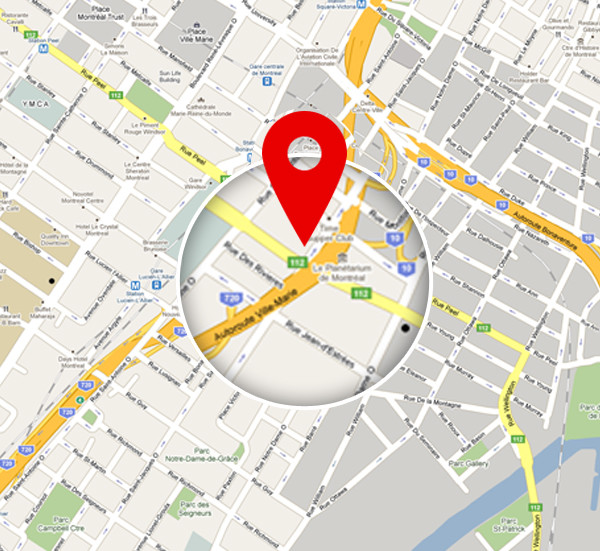
For location data, the principle is adapted so that the information released (such as a proof of being in a region) is statistically indistinguishable from what would be released if the person were at a nearby location. This is often achieved by adding random “noise” to the reported location, making it impossible to pinpoint the exact position but still allowing verification within a certain area.
Geo-Indistinguishability: A Special Case for Location Privacy
One of the most influential adaptations of differential privacy for location data is known as geo-indistinguishability. The idea is to ensure that any reported location is plausible for a region around the true location, within a mathematically defined radius.
The Geo-Indistinguishability Mechanism
Given a true location xx, a mechanism outputs a perturbed location x′x′ such that the probability of reporting x′x′ decreases with the distance from xx. The mechanism is designed so that for any two locations xx and x′x′:Pr[M(x)=y]Pr[M(x′)=y]≤eε⋅d(x,x′)Pr[M(x′)=y]Pr[M(x)=y]≤eε⋅d(x,x′)
where d(x,x′)d(x,x′) is the distance between xx and x′x′, and εε controls the privacy level.
This ensures that, even if someone knows the mechanism, they cannot confidently infer the true location from the reported one, as many possible true locations could have produced the same output.
How Privacy-Preserving Location Proofs Work
Step-by-Step Process
- Claim Generation: The individual’s device generates a proof that it was within a specified geographic area at a given time.
- Noise Addition: Before sharing, the device mathematically perturbs the location data using a differential privacy mechanism (often Laplace or Gaussian noise).
- Proof Submission: The perturbed proof is submitted to a verifier (such as an employer, event organiser, or security checkpoint).
- Verification: The verifier checks that the proof is consistent with being within the allowed area-without learning the exact location.
Mathematical Model
Suppose a user’s true location is LL, and they wish to prove being within region RR. The device computes:L′=L+ηL′=L+η
where ηη is random noise drawn from a distribution (such as Laplace) calibrated to the desired privacy level.
The proof consists of L′L′ and a cryptographic attestation that L′L′ was generated according to the agreed-upon privacy protocol.
Balancing Privacy and Utility
A key challenge is the trade-off between privacy and accuracy. Adding more noise increases privacy but reduces the utility of the location proof (e.g., it becomes harder to verify presence within a small area). The privacy parameter εε is chosen to balance these needs, with smaller values protecting privacy more strongly but requiring larger “fuzziness” in the location.
Real-World Applications
- Contact Tracing: Individuals can prove they were not at a COVID-19 exposure site without revealing their exact movements.
- Access Control: Workers can demonstrate presence at a secure facility without disclosing their precise location within the site.
- Location-Based Services: Users can access services (such as local offers or event entry) by proving proximity rather than sharing GPS coordinates.
Advantages Over Traditional Methods
- No Need for Trusted Third Parties: Differential privacy mechanisms can be implemented directly on user devices, removing the need for centralised authorities to hold or process sensitive location data.
- Mathematical Guarantees: The privacy protection is provable and quantifiable, not reliant on policy or trust.
- Flexible Integration: The approach can be adapted to a wide range of mobile, IoT, and web applications.
Technical Challenges and Future Directions
- Parameter Selection: Choosing the right level of noise to balance privacy and service utility.
- Adversarial Models: Ensuring robustness against attackers with side information or the ability to correlate multiple proofs.
- Usability: Designing user interfaces and experiences that make privacy-preserving proofs understandable and accessible.
Ongoing research is focused on optimising these protocols, integrating cryptographic zero-knowledge proofs for even stronger guarantees, and extending the approach to other types of sensitive data.
Summary
Mathematical methods based on differential privacy and geo-indistinguishability are enabling individuals to prove their presence at a location without revealing where they actually were. By adding carefully calibrated noise to location data, these protocols offer a new standard for privacy in the digital age-empowering users to access services, verify claims, and protect themselves from surveillance, all with strong mathematical guarantees. As these technologies mature, they are set to become foundational tools for privacy-preserving digital identity and location-based services worldwide.