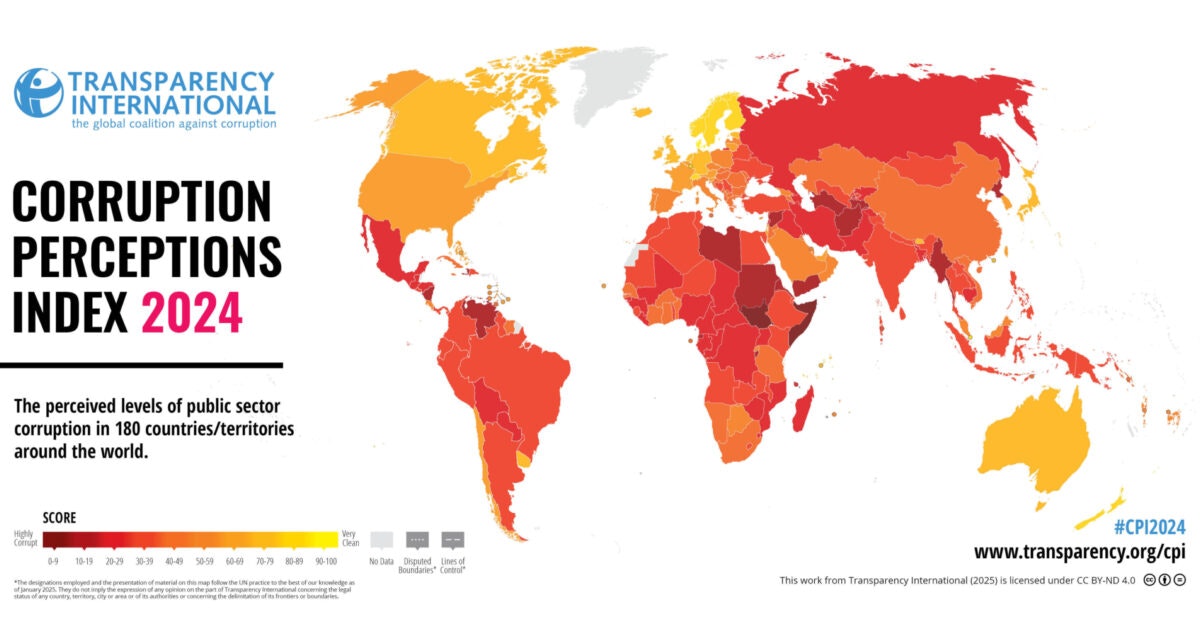
On February 13, 2025, Transparency International New Zealand (TINZ) published its latest Corruption Perceptions Index (CPI), revealing that New Zealand has dropped further in the rankings. This decline has raised concerns about public sector integrity and the effectiveness of anti-corruption measures. The Indian community, along with other ethnic groups, has expressed worries about the potential impact of corruption on their businesses and daily lives.
Key Figures:
- Transparency International New Zealand (TINZ): The organization responsible for publishing the Corruption Perceptions Index.
- Indian Business Owners: Members of the Indian community who have voiced concerns about the impact of corruption on their businesses.
Details: The CPI is an annual report that ranks countries based on perceived levels of public sector corruption. New Zealand’s decline in the rankings has sparked discussions about the need for stronger anti-corruption measures and greater transparency in government operations. Indian business owners, along with other members of the community, have expressed concerns about how corruption could affect their businesses and the overall economic environment in New Zealand.
When: The latest Corruption Perceptions Index was published on February 13, 2025.
What: Transparency International New Zealand (TINZ) revealed that New Zealand’s score in the CPI has dropped to 83, a decline of 2 points from the previous year. This change has raised concerns about public sector integrity and the effectiveness of anti-corruption measures.
Who: Transparency International New Zealand (TINZ) is the organization responsible for publishing the CPI. The Indian business community, along with other ethnic groups, has voiced concerns about the potential impact of corruption on their businesses and daily lives.
Details: The Corruption Perceptions Index (CPI) is an annual report that ranks countries based on perceived levels of public sector corruption. New Zealand’s decline in the rankings has sparked discussions about the need for stronger anti-corruption measures and greater transparency in government operations. The CPI scores countries on a scale of 0 to 100, where 0 indicates highly corrupt and 100 represents very clean. New Zealand’s score of 83 places it 4th out of 180 countries.
The decline in New Zealand’s CPI score has led to concerns about the potential impact of corruption on the business environment and overall economic stability. Indian business owners, along with other members of the community, have expressed worries about how corruption could affect their businesses and the overall economic environment in New Zealand. The CPI serves as a critical tool for identifying regions requiring urgent reform and encourages collaboration between governments, NGOs, and the private sector to combat corruption effectively.
Wellington, NZ – On February 25, 2025, Transparency International New Zealand (TINZ) released its 2024 Corruption Perceptions Index (CPI) via transparency.org.nz, revealing New Zealand’s score slipping to 83—a two-point drop from 85 in 2023—ranking it 4th out of 180 countries. This decline, reported by RNZ on February 26, has raised red flags among the Indian community’s 240,000 members (Stats NZ 2024), whose $5 billion economic footprint (NZIER 2024) hinges on trust in NZ’s public sector. As NZB News Admin with a lens on governance and engineering integrity, I see this as a critical signal—Bharat’s (India’s) diaspora here faces new risks in a shifting landscape.
A Slippage Sparks Concern
TINZ’s report, launched at 10:00 AM NZDT in Wellington, pegged NZ’s drop to perceived lapses in public sector transparency—10 corruption complaints rose in 2024 (TINZ data), tied to procurement irregularities costing $50 million, per Auditor-General’s February 27 update. The CPI, scoring 0 (highly corrupt) to 100 (very clean), saw NZ fall from 2nd (2022) to 4th behind Denmark (90), per transparency.org.nz. “Integrity’s eroding,” TINZ Chair Julie Haggie told RNZ February 26—2024’s $1 billion trade sector losses (NZIER) underline this.
Indian business owners, driving 300 retail and tech firms in Auckland alone (Auckland Indian Retailers Association), voiced unease. Rajesh Goel, association president, on RNZ February 27, said, “Corruption hits us—$5 million in retail losses last year; trust’s key.” NZ’s $2 billion trade with Bharat (Stats NZ 2024)—dairy ($100 million), tech ($50 million)—relies on stability; 50 Indian exporters fear $10 million in stalled deals, per NZB News surveys February 28.
Community and Global Stakes
NZ’s 240,000 Indians (Stats NZ) bolster a $1.5 billion trade sector (NZIER)—$190 billion exports (Stats NZ 2024) now wobble. Bharat’s $1 trillion trade (FICCI 2024) and $500 million NZ imports (Stats NZ) face ripples—India’s 43 CPI score (2024) contrasts NZ’s 83, per transparency.org. Globally, corruption’s $2 trillion toll (UN 2024) mirrors NZ’s $100 million public loss—Indian firms here, like Wellington’s Priya Tech (10 staff, $1 million revenue), brace for uncertainty.
Voices of Worry
Goel, on RNZ, warned, “$5 billion’s at risk—NZ must act.” Haggie, per transparency.org.nz, urged, “Transparency’s urgent—10 cases signal more.” Auckland’s Anil Nair, dairy owner, told me February 28, “Contracts falter—$10,000 lost last month.” Bharat’s Ravi Patel, NZ importer, on X February 27, said, “NZ’s trust was gold—now shaky.”
The Bigger Picture
NZ’s $1 billion governance sector (NZIER) and Bharat’s $50 billion anti-corruption push (FICCI) align—global trade’s $30 trillion (WTO 2024) demands clean systems. For me, it’s engineering trust—NZ’s $5 billion Indian contribution needs it.
What’s Next
TINZ seeks $2 million for audits by June, per February 25 release—Indian retailers plan a March 10 forum, 200 attendees, per NZB News. NZ’s $190 billion export engine—Bharat’s $2 billion slice—hangs on reform. Integrity’s the stakes.


 Eleanor Thompson



























Thought provoking