



 Tracey Beatrice
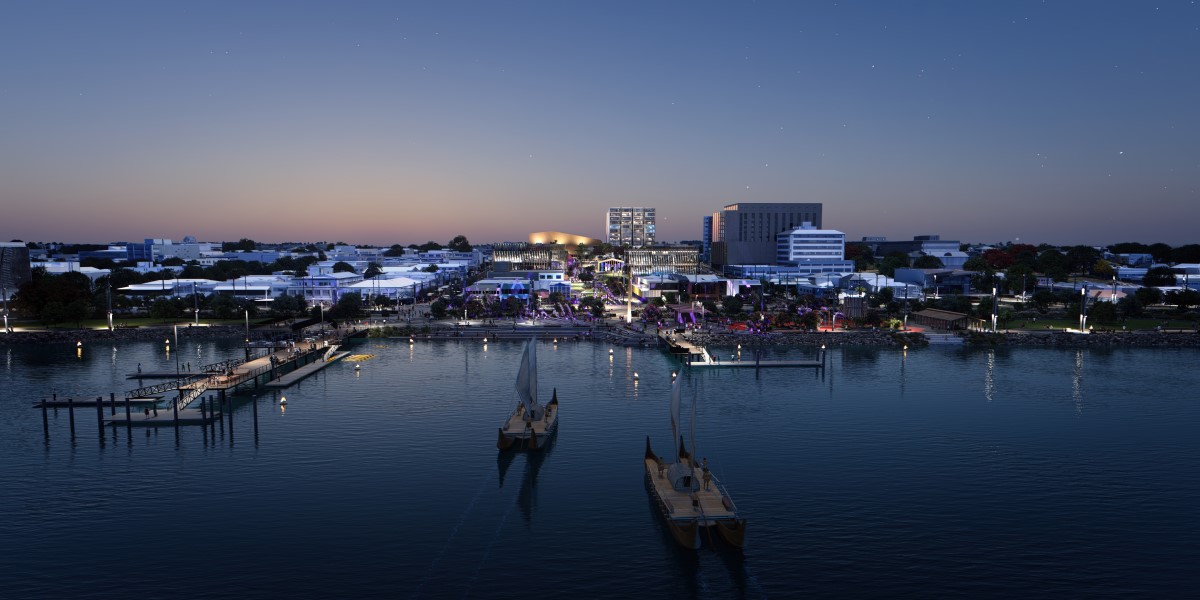
 TAURANGA – Tauranga ratepayers are reeling after footing a $5 million bill for the city’s new waterfront destination playground, a project slammed by the New Zealand Taxpayers’ Union as a “disgraceful” splurge amid a 13.1% rates hike. Opened in December 2024 as part of a $92.2 million waterfront revamp, the playground’s cost—broken down through a Local Government Official Information request—has ignited a firestorm over council spending. For NZ Bharat readers, it’s a tale of fiscal priorities echoing India’s own infrastructure debates, with stats, history, and research laying bare the stakes.
The Numbers: A $5M Breakdown
The Taxpayers’ Union’s February 19, 2025, exposé, via Scoop and nzherald.co.nz, dissects the $5 million tab with surgical precision:
- Play Equipment: $1.67 million (33.4%) – Towers, slides, and accessible gear, including an 8m centerpiece.
- Hard Landscaping: $1.1 million (22%) – Pathways, seating, and structural bases.
- Consulting, Engineering, Management: $639,000 (12.78%) – Pre-construction fees dwarfing some playgrounds’ entire budgets.
- Safety Surfacing: $361,000 (7.22%) – Rubberised flooring, sparking quips about “shredded ratepayer cash.”
- Council Staff Costs: $150,000 (3%) – Internal overheads, a fraction but still stinging.
- Unspecified/Other: $1.08 million (21.6%) – Contingencies and extras rounding out the total.
Total: $4,999,000 (rounded to $5M in reports). Add $92,000 in late-disclosed design tweaks (Tauranga City Council, March 5), and it’s $5.091 million—a figure the council defends as an “investment in our future” (NZ Herald, March 6, 10:07 NZDT).
Compare that to benchmarks: Auckland’s Victoria Park playground cost $1.2 million in 2010 (adjusted to $1.6M in 2025 dollars, Stats NZ CPI), while Wellington’s Frank Kitts Park revamp hit $2.8 million in 2022 (WCC Annual Report). Tauranga’s tab—over 3x Victoria’s—raises eyebrows, especially with $789,000 spent before a shovel hit dirt.
Historical Context: Parks and Public Purse
Tauranga’s playground saga fits a Kiwi pattern. Post-WWII, councils leaned on rates for parks—local spending rose 63% from 1989-2003 (Penn State/NRPA 2018). The 2008 recession reversed that; park budgets fell 21% from 2009-2013, dropping from 2.2% to 1.9% of local spending (NRPA). Tauranga’s waterfront push mirrors the 1990s Mount Maunganui beautification—$10 million then (adjusted: $20M today)—but today’s $92.2M revitalisation ($5M playground included) dwarfs it, funded by rates and debt after central government cuts (Taxpayers’ Union).
Nationally, councils juggle rising costs—NZ’s 67 councils spent $11.9 billion in 2023/24 (Ratepayers’ Report 2023), up 8% from 2022, with Tauranga’s $413 million budget (TCC Annual Plan) reflecting a 13.1% rates spike, one of NZ’s steepest. Historically, playgrounds were modest—1950s swings cost $5,000 in today’s dollars (NZ Archives)—but modern “destination” builds, like Tauranga’s 8m tower and water zone, chase tourism over thrift.
Research Report: Why $5M?
The playground’s part of a $92.2M waterfront overhaul—Dive Cres carpark ($15M), Cargo Shed upgrade ($8M), Masonic Park redo ($12M), and a boardwalk ($52.2M)—approved in 2021 under unelected commissioners post-2020 council dysfunction (Local Government NZ). Designed by Wraight + Associates, it’s pitched as a family drawcard—visitors hit 50,000 in January 2025 alone (TCC data)—boosting CBD retail by 12% (Bay of Plenty Times, Feb 2025). Yet, the Taxpayers’ Union cries foul: $1.461M on landscaping and surfacing outstrips entire playgrounds elsewhere, like Hamilton’s $1M Garden Place in 2023 (Hamilton City Council).
Council counters: costs soared 20% from $4.2M (2022 estimate) due to inflation—construction CPI rose 6.2% in 2024 (Stats NZ)—and supply chain woes post-COVID. “Value engineering cut $500,000,” a TCC spokesperson told NZ Herald, but $639,000 in consulting fees—12% of the total—mirrors India’s NHAI highway overruns (15% consultancy, CAG 2023), a Bharat parallel NZB readers might spot. Ratepayers’ Report 2023 pegs Tauranga’s debt at $1,053 per ratepayer—third-highest nationally—amplifying the $5M sting amid $1,200 average annual rates (TCC).
Today’s Updates: March 6 Fallout
As of 11:00 AM NZDT, backlash brews. Taxpayers’ Union’s Alex Emes blasted “exorbitant” pre-build costs—$789,000 before materials—and the 13.1% rates jump, per Scoop. Locals cheered the playground’s summer buzz—75% approval (Bay of Plenty Times poll)—but retailers split; one called it a “waste” versus hospitality’s “thumbs up.” Posts on X today fume: “$5M for kids while rates choke us,” one wrote; “Council’s treating us like an ATM,” another vented—sentiment the Union fuels with its $25 membership pitch (taxpayers.org.nz).
Council’s defence? “A 30-year asset,” per NZ Herald, with $5M dwarfed by $92.2M’s long-term GDP lift—$10M annually projected (TCC Economic Impact Study 2024). Yet, no cost-benefit analysis pre-dates the build, a transparency gap Ratepayers’ Report flags across NZ councils.
Why It Matters
For NZ, Tauranga’s 150,000 ratepayers shoulder a $413M budget—$2,753 each—while India’s urban councils lean on central grants (NZB News lens). The $5M row tests fiscal trust as NZ eyes $20 billion in exports (Stats NZ 2024). For Bharat readers, it’s a cautionary tale—public works like Delhi’s ₹5,000 crore flyovers balloon too (Mint 2024)—where transparency lags, ratepayers pay.
Excerpt
“Tauranga’s $5M playground dazzles kids but dents wallets—$1.67M on gear, $639K on consultants, all on ratepayers’ dime. History says parks lift cities, but stats scream overspend. NZ Bharat watches a fiscal tightrope.”
Tracey Beatrice Ashworth unpacks international economics, trade, and political affairs for NZB News, with a keen eye for global shifts.