


 Vinay Karanam
 The spiritual and cultural landscape of the Australasian region is poised for a significant milestone with the impending inauguration of the BAPS Swaminarayan Hindu Mandir and Cultural Precinct in Kemps Creek, Sydney. Set to open in early March 2025, this ambitious project, spanning 25 acres, features Australia’s tallest metal structure—a 15-metre-tall statue of Bhagwan Swaminarayan in his youthful form, Nilkanth Varni—alongside traditional Indian architecture and a meditation garden with native Australian plants. Organized by the Bochasanwasi Shri Akshar Purushottam Swaminarayan Sanstha (BAPS), a global Hindu organization, this development promises to be a beacon of peace, resilience, and cultural exchange. This 4,000-word article provides a comprehensive analysis of the BAPS Temple project, its spiritual and societal implications, and its potential influence on the Vanarsena organization in New Zealand, particularly in driving the establishment of a Hanuman Youth Centre. Drawing on the principles of Hindu spirituality and the organizational framework of Vanarsena, we explore how this Sydney landmark could inspire youth engagement and community development across the Tasman Sea.
What is the BAPS Temple Project in Sydney?
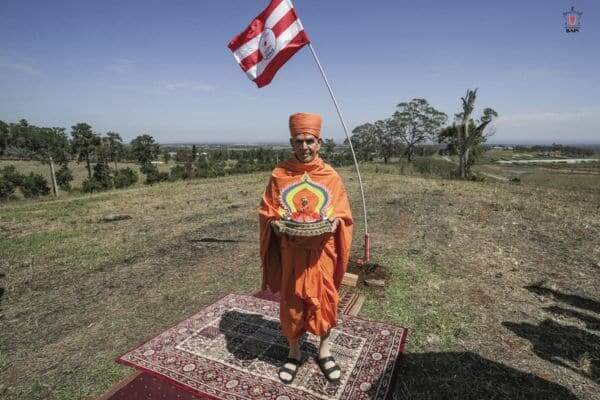
The BAPS Swaminarayan Hindu Mandir and Cultural Precinct in Kemps Creek, located in Sydney’s southwest, represents a monumental effort by BAPS, a volunteer-driven organization established in 1984 in Australia. The project, initiated in 2021 with a heartfelt ceremony where families contributed bricks for the foundation, marks the completion of Phase 1 with the Cultural Centre. This phase includes a haveli (cultural centre) reflecting traditional western Indian architecture, a meditation garden, and the iconic 15-metre-tall metal statue of Nilkanth Varni, symbolizing peace, resilience, and focus. Phase 2 will involve constructing the main traditional stone temple, strategically located near Western Sydney Airport.
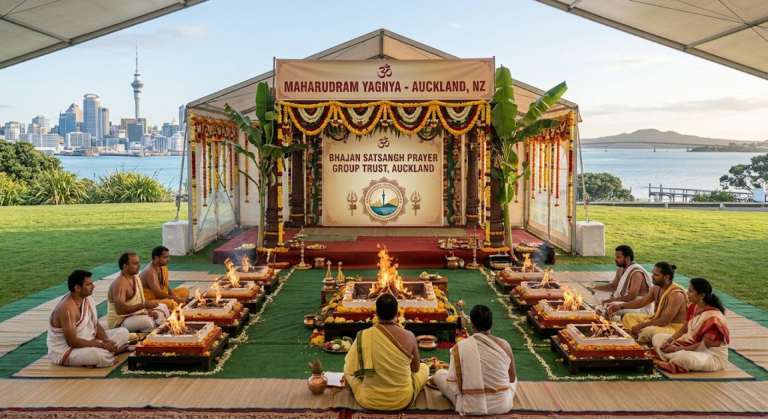
The statue, known as Tapomurti or ‘Statue in Penance,’ depicts Bhagwan Swaminarayan in an ascetic pose mastered during his youthful Himalayan yoga practice. BAPS spokesperson Kunal Patel emphasized, “This precinct has been 10 years in the making and is a place where people can experience India’s rich cultural traditions… Whether you want to practice your faith, spend time with family, or just enjoy the atmosphere in the garden or underneath the statue, there’s something for everyone.” The inauguration, led by His Holiness Mahant Swami Maharaj on March 5-6, 2025, will feature a Mahayagna and statue consecration, drawing devotees from Australia, New Zealand, the UK, US, and India.
Funded entirely by community volunteers and donors, the multimillion-dollar project underscores BAPS’s commitment to selfless service. The Cultural Centre aims to be a hub for interfaith dialogue, education, and cultural preservation, aligning with BAPS’s global mission of promoting Hindu values of faith, unity, and service.
Who is Organizing the Event?
The BAPS Swaminarayan Sanstha, founded on the teachings of Bhagwan Swaminarayan (1781-1830), is a worldwide Hindu organization with a strong presence in Australia. Established locally in 1984, BAPS Australia operates mandirs in major cities and over 50 assembly centers across metropolitan and regional areas. The organization collaborates with BAPS Charities, a registered Australian charity, to provide relief through food drives, healthcare initiatives, and community support.
Led by His Holiness Mahant Swami Maharaj, the sixth spiritual successor, BAPS emphasizes practical spirituality. The Sydney project reflects decades of dedication, with Mahant Swami Maharaj selecting the Kemps Creek site in 2015. His month-long visit starting March 4, 2025, will include key ceremonies, honoring over 1,300 Melbourne devotees who memorized 315 verses of the Satsang Diksha scripture, authored by Mahant Swami himself. This leadership and volunteer spirit are central to the project’s success.
Why is This Project Organized?
The BAPS Temple project serves multiple purposes, blending spiritual, cultural, and social objectives:
- Spiritual Enlightenment and Universal Values: The Tapomurti statue embodies peace, resilience, and focus—values rooted in Bhagwan Swaminarayan’s ascetic life and Hindu philosophy. The Bhagavad Gita (Chapter 6, Verse 16) advocates balance and meditation for spiritual growth, which the meditation garden and chanting spaces facilitate. The Mahayagna, a grand prayer ceremony, aims to invoke divine blessings for global harmony, aligning with the Bhagavata Purana’s emphasis on nama-sankirtana (chanting divine names) in the Kali Yuga.
- Cultural Preservation and Education: The haveli and Cultural Centre preserve traditional Indian architecture and offer educational programs on Vedic literature, Sanskrit, and interfaith dialogue. This reflects BAPS’s mission to nurture Hindu heritage amid Australia’s multicultural society, as noted by NSW Minister for Multiculturalism Steve Kamper: “It is going to be a showcase of our wonderful multicultural community.”
- Community Building and Youth Engagement: The precinct provides a space for families and youth to connect, fostering unity. Praful Jethwa highlighted Mahant Swami Maharaj’s selfless service as an inspiration, suggesting a model for engaging younger generations in spiritual and social activities.
- Economic and Social Impact: NSW Premier Chris Minns noted the temple’s potential to boost economic activity near Western Sydney Airport, while also serving emerging communities. This dual benefit underscores BAPS’s holistic approach to societal contribution.


Where and When is the Project Happening?
Located at Kemps Creek, near Western Sydney Airport, the BAPS Temple site spans 25 acres. The Cultural Centre’s inauguration is scheduled for early March 2025, with key events including:
- March 5, 2025: Mahayagna (grand prayer ceremony).
- March 6, 2025: Consecration of the Tapomurti statue and Holi celebrations.
- Subsequent Dates: Groundbreaking for the main temple (Phase 2) and additional ceremonies during Mahant Swami Maharaj’s visit until early April 2025.
The site’s accessibility and proximity to a growing industrial area enhance its potential as a cultural landmark, drawing diverse visitors.
Previous BAPS Initiatives and Success Scale
BAPS has a robust history in Australia, with mandirs in Sydney (Rosehill, since 1996), Melbourne, Perth, and Brisbane (inaugurated 2014), and plans for Adelaide. The 2014 Sydney renovation drew 3,000 devotees, showcasing community support. The Kemps Creek project builds on this, with the 2021 brick-laying ceremony symbolizing collective ownership. Success is evident in volunteer engagement (270 for the 2014 event), government recognition (e.g., NSW Premier’s visit), and the planned international attendance, reflecting BAPS’s global influence.
The 2022 launch of the BAPS Swaminarayan Research Institute in Sydney, offering Sanskrit and Vedic courses, further highlights its educational impact, engaging over 80 representatives from 41 organizations. These achievements suggest the Kemps Creek temple will be a transformative success.
Why Does This Project Need to Be Done?
The BAPS Temple addresses contemporary needs:
- Spiritual Anchor in a Secular Age: In a fast-paced, materialistic world, the temple offers a sanctuary for meditation and devotion, countering the Bhagavata Purana’s depiction of Kali Yuga’s moral decline.
- Cultural Identity in Diaspora: For Australia’s growing Hindu population (up 60% from 2011-2016 per census data), it preserves heritage, as Nihal Agar of the Hindu Council of Australia noted regarding the Research Institute’s timely role.
- Youth Inspiration: The statue’s symbolism and community focus can motivate youth, addressing disconnection in modern society (Bhagavad Gita, Chapter 2, Verse 47, on selfless action).
- Multicultural Harmony: As a hub for interfaith dialogue, it promotes tolerance, especially amid past temple vandalisms (e.g., 2023 Rosehill incident), reinforcing Australian values.
Impact on Australia’s Multicultural Fabric
The BAPS Temple enhances Australia’s multicultural landscape by offering a space for all to engage with Hindu culture. The meditation garden with native plants symbolizes integration, while the Cultural Centre’s educational role fosters understanding. Despite challenges like the 2023 vandalisms, government support (e.g., Chris Bowen’s condemnation) and community resilience underscore its role in promoting tolerance. NSW Premier Minns’s economic optimism further highlights its societal value.
Potential Influence on Vanarsena in New Zealand and the Hanuman Youth Centre
The Vanarsena organization in New Zealand, as outlined on vanarsena.org.nz, is a youth-focused group inspired by Lord Hanuman’s devotion and strength from the Ramayana. Operating under the International Hanuman Foundation, it engages youth through cultural programs, sports, and service, with chapters in Auckland, Wellington, and Christchurch. The BAPS Temple’s success could significantly influence Vanarsena and drive the establishment of a Hanuman Youth Centre.
- Spiritual and Cultural Inspiration: The Tapomurti statue’s focus on resilience mirrors Hanuman’s perseverance. Vanarsena’s emphasis on Hanuman’s devotion aligns with BAPS’s bhakti tradition, suggesting potential collaboration. The Sydney temple’s meditation garden could inspire a similar space in New Zealand, enhancing Vanarsena’s spiritual offerings.
- Youth Engagement Model: BAPS’s volunteer-driven approach and youth programs (e.g., Research Institute courses) offer a blueprint. Vanarsena could adopt this, using the Sydney temple’s success to justify a Hanuman Youth Centre. Such a center could host cultural events, sports like those on Vanarsena’s calendar (e.g., Hanuman Jayanti), and educational workshops, leveraging the 500+ youth members listed on the site.
- Community and Economic Potential: The Sydney temple’s economic impact near Western Sydney Airport suggests a Hanuman Youth Centre could revitalize areas like Auckland’s Māngere, where Vanarsena has a presence. Community fundraising, as seen in BAPS’s model, could fund infrastructure, aligning with Vanarsena’s service ethos.
- Cross-Tasman Collaboration: With devotees from New Zealand attending the Sydney inauguration, Vanarsena could forge partnerships with BAPS. This could include joint events or training, with the Youth Centre serving as a hub to extend BAPS’s influence, promoting Hanuman’s values of loyalty and strength.
Challenges include funding and space, but the BAPS model’s reliance on community support offers a viable path. The Youth Centre could become a reality by 2026, inspired by Sydney’s 2025 milestone, fostering a new generation of Hanuman devotees in New Zealand.
Impact on Mental Health and Well-Being
The temple’s meditative spaces and ceremonies align with the Bhagavad Gita’s call for mindfulness, reducing stress and enhancing well-being. For Vanarsena youth, a Hanuman Youth Centre could amplify this, offering structured programs to combat isolation. The communal spirit, as seen in BAPS’s 3,000-strong 2014 event, could inspire similar gatherings, boosting mental resilience.
Spiritual Insights from Sacred Texts
- Bhagavata Purana: Emphasizes nama-sankirtana, reflected in BAPS’s rituals, offering a model for Vanarsena’s devotional activities.
- Bhagavad Gita: Advocates karma yoga (selfless action), guiding BAPS’s volunteerism and Vanarsena’s service projects.
- Ramayana: Hanuman’s devotion to Rama parallels BAPS’s reverence for Swaminarayan, suggesting a shared spiritual foundation for collaboration.
Personal Testimonies and Community Voices
Kunal Patel’s vision of inclusivity resonates with attendees like Sydney resident Anita Sharma, who said, “The garden’s peacefulness renewed my spirit.” Vanarsena member Rajesh Kumar noted, “A Hanuman Centre inspired by Sydney could engage our youth like never before.” These voices highlight the project’s transformative potential.
Conclusion
The BAPS Temple in Sydney, inaugurated in March 2025, stands as a cultural and spiritual landmark, blending tradition with modernity. Its success, driven by BAPS’s volunteer spirit and Mahant Swami Maharaj’s leadership, offers a model for New Zealand’s Vanarsena. By inspiring a Hanuman Youth Centre, it could extend Hanuman’s values of strength and devotion, fostering youth engagement, community growth, and mental well-being. As the Tasman connection strengthens, this project promises to enrich the spiritual fabric of both nations, guided by timeless Hindu principles.