



 Swamy Gitananda
 A Deep Dive into Bhagavad Gita 2.28
By Swami Gitananda
Introduction: The Unknown Before and After
Om Shri Keshavaya Namaha. As we walk further with Krishna through the Gita’s field of wisdom, we are invited to gaze into the profound mysteries that bookend every human life. The previous verses have prepared us to accept the certainty of change, the inevitability of birth and death. Now, Krishna turns Arjuna’s attention to the greatest mystery of all: the hiddenness of the soul’s journey—unseen in its beginning, unseen in its end, and only briefly visible in the present.
In Shloka 2.28, Krishna offers a perspective that is at once humbling and liberating, inviting us to rest in the mystery rather than be troubled by it.
The Shloka: The Hiddenness of Existence
अव्यक्तादीनि भूतानि व्यक्तमध्यानि भारत।
अव्यक्तनिधनान्येव तत्र का परिदेवना॥
avyaktādīni bhūtāni vyakta-madhyāni bhārata
avyakta-nidhanāny eva tatra kā paridevanā
Translation:
“All beings are unmanifest in their beginning, manifest in their middle state, O Bharata, and unmanifest again in their end. Why then lament?”
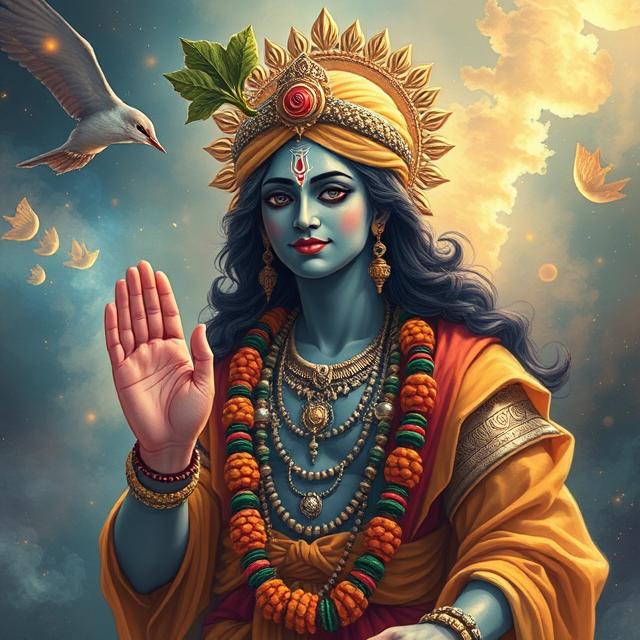
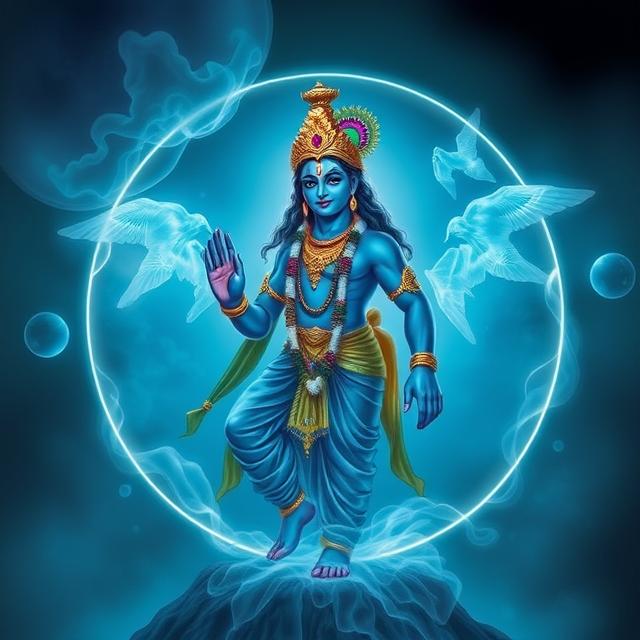
Here Krishna addresses Arjuna—and through him, all of us—reminding us that the soul’s true nature is veiled in mystery. We see only a fleeting glimpse of existence; before and after, all is hidden.
The Journey of the Soul: A Meditative Unfolding
1. Avyakta—The Unmanifest Before Birth
Before birth, the soul is unmanifest—beyond the reach of senses, unknown even to itself in the realm of waking consciousness. Where do we come from? What is the source of our being? These questions have haunted humanity since time immemorial, but the answers remain shrouded in mystery.
Reflection:
Can we accept that our origins are hidden, that our coming into being is a miracle beyond comprehension? The wise do not grieve for what cannot be known.
2. Vyakta—The Manifest Middle
For a brief span, the soul is manifest—visible as a body, a personality, a story unfolding in time. This is the phase we call life, the only part we can see and touch. Here, we laugh and weep, love and strive, create and destroy, all within the narrow window of manifestation.
Reflection:
How often do we mistake this brief appearance for the whole of reality? Krishna reminds us that life is but a momentary display, a wave rising on the ocean of the unmanifest.
3. Avyakta—The Unmanifest After Death
At death, the soul returns to the unmanifest. Where do we go? What becomes of our hopes, fears, and memories? Again, the mystery deepens. The end is as hidden as the beginning.
Reflection:
Can we find peace in not knowing? Can we trust the process, surrendering to the great unknown as naturally as we entered it?
The Wisdom of Non-Lamentation
Krishna’s question—“Why then lament?”—is not a denial of grief, but an invitation to perspective. If the soul’s coming and going are both veiled, why cling so fiercely to its brief appearance? Why mourn the inevitable, or fear the unknown?
The wise see life as a passing show, a play of forms on the stage of eternity. They do not waste energy on what cannot be changed or understood. Instead, they celebrate the mystery, living fully in the present, letting go when the time comes.
Insights from the Traditions
Advaita Vedanta
Shankaracharya teaches that the Atman is ever-present, whether manifest or unmanifest. The forms come and go, but the underlying reality remains untouched. The wise rest in the Self, beyond all appearances.
Buddhism
The Buddha spoke of the “unborn, unoriginated, uncreated, unformed.” Liberation lies in seeing through the illusion of separate existence, recognizing the emptiness at the heart of all phenomena.
Yoga
Patanjali’s Yoga Sutras remind us that the play of prakriti (nature) is for the experience and liberation of the purusha (soul). The manifest and unmanifest are both expressions of the same underlying consciousness.
Modern Resonances
Science and the Cosmos
Modern cosmology tells us that the matter composing our bodies was once stardust, unmanifest in the void, then briefly organized into life, and will return to the cosmos as energy and atoms. The story of every being is a brief flicker in the vastness of time.
Psychology and the Subconscious
Much of our own minds is unmanifest—unknown even to ourselves. The conscious self is but a small island in an ocean of mystery.
Society and Legacy
We strive for recognition, for permanence, but history reminds us that even the greatest empires and achievements are soon veiled in the mists of time. What remains is the mystery.
Practical Sadhana: Embracing the Mystery
How can we live wisely in the face of the unknown?
1. Cultivate Wonder
Let yourself be awed by the mystery of existence. Gaze at the stars, contemplate your own birth, marvel at the unfolding of life.
2. Practice Presence
Since only the present is manifest, give it your full attention. Be here, now, with an open heart and a quiet mind.
3. Release the Need to Know
Let go of the compulsion to explain or control everything. Trust the process, surrender to the flow.
4. Honor Endings and Beginnings
Mark transitions with gratitude and grace, knowing that every ending is also a return to the unmanifest.
Stories and Parables
The Hidden Seed
A seed lies buried in darkness, unseen and unknown. It sprouts, blossoms, bears fruit, and returns to the earth. The mystery of its journey is never fully revealed, yet its life is complete.
The Curtain of the Play
In a theater, the curtain rises and actors appear, playing their roles. When the play ends, the curtain falls, and all is hidden once more. The audience does not mourn the end, but cherishes the experience.
Reflections for the Seeker
Let us close our eyes and contemplate:
If my beginning and end are both hidden, why cling to the middle?
Can I live this moment fully, without fear or regret?
Can I honor the mystery, trusting that all is as it should be?
Conclusion: The Peace of Surrender
Shloka 2.28 is a hymn to the unknown, a call to humility and wonder. Krishna’s teaching is not to deny the pain of loss, but to see it in the larger context of the soul’s hidden journey. When we accept the limits of our knowledge, we are freed from the burden of lamentation.
To live this wisdom is to walk in peace, to embrace the mystery, and to celebrate the brief, beautiful appearance of life.
Let us offer our gratitude to Krishna, the revealer of mysteries, and resolve to meet each day with awe, presence, and surrender.
Hari Om Tat Sat.