 Dorothy Brown
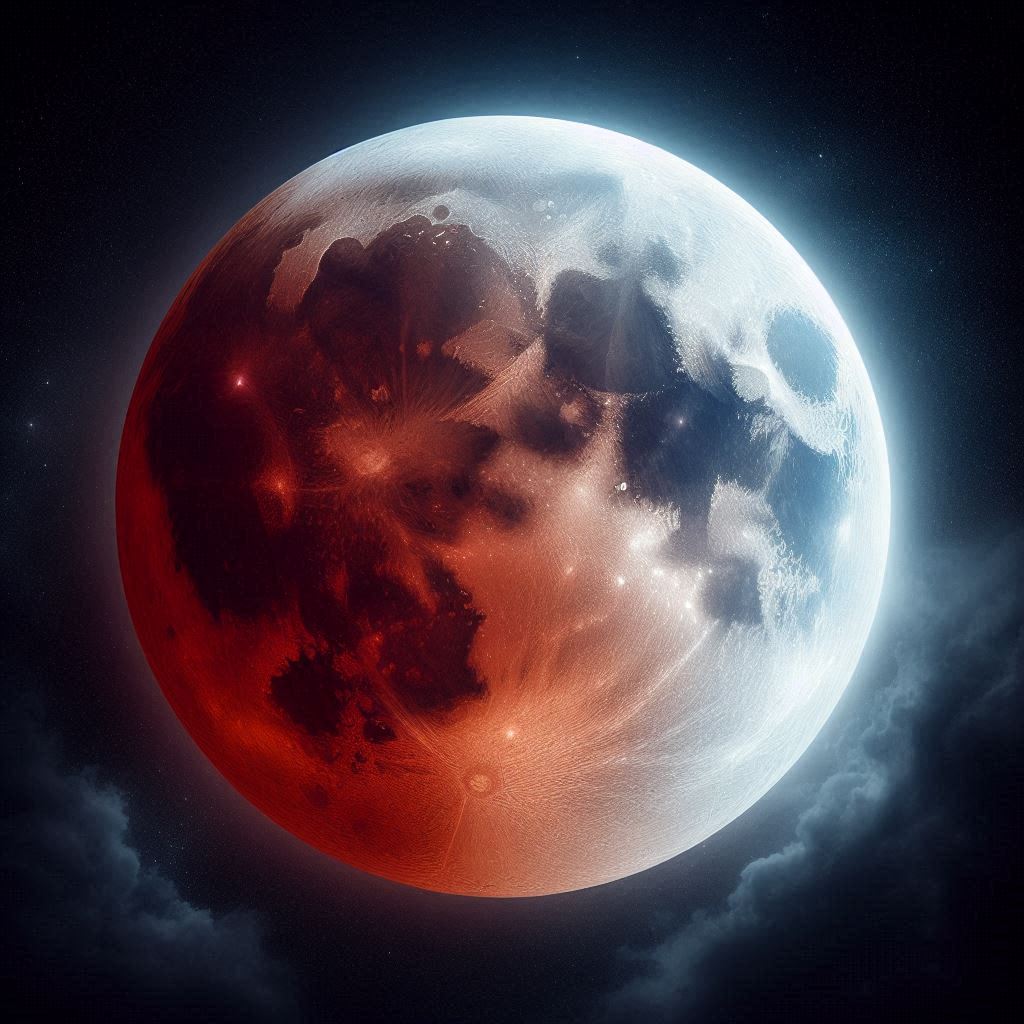
 A lunar eclipse occurs when the Earth positions itself directly between the Sun and the Moon, casting its shadow over the lunar surface. This alignment happens during a full moon when the Moon is near one of its nodes—the points where its orbital plane intersects Earth’s orbit around the Sun. The Earth’s shadow has two components: the umbra, the darker inner shadow where the Sun is completely blocked, and the penumbra, the lighter outer shadow where the Sun is partially obscured. As the Moon passes through these shadows, it may dim or take on a reddish hue due to the refraction of sunlight through Earth’s atmosphere, a phenomenon often called a “blood moon.”
Astronomically, lunar eclipses are predictable, occurring in pairs or triplets with solar eclipses during an eclipse season roughly every six months. Unlike solar eclipses, which are visible only from a narrow path, lunar eclipses can be seen from anywhere the Moon is above the horizon, making them a global spectacle. The duration and type—penumbral, partial, or total—depend on the Moon’s proximity to the node and the extent of shadow coverage. A total lunar eclipse, like the one on March 14, 2025, can have totality lasting up to 1 hour and 40 minutes, with the entire event spanning several hours.
Spiritually, in Hindu traditions, a lunar eclipse (Chandra Grahan) holds deep significance, often explained through cosmology. The Puranas, such as the Bhagavata Purana and Vishnu Purana, attribute eclipses to the demons Rahu and Ketu, severed heads of the asura Svarbhanu who tried to drink the nectar of immortality during the Samudra Manthan (churning of the ocean). After being betrayed by the Sun and Moon, Rahu and Ketu periodically swallow these celestial bodies, causing eclipses. This narrative underscores the cultural reverence and caution surrounding eclipses in Hindu tradition.

Last Five Lunar Eclipses: Visibility in Bharat and New Zealand
To contextualize recent lunar eclipses and their visibility, here are the last five significant events as of March 14, 2025:
- May 5, 2023 (Partial Lunar Eclipse)
- Visibility: Visible in northern Bharat (e.g., Uttar Pradesh, Bihar) and New Zealand (e.g., Auckland, Wellington), though southern Bharat saw limited visibility due to the Moon’s position.
- Details: Coinciding with Buddha Purnima, this eclipse had a 4% umbral magnitude, visible from 6:53 a.m. to 10:30 a.m. NZDT in New Zealand. In Bharat, visibility was partial, and the sutak period was not observed in many regions due to invisibility.
- October 28, 2023 (Partial Lunar Eclipse)
- Visibility: Visible across Bharat (e.g., Delhi, Mumbai) and New Zealand (e.g., Christchurch, Dunedin).
- Details: With an umbral magnitude of 0.12, it lasted from 7:34 p.m. to 11:54 p.m. IST in Bharat and 2:34 a.m. to 6:54 a.m. NZDT in New Zealand. The partial shadow was subtle but noticeable.
- March 25, 2024 (Penumbral Lunar Eclipse)
- Visibility: Visible in Bharat (e.g., Chennai, Kolkata) and New Zealand (e.g., Auckland).
- Details: A penumbral magnitude of 0.957 made it a minor event, visible from 12:53 a.m. to 5:02 a.m. IST and 3:53 p.m. to 8:02 p.m. NZDT on March 24-25. The dimming was subtle, requiring careful observation.
- September 18, 2024 (Partial Lunar Eclipse)
- Visibility: Visible in Bharat (e.g., Bangalore, Hyderabad) and New Zealand (e.g., Wellington).
- Details: An umbral magnitude of 0.085, it lasted from 2:41 a.m. to 6:47 a.m. IST and 5:41 p.m. to 9:47 p.m. NZDT on September 17-18. New Zealand had better visibility, with 8% of the Moon obscured.
- March 14, 2025 (Total Lunar Eclipse)
- Visibility: Visible in Bharat (e.g., Mumbai, Delhi) and New Zealand (e.g., Auckland, Christchurch), with totality from 12:24 a.m. to 1:47 a.m. IST (March 14) and 3:24 p.m. to 4:47 p.m. NZDT (March 13).
- Details: This ongoing eclipse lasts 83 minutes during totality, with the Moon turning a striking red, visible across both regions.
These eclipses highlight visibility patterns influenced by geographical positioning. Bharat often experiences partial visibility due to timing, while New Zealand benefits from nighttime hours during full moons, making the 2025 event particularly significant for both regions.


Hindu Sampradayas’ Guidelines: What to Do and What Not to Do
Hindu Sampradayas offer diverse perspectives on lunar eclipses, shaped by their interpretations of Shastras and Puranas. Here are guidelines from 6-8 major traditions:
- Madhva Sampradaya
- Do: Chant the Vishnu Sahasranama or Dvadasa Stotra to seek Lord Vishnu’s protection, emphasizing devotion during cosmic disturbances.
- Don’t: Avoid cooking, eating, or sleeping during the eclipse, as the Madhva Vijay warns of negative energies. Take a purifying bath post-eclipse.
- Basis: The Bhagavata Purana (10.12.11) advises chanting to counter Rahu-Ketu’s influence.
- Ramanuja Sampradaya
- Do: Perform Sri Vishnu Sahasranama Parayana and offer charity (dana) to neutralize inauspicious effects, per Vishishtadvaita’s focus on surrender.
- Don’t: Refrain from initiating new ventures, as the Rahasyatraya Sara warns of karmic imbalance.
- Basis: The Vishnu Purana (5.24) links eclipses to divine tests of faith.
- Lingayat Sampradaya
- Do: Meditate on Lord Shiva’s Ishtalinga and recite Vachana hymns for spiritual strength.
- Don’t: Avoid outdoor activities or gazing at the eclipsed Moon to protect against malevolent forces.
- Basis: The Shiva Purana (Rudra Samhita 2.15) associates eclipses with Shiva’s cosmic dance.
- Vaishnava Sampradaya (General)
- Do: Chant Hare Krishna Mahamantra and offer prayers to Krishna or Rama.
- Don’t: Abstain from food consumption; purify homes with Ganga Jal post-eclipse, per Bhagavad Gita (9.22).
- Basis: The Srimad Bhagavatam (11.5.32) promotes chanting during adversities.
- Shakta Sampradaya
- Do: Worship Goddess Durga or Kali with Devi Mahatmyam recitations to harness feminine energy.
- Don’t: Avoid sexual activity or aggressive behavior, as the Devi Bhagavata Purana (7.31) warns of heightened negativity.
- Basis: Eclipses are moments of divine feminine intervention.
- Smarta Sampradaya
- Do: Conduct a Satyanarayana Vrata or Homam to appease all deities.
- Don’t: Refrain from cooking or eating unoffered food; take a bath with tulsi water post-eclipse.
- Basis: The Skanda Purana (1.2.34) advises ritual purity during grahans.
- Shaiva Siddhanta
- Do: Meditate on Shiva’s five aspects and perform Rudra Abhishekam.
- Don’t: Avoid looking at the eclipse directly; stay indoors to maintain spiritual focus.
- Basis: The Shiva Agamas link eclipses to Shiva’s testing of devotees.
- Gaudiya Vaishnava Sampradaya
- Do: Chant Hare Krishna 108 times and distribute prasadam post-eclipse.
- Don’t: Avoid mundane activities; purify with Ganges water, per Chaitanya Charitamrita (2.1.88).
- Basis: Emphasis on Krishna’s protection during cosmic events.
These guidelines reflect a shared focus on purification and devotion, though practices vary. The sutak period (inauspicious time before and during the eclipse) is observed by some (e.g., 9 hours in North India, 3 hours in South India), but its applicability depends on visibility.
Importance in Astronomy
Lunar eclipses are pivotal in astronomy, offering insights into celestial mechanics and Earth’s atmosphere. Ancient Indian astronomers like Aryabhata (5th century CE) accurately predicted eclipses, as documented in the Aryabhatiya, attributing them to the alignment of Sun, Earth, and Moon. Modern astronomy, using tools like NASA’s eclipse pages, maps visibility and duration. The 2025 total lunar eclipse allows scientists to study atmospheric conditions—e.g., volcanic dust affecting the Moon’s red hue—via instruments like NASA’s Lunar Reconnaissance Orbiter’s Diviner.
Eclipses historically aided navigation and timekeeping. In 1504, Christopher Columbus used a lunar eclipse to impress indigenous people in Jamaica, showcasing their practical utility. Vedic texts like the Taittiriya Brahmana demonstrate early Indian observations, highlighting a sophisticated understanding of orbital dynamics.
Light Bending Phenomena and Einstein’s Triumph Lunar eclipses also played a role in validating Einstein’s theory of general relativity through the phenomenon of gravitational lensing. During a solar eclipse on May 29, 1919, Sir Arthur Eddington observed the bending of starlight near the Sun, confirming Einstein’s prediction that massive objects warp spacetime, bending light. While this experiment involved a solar eclipse, lunar eclipses contribute to similar studies by providing opportunities to observe light refraction through Earth’s atmosphere. The 1919 event made Einstein a scientific hero, with newspapers like The Times proclaiming “Revolution in Science” on November 7, 1919. This breakthrough reshaped modern physics, cementing Einstein’s legacy.

Fun Facts About Lunar Eclipses
- The term “blood moon” arises from the reddish hue caused by Rayleigh scattering, the same effect that makes sunsets red.
- The longest total lunar eclipse in recent history occurred on July 27, 2018, lasting 1 hour and 43 minutes.
- Ancient cultures, like the Mesopotamians, believed eclipses signaled divine omens, often leading to rituals to appease gods.
- The Moon doesn’t disappear entirely during a total eclipse; it can glow faintly due to light refracted by Earth’s atmosphere, sometimes appearing coppery or orange.
Significance in Astrology and Planetary Movements
Astrology, a revered science in ancient India, views lunar eclipses as transformative events influencing human destiny. The Brihat Parashara Hora Shastra links eclipses to Rahu and Ketu’s nodal influence, affecting zodiac signs. The 2023 Libra eclipse favored Aries and Taurus but posed challenges for Libra and Pisces, per astrologer Chirag Daruwalla. The 2025 eclipse, occurring during a full moon, may amplify emotional and karmic shifts.
Planets Entering Meena Rashi (Pisces) During the 2025 Eclipse In March 2025, the Moon transits Meena Rashi (Pisces) during the lunar eclipse, with Jupiter, the ruler of Pisces, already stationed there since May 2024 (per Vedic astrology transits). This alignment enhances spiritual energies, as Pisces is associated with intuition, compassion, and transcendence. Rahu, positioned in Pisces until May 2025, further intensifies the eclipse’s impact, stirring subconscious fears but also opening doors for spiritual awakening.
Impact on Other Rashis: Positives, Negatives, and Remedies The eclipse’s effects vary across the 12 zodiac signs (rashis), influenced by the Moon’s placement in Pisces and Rahu-Ketu dynamics:
Mesha (Aries)
Positives: Enhanced intuition; opportunities for spiritual growth. Negatives: Emotional volatility; potential for misunderstandings. What to Do: Chant Aditya Hridaya Stotra to balance solar energy; donate to the needy.
Vrishabha (Taurus)
Positives: Career breakthroughs; financial clarity. Negatives: Stress from overthinking; minor health issues. What to Do: Recite Sri Suktam for prosperity; avoid major decisions during the eclipse.
Mithuna (Gemini)
Positives: Creative inspiration; improved communication. Negatives: Anxiety; strained relationships. What to Do: Meditate with Ganesha Mantra to remove obstacles; practice mindfulness.
Karka (Cancer)
Positives: Deep emotional healing; family bonding. Negatives: Mood swings; past traumas resurfacing. What to Do: Chant Chandra Kavacham to soothe lunar energies; offer water to a Shiva Linga.
Simha (Leo)
Positives: Leadership opportunities; recognition. Negatives: Ego clashes; financial strain. What to Do: Perform Surya Namaskar post-eclipse; avoid confrontations.
Kanya (Virgo)
Positives: Improved health routines; analytical clarity. Negatives: Overthinking; relationship tensions. What to Do: Recite Budha Mantra for mental peace; donate green items.
Tula (Libra)
Positives: Romantic harmony; creative pursuits. Negatives: Indecision; emotional overwhelm. What to Do: Chant Shukra Mantra for balance; wear white clothing post-eclipse.
Vrishchika (Scorpio)
Positives: Transformative insights; spiritual depth. Negatives: Intense emotions; hidden fears surfacing. What to Do: Perform Hanuman Chalisa recitation; light a ghee lamp.
Dhanu (Sagittarius)
Positives: Educational gains; travel opportunities. Negatives: Restlessness; family disputes. What to Do: Chant Guru Mantra to Jupiter; avoid long journeys during the eclipse.
Makara (Capricorn)
Positives: Career stability; financial planning success. Negatives: Work stress; communication issues. What to Do: Recite Shani Mantra for discipline; donate black sesame seeds.
Kumbha (Aquarius)
Positives: Social connections; innovative ideas. Negatives: Financial uncertainty; detachment issues. What to Do: Chant Rahu Mantra to pacify nodal energies; wear blue sapphire if advised.
Meena (Pisces)
Positives: Spiritual awakening; emotional clarity. Negatives: Over-sensitivity; health concerns (e.g., sleep issues). What to Do: Perform Vishnu Sahasranama chanting; meditate near water post-eclipse.
General Astrological Advice Eclipses are accelerators of change, opening karmic doors (Allure, 2022). In New Zealand, the 2025 eclipse’s 61-73% solar obscuration influences Taurus-Scorpio nodal energies, urging introspection. In Bharat, invisible eclipses (e.g., 2023) still affect subtle energies, prompting rituals to mitigate effects. Astrologers recommend avoiding major decisions (e.g., marriage, investments) during the eclipse window and focusing on spiritual practices.
Effects on Mental and Physical Health
Lunar eclipses may impact health due to electromagnetic changes and gravitational pulls. Some report heightened sensitivity or fatigue (Quora, 2019), possibly linked to disrupted sleep cycles during full moons. The Charaka Samhita (Sutra Sthana 3.24) suggests cosmic alignments affect the body’s doshas (vata, pitta, kapha), with eclipses potentially aggravating vata (anxiety, restlessness).
Mentally, the reddish hue and myths of Rahu-Ketu can induce fear or awe, impacting emotional well-being. Physically, exposure to unfiltered light or disrupted routines may strain the elderly or pregnant. Studies (e.g., Natural History Museum) note no direct harm, but caution is advised during totality.
Psychological Impact of the 2025 Eclipse in Pisces With the Moon in Pisces, emotional sensitivity peaks, potentially leading to heightened empathy but also vulnerability to stress. Rahu’s presence in Pisces may stir subconscious fears, while Jupiter’s influence encourages introspection. This alignment could lead to vivid dreams or spiritual insights, but individuals prone to anxiety may feel overwhelmed.
Special Care for Children, Elderly, and Pregnant Women
Hindu Sampradayas recommend specific care during eclipses:
- Children: Keep indoors, avoid food intake, and engage in light chanting or storytelling (e.g., Ramayana tales). The Skanda Purana (3.1.12) warns of vulnerability to negative energies.
- Elderly: Rest, avoid exertion, and take a post-eclipse bath with tulsi water. The Mahabharata (Shanti Parva 59) advises protection for the frail.
- Pregnant Women: Stay indoors, avoid looking at the eclipse, and chant protective mantras (e.g., Devi Kavacham). The Garuda Purana (2.19.14) links eclipses to fetal stress, suggesting ghee lamps to ward off harm.
Post-eclipse, all groups should bathe and consume freshly prepared prasadam to restore balance. Pregnant women may also benefit from consuming sattvic foods like milk or fruits after the eclipse to balance energies.
Climate Change, Calamities, and Eclipses
Lunar eclipses have been historically linked to natural phenomena, often interpreted as omens in ancient cultures. The Mahabharata (Udyoga Parva 143) notes Vyasa’s warning of eclipses as precursors to calamities before the Kurukshetra war, reflecting a belief in cosmic correlations. Modern science, however, examines eclipses in the context of climate change and atmospheric studies.
Climate Change and Eclipse Observations Lunar eclipses provide a window into Earth’s atmospheric health. The Moon’s reddish hue during totality results from sunlight passing through Earth’s atmosphere, scattering shorter blue wavelengths and leaving red light to reach the Moon (Rayleigh scattering). Increased particulate matter from pollution or volcanic activity can darken the eclipse, as seen during the 1991 Mount Pinatubo eruption, which led to a notably dark lunar eclipse in December 1992. Climate change exacerbates this by increasing atmospheric aerosols—e.g., from wildfires or industrial emissions—potentially altering eclipse appearances. The 2025 eclipse, visible in Bharat and New Zealand, may reflect recent climate shifts, such as Australia’s 2023-2024 bushfires or Bharat’s urban pollution spikes.
Calamities Linked to Eclipses Ancient texts often associate eclipses with natural disasters. The Brihat Samhita by Varahamihira (6th century CE) predicts earthquakes, floods, or droughts following eclipses, especially if accompanied by unusual celestial signs (e.g., comets). Historical records note the 526 CE Antioch earthquake, which followed a lunar eclipse, though modern science attributes such events to tectonic activity, not eclipses. However, the gravitational pull during eclipses may exert minor tidal stress on Earth’s crust, potentially triggering seismic activity in fault zones, as suggested by a 2016 study in Nature Geoscience. In Bharat, the 2001 Gujarat earthquake was anecdotally linked to a prior eclipse, though no causal link was proven.
In New Zealand, a seismically active region, the 2025 eclipse coincides with heightened volcanic monitoring after Taupo’s 2022 unrest. While not directly causal, the eclipse’s timing may prompt cultural reflection on environmental harmony, especially given climate-driven events like Cyclone Gabrielle in 2023.
Cultural Interpretations of Calamities In Hindu tradition, eclipses are seen as moments of cosmic imbalance. The Matsya Purana (237.12) advises prayers to avert calamities, reflecting a belief in divine intervention. Modern environmentalists might interpret this as a call to address climate change, linking ancient wisdom with contemporary challenges.
Insights from Shastras and Puranas
- Bhagavata Purana (12.3.51): Chanting Vishnu’s names counters eclipse negativity.
- Vishnu Purana (5.24): Describes Rahu-Ketu’s role, urging rituals.
- Shiva Purana (Rudra Samhita 2.15): Links eclipses to Shiva’s cosmic order.
- Mahabharata (Udyoga Parva 143): Vyasa warns of omens, including eclipses, before Kurukshetra.
- Brihat Samhita (5.3): Predicts weather changes post-eclipse, reflecting ancient meteorological insights.
These texts emphasize purification and devotion as remedies, aligning with the 2025 Rama Navami event’s focus on Vishnu Sahasranama chanting.
What World Muttadishas Say
Prominent muttadishas offer varied perspectives:
- Sri Sri Ravi Shankar (Art of Living): Advocates meditation to harness eclipse energy positively.
- Sri Chinna Jeeyar Swamiji: Recommends chanting Vishnu Sahasranama, as seen in the 2025 Auckland event.
- Sri Jayendra Saraswati (Kanchi Mutt): Advises performing Rudra Homam for spiritual protection.
- Sri Nirmalananda Swami (Chinmaya Mission): Suggests introspection and charity during eclipses.
- Sri Subudhendra Teertha Swamiji (Rayara Mutta): Encourages reciting Sri Raghavendra Stotra and performing Sankalpa Seva.
- Sri Satyatma Tirtha Swamiji (Uttaradi Mutta): Recommends chanting Dvaita Stotras and engaging in Sarva Pitru Tarpana rituals.
- ISKCON (International Society for Krishna Consciousness): Advocates chanting the Hare Krishna Mahamantra and giving charity to temples or qualified spiritual practitioners.
- Sadhguru (Isha Foundation): Suggests avoiding food during the eclipse and chanting Yoga Yoga Yogeshwaraya for spiritual alignment.
- Palimaru Mutta: Recommends covering consecrated items with turmeric-dyed cloth and chanting Linga Bhairavi Stotras.
- Sri Vidyadheesha Teertha Swamiji (Palimaru Mutta): Advises performing Shadprayaga Snana (ritual bathing) and offering prayers to Lord Krishna.
- Sri Vishwesha Tirtha Swamiji (Pejawar Mutta): Encourages reciting Bhagavad Gita verses and engaging in Annadana (food donation).
- Sri Bharati Tirtha Swamiji (Sringeri Sharada Peetham): Suggests chanting Saraswati Stotra and meditating on the goddess of wisdom.
These leaders echo traditional caution while promoting mindfulness, aligning with global spiritual responses to eclipses.
Excerpt
The lunar eclipse of March 14, 2025, visible in Bharat and New Zealand, bridges astronomy, astrology, and spirituality. Its visibility in Meena Rashi influences all zodiac signs, offering opportunities for growth amid challenges, while climate change adds a modern lens to ancient omens of calamity. Einstein’s legacy of light bending underscores the eclipse’s scientific allure, complemented by fun facts and cultural insights. Guided by Sampradaya practices, Shastric wisdom, and muttadisha advice, this event invites reflection, care for the vulnerable, and a renewed commitment to cosmic and environmental harmony.