



 Tracey Beatrice
 Auckland Transport’s proposed $400,000 pedestrian crossing upgrade in Waiuku has been put on hold following strong criticism from local leaders and community members. The project, which would have required a month-long closure of the town’s main street, has sparked debate over the best approach to road safety, costs, and community disruption. The pause marks a turning point in how local infrastructure projects are scrutinised and may signal a shift towards more innovative, cost-effective solutions in the region.
Background: The Waiuku Pedestrian Crossing Proposal
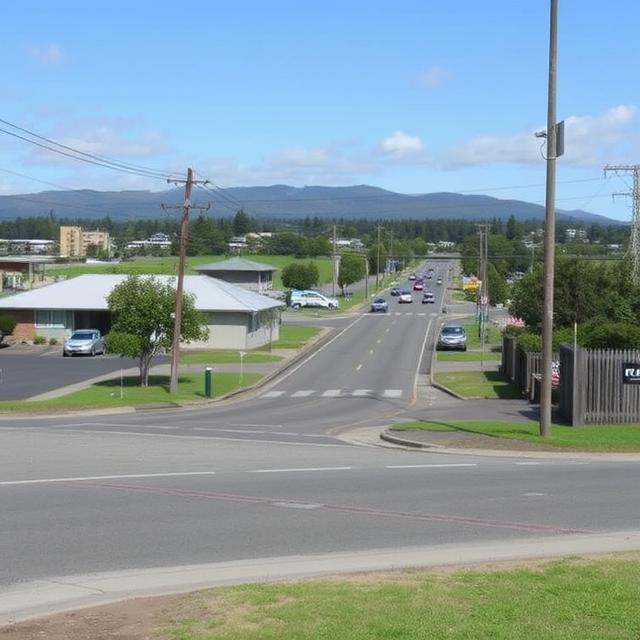
Auckland Transport (AT) had planned to install a raised pedestrian crossing on Queen Street, Waiuku, as part of a broader multi-street safety improvement scheme. The project aimed to address safety concerns, particularly for unaccompanied children who frequently cross the area on weekdays. The proposal included works on Queen Street, George Street, Mellsop Avenue, and Kent Street, with associated footpath and drainage upgrades.
However, the plan quickly became controversial due to its estimated cost—nearly $400,000—and the significant disruption it would cause, including a 30-day closure of Queen Street. Local businesses and residents voiced concerns about the impact on daily life and the perceived lack of consultation over the project’s scale and design.
Community and Local Board Opposition
Franklin Local Board member Gary Holmes led the opposition, questioning both the necessity and the expense of the planned raised crossing. Holmes advocated for a rubber raised crossing, a solution he says has been successfully trialled in Waiuku and widely adopted in Australia. He estimates a rubber crossing could be installed for under $100,000 and completed in less than a day, compared to the month-long disruption of the original proposal.
Holmes stated, “It’s frankly astounding that Auckland Transport continues to push these exorbitant and disruptive raised table crossings when demonstrably better options exist. The community is fed up with the endless road closures and the eye-watering price tags for what should be simple safety improvements.”
He pointed to the success of a rubber roundabout already in use in Waiuku as evidence that alternative, modular solutions can deliver both safety and cost efficiency without the prolonged inconvenience.
Auckland Transport’s Response
Auckland Transport maintains that the project was developed in response to genuine safety concerns raised by the Waiuku community, with pedestrian surveys showing dozens of unaccompanied children using the crossing area daily. Initial community engagement in April 2023 indicated support for improved pedestrian safety.
AT’s group manager of infrastructure project delivery, Mark Banfield, acknowledged recent concerns about the project’s cost, timeline, and disruption. He emphasised that the $65,000 estimate for the raised crossing was only a small part of the full $383,000 safety upgrade, which also includes footpath and drainage improvements. Banfield also clarified that while a temporary rubber crossing could be installed quickly, it would need replacement within five years, potentially increasing long-term costs.
“We are committed to listening and responding to the needs and concerns of our communities and balancing the disruption that comes with road construction projects against the safety and benefits they will deliver,” Banfield said. AT will now workshop the project with the Franklin Local Board and re-engage with the community before any further steps are taken.
The Debate: Traditional vs. Innovative Safety Solutions
The Waiuku case highlights a broader debate in New Zealand’s infrastructure sector: whether traditional, high-cost solutions are always best, or if innovative, modular alternatives can deliver comparable safety outcomes at a fraction of the price.
Rubber Raised Crossings:
- Cost-Effective: Estimated at less than $100,000, compared to $350,000–$400,000 for traditional raised tables.
- Rapid Installation: Can be fitted in under a day, minimising disruption.
- Durability: Modular design allows for easy replacement of damaged sections.
- Proven Results: Successfully used in Australia and already trialled in Waiuku with the rubber roundabout.
Traditional Raised Tables:
- Longer Lifespan: Typically last longer than rubber alternatives, with less frequent need for replacement.
- Perceived Robustness: Some engineers argue they better withstand heavy traffic and weather.
- Higher Upfront Cost: Require excavation, road closures, and more extensive construction.
Community Engagement and Next Steps
The project’s pause is a direct result of local advocacy and the willingness of Auckland Transport to reconsider its approach. The Franklin Local Board and AT will now workshop the proposal, examining the full cost breakdown, potential alternatives, and the best way to achieve safety outcomes with minimal disruption.
Holmes and other board members expect a resolution in the coming months, with further engagement planned to ensure the community’s voice is central to the final decision.
Broader Implications for Auckland and Beyond
The Waiuku safety project pause may set a precedent for other communities across Auckland and New Zealand. As councils and transport agencies grapple with rising construction costs and public demand for transparency, there is growing pressure to consider innovative, cost-effective solutions—especially for smaller, local projects.
This episode also underscores the importance of genuine community engagement and the value of local knowledge in shaping infrastructure investments. The success of modular, rubber-based safety solutions in Waiuku and elsewhere could pave the way for wider adoption, potentially saving millions in ratepayer funds while maintaining or even enhancing road safety.
Summary
The Waiuku pedestrian crossing project has been paused after strong community and local board opposition to its cost and disruption. The debate has brought attention to alternative, innovative solutions such as rubber raised crossings, which offer a cheaper and less disruptive approach to road safety. Auckland Transport and the Franklin Local Board will now work together to review the project, with a renewed focus on community input, cost efficiency, and practical outcomes. The outcome in Waiuku could influence how similar safety projects are planned and delivered across New Zealand.